
Table of Contents
- Why Water Purification Matters During a Disaster
- Boiling Water for Purification Time and Temperature
- How to Use Bleach to Purify Water Safely
- Best Portable Water Filters for Emergencies
- Filtering Solid Particles Before Chemical Treatment
- Water Storage and Long-Term Maintenance
- Signs of Contaminated Water and When to Test
- Conclusion
Last Updated: August 27, 2026
Why Water Purification Matters During a Disaster
When a natural disaster strikes, municipal water systems often fail within hours. Contaminated water becomes one of the first health threats your household will face, not days or weeks later, but immediately. The challenge isn't just access; it's knowing which purification methods actually work when you need them most.
Water-related illnesses during emergencies spike because people either skip purification entirely or use methods incorrectly. The difference between safe drinking water and waterborne illness often comes down to understanding three core techniques: boiling, chemical disinfection, and filtration. Each works, but each has specific requirements.
This guide walks you through how to purify water during a natural disaster using methods that don't require electricity, specialized equipment, or advanced chemistry knowledge. We'll cover the exact steps, timing, and safety checks so you can confidently provide clean drinking water for your family when it matters most.
Boiling Water for Purification Time and Temperature
Boiling is the most reliable purification method available, and it's been proven for centuries. A rolling boil kills virtually all pathogens, including bacteria, viruses, and protozoa that cause waterborne diseases. The key is understanding what "rolling boil" actually means and how long to maintain it.
Bring water to a rolling boil, where large bubbles break the surface continuously, and maintain that boil for at least one minute (the CDC). If you're at high altitude (above 6,500 feet), extend the boil to three minutes because water boils at lower temperatures in thin air, which reduces its disinfection effectiveness (the CDC). The water doesn't need to boil for hours; one to three minutes is sufficient to eliminate pathogens.
Here's the practical reality: a rolling boil creates enough heat energy to denature the proteins that microorganisms depend on to survive. Bacteria, viruses, and protozoa cannot withstand sustained temperatures above 160°F (71°C), and boiling ensures you exceed this threshold significantly. The turbulence of a rolling boil also helps by ensuring even heat distribution throughout the water.
What you'll need:
- A heat source (camp stove, fireplace, propane burner, or even a car engine block in emergencies)
- A metal or glass pot with a lid
- Water to be purified
- A way to cool the water before drinking (let it sit or transfer to another container)
After boiling, allow the water to cool before drinking or storing. Hot water is more prone to recontamination if it sits in an open container, so cover it while cooling. Once cooled, store in food-grade plastic containers or glass bottles. Boiled water stored in sealed, clean containers can remain safe for several days if kept in a cool, dark place.
How to Use Bleach to Purify Water Safely
Chemical disinfection with household bleach works when boiling isn't practical or when you need to treat large quantities quickly. Bleach contains sodium hypochlorite, an active disinfectant that kills pathogens through oxidation. The challenge is using the correct dose, too little and pathogens survive; too much and the water becomes unsafe to drink.
Use only unscented, regular household bleach (typically 6-8% sodium hypochlorite). Do not use bleach designed for laundry with additives, color-safe formulas, or perfumes. Add two drops of bleach per liter of clear water, or eight drops per gallon (fema.gov). If the water is cloudy or turbid, double the dose to four drops per liter.
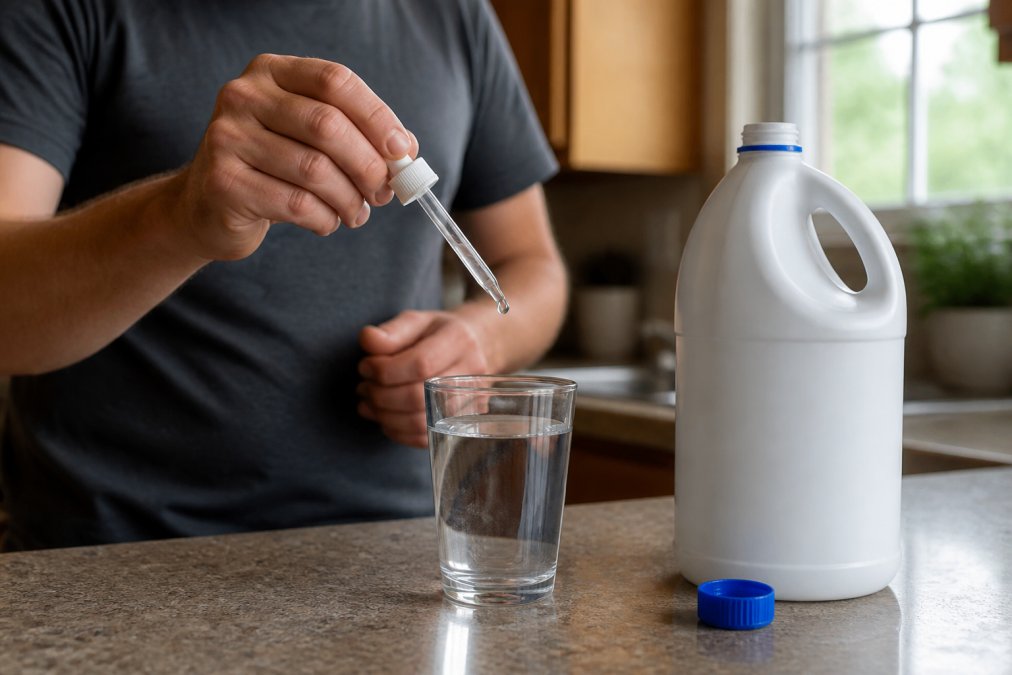
After adding bleach, stir thoroughly and wait at least 30 minutes before drinking. This contact time allows the sodium hypochlorite to circulate through the water and neutralize pathogens. You should notice a faint chlorine smell, this is normal and indicates the disinfectant is present. If you don't smell chlorine after 30 minutes, add one more drop and wait another 15 minutes.
For larger quantities, calculate based on volume. A 55-gallon drum of clear water needs 220 drops (about 7 teaspoons) of bleach. A 5-gallon bucket needs 20 drops (about 2/3 teaspoon). The math is straightforward: 2 drops per liter for clear water, 4 drops per liter for cloudy water.
Store bleach-treated water in sealed containers away from direct sunlight. Bleach-treated water remains safe for up to 24 hours if stored properly. After 24 hours, the chlorine begins to dissipate and the water's protective disinfectant weakens. For longer storage, boiling is more reliable than chemical treatment.
Best Portable Water Filters for Emergencies
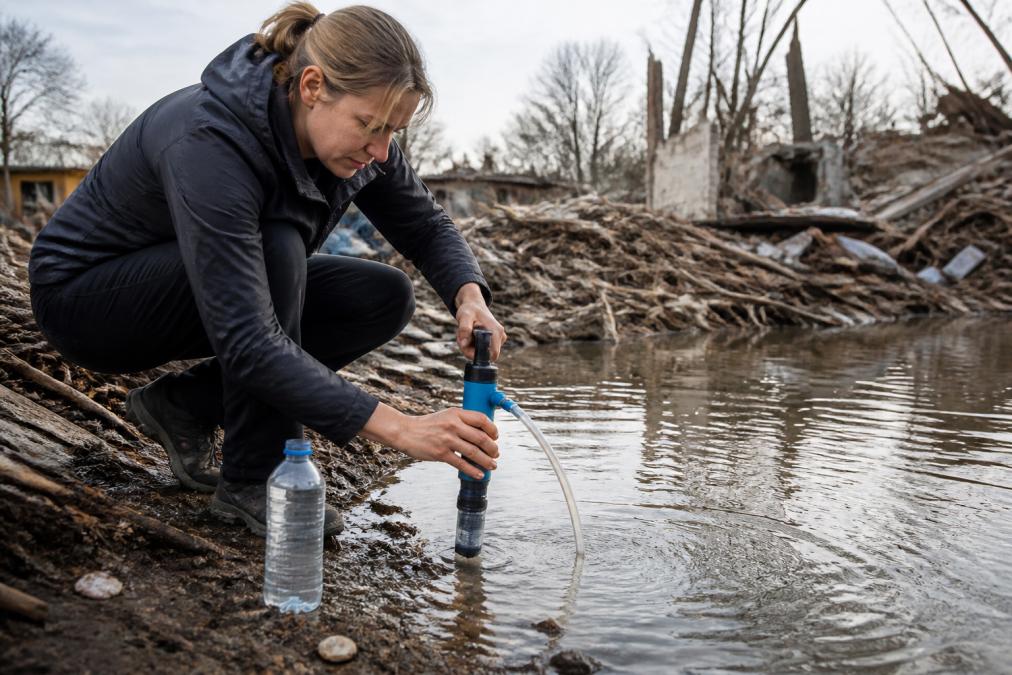
Portable filters address a different problem than boiling or chemical treatment: they remove solid particles, sediment, and some microorganisms through mechanical filtration. They're lightweight, require no fuel, and work immediately, making them ideal for evacuation scenarios or when you need to treat water from questionable sources like streams or flooded areas.
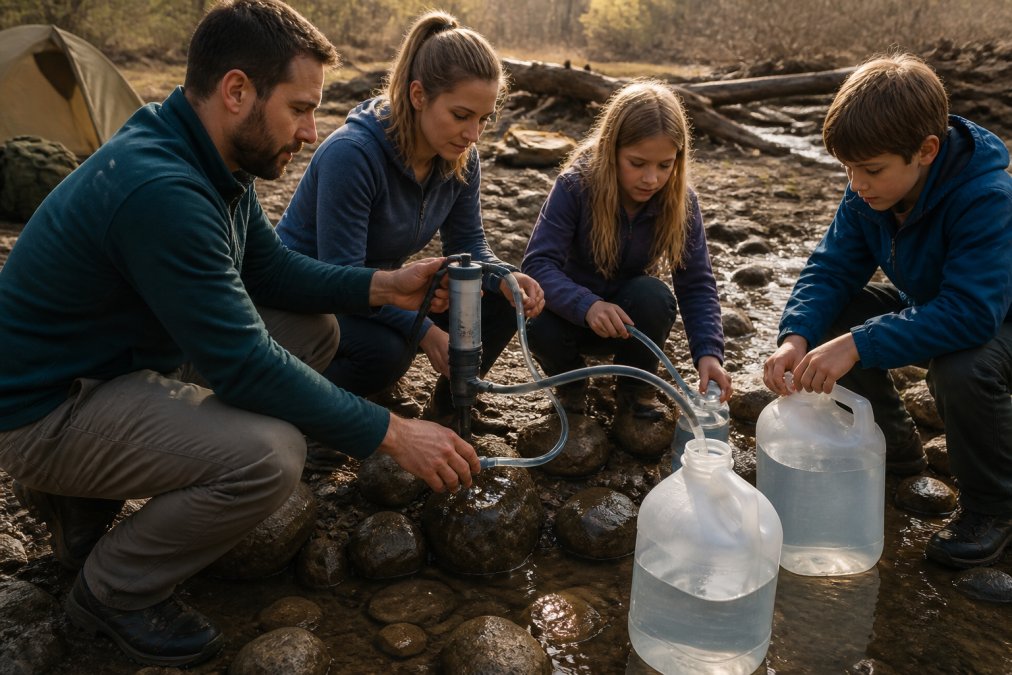
Portable filters fall into three categories: squeeze filters, gravity-fed systems, and pump filters. Squeeze filters are the lightest and fastest for small quantities. Gravity-fed systems handle larger volumes but require setup time and two containers. Pump filters offer the best combination of speed and volume but require physical effort.
Squeeze filters like the LifeStraw or similar portable options typically use a hollow-fiber membrane that blocks particles down to 0.2 microns. This removes bacteria and some protozoa but may not eliminate viruses in all cases. They're excellent for treating visibly cloudy water before boiling or chemical treatment, and they work in seconds. Most squeeze filters handle 100,000 to 1 million gallons before replacement is needed.
Gravity-fed systems (like the Sawyer Squeeze with a gravity bag setup) allow you to filter large quantities passively. Fill an elevated bag with untreated water, and gravity pulls it through the filter into a clean container below. These systems require space and setup but are ideal for sheltering-in-place scenarios where you have time and need high volume.
Pump filters require manual effort but give you complete control over flow rate and volume. They're reliable in extreme cold or with very dirty water sources. Having at least one portable filter in your emergency kit is recommended because they work independently of electricity, fuel, or timing, making them invaluable when other methods aren't immediately available.
A critical point: portable filters excel at removing particles and some microorganisms, but they don't eliminate all viruses. For complete purification, combine filtration with either boiling or chemical treatment. Filter first to remove sediment, then disinfect chemically or thermally.
Filtering Solid Particles Before Chemical Treatment
Turbidity, visible cloudiness or particles in water, complicates chemical disinfection. Sediment, debris, and suspended solids can shield pathogens from bleach or iodine, reducing treatment effectiveness. Filtering solids first ensures your chemical disinfectant makes direct contact with microorganisms.
Simple sedimentation removes large particles without any equipment. Let cloudy water sit undisturbed for several hours in a clear container. Gravity causes heavier particles to settle to the bottom. Carefully pour the clearer water from the top into another container, leaving the sediment behind. This won't remove all particles, but it removes enough to improve chemical disinfection.
For faster particle removal, use a cloth filter. Pour water through several layers of clean cloth (cotton, linen, or even a clean t-shirt) into a clean container. Cloth filters trap particles down to roughly 20 microns, visible to the eye but not to bacteria. Repeat the process two or three times for progressively clearer water.
Improvised sand and gravel filters work when you have time and materials. Layer clean sand, gravel, and cloth in a container with a hole in the bottom. Pour cloudy water through the top; it percolates through the layers and emerges clearer at the bottom. This DIY method removes many particles but isn't foolproof, always follow it with boiling or chemical treatment.
After filtering, apply your chosen disinfection method. If you used cloth or sand filtration, treat the water as clear water (2 drops of bleach per liter, or 1 minute rolling boil). The combination of particle removal plus chemical or thermal disinfection provides reliable purification.
Water Storage and Long-Term Maintenance
Purified water is only safe if it remains uncontaminated during storage. Improper storage is one of the most common reasons families lose confidence in their emergency water supplies, the water becomes foul-tasting or develops an odor, leading people to believe it's unsafe or to abandon their storage plan.
Store purified water in food-grade plastic containers or glass bottles. Never use containers that previously held chemicals, pesticides, or non-food products. Food-grade containers are marked with a recycling symbol and the number 2, 4, or 5. These plastics don't leach chemicals into water over time. Avoid clear plastic if possible, opaque containers prevent algae growth if light exposure occurs.
Fill containers to the brim to minimize air space. Oxygen in the headspace can degrade water quality over time. Seal containers tightly and label them with the date of storage. Store in a cool, dark location away from direct sunlight, heat sources, and chemical fumes. A basement, closet, or garage away from furnaces works well.
Boiled water stored in sealed containers remains safe for several days at room temperature. Bleach-treated water remains safe for up to 24 hours unless you store it in ideal conditions (cool, dark, sealed). For longer-term storage beyond a few days, commercial water storage containers with added stabilizers are more reliable than homemade solutions.
Rotate stored water every 6 to 12 months, even if it's sealed. Over time, even properly stored water can develop off-tastes or slight discoloration. Use the oldest water first and replace it with newly purified water. This rotation keeps your supply fresh and your family confident in the system.
Signs of Contaminated Water and When to Test
Recognizing contaminated water prevents waterborne illness. Some signs are obvious; others are subtle and easy to miss in a crisis situation. Learn to identify both visual and practical indicators of water safety.
Visible cloudiness, sediment, or discoloration indicates particle contamination. Water should be clear or nearly clear. Brown, yellow, or reddish tints suggest iron, tannins, or other dissolved minerals, a sign the water source is questionable. Visible debris, algae, or foam means the water is definitely unsafe without purification.
Smell is another reliable indicator. Fresh, clean water has no odor or a very faint earthy smell. A strong chemical smell, sulfur smell (like rotten eggs), or petroleum smell indicates contamination. Sewage-like odors mean the water source is compromised and requires aggressive treatment (boiling plus chemical disinfection, not just one method).
Taste is a less reliable indicator because you shouldn't drink untreated water to test it. However, if treated water tastes off after storage, it may indicate storage container contamination or that your treatment method wasn't adequate. Discard it and start over.
After a natural disaster, municipal water systems typically issue boil water advisories when contamination is detected. Follow these advisories strictly, they're issued because testing has confirmed pathogens in the water supply. Treat all water as potentially contaminated until the advisory is lifted and the water system confirms safety.
For long-term preparedness, water testing kits are available commercially. These kits test for bacteria, pH, hardness, and other parameters. However, they're most useful for ongoing water source evaluation, not emergency scenarios. During an active disaster, assume all untreated water is contaminated and treat accordingly.
Conclusion
Purifying water during a natural disaster doesn't require specialized expertise or expensive equipment. Boiling, bleach treatment, and portable filtration each work reliably when applied correctly. The challenge most families face isn't understanding the methods, it's remembering the exact steps and having the right supplies on hand when the emergency arrives.
SHTF Prepper Club simplifies family emergency preparedness by providing expert guidance and a curated selection of essential survival gear. We offer vetted solutions for food storage, water filtration, power, and safety to ensure your household remains ready for any scenario without the fear. Our comprehensive kits and tools are designed to empower you with long-term independence and peace of mind. Whether you are sheltering in place or preparing for the unexpected, we provide the reliable resources you need to protect your family.
Start today by assembling a basic water purification kit: a portable filter, household bleach in a sealed container, and food-grade storage bottles. Practice one purification method before you need it, boil water and store it, or treat a batch with bleach to understand the process. Your family's resilience begins with reliable access to safe drinking water.
Frequently Asked Questions
Q: How long should you boil water to make it safe to drink?
A: Boil water at a rolling boil for at least 1 minute at sea level. At higher elevations (above 6,500 feet), boil for 3 minutes to ensure all pathogens, including bacteria, viruses, and protozoa, are eliminated. Let the water cool before drinking. This method kills most microorganisms that cause waterborne diseases.
Q: Can you use household bleach to disinfect drinking water?
A: Yes. Use unscented household bleach with 5-6% sodium hypochlorite. Add 2 drops per quart (or 8 drops per gallon) of clear water, or 4 drops per quart of cloudy water. Stir well and wait 30 minutes before drinking. The water should have a slight chlorine smell. Never use bleach with additives or fragrances.
Q: What are the most effective ways to purify water in an emergency?
A: The most reliable methods are boiling, chemical disinfection with bleach or iodine tablets, and portable water filters. Boiling is 100% effective but requires fuel. Bleach and iodine are portable and affordable. Portable filters remove turbidity and many pathogens but may not eliminate all viruses. Combining methods, such as filtering first then boiling or using tablets, provides extra safety.
Q: How can you tell if water is safe to drink after a flood?
A: Floodwater is almost always contaminated. Signs of contamination include cloudiness, discoloration, odor, or visible debris. Even clear water may contain harmful microorganisms and chemicals. Always treat floodwater before drinking, boil it, use bleach or purification tablets, or run it through a portable filter. When tap water is unsafe, local authorities typically issue a boil water advisory. Do not rely on appearance alone.
This article was written using GrandRanker