
Table of Contents
- Why Your Household Needs an Emergency Radio
- NOAA Weather Radio Features That Matter
- Hand Crank vs Solar Emergency Radio: Which Powers Your Preparedness
- Top Emergency Radios for Home and Travel
- How to Use a Weather Radio During an Emergency
- Key Features to Evaluate Before Buying
- Integration with Your Broader Emergency Kit
- Maintaining Your Emergency Radio for Long-Term Reliability
Last Updated: August 28, 2026
Why Your Household Needs an Emergency Radio
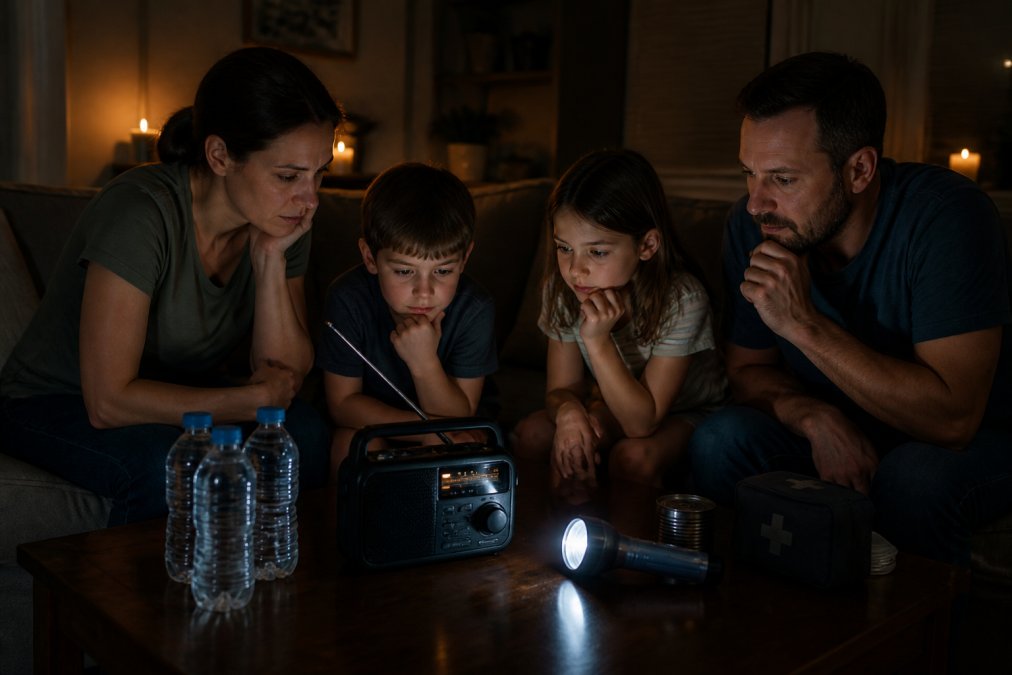
When power outages, cell tower failures, and dead phone batteries leave you isolated, an emergency radio becomes your lifeline to critical weather alerts, emergency broadcasts, and news. Most households don't own one, a significant gap in preparedness. During hurricanes, tornadoes, winter storms, and widespread outages, families scramble for information through dead devices. According to FEMA guidance on emergency preparedness, a battery-powered or hand-crank radio is essential infrastructure for any home serious about weathering emergencies without panic.
NOAA Weather Radio Features That Matter
NOAA (National Oceanic and Atmospheric Administration) operates a network of radio stations broadcasting continuous weather information and emergency alerts. The difference between manual and automatic alerts is substantial. Some radios require manual tuning; others include Specific Area Message Encoding (S.A.M.E.) technology, which automatically sounds an alarm when severe weather is issued for your specific programmed counties. This means you don't monitor constantly, the radio alerts you when danger approaches.
NOAA broadcasts on seven VHF channels (162.400 through 162.550 MHz) (noaa.gov). A good emergency radio locks onto these channels and displays signal strength, confirming you're receiving genuine NOAA data. Reception quality directly affects how quickly you learn about severe weather, flash floods, and tornado warnings.
Hand Crank vs Solar Emergency Radio: Which Powers Your Preparedness
The power source you choose determines how long your radio stays operational during extended outages. Hand-crank radios offer immediate power with zero dependencies, one minute of cranking typically provides 10-15 minutes of operation. The downside: sustained hand-cranking becomes tiring and is impractical for round-the-clock monitoring.
Solar panels charge slowly but continuously during daylight, making them excellent for long-term preparedness. However, solar charging slows dramatically in cloudy weather or winter months. Relying on solar alone during a multi-day winter storm leaves you vulnerable.
The best emergency radios combine multiple power sources: hand crank plus solar plus battery backup plus USB charging. This redundancy ensures that if one system fails, three others remain available. Multi-power radios consistently outperform single-source devices during extended outages.
| Power Source | Best For | Limitations |
|---|---|---|
| Hand crank | Immediate access, no dependencies | Tiring with sustained use |
| Solar panel | Long-term charging, daylight hours | Slow in cloudy/winter conditions |
| Rechargeable battery | Extended operation, reliable capacity | Requires initial charging |
| AA/AAA batteries | Backup power, extended shelf life | Must be replaced periodically |
Top Emergency Radios for Home and Travel
Midland ER310: Automatic Alerts and Multi-Power Reliability
The Midland ER310 stands out for automatic NOAA weather alerts. Unlike radios requiring manual tuning, the ER310 monitors weather channels continuously and sounds an alarm when severe weather is detected in your area. It combines four independent power sources: hand crank, solar panel, rechargeable lithium-ion battery (3500 mAh capacity), and six AA battery slots. The Cree LED flashlight includes high, low, and SOS strobe modes. A USB output port allows charging small devices when power is critical.
Pros: Automatic alerts eliminate constant monitoring. Multiple power sources ensure operation during any scenario. Strong 3500 mAh battery capacity.
Cons: Solar panel charges slowly in indirect sunlight. Higher price reflects the feature set.
Kaito KA500 Voyager: Shortwave Capability for Wide-Area Coverage
The Kaito KA500 Voyager receives AM/FM, two shortwave bands, and all seven NOAA weather channels. Shortwave reception is valuable, during widespread grid failures, shortwave broadcasts from international sources sometimes provide information when local stations go silent. Five power options provide flexibility: hand crank, solar panel, three AA batteries, USB charging, and optional AC adapter. The rubberized, water-resistant housing protects against moisture and impact.
Pros: Shortwave reception provides information sources beyond standard weather bands. Multiple power options suit both home and travel use.
Cons: Manual tuning for NOAA alerts requires active monitoring. AA batteries not included.
FosPower: Budget-Friendly Compact Option
The FosPower Emergency Solar Hand Crank Portable Radio delivers core functionality at entry-level pricing. It receives AM/FM and NOAA weather bands, includes a flashlight, reading lamp, and SOS alarm. The 2000 mAh power bank allows charging small devices. IPX3 water resistance protects against splashing. Four power sources, hand crank, solar, three AAA batteries, and USB, provide redundancy without complexity.
Pros: Excellent value. Compact and portable. Multiple power sources. IPX3 water resistance.
Cons: Manual tuning for NOAA alerts. Plastic construction feels lighter than premium models. Limited 2000 mAh power bank capacity.
Sangean CL-100: Desktop Alert System with Localized Warnings
The Sangean CL-100 is a tabletop unit designed for home use. Public Alert Certified, it uses S.A.M.E. technology to target alerts to specific counties, program up to 25 counties and receive only warnings affecting those areas. The radio stores up to 20 alert messages on an LCD display. It receives all seven NOAA weather channels, AM, and FM-RBDS bands. Operates on AC power (adapter included) or four AA batteries for backup.
Pros: S.A.M.E. certification reduces unnecessary alarms. Public Alert Certified. Wide LCD display. Excellent for storm-prone regions.
Cons: Primarily stationary, not portable. AA batteries not included.
Ambient Weather WR-111B: Balanced Features and Value
The Ambient Weather WR-111B delivers balanced functionality: NOAA weather alerts, AM/FM radio, multiple power sources, and practical features at mid-range pricing. Hand crank, solar panel, USB charging, and three AAA batteries provide power redundancy. Built-in LED flashlight, reading lamp, and SOS alarm handle lighting and signaling needs. USB output charges mobile devices.
Pros: Comprehensive features at reasonable cost. Multiple power sources. NOAA capability with alert function.
Cons: AAA batteries not included. Manual alert monitoring on some functions.
How to Use a Weather Radio During an Emergency
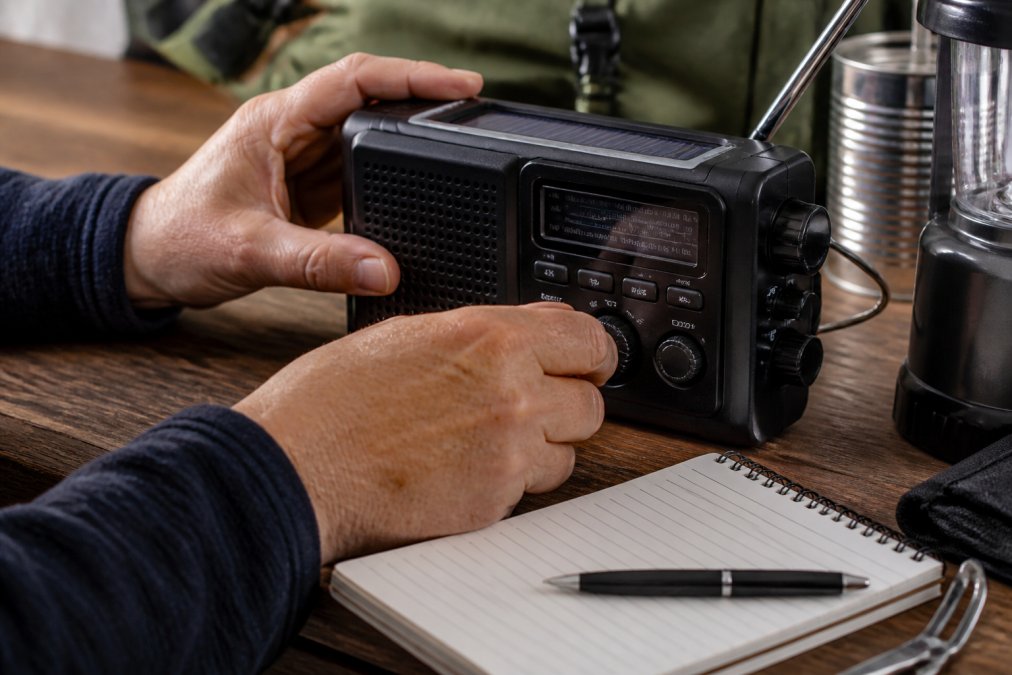
When an emergency radio activates, listen immediately without adjusting settings. Write down the information: time, alert type, affected areas, and recommended actions. This record helps you remember details and share information with family members.
Before an emergency, verify S.A.M.E. programming is set correctly. Program the specific counties where you live and work. Test the alert function monthly to confirm it works and familiarize yourself with the alert sound.
During the emergency, keep the radio on a stable surface where everyone can hear it. If using hand-crank power, take turns cranking in short intervals to preserve energy. Track the progression of alerts, a watch becomes a warning, a warning becomes an all-clear. Each update changes your response.
After the emergency passes, document what information you received and when. Share this with family members so everyone learns from the experience.
Key Features to Evaluate Before Buying
Reception and Signal Quality
Reception quality determines whether your radio receives clear NOAA broadcasts. A weak signal means garbled audio or missed alerts. A radio with a telescoping antenna optimizes signal strength. Signal strength indicators show whether you're receiving strong signals or barely connecting. Test the radio in your home's typical location, basement, living room, or bedroom, because building materials affect signal penetration.
Durability and Water Resistance
An emergency radio must survive the conditions it's designed for. Water resistance is measured by IPX ratings: IPX3 means splash resistance; IPX4 means water-resistant to splashing from any direction; IPX7 means submersion to one meter for 30 minutes (iec.ch). Rubberized housing protects against drops and impact. Battery compartments should close securely with corrosion-resistant contacts.
Battery Life and Capacity
Battery capacity is measured in milliamp-hours (mAh). A 3500 mAh lithium-ion battery provides significantly longer operation than a 2000 mAh battery. Real-world battery life is typically 60-80% of advertised runtime. Quality lithium-ion batteries hold charge for months; cheaper batteries self-discharge rapidly, leaving your radio dead when needed.
Integration with Your Broader Emergency Kit
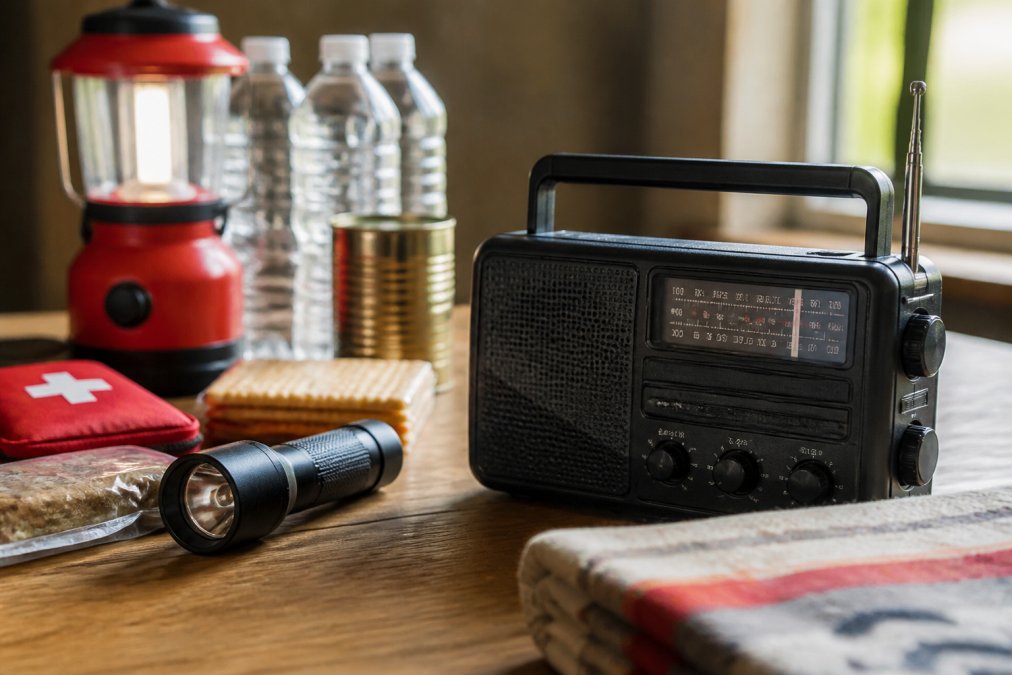
An emergency radio is one component of a comprehensive emergency kit that includes water, food, first aid supplies, flashlights, and batteries. The radio's role is information, it tells you what's happening, what dangers exist, and what authorities recommend.
Keep a notebook and pen near the radio. When alerts come through, write down information immediately. This prevents misremembering details and creates an emergency timeline. Store the radio in an accessible location, not buried in a closet. During an emergency, you need to activate it within seconds. Keep it in a central living area or bedroom where family members gather during storms.
Maintaining Your Emergency Radio for Long-Term Reliability
Test your emergency radio monthly. Turn it on, verify it receives NOAA broadcasts, and confirm the alert function works. This catches problems before an actual emergency. Replace batteries if the radio won't power on.
Recharge the radio's internal battery every three months, even if unused. This keeps the battery active and prevents permanent capacity loss. Store the radio in a cool, dry location, heat accelerates battery degradation and humidity causes corrosion. A sealed plastic container in a closet or basement is ideal.
Inspect the casing for cracks, the antenna for damage, and the solar panel for cloudiness. Keep spare batteries in the same location. Rotate batteries annually, using older ones first and replacing with fresh stock.
An emergency radio transforms from equipment into a family safety tool when you understand its role and maintain it properly. The right radio, matched to your specific needs, maintained consistently, and integrated into your broader emergency kit, provides the information access that turns chaos into managed response. Start with a model that fits your budget and location, test it monthly, and upgrade as your preparedness plan expands.
Frequently Asked Questions
What makes an emergency radio different from a regular AM/FM radio?
An emergency radio includes NOAA weather band reception with alert functionality, multiple power sources (hand crank, solar, battery), and features like flashlights and SOS alarms. Regular AM/FM radios lack weather alerts and emergency-specific power redundancy. During power outages or severe weather, an emergency radio automatically notifies you of warnings without manual tuning, making it essential for household safety.
How do NOAA weather radio features protect my family during storms?
NOAA weather radios receive all seven VHF weather channels and broadcast alerts for severe thunderstorms, tornadoes, hurricanes, and other hazards. Many models use S.A.M.E. technology to send localized alerts for your specific county, reducing false alarms. Automatic alert models sound an alarm when warnings are issued, ensuring you receive critical information even while sleeping or away from traditional news sources.
Should I choose a hand crank or solar emergency radio?
Hand crank radios provide immediate power on demand without waiting for sunlight, making them reliable in any weather or time of day. Solar radios charge passively during daylight but require clear skies. The best emergency radios combine both: hand crank for immediate backup and solar for sustained charging. This dual-power approach ensures your radio functions in cloudy conditions, at night, and during extended outages.
How often should I test and maintain my emergency radio?
Test your emergency radio every 3-6 months by tuning to NOAA channels, checking battery backup, and ensuring the hand crank and solar panel function. Replace AA or AAA batteries annually if using battery backup. Store your radio in a cool, dry location away from direct sunlight to preserve battery life. Before hurricane or severe weather season, perform a full systems check to confirm all power sources and alert functions work properly.
This article was written using GrandRanker