
Table of Contents
- Common Causes of Emergency Radio Battery Drain
- How to Test Emergency Radio Battery Health
- Signs of a Failing Radio Battery
- Battery Degradation and Aging in Emergency Radios
- Best Practices for Lithium-Ion Battery Storage
-
7 Practical Steps to Stop Your Radio Battery From Draining
- Step 1: Lower Transmit Power and Enable Power-Save Mode
- Step 2: Clean Battery Contacts and Terminals
- Step 3: Remove Aftermarket Accessories Draining Power
- Step 4: Update Radio Firmware
- Step 5: Switch to Rechargeable Cells for Long-Term Use
- Step 6: Store Batteries in Cool, Dry Conditions
- Step 7: Check for Short Circuits and Electrical Leakage
- Emergency Preparedness and Standby Power Management
- Conclusion
Last Updated: August 19, 2026
Common Causes of Emergency Radio Battery Drain
Your emergency radio battery drains fast for specific, fixable reasons. Understanding these causes is your first step toward keeping your radio operational when you need it most.
Parasitic Power Draw and Standby Current
Parasitic draw is the silent power drain happening even when your radio isn't actively transmitting or receiving. Most emergency radios draw between 5 and 50 milliamps during standby, depending on the model and features enabled. If your radio has a display screen, LED indicators, or a scanning function active, that standby current increases substantially.
The fix is straightforward: disable features you don't need. Turn off the display backlight, disable automatic scanning, and power down any Bluetooth or WiFi connectivity. Many users don't realize their radio is constantly searching for a signal, which consumes power continuously.
High Transmit Power Settings
Transmit power is one of the largest power consumers on any radio. A 25-watt transmission uses roughly five times more power than a 5-watt transmission. If you're in an area with good coverage, you don't need maximum power.
Check your radio's power settings. Most quality emergency radios let you select low, medium, or high power modes. For routine communications, low power works fine. Reserve high power for emergencies when distance is critical. This single adjustment can extend your battery life by 40-60% during active use.
Battery Contact Corrosion and Terminal Maintenance
Battery contacts corrode over time, especially in humid or salty environments. Terminal corrosion creates resistance between the battery and the radio, forcing the radio to work harder to draw power.
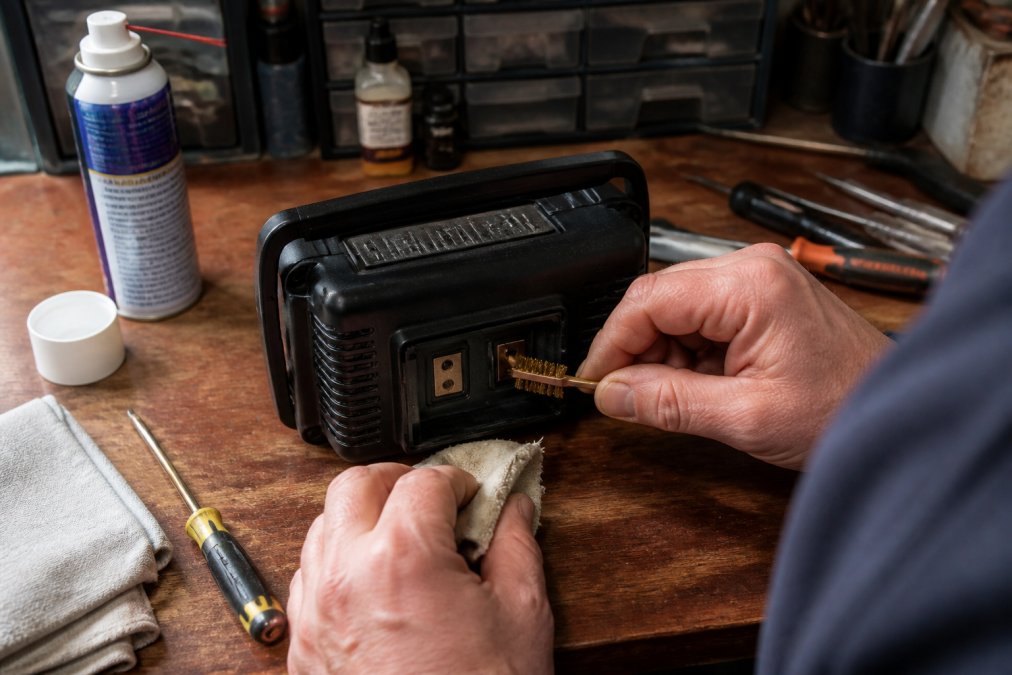
Inspect your battery contacts regularly. If you see white, green, or blue oxidation on the terminals, that's corrosion. Clean battery terminals with a dry cloth or a small brass brush. For stubborn corrosion, use a cotton swab lightly dampened with vinegar or rubbing alcohol. Let the terminals dry completely before reinstalling the battery. This three-minute task can restore 15-25% of your effective battery capacity.
How to Test Emergency Radio Battery Health
Testing your battery tells you whether the problem is the battery itself or something else drawing power from it. A failing battery won't hold voltage under load, while a healthy battery will maintain stable voltage even during active use.
Using a Multimeter to Check Voltage
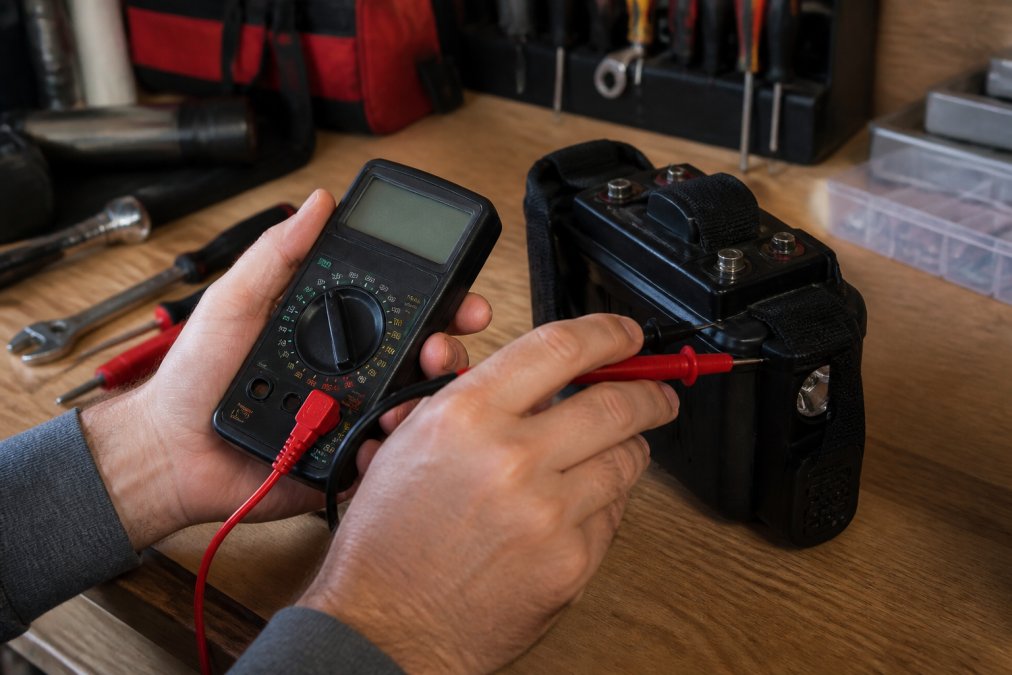
Set a digital multimeter to DC voltage mode and touch the red probe to the positive terminal and the black probe to the negative terminal of your battery. A fresh alkaline battery should read close to its rated voltage: 1.5 volts for a single cell, 3 volts for a pair, 9 volts for a 9V battery. Rechargeable lithium-ion batteries should read around 3.7 volts when fully charged. If your reading is more than 0.3 volts below the rated voltage, the battery is partially depleted or failing.
Measuring Discharge Rate Under Load
Install the battery in your radio and power on the device. Let it run for 30 minutes in standby mode, then check the voltage again. A healthy battery should hold its voltage. If voltage drops more than 0.2 volts during that 30-minute period, you have either a failing battery or significant parasitic drain in the radio itself.
For a more precise test, measure voltage immediately after a 2-minute transmission session at full power. A healthy battery will recover to near its pre-transmission voltage within 10 seconds. If voltage stays depressed or drops further, the battery is failing.
Signs of a Failing Radio Battery
A failing battery exhibits specific behaviors. The battery might read acceptable voltage at rest but fail to deliver power during transmission. You might notice the radio shuts off unexpectedly during use, then powers back on when you stop transmitting.
Rapid voltage collapse is another indicator. If voltage drops from 3.7 volts to 2.8 volts within seconds of pressing transmit, internal resistance is too high. Temperature sensitivity also signals aging, if your battery works fine at room temperature but fails in cold weather, the battery's internal resistance increases with cold.
If the battery swells, leaks, or produces heat during charging, it's failing and should be replaced immediately.
Battery Degradation and Aging in Emergency Radios
All batteries degrade over time. Every charge cycle, discharge, and month of storage causes microscopic changes inside the battery.
Charge Cycles and Capacity Loss
Rechargeable batteries have a finite number of charge cycles before capacity drops below usable levels. A lithium-ion battery rated for 500 charge cycles means you can fully charge and discharge it 500 times before capacity falls to 80% of original. By cycle 1,000, capacity might be 60% of original.
Emergency radio users who cycle their batteries frequently should plan to replace them every 2-3 years. Alkaline batteries also degrade during storage, losing roughly 2-3% of capacity per year. A battery stored for five years will have lost 10-15% of its original capacity, even if never used. SHTF Prepper Club recommends rotating emergency batteries and checking expiration dates annually.
Cold Weather Performance and Internal Resistance
Cold reduces battery performance dramatically. At freezing temperatures, internal resistance increases, which means the battery can't deliver current as quickly. A battery that works fine at 70°F might fail to power your radio at 20°F.
This isn't permanent damage, the battery recovers when warmed up. But in an actual emergency during winter, you need to know this limitation. Cold-weather preparedness means keeping backup batteries in an inside pocket or insulated bag, not in an exposed pack where they'll freeze.
Lithium-ion batteries perform better in cold than alkaline batteries. If your area experiences harsh winters, switching to lithium-ion cells for emergency radios makes sense.
Best Practices for Lithium-Ion Battery Storage
If you're using rechargeable lithium-ion batteries, storage conditions dramatically affect longevity. The ideal storage state is 40-60% charge.
Store batteries in a cool, dry place at room temperature, around 65-75°F. Heat accelerates chemical degradation. A basement or climate-controlled closet is better than a hot garage or attic. Keep batteries away from metal objects that could create a short circuit. Store them in a non-conductive container or battery case. Check on stored batteries every 3-6 months and verify they still hold a charge.
7 Practical Steps to Stop Your Radio Battery From Draining
These steps address the most common causes of rapid battery drain. Work through them in order, testing after each adjustment.
Step 1: Lower Transmit Power and Enable Power-Save Mode
Locate your radio's power settings menu and switch from high power to low or medium power. This single change can extend battery life by 50% or more. Next, enable power-save mode if your radio has one. Power-save mode reduces transmit power automatically, dims the display, and extends scanning intervals. Test the radio for 2 hours in power-save mode and check voltage before and after.
Step 2: Clean Battery Contacts and Terminals
Remove the battery and inspect the contacts on both the battery and the radio. Use a clean, dry cloth to wipe both contact surfaces. If you see corrosion, use a small brass brush or cotton swab with rubbing alcohol to clean it away. Let everything dry completely before reinstalling the battery.
Step 3: Remove Aftermarket Accessories Draining Power
Aftermarket accessories like external antennas, amplifiers, or repeater modules draw additional power. If you've added any of these, remove them temporarily and test battery drain. Some aftermarket amplifiers are particularly power-hungry. For emergency use, a standard antenna is sufficient.
Step 4: Update Radio Firmware
Many modern emergency radios have firmware that can be updated. Check the manufacturer's website for your specific radio model and download any available firmware updates. Firmware updates occasionally fix bugs that cause parasitic drain or improve power management algorithms.
Step 5: Switch to Rechargeable Cells for Long-Term Use
If you're using alkaline batteries, switching to rechargeable lithium-ion cells can improve performance. Rechargeable batteries maintain more stable voltage throughout their discharge cycle and have lower internal resistance when new. For frequently-used radios, rechargeable cells make sense.
Step 6: Store Batteries in Cool, Dry Conditions
Move your emergency radio batteries to a climate-controlled storage area. Avoid hot garages, attics, or vehicles. Store batteries separate from the radio when not actively using it. This prevents parasitic drain from the radio pulling power through the battery even when the radio is off.
Step 7: Check for Short Circuits and Electrical Leakage
Inspect the battery compartment for debris, corrosion, or damage. A grain of salt or tiny piece of metal can create a short circuit that drains the battery rapidly. Check the battery itself for cracks, leaks, or swelling. Verify that the battery door closes completely and securely.
Emergency Preparedness and Standby Power Management
Emergency radios are only useful if the battery has power when you need it. Most emergencies that disrupt power last 24-72 hours. Your emergency radio should be capable of operating for at least 72 hours on a single battery charge. SHTF Prepper Club recommends having at least two complete radio systems, one actively deployed and one in storage with fresh batteries.
Rotate your active battery every 6 months. Take the deployed battery out of service, charge it fully if it's rechargeable, and store it in a cool place. Install a fresh battery in the radio. Keep a log of your battery rotation with dates and voltage readings.
Test your radio system quarterly. Power it on, verify it receives signals, do a short transmission, and check the battery voltage before and after. This quarterly test catches problems before an actual emergency.
Emergency radio batteries drain fast when you ignore parasitic draw, run at maximum transmit power, or allow terminal corrosion to build up. The fixes are straightforward: lower your power settings, clean your contacts, and store batteries properly. Most battery drain problems aren't battery failures, they're operational issues you can control.
SHTF Prepper Club's approach to emergency preparedness includes not just the gear itself, but the maintenance and power management practices that keep that gear operational when you need it. By implementing these seven steps and following the testing procedures outlined above, you'll ensure your emergency radio battery stays charged and ready.
Frequently Asked Questions
What causes emergency radio battery drain?
Emergency radio batteries drain fast due to parasitic draw (power consumed during standby), high transmit power settings, battery degradation, and corroded terminals. Aftermarket accessories, firmware issues, and cold weather also accelerate discharge. Testing with a multimeter helps identify whether the problem is the battery itself or the radio's power consumption.
How can I test my emergency radio battery health with a multimeter?
Set your multimeter to DC voltage mode and touch the red probe to the positive terminal and the black probe to the negative terminal. A healthy alkaline battery should read 1.5V; lithium-ion cells should show 3.7V or higher. If the voltage drops rapidly under load (transmit), the battery is failing. Measure voltage again after 30 seconds of transmit to see the voltage drop under stress.
Are rechargeable batteries better than alkaline for emergency radios?
Rechargeable nickel-metal hydride (NiMH) batteries work well for frequent use but have higher standby current and memory effect issues. Alkaline batteries hold their charge longer during storage and are better for emergency-only radios. Lithium-ion batteries offer the best capacity and lowest self-discharge but cost more. Choose based on your usage pattern: rechargeable for regular communication, alkaline for long-term emergency storage.
What are signs my emergency radio battery is failing?
A failing battery shows rapid voltage drop under transmit, shorter talk time than expected, inability to reach normal range, or the radio powering off mid-transmission. Battery contacts may appear corroded or green. If the radio powers on but dies within minutes of use, the battery has likely reached the end of its charge cycles or suffered internal resistance increase from age or cold exposure.
This article was written using GrandRanker