
Table of Contents
- Does Emergency Preparedness Actually Save Money?
- The 1:13 Return on Investment in Disaster Mitigation
- How to Build an Emergency Kit on a Budget
- Emergency Fund vs Emergency Supplies: Which Comes First?
- Reducing Recovery and Cleanup Costs Through Preparedness
- Your Financial Preparedness Checklist
- The Hidden Savings: Asset Protection and Psychological Resilience
- Conclusion: Preparedness as Financial Insurance
Last Updated: August 18, 2026
Does Emergency Preparedness Actually Save Money?
The question sounds straightforward, but the answer is more nuanced than a simple yes or no. Emergency preparedness does save money, but the savings depend entirely on what you prepare for and how you approach it. At SHTF Prepper Club, we've analyzed how families can build financial resilience through smart preparedness planning, and the math consistently shows that the upfront investment pays dividends when emergencies strike.
The real cost of being unprepared extends far beyond the immediate disaster. When households lack emergency supplies, they're forced into reactive spending: emergency room visits instead of preventive care, replacement purchases at inflated disaster prices, and recovery costs that can stretch into years. According to FEMA's disaster recovery analysis, unpreparedness often multiplies the financial impact of any given event.
Here's what the financial case for emergency preparedness actually looks like: families that plan ahead spend less during crises, recover faster afterward, and experience fewer cascading financial problems. The benefit compounds when you consider not just direct savings but also avoided debt, preserved assets, and reduced stress-related expenses.
Below, we'll walk you through exactly how emergency preparedness saves money, what financial strategies work best, and how to build a plan that fits your household's specific situation and budget.
The 1:13 Return on Investment in Disaster Mitigation
When disaster mitigation experts talk about return on investment, they're referring to a well-documented ratio: for every dollar spent on hazard mitigation before a disaster, communities and households save approximately thirteen dollars in recovery costs. This 1:13 ROI ratio has become the benchmark for understanding why emergency preparedness saves money at scale.
The mechanism is straightforward. Mitigation spending, whether it's reinforcing a roof, securing heavy furniture, or stockpiling water, prevents damage before it happens. Recovery spending, by contrast, occurs after the damage is done and costs multiply because you're paying emergency prices, contractor premiums, and often financing costs on top of the base expense.
Consider a concrete example: installing hurricane straps on a roof costs between a few hundred and a couple thousand dollars depending on your home's size. If a hurricane destroys an unstrapped roof, repair costs can easily exceed fifty thousand dollars, plus temporary housing, contents replacement, and potential mold remediation. The mitigation investment pays for itself many times over if a single major event occurs during your home's ownership.
The 1:13 ratio applies broadly across different types of disasters and preparedness measures. Families who maintain emergency supplies avoid the markup pricing that appears in the hours after a disaster strikes. Communities that invest in resilience infrastructure experience faster economic recovery. Households with financial cushions avoid predatory lending after unexpected events.
This ratio matters because it reframes emergency preparedness from an optional luxury to a basic financial strategy. You're not spending money on preparedness, you're redirecting spending from the recovery phase (where it's expensive and often unavoidable) to the preparation phase (where you control costs).
How to Build an Emergency Kit on a Budget
Building an effective emergency kit doesn't require spending thousands of dollars upfront. The key is starting with essentials, prioritizing items that address the most likely scenarios your household faces, and expanding gradually as your budget allows.
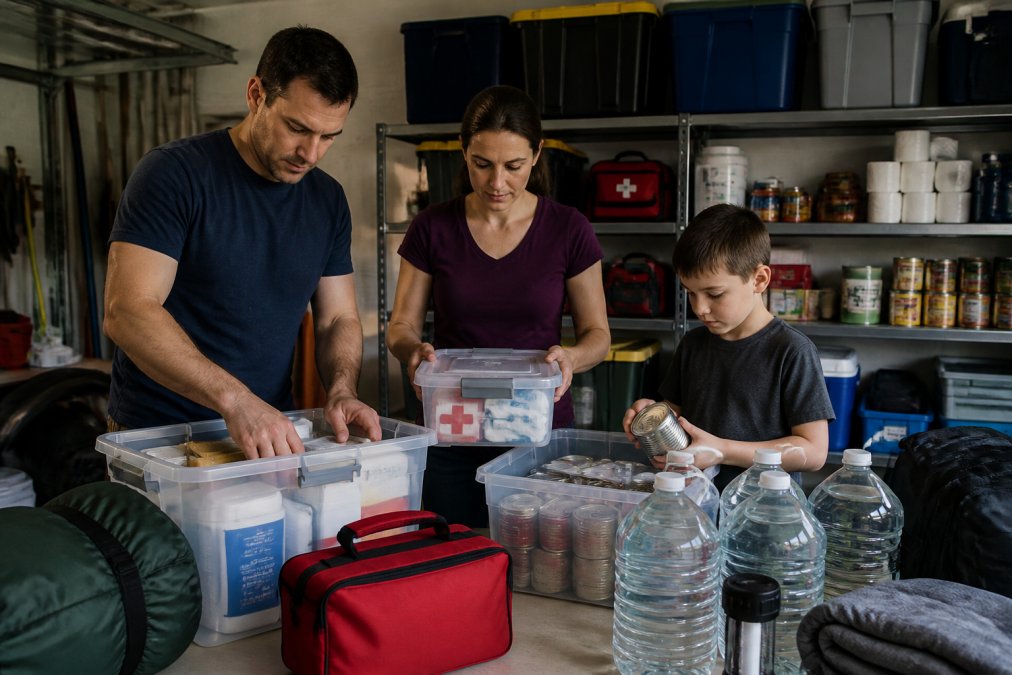
Start with water and food, the two non-negotiable items for any emergency. Water needs are straightforward: plan for one gallon per person per day for drinking and basic hygiene. A family of four should maintain at least a two-week supply, which means fifty-six gallons. Food storage doesn't require expensive freeze-dried meals. Canned goods, pasta, rice, peanut butter, and other shelf-stable items you already eat work perfectly. The advantage is psychological: your family will actually consume these items during normal times, rotating them naturally.
Next, assemble a basic first aid kit. You don't need a pre-packaged commercial kit. Gather bandages, antiseptic, pain relievers, antihistamines, anti-diarrheal medication, and any prescription medications your household members need. Add a thermometer, tweezers, and scissors. This costs under fifty dollars and covers ninety percent of minor medical situations that occur during emergencies.
Add tools and supplies specific to your region's hazards. If you live in an area prone to power outages, a battery-powered or hand-crank radio and flashlights with extra batteries are essential. For flood-prone areas, add plastic sheeting, duct tape, and a wet/dry vacuum. For hurricane regions, add plywood, nails, and tarps. For winter storms, add rock salt and sand. These regional additions cost between fifty and two hundred dollars depending on what you choose.
Water purification deserves its own category because it's critical and affordable. A LifeStraw Personal Water Filter removes 99.999999% of bacteria, 99.999% of parasites, and 99.999% of microplastics, filtering up to 1,000 gallons from contaminated sources. Pair it with water storage containers and basic knowledge of boiling water, and you've covered your household's water security.
Document storage matters more than most people realize. Keep copies of insurance policies, property deeds, medical records, and financial documents in a waterproof container. Digital copies stored in cloud storage add redundancy. This costs nearly nothing but prevents the financial chaos that occurs when you can't prove what you owned or what your medical history includes.
The total cost for a functional emergency kit covering a family of four ranges from three hundred to seven hundred dollars, depending on your region and what you already own. Spread across a year, that's twenty-five to sixty dollars monthly, less than most households spend on streaming subscriptions. The financial preparedness savings begin immediately if any emergency occurs.
Emergency Fund vs Emergency Supplies: Which Comes First?
This question reveals a false choice. You need both, but the sequence matters for households with limited resources.
Start with an emergency fund before you stock physical supplies. A financial emergency fund, typically three to six months of living expenses, solves a broader range of problems than physical supplies alone. Job loss, medical emergencies, car repairs, and unexpected home maintenance all require cash. These scenarios are statistically more likely than the specific disasters that emergency supplies address.
Build your emergency fund to at least one thousand dollars first. This covers most minor crises without forcing you into debt. Once you reach one thousand dollars, begin building your emergency kit simultaneously. The two strategies work together: the emergency fund handles financial shocks, while emergency supplies handle scenarios where money can't solve the problem (like power outages or supply chain disruptions).
The psychological benefit of having both cannot be overstated. Households with emergency funds report lower stress levels and make better financial decisions during actual emergencies. They don't panic-buy at inflated prices because they have supplies. They don't take predatory loans because they have cash reserves. They don't skip medical care because they can't afford it.
For families with very limited resources, prioritize this sequence: emergency fund to one thousand dollars, then emergency supplies, then expanding the emergency fund to three months of expenses, then expanding emergency supplies. This progression addresses both financial and physical resilience simultaneously.
Reducing Recovery and Cleanup Costs Through Preparedness
The financial damage from disasters extends far beyond the initial event. Recovery and cleanup costs often exceed the direct damage, particularly when households lack basic preparedness.
When a storm damages a roof, the immediate repair cost is just the beginning. Without tarps and temporary protection already on hand, water damage spreads into attics, walls, and insulation. What started as a roof repair becomes a full interior restoration. Prepared households have tarps and materials ready, reducing secondary damage by seventy to eighty percent.
Similarly, power outages create financial cascades. Unprepared households lose food in refrigerators and freezers. Prepared households with coolers and ice already stored preserve most of their food. The difference between a one-hundred-dollar loss and a fifteen-hundred-dollar loss comes down to whether you had basic supplies ready.
Cleanup costs multiply without preparation. Families without heavy-duty trash bags, shovels, and work gloves end up paying contractors for debris removal. Families without basic cleaning supplies struggle with mold and contamination. The difference between DIY cleanup (which costs supplies and labor you already have) and contractor cleanup (which costs hundreds to thousands) depends entirely on preparedness.
Document preservation prevents financial chaos during recovery. Families without copies of insurance policies, property photos, and financial records spend months reconstructing information while insurance claims languish. Families with organized documents submit claims within days and begin recovery immediately.
Insurance itself represents a form of preparedness that directly reduces recovery costs. Households without adequate insurance face catastrophic financial losses. Those with proper coverage recover their assets and rebuild. The preparedness here is financial planning, ensuring you have the right insurance before you need it, not scrambling to find coverage after disaster strikes.
Your Financial Preparedness Checklist
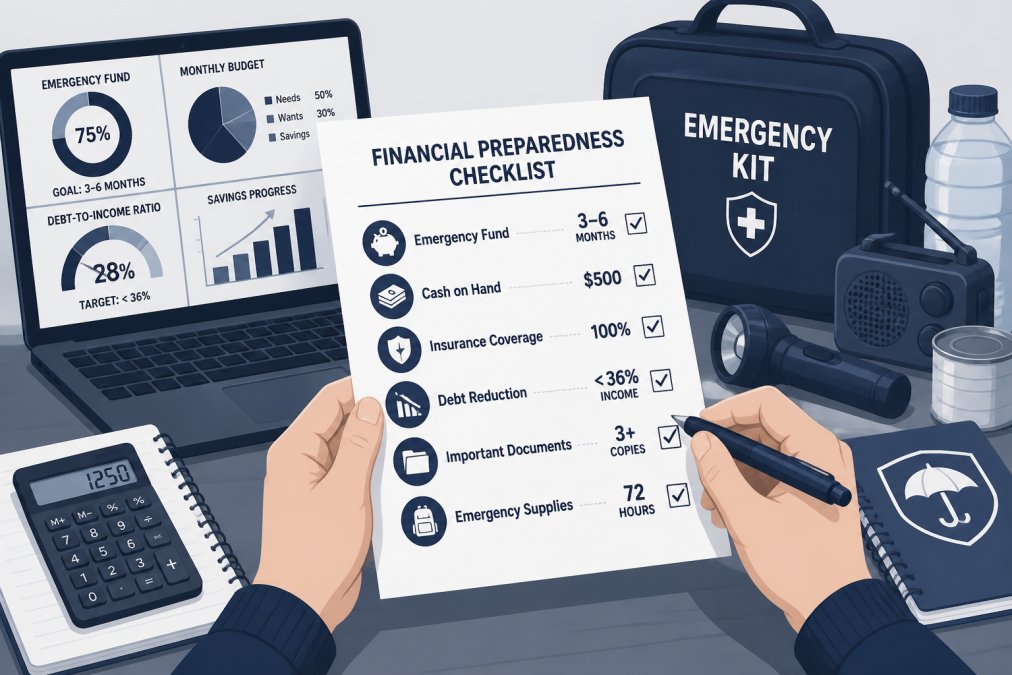
A financial preparedness checklist ensures you've addressed the key areas where preparedness saves money. Work through this systematically, checking items off as you complete them.
| Preparedness Area | Action Items | Impact |
|---|---|---|
| Emergency Fund | Build to $1,000, then 3-6 months expenses | Prevents debt during job loss or medical emergency |
| Insurance Coverage | Review homeowner, health, auto, and life policies | Ensures recovery costs are covered |
| Document Storage | Digitize and back up financial, medical, and property records | Enables fast insurance claims and financial recovery |
| Water Security | Store 2 weeks of water, add water purification | Eliminates emergency water purchase costs |
| Food Storage | Stock 2-4 weeks of shelf-stable food | Prevents food loss and emergency grocery markup |
| First Aid & Medicine | Assemble kit with basic supplies and prescriptions | Avoids emergency room visits for minor issues |
| Regional Hazard Prep | Address specific risks (hurricane, flood, fire, winter) | Reduces damage-specific recovery costs |
| Power Backup | Battery storage or generator with fuel | Preserves food and maintains essential services |
| Tool & Supply Storage | Keep tarps, duct tape, flashlights, batteries | Enables immediate damage prevention |
| Communication Plan | Establish out-of-area contact and meeting points | Reduces search and rescue costs |
Work through this checklist in order of financial impact. Emergency fund and insurance address the broadest range of scenarios. Water and food address the most likely extended disruptions. Regional hazard preparation addresses specific risks to your household.
The Hidden Savings: Asset Protection and Psychological Resilience
Emergency preparedness saves money in ways that don't appear on a traditional financial statement but matter deeply to household finances.
Asset protection is the most tangible hidden savings. A family home represents the largest asset most households own. Preparedness measures like roof reinforcement, foundation waterproofing, and fire-resistant landscaping protect that asset from depreciation. A home damaged by preventable disaster loses market value, becomes harder to insure, and costs more to maintain. Prepared households preserve their home's value and insurability.
Similarly, vehicles, electronics, and household goods retain value longer when protected. A car stored safely during a hurricane doesn't need replacement. Electronics protected from power surges continue functioning. Furniture protected from water damage doesn't need restoration. These protections cost dozens or hundreds of dollars in preparedness but preserve thousands in asset value.
The psychological resilience benefit compounds over time. Families that feel prepared experience lower stress levels, which translates to fewer stress-related health problems and expenses. They make better financial decisions because they're not in crisis mode. They sleep better at night knowing their household is protected. This psychological benefit isn't measurable in dollars, but it reduces medical expenses, improves work performance, and strengthens family relationships.
Opportunity cost represents another hidden savings category. When disasters strike unprepared households, family members spend weeks or months handling recovery instead of working, caring for children, or pursuing opportunities. A family that recovers in days instead of months preserves months of income and productivity. This opportunity cost often exceeds the direct disaster costs.
Conclusion: Preparedness as Financial Insurance
Emergency preparedness absolutely saves money, but only if you actually implement it. The 1:13 return on investment ratio, the avoided recovery costs, the preserved assets, and the maintained income all point in the same direction: preparation is one of the highest-return financial strategies available.
SHTF Prepper Club helps families implement this strategy without overwhelm. Our expert-vetted food storage solutions with up to 25-year shelf life, reliable water purification systems, and comprehensive preparedness guides transform abstract financial benefits into concrete household security. Start building your emergency fund and emergency kit today. Your future self will thank you when the next crisis hits, and more importantly, your finances will remain intact.
Frequently Asked Questions
How much money can you actually save by having an emergency preparedness kit?
Savings depend on what you prevent. Research shows every dollar spent on disaster mitigation saves approximately thirteen dollars in recovery costs. A family that invests $500-$1,500 in preparedness supplies and planning can avoid tens of thousands in emergency expenses, temporary housing, medical bills, and property damage. Specific savings come from avoiding price gouging during shortages, preventing spoilage through proper food storage, and reducing the need for expensive emergency services or loans.
What should be included in a financial preparedness checklist?
A financial preparedness checklist should include: establishing an emergency fund (3-6 months of expenses), documenting important financial records, reviewing insurance coverage gaps, creating a household inventory of assets, setting up automatic bill payments, securing copies of legal documents, and identifying backup income sources. Add specific items like copies of insurance policies, account numbers, and contact information for financial institutions stored in a waterproof, fireproof container at home and digitally in a secure location.
Should I prioritize building an emergency fund or buying emergency supplies first?
Start with both simultaneously, but in phases. Begin with a small emergency fund ($1,000-$2,000) while purchasing basic supplies like water, non-perishable food, and first aid items. Once your emergency fund reaches 3 months of expenses, expand your physical supplies to include backup power, water filtration, and specialized gear for your region's hazards. This dual approach ensures you have both liquid cash for unexpected expenses and physical resources for scenarios where cash becomes inaccessible.
Does having insurance mean I don't need emergency preparedness?
No. Insurance covers some financial losses but leaves gaps. Most homeowners insurance has deductibles ($500-$5,000+), coverage limits, and waiting periods for claims. During emergencies, you need immediate access to supplies, cash, and resources before insurance payouts arrive. Additionally, insurance doesn't cover all disaster-related costs like temporary housing, meals, or transportation. Preparedness fills these gaps and reduces the overall financial impact by preventing losses insurance won't cover and minimizing recovery time.
This article was written using GrandRanker