
Table of Contents
- The Correct Bleach-to-Water Ratio for Purification
- Best Household Bleach for Water Purification
- Step-by-Step Water Disinfection Process
- How Long to Wait After Adding Bleach to Water
- Emergency Water Storage Containers and Maintenance
- Improving Taste and Addressing Common Issues
- When Bleach Alone Isn't Enough
- Conclusion
Last Updated: August 20, 2026
The Correct Bleach-to-Water Ratio for Purification
The standard recommendation for purifying water with bleach is straightforward: use unscented household bleach containing 8.25% sodium hypochlorite. For clear water, add 2 drops per quart (or 8 drops per gallon). For cloudy or turbid water, double the dose to 4 drops per quart (16 drops per gallon). This approach has become the foundation of emergency water disinfection because it reliably eliminates pathogens and microorganisms that cause waterborne illness.
The difference between these ratios matters. Clear water requires less bleach because sediment and particles don't shield contaminants. Cloudy water needs more contact time and higher chlorine concentration to ensure the bleach reaches all pathogens hiding in the turbidity. Getting the ratio right is the difference between safe drinking water and wasted effort.
At SHTF Prepper Club, we emphasize this distinction because many emergency guides oversimplify it. They give one ratio for all situations, which creates false confidence. Your water source determines your approach.
Ratio for Clear Water
Clear water presents the simpler case. If you can see through the water without cloudiness or visible sediment, the standard ratio applies: 2 drops of unscented household bleach per quart of water. This delivers approximately 0.5 parts per million of free chlorine residual, which is the target for safe potable water.
Here's the practical application. Fill a clean quart-sized container with your water source. Using a standard dropper, add exactly 2 drops of bleach. Stir thoroughly for at least 1 minute to ensure the bleach distributes evenly. The water will have a slight chlorine smell, which is actually a good sign, it indicates the presence of disinfectant.
One common mistake is assuming the smell means the water is safe. The chlorine odor is necessary but not sufficient. You still need to wait the full contact time (covered in detail later) before drinking. The disinfection process takes time, even though mixing happens instantly.
Ratio for Cloudy or Turbid Water
Turbid water, water that appears cloudy, murky, or contains visible particles, requires double the bleach dose. Add 4 drops per quart (16 drops per gallon). Turbidity indicates suspended sediment, organic matter, or other particles that can shield pathogens from the bleach's disinfecting action.
This higher concentration ensures that enough free chlorine is available to penetrate through the particles and reach all microorganisms. The particles themselves don't need to be killed, they're not the threat. But they can protect bacteria and parasites from contact with the bleach, which is why increased chlorine concentration is essential.
If your water source is extremely cloudy or has visible debris, consider pre-filtering through cloth or a simple sediment filter before adding bleach. This step removes large particles and improves the effectiveness of your bleach treatment. Many emergency preparedness plans overlook this, but it significantly improves results with heavily contaminated water sources.
Best Household Bleach for Water Purification
Not all bleach is suitable for water purification. You need unscented household bleach with a sodium hypochlorite concentration of 8.25%. This is the standard strength found in most store-bought bleach bottles.
Check the label carefully. The product must say "unscented" because scented varieties contain additives that are unsafe for drinking water. Some bleach products also contain surfactants or other chemicals designed for laundry or cleaning, these are not appropriate for potable water treatment.
Avoid bleach labeled as "splash-less," "color-safe," or "for delicates." These formulations contain additional compounds. Similarly, do not use pool chlorine, which has different chemical properties and concentrations designed for large-volume treatment. The ratio and safety profile are completely different.
The concentration matters because it determines how much volume you need to add. An 8.25% solution means each drop contains a precise amount of sodium hypochlorite. If you use a different concentration, your ratios will be wrong, and your water may not be adequately disinfected or may taste overly chlorinated.
Store your bleach in a cool, dark place. Bleach degrades over time when exposed to heat and light, which reduces its effectiveness. A bottle stored in a cabinet will remain viable much longer than one left on a sunny shelf. For emergency preparedness, rotate your bleach supply every 6-12 months to maintain full potency.
Step-by-Step Water Disinfection Process
Disinfection follows a logical sequence: prepare your water, add the bleach, mix thoroughly, wait for contact time, and verify safety before use. Each step serves a purpose and skipping any of them reduces effectiveness.
Preparing Your Water
Start by assessing your water source. If it's visibly cloudy, turbid, or contains debris, pre-filtration is your first step. Pour the water through a clean cloth, coffee filter, or a simple sediment filter to remove large particles. This doesn't kill pathogens, it just removes the material that can shield them from bleach.
Fill clean containers with your filtered water. Use containers that are food-safe or previously used only for food or water. Never use containers that previously held chemicals, pesticides, or other hazardous substances. The residue from those materials can contaminate your water even after rinsing.
If your water source is from a natural body of water (stream, pond, lake), pre-filtering is especially important. These sources often contain visible sediment and organic material. Even if the water looks relatively clear, it likely contains suspended particles that require removal.
Adding and Mixing Bleach
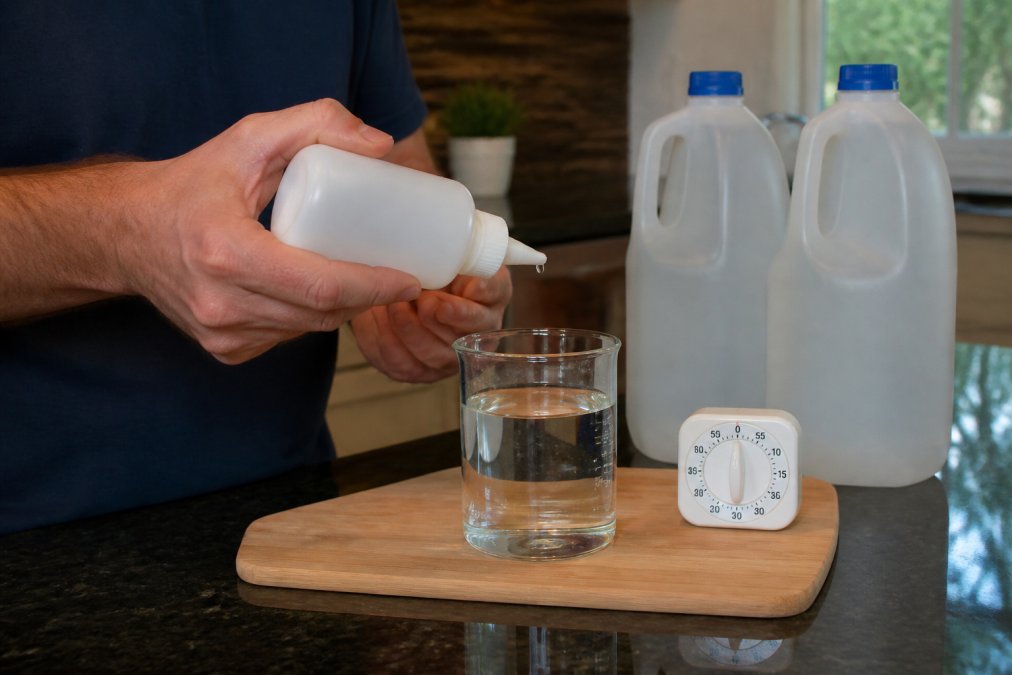
Measure your bleach carefully. Use a standard dropper or pipette for accuracy. A standard dropper holds approximately 0.05 mL per drop, which is the basis for the 2-drop and 4-drop recommendations.
Add the appropriate number of drops based on your water clarity. For clear water, add 2 drops per quart. For cloudy water, add 4 drops per quart. If you're treating larger volumes, scale proportionally: 8 drops per gallon for clear water, 16 drops per gallon for cloudy water.
Stir the water thoroughly for at least 1 minute. Use a clean spoon or stirring rod. The goal is to distribute the bleach evenly throughout the water so every molecule comes into contact with the disinfectant. Incomplete mixing leaves pockets of untreated water.
You'll notice a faint chlorine smell after mixing. This is expected and indicates the presence of free chlorine residual. If you don't smell chlorine at all, the bleach may be degraded or the dose may have been too small. If the smell is overwhelming, you've added too much bleach, in this case, discard the water and start over.
How Long to Wait After Adding Bleach to Water
The contact time is the period between adding bleach and when the water becomes safe to drink. This is not optional, and it's not negotiable based on how thirsty you are.
For clear water treated with the standard 2-drop-per-quart ratio, wait a minimum of 30 minutes at room temperature before drinking. For cloudy water treated with the 4-drop-per-quart ratio, wait a minimum of 60 minutes. These timeframes allow the chlorine to penetrate and neutralize pathogens and microorganisms.
Temperature affects contact time. Cold water requires longer contact time because chemical reactions slow down at lower temperatures. If your water is cold (below 50°F), extend the contact time to 1 hour for clear water and 2 hours for cloudy water. If you're unsure of the temperature, default to the longer contact time.
After the contact time has elapsed, you can drink the water or use it for cooking. The water will have a slight chlorine taste, which some people find unpleasant. This taste is harmless, it simply indicates the presence of residual disinfectant, which is actually a safety feature. It means there's enough chlorine to prevent microbial growth if the water sits for a few days.
Emergency Water Storage Containers and Maintenance
Proper storage preserves your disinfected water and prevents recontamination. The container you choose and how you maintain it directly affect how long your treated water remains safe.
Use food-grade containers made from high-density polyethylene (HDPE) or similar materials approved for potable water storage. These are typically marked with a "2" in the recycling triangle. Never use containers that previously held non-food items, gasoline, pesticides, or any other hazardous substances.
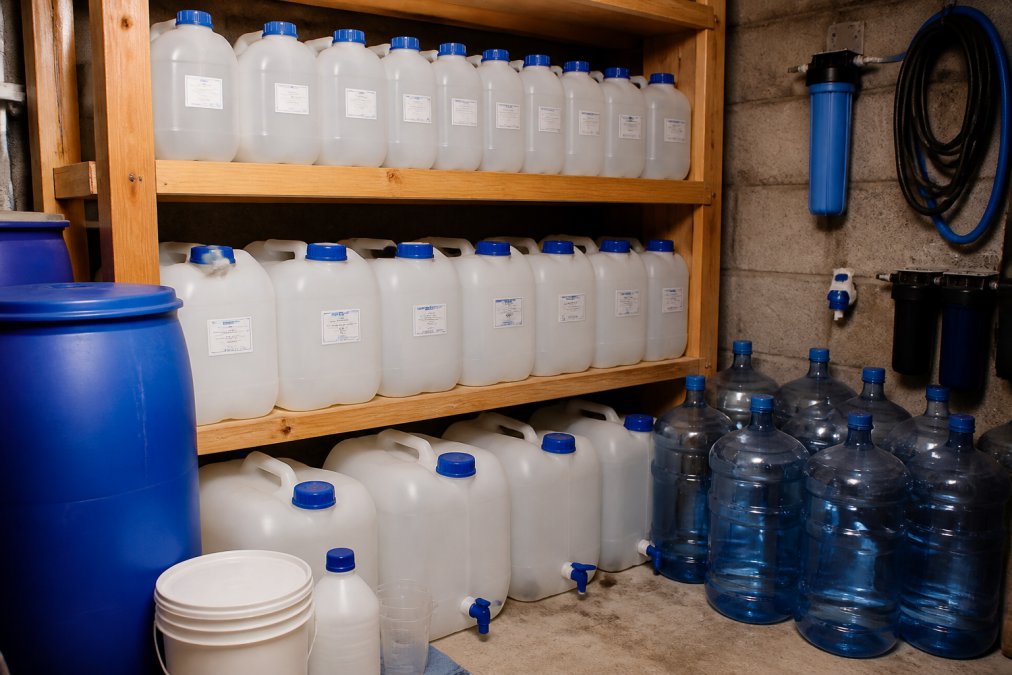
Store containers in a cool, dark place away from direct sunlight. Sunlight degrades the plastic and can promote algae growth if any light penetrates the container. A basement, pantry, or interior closet is ideal. Avoid garages or sheds where temperature fluctuations are extreme.
Label each container with the date you filled it and the date you treated it with bleach. Treated water remains safe for 6 months when stored properly. After 6 months, the chlorine residual degrades and the water may no longer be adequately protected against microbial growth. Rotate your supply by using older water first and replacing it with newly treated water.
Keep containers sealed when not in use. A loose or open container allows dust, insects, and airborne contaminants to enter. If you need to access the water, use a clean ladle or cup, don't drink directly from the container.
For long-term storage beyond 6 months, consider re-treating the water. Add 1 drop of bleach per quart of previously treated water to restore the chlorine residual. This extends the safe storage period another 6 months.
Improving Taste and Addressing Common Issues
The chlorine taste from bleach treatment is harmless but unpleasant for many people. Several methods can improve palatability without compromising safety.
Aeration reduces chlorine taste. Pour the treated water back and forth between two clean containers several times, allowing air to mix with the water. This increases surface area and allows some chlorine to evaporate naturally. The water remains safe because you're only removing excess chlorine beyond what's needed for disinfection.
Activated charcoal filters also reduce chlorine taste while maintaining safety. If you have a water pitcher with a charcoal filter, pour your treated water through it. The charcoal absorbs the chlorine flavor without removing the disinfectant properties that protect the water.
Some people add a small amount of flavoring, lemon juice, powdered drink mix, or similar, to mask the taste. This is safe and doesn't affect the water's safety. Just ensure the flavoring comes from a clean source.
A common issue is over-treating water with bleach. If the chlorine smell is overwhelming or the taste is extremely strong, you've added too much. Discard this water and start over with the correct dosage. There's no safe way to remove excess bleach from water.
Another frequent problem is incomplete mixing. If some areas of the water smell strongly of chlorine while others don't, the bleach wasn't distributed evenly. Stir more thoroughly and wait the full contact time before evaluating.
When Bleach Alone Isn't Enough
Bleach is highly effective against bacteria and viruses, but it has limitations with certain contaminants. Understanding these limitations helps you recognize when alternative or supplementary purification methods are necessary.
Bleach does not effectively remove heavy metals, chemical pollutants, or particulate matter. If your water source is contaminated with industrial runoff, agricultural chemicals, or sediment, bleach treatment alone is insufficient. Pre-filtration through activated charcoal or sediment filters addresses some of these issues, but heavily contaminated water may require more sophisticated treatment.
Bleach is also less effective against certain parasites, particularly Cryptosporidium, which has a protective cyst that resists chlorine. If you suspect your water source contains parasites, particularly if you're treating water from wilderness sources or areas with known contamination, boiling is a more reliable method than bleaching. Boiling for at least 1 minute kills all pathogens, including resistant parasites.
For maximum safety with unknown water sources, combine methods. Pre-filter for sediment, boil the water, and then add bleach for residual protection during storage. This layered approach addresses bacteria, viruses, parasites, and some chemical contaminants.
SHTF Prepper Club recommends understanding your specific water source before an emergency occurs. If you know your well water is safe or your municipal supply is reliable, bleach treatment is sufficient for emergency storage. If your backup water source is untreated surface water, plan for more comprehensive treatment methods.
Preparing for emergencies means having reliable methods to ensure your family has safe drinking water when normal supplies are disrupted. Bleach treatment is one of the most accessible and effective tools available, but only when applied correctly. SHTF Prepper Club provides the expert guidance and vetted emergency supplies you need to implement these methods with confidence. Start building your emergency water supply today and ensure your family remains protected.
Frequently Asked Questions
What is the exact ratio of bleach to water for emergency purification?
For clear water, use 8 drops of unscented household bleach (sodium hypochlorite at 6% concentration) per gallon. For cloudy water, double the dose to 16 drops per gallon. In metric, that's 2 drops per liter for clear water, 4 drops per liter for turbid water. Always use a dropper for accuracy, and stir thoroughly for at least 1 minute to ensure proper disinfection of all microorganisms.
How long must water sit after adding bleach before it is safe to drink?
After adding bleach and stirring, wait a minimum of 30 minutes before drinking. This contact time allows the chlorine residual to neutralize pathogens and waterborne bacteria. In cooler water (below 50°F), extend the wait to 1 hour. You should notice a slight chlorine smell; if you don't, the water may not be adequately treated and you should add another dose and wait again.
What type of household bleach is safe for water purification?
Only unscented household bleach containing 6% sodium hypochlorite is safe for potable water treatment. Check the label carefully, it must say 'unscented' and contain no added dyes, perfumes, or other chemicals. Avoid color-safe bleach, scented varieties, and anything labeled for laundry with additives. A standard jug from the grocery store marked as plain household bleach will work; verify the concentration before use.
How do I improve the taste of water treated with bleach?
After the 30-minute waiting period, the chlorine taste can be reduced by pouring the water between two clean containers several times to aerate it, or by letting it sit uncovered for a few hours. Adding a pinch of salt or a small amount of lemon juice (if available) can also mask the residual chlorine flavor. Some people find the taste improves after 24 hours of storage. These steps don't affect safety, they only address palatability.
This article was written using GrandRanker