
Table of Contents
- Why Portable Power Stations Matter for Home Emergency Backup
- How to Calculate Power Station Capacity for Home Backup
- Portable Power Station vs Gas Generator for Emergencies
- Battery Chemistry: LiFePO4 vs Lithium-Ion for Long-Term Reliability
- Top Portable Power Stations for Emergency Backup
- Maintaining Lithium Iron Phosphate Batteries for Long-Term Storage
- Key Features That Matter: Inverter Output, Solar Input, and Pass-Through Charging
- Emergency Preparedness Scenarios: When You'll Actually Need a Power Station
Last Updated: August 26, 2026
Why Portable Power Stations Matter for Home Emergency Backup
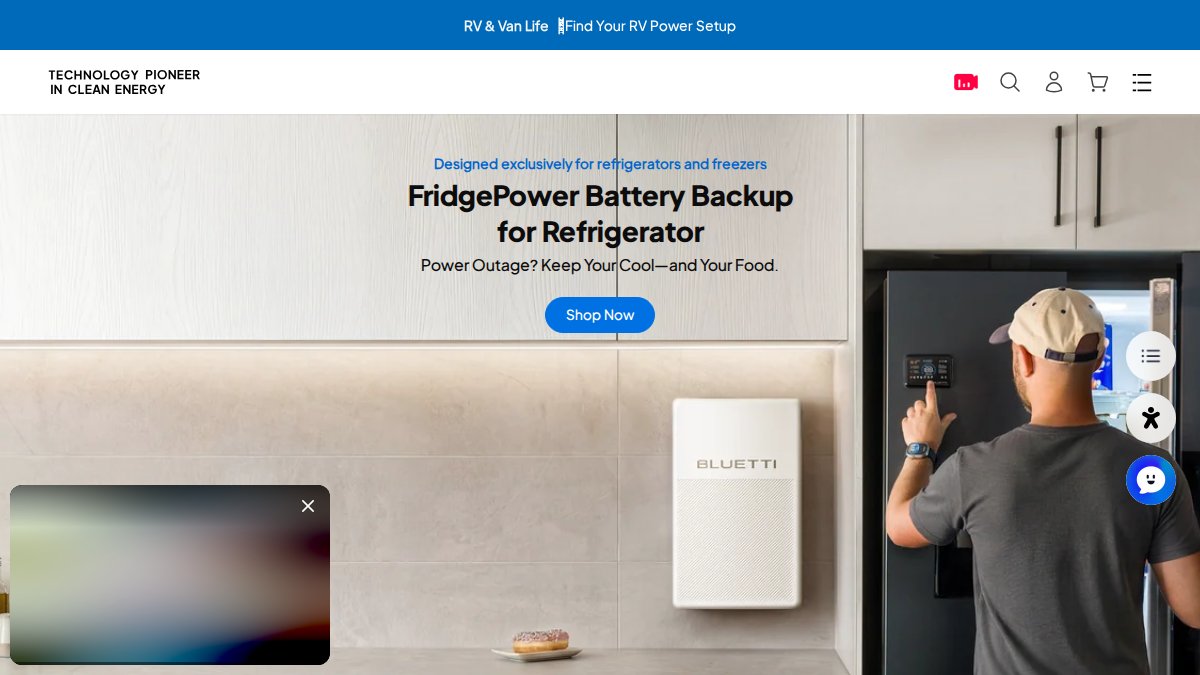
Power outages happen. A winter storm knocks out the grid for three days. A summer heat wave triggers rolling blackouts. A fallen tree takes down the neighborhood transformer. When the lights go out, most households have maybe a few hours of backup before things get uncomfortable and dangerous.
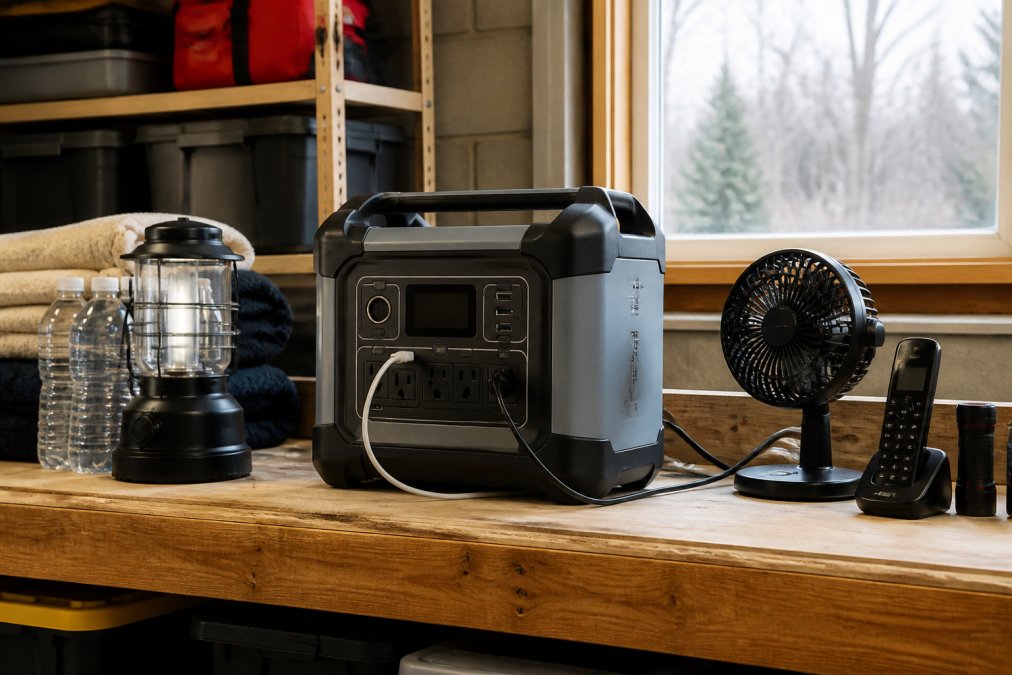
Portable power stations change the equation. Unlike gas generators, they run silently, produce no fumes, and require no fuel storage or maintenance. Unlike car batteries, they're designed for home emergencies with multiple outlets, high continuous output, and the ability to power essential devices for hours or days. The difference during an actual outage is substantial.
The best portable power stations combine sufficient capacity with your household's actual power needs. A 500-watt-hour station won't power a refrigerator, sump pump, and medical equipment simultaneously. A 10,000-watt-hour unit won't help if you can't recharge it when you need it most. This guide breaks down how to calculate your real power requirements, compares the technology that matters, and reviews portable power stations that deliver when the grid fails.
How to Calculate Power Station Capacity for Home Backup
Choosing a portable power station without calculating your actual power needs is like buying a generator by color. You'll either overspend on capacity you don't need or underbuy and face critical failure during an outage.
Understanding Watt-Hours and Continuous Output
Watt-hours measure total energy storage. A 2,048-watt-hour station holds twice the energy of a 1,024-watt-hour model. But watt-hours alone don't tell the full story.
Continuous output, measured in watts, determines what devices you can run simultaneously. A power station with 2,400 watts continuous output can power a refrigerator (600W), a microwave (1,000W), and a laptop charger (100W) at the same time. The same station with only 1,200 watts continuous output cannot.
Surge power (peak watts) is the brief spike a power station delivers when devices first turn on. A refrigerator compressor draws 3,000 watts for half a second when it kicks in, then settles to 600 watts continuous (energy.gov). If your station's surge capacity is below 3,000 watts, the fridge won't start.
Calculating Your Household Peak Load
Peak load is the maximum watts your household draws at any single moment. Start by listing critical devices and their wattage:
- Refrigerator: 600W continuous (3,000W surge at startup)
- Sump pump: 1,200W continuous
- Furnace blower: 800W continuous
- Microwave: 1,000W
- Phone chargers: 50W total
- LED lights: 100W total
- Laptop: 100W
Your peak load scenario might be: refrigerator + sump pump + furnace blower + lights = 2,600 watts continuous. That's your minimum continuous output requirement.
Most households can survive on 2,000-3,000 watts continuous output if they prioritize essentials. Eight hours of 2,000 watts requires 16,000 watt-hours of storage. Three days (72 hours) at the same load requires 144,000 watt-hours, which is why most households combine a portable power station with solar panels for recharging during extended outages.
| Device | Wattage | Runtime on 2,048Wh Station |
|---|---|---|
| Refrigerator (continuous) | 600W | ~3.4 hours |
| LED lighting (4 bulbs) | 100W | ~20 hours |
| Laptop charging | 100W | ~20 hours |
| Phone charging (2 devices) | 50W | ~41 hours |
| Microwave (5 min use) | 1,000W | 0.1 hours (10 minutes) |
Portable Power Station vs Gas Generator for Emergencies
Gas generators deliver raw power at lower upfront cost. A 4,500-watt inverter generator can run nearly any household appliance. But they produce carbon monoxide and cannot run indoors, in garages, or basements. During a winter outage, your generator sits outside in the cold and snow. You'll need fuel storage, gasoline degrades within months, and maintenance includes oil changes and seasonal prep. They're loud and announce to the street that you have backup power.
Portable power stations run silently with zero emissions. You can operate them indoors. They require no fuel storage or maintenance. Lithium iron phosphate models hold their charge for months without degradation. For a three-day outage powering essential devices, a portable power station with solar input is superior. For running a whole-home air conditioner or heating system during an extended outage, a gas generator is more practical. Most prepared households use both.
Battery Chemistry: LiFePO4 vs Lithium-Ion for Long-Term Reliability
Lithium iron phosphate (LiFePO4) is the gold standard for emergency backup. It tolerates deeper discharge cycles, maintains capacity across thousands of charge cycles, and degrades slowly over time. A quality LiFePO4 battery rated for 3,500 cycles to 80% capacity means you can fully charge and discharge the station 3,500 times before it drops to 80% of original capacity (peer-reviewed research). At one full cycle per week, that's 67 years of use. In practice, most households see 10-15 years of reliable service.
LiFePO4 is also safer. The chemistry is inherently stable and won't catch fire or explode under normal use. This matters for emergency gear stored in your home.
Lithium-ion (NMC chemistry) is cheaper and lighter, but it degrades faster. A typical lithium-ion battery rated for 1,000-1,500 cycles to 80% capacity means noticeable capacity loss within 3-5 years of regular use. For emergency backup that sits dormant until needed, LiFePO4 is the better choice. The price difference has compressed to 15-25%, making LiFePO4 the practical choice for most households.
Top Portable Power Stations for Emergency Backup
BLUETTI AC200MAX: Maximum Expandability for Growing Needs
The BLUETTI AC200MAX starts with 2,048 watt-hours of LiFePO4 capacity and expands to 8,192 watt-hours by adding battery modules. The inverter delivers 2,200 watts continuous output with 4,800 watts surge capacity, covering most household essentials simultaneously. Solar input accepts up to 900 watts, allowing full recharge in 2-3 hours on a clear day. App control via Bluetooth lets you monitor charge state from your phone. For expandability and solid performance, the AC200MAX works well.
EcoFlow DELTA Pro: Whole-Home Backup Power
The EcoFlow DELTA Pro starts with 3,600 watt-hours and expands to 25 kilowatt-hours with additional battery modules. The inverter outputs 3,600 watts continuous, with X-Boost technology supporting appliances up to 4,500 watts. The LiFePO4 battery is rated for 3,500 cycles to 80% capacity. Charging reaches 0-80% in 1.5 hours via AC mains.
An optional transfer switch connects directly to your home's electrical panel, automatically routing power to essential circuits during an outage. This is the closest you'll get to whole-home backup without installing a traditional battery system. For households committed to serious emergency preparedness, the DELTA Pro delivers capability.
Anker PowerHouse 767: Fast Charging and Long-Term Durability
The Anker PowerHouse 767 combines 2,048 watt-hours, fast AC recharging (0-80% in one hour), and LiFePO4 chemistry rated for 3,000 cycles, providing a 10-year lifespan under normal use. The inverter delivers 2,400 watts continuous output. An expansion battery option doubles capacity to 4,096 watt-hours. For households wanting a reliable, long-lasting station without premium pricing, the PowerHouse 767 is solid.
Jackery Explorer 1000 Pro: Balanced Capacity and Portability
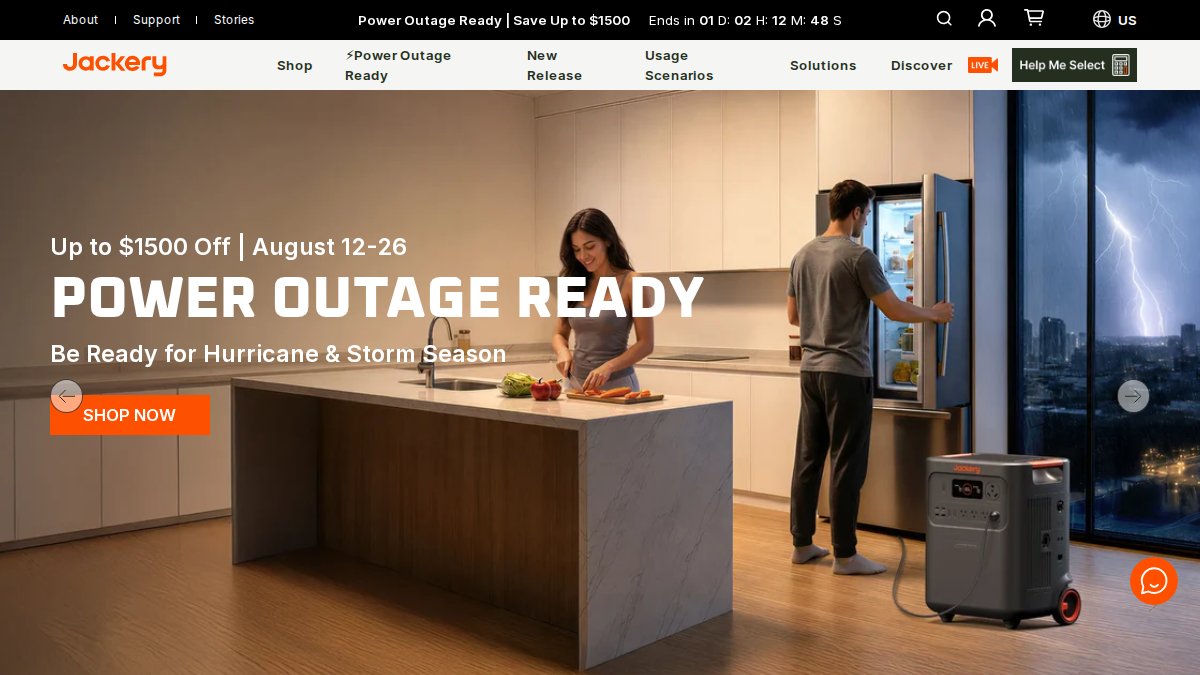
The Jackery Explorer 1000 Pro offers 1,002 watt-hours in a relatively compact, portable package. The 1,000 watts continuous output with 2,000 watts surge capacity handles essential devices. Quick AC recharging (1.8 hours to full charge) restores capacity rapidly. Jackery uses NMC lithium-ion, not LiFePO4, so capacity degrades faster, expect noticeable loss within 3-5 years of regular use. For households with modest backup needs powering essentials for 12-24 hours, the Explorer 1000 Pro delivers value.
Renogy Phoenix 1000: Budget-Friendly Expandable Power
The Renogy Phoenix 1000 delivers 998.4 watt-hours of LiFePO4 capacity at the lowest price point. The 1,500 watts continuous output (2,100 watts peak) covers essential devices, and iBoost mode can support appliances up to 3,000 watts. You can link two Phoenix 1000 units together to double capacity and output. The battery is rated for 3,500+ cycles to 80% capacity. For a single-unit solution for modest backup needs, the Phoenix 1000 is hard to beat on value.
Maintaining Lithium Iron Phosphate Batteries for Long-Term Storage
Your portable power station will spend most of its life sitting dormant. How you store and maintain it determines whether it actually works when you need it.
Store the station in a cool, dry location, ideally between 50-85°F. Charge it to 50-60% capacity before long-term storage. A fully charged battery sitting for months degrades faster than one at partial charge. Check the charge level every 3-6 months. LiFePO4 batteries self-discharge slowly, expect to lose 1-2% per month (peer-reviewed research). If charge drops below 20%, top it back up to 50-60%. Test the system annually by plugging in a device and verifying the station powers it.
Key Features That Matter: Inverter Output, Surge Capacity, and Pass-Through Charging
When comparing portable power stations, focus on three specifications that determine real-world performance.
Continuous inverter output is the sustained watts the station can deliver. A 2,400-watt inverter can run a refrigerator (600W) plus a sump pump (1,200W) plus lights (100W) simultaneously.
Surge capacity (peak watts) is the brief spike when devices start. Refrigerators, pumps, and air conditioners draw 2-5 times their running wattage for a few seconds during startup. If your station's surge capacity is below the device's startup draw, the inverter will shut down.
Pass-through charging lets you charge the station while simultaneously powering devices. This matters during extended outages when you're running devices during the day and recharging via solar panels.
Emergency Preparedness Scenarios: When You'll Actually Need a Power Station
Three-day winter storm: The grid goes down for 72 hours at 20°F. Your furnace blower needs 800 watts continuous, your refrigerator needs 600 watts. A 3,600-watt-hour station with solar input can power essential devices during the day and recharge from solar panels. This scenario is where portable power stations excel.
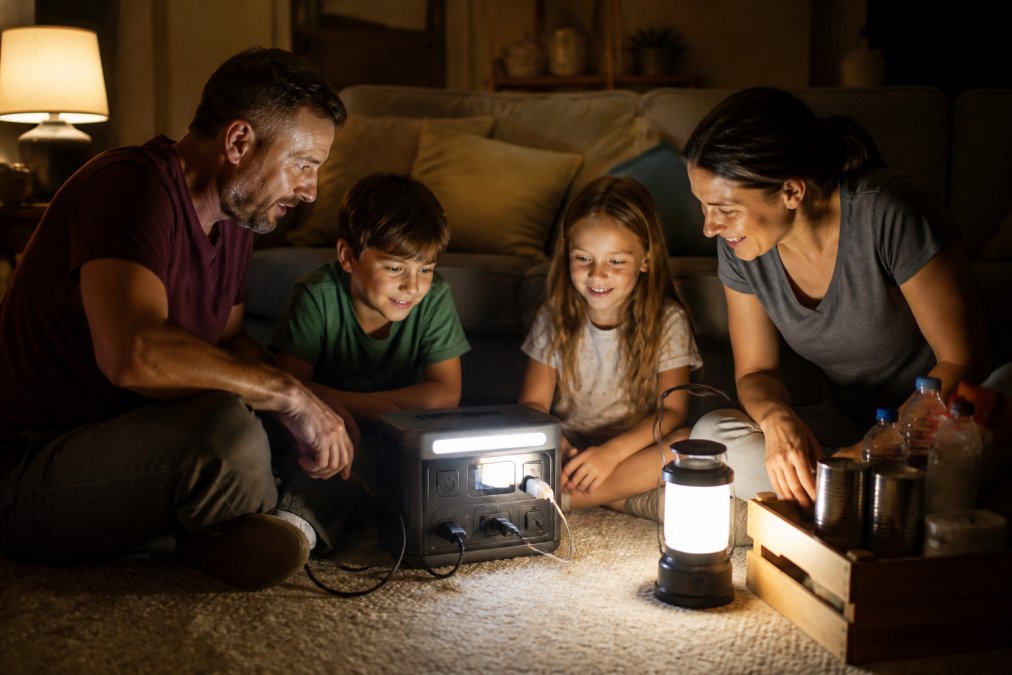
Extended multi-day outage: A transformer failure leaves your neighborhood without power for a week. A single portable power station won't sustain your full household load for seven days. You'll need either a larger station (5,000+ watt-hours), multiple stations, or a gas generator for high-demand periods.
Summer heat wave with rolling blackouts: Your air conditioner draws 3,500 watts, beyond most portable station continuous output. A portable power station won't cool your house, but it will power fans, keep food cold, and charge devices.
Medical equipment dependency: Someone in your household requires oxygen, dialysis, or CPAP therapy. These devices draw 500-1,500 watts and must run continuously. A portable power station with solar input becomes critical. Verify the device's exact wattage and surge requirements, then size your station accordingly.
Apartment or small space: You have limited room for a gas generator or large station. A 2,048-watt-hour portable power station fits in a closet and powers essential devices for 12-24 hours. Expandability via additional battery modules lets you grow capacity without replacing the entire system.
Portable power stations work best for essential devices during short to medium outages. For whole-home backup or extended multi-day scenarios, they're part of a layered system that includes solar panels, gas generators, or grid-tied battery systems.
When power fails, you have hours to act before critical systems fail. A portable power station for emergency backup is the difference between managing an outage and scrambling through one. The best portable power stations combine sufficient capacity, reliable battery chemistry, and enough continuous output to power your household essentials. At SHTF Prepper Club, we recommend starting with a 2,000+ watt-hour LiFePO4 station with at least 2,000 watts continuous output, paired with solar input capability for extended outages. Size your specific system based on your household's actual power needs and the outage scenarios most likely in your region. Test it annually, maintain the battery properly, and you'll have backup power that actually works when you need it most.
Frequently Asked Questions
Q: What size portable power station do I need for home emergency backup?
A: The size depends on which appliances you want to run. Calculate your household's peak load by adding the wattage of essential devices you'd use simultaneously. For basic backup (lights, phone charging, refrigerator), a 1000-1500 watt-hour station works. For running a refrigerator, heating, and multiple devices, aim for 2000+ watt-hours. Most families find 2000-3600Wh adequate for 24-48 hour outages. SHTF Prepper Club provides expert guidance and a curated selection of essential survival gear to help you assess your specific needs.
Q: Are portable power stations safe to use indoors during a power outage?
A: Yes, portable power stations with lithium iron phosphate batteries are safe indoors because they produce no fumes and operate silently. Unlike gas generators, which emit carbon monoxide and require outdoor use, LiFePO4-based stations include battery management systems that prevent overcharging and overheating. Always ensure your station is on a stable, flat surface away from moisture. Gas generators must never be used indoors.
Q: How often should you charge a portable power station for emergency readiness?
A: Charge your portable power station every 3-6 months if it uses LiFePO4 batteries, which maintain charge well over time. Check the charge level monthly and top up if it drops below 50%. Lithium iron phosphate batteries actually last longer when stored at 20-80% charge rather than fully charged. During active use or seasonal threats, charge weekly. Setting calendar reminders can help keep your backup power ready year-round.
Q: What is the difference between a portable power station and a gas generator?
A: Portable power stations use rechargeable lithium batteries and produce clean, silent power suitable for indoor use. Gas generators burn fuel to create power, producing noise, fumes, and carbon monoxide that require outdoor-only operation. Power stations charge from solar panels, wall outlets, or car chargers; generators need fuel storage and maintenance. For emergency home backup, power stations offer safety, convenience, and low maintenance. Generators suit extended outages where fuel is available.
This article was written using GrandRanker