
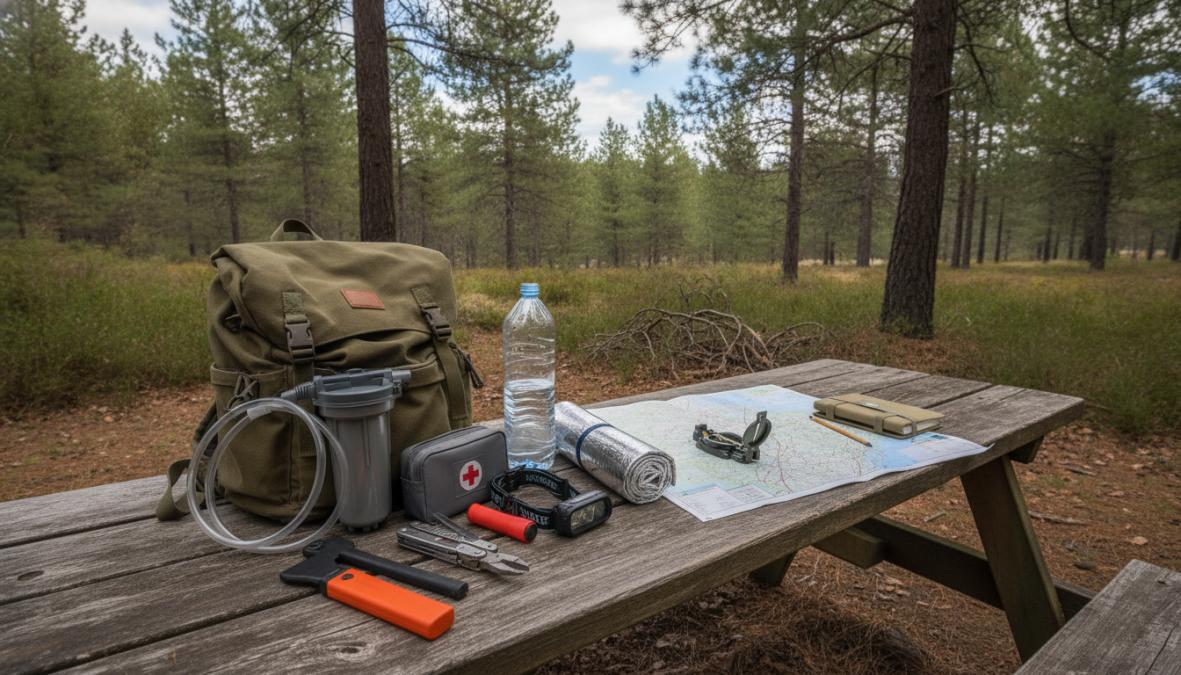
Table of Contents
- Why Essential Survival Gear Matters for Beginners
- The Complete Survival Kit Checklist for Beginners
- How to Build a Bug Out Bag: Step-by-Step
- Wilderness Survival Tools for Beginners: Multi-Tools and Cutting Implements
- Survival Gear Budget Tips: Starter vs. Pro-Tier Gear
- Maintenance and Shelf-Life Management
- Psychological Preparedness and Self-Reliance
- Common Mistakes Beginners Make
Essential Survival Gear for Beginners: Start Here
Last Updated: July 13, 2026
Most people lack basic supplies to handle a crisis lasting more than 72 hours. This guide breaks down the essential survival gear for beginners you actually need, not overwhelming lists that paralyze first-timers. You'll learn what goes into a functional survival kit, how to build a bug out bag that doesn't weigh you down, and why psychological readiness matters as much as the gear itself.
Why Essential Survival Gear Matters for Beginners
The biggest mistake beginners make is treating survival preparation like a shopping spree. They buy everything, organize nothing, and end up with untested gear they've never used.
According to [FEMA emergency preparedness(/blogs/news/emergency-preparedness-elderly-relatives-guide) guidelines | fema.gov], most survival situations last 72 hours or less, the time it takes for rescue or basic infrastructure to restore. This changes what you prioritize.
What separates functional kits from expensive clutter: every item serves multiple purposes, fits in a bag you'll carry, and has been tested. A beginner doesn't need 47 specialized tools. They need 10-15 items that work reliably under stress.
The Complete Survival Kit Checklist for Beginners
A functional survival kit contains roughly 15-20 core items organized into six categories: water, food, fire, shelter, first aid, and signaling. These address your actual survival hierarchy: without water, you die in days; without food, weeks; without shelter in harsh conditions, hours.
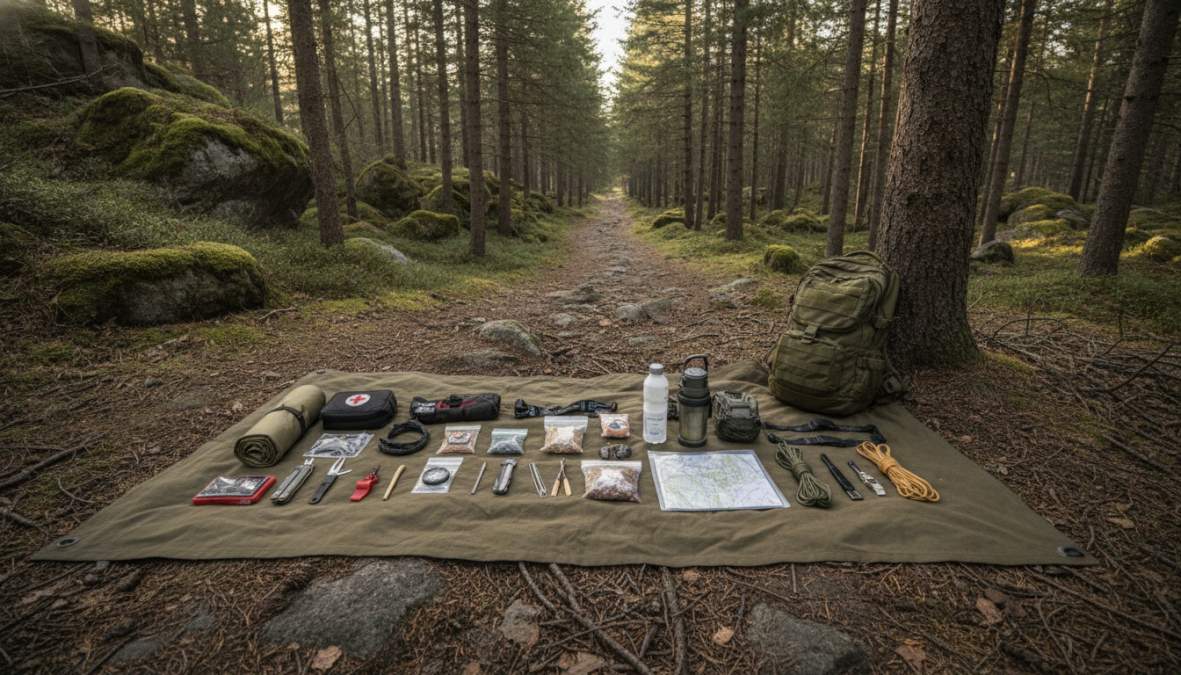
Water Filtration and Storage
You can survive three weeks without food. You can survive three days without water. In many situations, water is available but contaminated. Filtration is non-negotiable.
A portable water filter removes bacteria and protozoa without requiring fuel or electricity. Lightweight squeeze or pump filters can process hundreds of gallons and cost between basic and premium tiers.
A collapsible water pouch or hard-sided container lets you carry water from a source to your shelter. In a grid-down scenario, tap water stops flowing within hours.
Practical approach: Start with one portable filter and two water containers totaling 3-5 gallons capacity. Test the filter before you need it.
Emergency Food Rations
Food provides calories for energy and psychological comfort. A three-day kit needs roughly 1,200-1,500 calories per person per day.
High-calorie ration bars contain 400+ calories per bar with shelf lives of 5+ years. They're compact and require no preparation. Supplement with shelf-stable foods you enjoy: nuts, dried fruit, peanut butter packets.
Fire Starting Tools
Fire provides warmth, water purification, signaling, and morale. A beginner needs three independent ways to start fire: matches, a lighter, and a ferro rod. This redundancy matters because single-method failure is common under stress.
Waterproof matches in a sealed container are reliable. A standard lighter works in most conditions. A ferro rod works when wet and produces sparks without fuel.
Practice starting fire before you need to. Learning this skill when calm is exponentially easier than during an emergency.
Shelter and Bedding
Exposure kills faster than hunger. An emergency blanket reflects body heat and weighs ounces. A tarp with paracord creates a basic rain shelter. A sleeping bag or emergency bivvy prevents hypothermia.
First Aid and Medical Supplies
A proper trauma kit includes tourniquets, hemostatic gauze, and pressure bandages for life-threatening bleeding. A basic first aid kit handles cuts, blisters, and minor injuries.
Build your own kit rather than buying pre-assembled: pain relievers, antihistamines, anti-diarrheal medication, blister treatment, antibiotic ointment, and bandages. Add any personal medications and include a laminated reference card showing how to apply a tourniquet or treat shock.
Navigation and Signaling
A compass and map let you navigate without GPS or cell service. A whistle signals rescuers across distances where voice can't carry. A signaling mirror reflects sunlight and is visible for miles.
Lighting and Illumination
A headlamp frees both hands while providing light. LED headlamps run for 30+ hours on a single battery set and weigh almost nothing. Include extra batteries, most emergencies happen at night or in low-light conditions.
How to Build a Bug Out Bag: Step-by-Step
A bug out bag is a portable kit you can grab and leave with in under 60 seconds. It prioritizes weight, accessibility, and speed over comfort.
Select Your Container
A 30-40 liter backpack balances capacity with portability. Larger bags encourage over-packing. Look for multiple compartments, padded straps, and hip belts that transfer weight to your legs. External attachment points let you secure items without stuffing everything inside.
The empty bag should weigh under 3 pounds.
Organize by Priority Tier
Pack items based on access frequency. Items you'll need immediately (first aid, water, fire) go in top or side pockets. Items you might need (shelter, extra clothes) go in the main compartment. Heavy items sit low and close to your spine.
Test and Adjust
Assemble your bag, then carry it for a two-hour walk. Notice what you reach for and what causes discomfort. Adjust before an emergency forces you to.
Wilderness Survival Tools for Beginners: Multi-Tools and Cutting Implements
A quality multi-tool includes pliers, knife, saw, screwdrivers, and bottle opener with minimal weight. A separate fixed-blade knife (4-6 inches) handles tasks the multi-tool can't: batoning wood, processing food, and creating shelter components.
Duct tape wrapped around a pencil adds minimal weight and solves dozens of problems. Paracord (550 cord) can be unraveled for fishing line, used for shelter construction, or woven into bracelets. 50 feet weighs ounces and serves hundreds of purposes.
Don't buy specialty tools for imagined scenarios. A multi-tool and fixed blade handle 95% of real situations.
Survival Gear Budget Tips: Starter vs. Pro-Tier Gear
Budget-Tier Essentials
A functional starter kit costs $150-250 and includes a basic water filter, ration bars, fire starters, a multi-tool, a headlamp, paracord, and a first aid kit.
Start here. A complete budget kit today beats a perfect kit you're still planning next year. Focus on core items: water, fire, shelter, first aid. Skip gadgets.
Pro-Tier Upgrades
Once basics are solid, upgrade strategically. A premium water filter processes water faster. A better sleeping bag handles colder temperatures. Redundant fire-starting tools add reliability.
Maintenance and Shelf-Life Management
Gear that's never tested fails when you need it. Establish a yearly maintenance schedule to test batteries, check filter cartridges, verify fire starters, inspect first aid supplies, and replace expired ration bars.
Document what you have in a simple spreadsheet listing each item, purchase date, and expiration date. Rotate expired items into your home pantry and replace them.
Psychological Preparedness and Self-Reliance
The gear matters. Your mindset matters more. Psychological preparedness means accepting that emergencies happen and you can handle them. This isn't about becoming fearless, it's about replacing panic with action.
Someone who has practiced starting a fire, filtering water, and navigating without GPS approaches an emergency differently than someone who hasn't. Practice skills before you need them: start a fire in your backyard, filter and drink water, navigate using a map and compass, sleep outside with your emergency shelter.
Knowing you have water, food, and shelter supplies changes how you experience uncertainty. Anxiety decreases. Confidence increases.
Common Mistakes Beginners Make
Mistake one: Buying everything at once without testing. Start small, test, expand.
Mistake two: Optimizing for unlikely scenarios. Prioritize common emergencies: power outages, displacement, vehicle breakdown.
Mistake three: Neglecting water. Water is heavy, but filtering is essential when contaminated.
Mistake four: Ignoring weight. A 60-pound bug out bag is useless if you can't carry it for two hours.
Mistake five: Storing gear in inaccessible locations. Keep your primary kit where you can grab it within 60 seconds.
Mistake six: Never practicing. A kit you've never used might not work when you need it.
The difference between being prepared and being anxious is action. A beginner doesn't need perfect gear or months of training. You need a functional kit, basic skills, and a commitment to testing what you've assembled. Start with the essentials outlined above, test them regularly, and expand as your confidence grows.
Frequently Asked Questions
What should be in a basic survival kit checklist for beginners?
A basic survival kit for beginners should include water purification tablets or a portable filter, emergency food rations, fire-starting tools (lighter and matches), a multi-tool, paracord, an emergency blanket, a headlamp, a compass, a signaling mirror, and a trauma kit. Start with these bare minimum items and expand based on your environment and scenario. Most beginners benefit from a pre-assembled bug out bag to ensure nothing critical is forgotten.
How do I start building a survival kit on a budget?
Begin with budget-tier essentials: a basic multi-tool, waterproof matches, a hand-crank radio, duct tape, and a simple first aid kit. Purchase items incrementally rather than all at once. Focus on field-tested gear with proven durability. Look for multi-purpose items that serve several functions. Many budget-friendly options from established brands offer reliable performance without premium pricing. Prioritize water filtration and emergency food before upgrading to pro-tier tactical gear.
What are the most important wilderness survival tools for beginners?
The most critical wilderness survival tools are a reliable multi-tool, a sharp knife or cutting implement, paracord, and a fire starter. These four items enable you to build shelter, prepare food, start a fire, and create signaling devices. A compass and headlamp are equally essential for navigation and visibility. Beginners should master these tools before adding specialized equipment. Field-tested options from reputable brands ensure dependability when you need it most.
How long does a beginner survival kit last, and how do I maintain it?
Shelf-life depends on contents: emergency food rations typically last 5-25 years, water purification tablets 4-7 years, and batteries 3-10 years. Inspect your kit annually for expired items, corroded batteries, and damaged packaging. Rotate perishables and replace expired components promptly. Store in a cool, dry location away from direct sunlight. Maintain your multi-tool by keeping it clean and sharp. Regular maintenance ensures your emergency preparedness plan remains reliable and ready for any scenario.
This article was written using GrandRanker