
Table of Contents
- Survival Gear vs Camping Gear: Understanding the Core Difference
- Essential Survival Gear Every Family Should Know About
- Essential Camping Gear for Families
- Side-by-Side Comparison: Survival Gear vs Camping Gear
- Scenario-Based Gear Selection: Which Type Do You Need?
- Psychological Preparedness: The Often-Overlooked Element
- Building Your Family's Loadout: Practical Next Steps
- Conclusion
Survival Gear vs Camping Gear: Key Differences
Last Updated: July 13, 2026
Understanding the distinction between survival gear vs camping gear is essential for families preparing for emergencies or outdoor adventures. Survival gear prioritizes function and redundancy in life-or-death scenarios, while camping gear prioritizes comfort and convenience for recreational trips. This guide breaks down exactly what separates them, which items belong in each category, and how to build a loadout that keeps your family safe whether you're sheltering in place or heading into the wilderness.
Survival Gear vs Camping Gear: Understanding the Core Difference
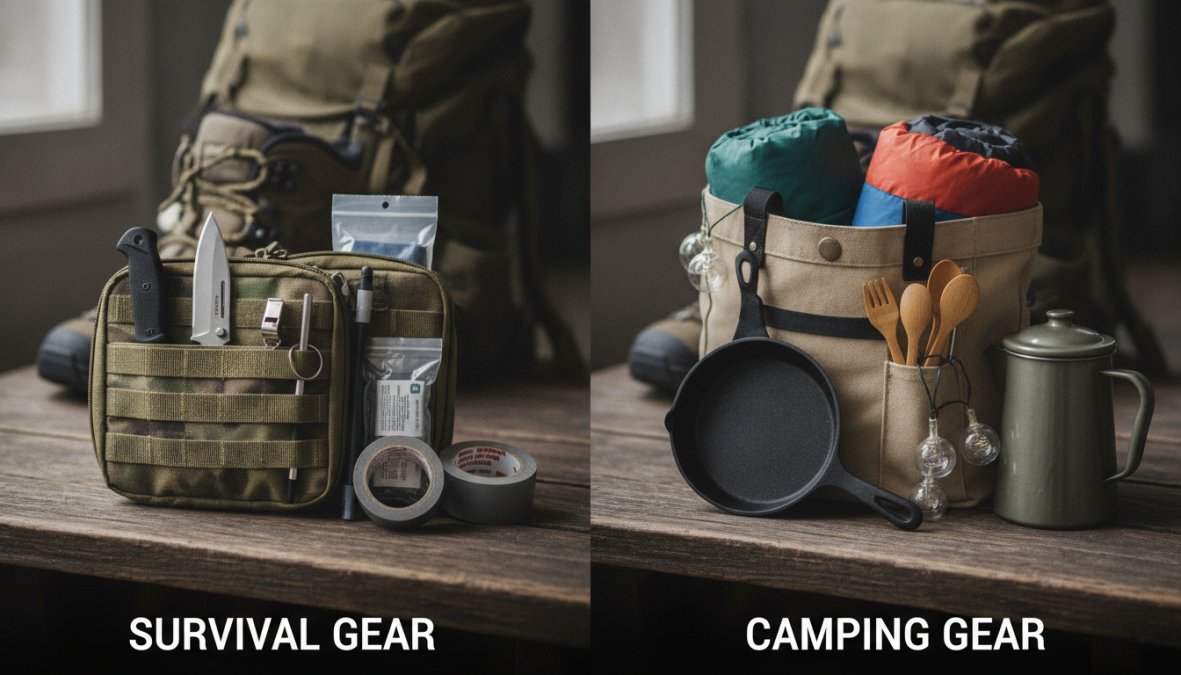
Survival gear is engineered to sustain life when systems fail, no rescue scheduled, no resupply coming, no comfort assumed. Camping gear assumes you'll return to civilization or receive help within a predictable timeframe. This distinction shapes every choice: materials, weight, durability, and redundancy.
Survival gear emphasizes ruggedness and self-sufficiency. A survival shelter prioritizes insulation and rapid deployment. A camping tent prioritizes livable space and ease of setup. Survival water filtration removes the widest range of contaminants from any source. Camping water systems often assume relatively clean water or easy boiling. Survival gear keeps you alive when panicked; camping gear assumes you're calm and resourced.
Purpose and Design Philosophy
Survival equipment is built for harsh conditions and extended use without resupply. A survival knife must hold an edge through processing firewood and food for weeks. A camping knife can be sharper and lighter because you'll use it briefly and return home. Survival gear assumes you're alone, under stress, and possibly injured. Every tool must serve multiple purposes and work in your hands when you're cold, wet, and exhausted.
Camping gear prioritizes user experience. Comfort matters because the trip is voluntary and temporary. A camping sleeping bag can be specialized for three-season use; a survival sleeping system must work in any season and be repairable with field materials. Camping stoves are efficient and convenient; survival fire-starting must work in rain, snow, and wind with wet materials.
Durability and Redundancy Requirements
Durability separates survival gear from camping gear more clearly than any other factor. Survival gear must be repairable or replaceable in the field using available materials. The Leatherman Signal includes a ferrocerium rod for fire starting, a diamond-coated sharpener, and replaceable wire cutters, because you can't order a replacement online. Camping gear can be more specialized because you can go home and buy a new one.
Redundancy is non-negotiable in survival preparation. Your family needs two water filtration methods, not one. Two fire-starting systems. Two navigation tools. Two shelter options. Camping gear often operates on a single solution. In survival scenarios, redundancy is the difference between life and death.
Essential Survival Gear Every Family Should Know About
Survival gear sustains life when infrastructure fails and help is distant or delayed. Your family's survival loadout should include tools that address the five priorities: shelter, water, fire, signaling, and first aid. Each category requires both primary and backup systems.
Navigation and Signaling Tools
Navigation and signaling become critical when you're separated from your family, injured, or lost. A traditional compass with a map works without batteries and remains reliable in any weather. The Garmin inReach Mini 2 provides global satellite communication and two-way messaging when cellular networks are down, with an SOS button for 24/7 emergency response and up to 14 days of battery life in tracking mode.
Signaling tools must be visible and audible. A survival whistle can be heard from miles away and requires no power. Mirrors or reflective materials signal aircraft and distant rescuers. GPS devices confirm your exact location for search and rescue teams.
Water Filtration and Purification
Water is the second survival priority. The Sawyer Squeeze Water Filtration System removes 99.99999% of bacteria and 99.9999% of protozoa using a 0.1-micron filter. At approximately 3 ounces, it's ultralight and versatile, drink directly from a bottle, squeeze into a container, or attach to standard threaded bottles. However, it does not filter viruses or heavy metals.
For comprehensive survival water purification, your family needs two methods. Boiling water kills viruses and is the most reliable purification method when fuel is available. Combining the Sawyer Squeeze with boiling creates a redundant system. Additionally, store at least one gallon per person per day, rotated annually. For extended survival scenarios, your family should understand how to identify water sources and have chemical purification tablets as backup.
Fire Starting Equipment
Fire provides warmth, water purification, food preparation, and psychological comfort. Multiple fire-starting methods are non-negotiable. The Leatherman Signal includes a ferrocerium rod that ignites in wet conditions and works at any altitude, unlike matches or lighters. Additionally, carry waterproof matches, a quality lighter, and cotton balls soaked in petroleum jelly (which burns hot and long).
Tinder preparation is often overlooked. Dry tinder is critical: dryer lint, char cloth, or commercial fire starters. In survival situations, gathering dry tinder in wet conditions is difficult. Pre-prepared, waterproofed tinder stored in your gear ensures fire can be started immediately. Your family should practice fire starting in various conditions to develop confidence and skill.
Emergency Shelter Systems
Shelter protects your family from elements that kill quickly: hypothermia in cold weather, heat exhaustion in extreme heat, and exposure in storms. A high-quality sleeping bag with an R-value of 4-5 keeps you warm in freezing temperatures. Paracord is essential: 50 feet can construct a tarp shelter, secure gear, or create emergency repairs. Down insulation retains warmth even when wet.
Your family's shelter system should include a lightweight emergency tarp, paracord, a sleeping bag rated for the worst season you might face, and a sleeping pad with high R-value. For emergency preparedness, prioritize compact, lightweight systems that deploy quickly and insulate effectively. A tarp and paracord weigh less than a tent but provide equivalent protection when rigged correctly.
First Aid and Medical Kits
First aid is survival's third pillar. Injuries that would be minor annoyances at home become life-threatening in survival scenarios. Your family's first aid kit must address trauma (bleeding control), infection prevention, pain management, and illness treatment. Include tourniquets, hemostatic gauze, and pressure bandages. Antibiotics, pain relievers, and anti-diarrheal medication address infections and illness.
Wilderness first aid differs from standard first aid. Evacuation is uncertain, so wound care must prevent infection over extended periods. Blister prevention and treatment are critical, a blister can prevent walking, which can prevent escape. Burn treatment, fracture stabilization, and hypothermia recognition are survival-specific skills your family should study.
Multi-Tools and Cutting Implements
The Leatherman Signal combines a knife, pliers, wire cutters, a ferrocerium rod, an emergency whistle, and a diamond-coated sharpener in one compact package. The ferrocerium rod is a survival-specific feature absent from standard camping multi-tools. The diamond sharpener maintains blade edges in the field, critical because a dull blade is dangerous and ineffective.
A separate fixed-blade knife complements the multi-tool. A blade length of 3.5 to 4.5 inches balances utility and control. Fixed blades don't fold, so they're faster to deploy and more durable than folding knives. Your family should practice basic knife skills and maintenance. A dull knife requires dangerous pressure; a sharp knife is safer and more effective.
Essential Camping Gear for Families
Camping gear prioritizes comfort and convenience for planned trips where return to civilization is expected. Unlike survival gear, which must function in worst-case scenarios, camping gear assumes predictable conditions and available backup systems.
Comfort-Focused Shelter and Sleeping Systems
The MSR Hubba Hubba 2-Person Tent exemplifies camping-focused design. Its symmetrical geometry maximizes headroom and interior space. Two large StayDry doors with integrated rain gutters provide convenience during multi-day trips. Freestanding design allows quick setup on various terrains without stakes. The tent's premium price reflects its specialized design for recreational camping, not emergency survival.
Camping sleeping systems prioritize comfort over versatility. A three-season sleeping bag rated for 20°F is adequate for spring, summer, and fall camping but won't protect you in winter survival scenarios. Synthetic insulation dries faster than down, which matters on recreational trips but is irrelevant in survival situations.
Cooking and Food Storage
Camping cooking emphasizes convenience and variety. Portable camp stoves using propane or butane fuel provide reliable heat for meal preparation. Food storage focuses on freshness and flavor preservation during a trip. Coolers maintain perishable foods.
Survival food is fundamentally different. Long-term food storage requires shelf-stable rations designed for 25-year storage with minimal preparation. SHTF Prepper Club provides comprehensive emergency food kits with up to 25-year shelf life, critical for families that may not have fuel, water, or energy to cook. Camping food is fresh and varied; survival food prioritizes calories and nutrition density in compact form.
Lighting and Navigation Convenience
Camping lighting prioritizes brightness and runtime. Headlamps with high lumen output illuminate campsites and trails clearly. LED technology provides long battery life, and USB rechargeable batteries eliminate the need to carry spares.
Survival lighting must work without electricity. A quality flashlight with alkaline batteries serves as backup, but reliance on batteries is risky. Chemical light sticks provide emergency illumination without batteries. Headlamps for survival should use standard AA or AAA batteries you can source anywhere. Matches and candles provide light when batteries fail.
Side-by-Side Comparison: Survival Gear vs Camping Gear
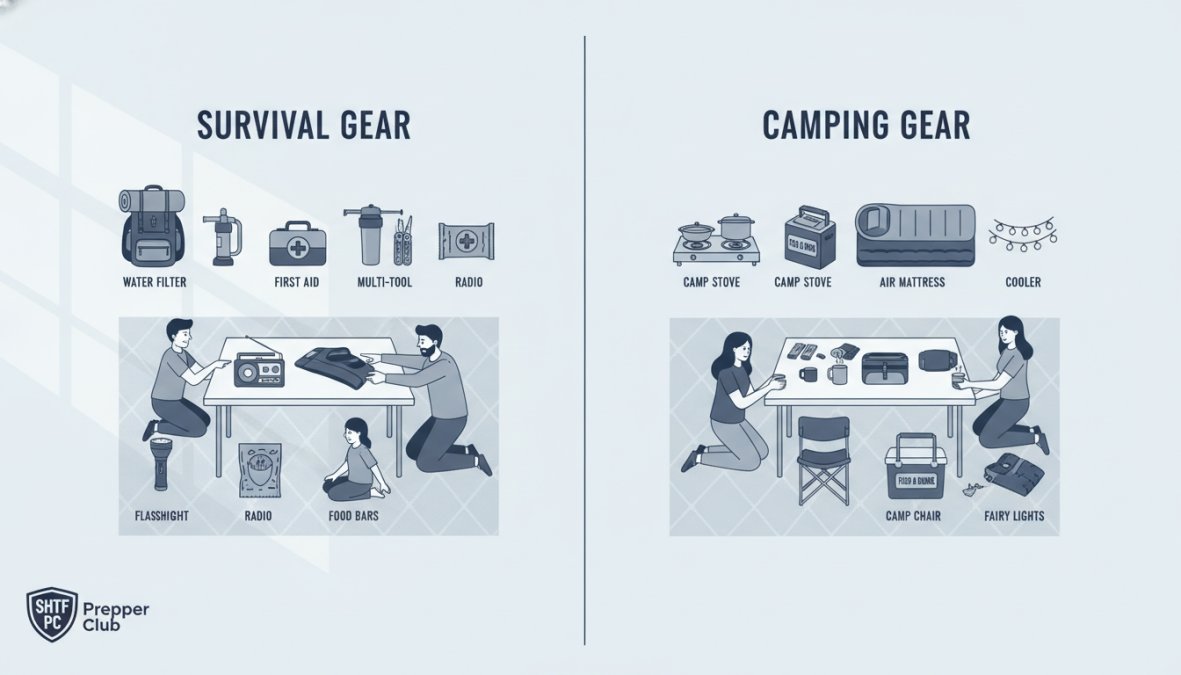
The practical differences between survival gear and camping gear become clear when comparing specific items. A survival shelter prioritizes rapid deployment and insulation; a camping shelter prioritizes space and ease of setup. A survival water system emphasizes removing all contaminants; a camping system assumes relatively clean water.
| Gear Category | Survival Focus | Camping Focus | Key Difference |
|---|---|---|---|
| Shelter | Rapid deployment, insulation (R-value 4-5) | Spacious, ventilated, easy setup | Survival prioritizes protection; camping prioritizes comfort |
| Water System | Removes bacteria, protozoa, viruses | Assumes boiled or clean water | Survival handles worst-case sources; camping handles standard sources |
| Fire Starting | Ferrocerium rod, matches, tinder | Propane stove, lighter | Survival uses primitive methods; camping uses fuel-based systems |
| Lighting | Alkaline flashlight, chemical light sticks | LED headlamp, USB rechargeable | Survival avoids battery dependency; camping uses rechargeable tech |
| Food | 25-year shelf-stable rations | Fresh food, coolers | Survival stores indefinitely; camping prioritizes freshness |
| Navigation | Map, compass, GPS | GPS, trail markers | Survival works without electronics; camping relies on technology |
| First Aid | Tourniquets, hemostatic gauze, infection prevention | Basic wound care, blister treatment | Survival handles serious injuries; camping handles minor injuries |
Weight-to-Utility Ratio Analysis
Survival gear must deliver maximum utility per ounce because you may carry it for days or weeks. The Leatherman Signal weighs approximately 8 ounces but consolidates knife, pliers, wire cutters, fire starter, whistle, and sharpener. The Sawyer Squeeze weighs 3 ounces and filters thousands of gallons. Paracord weighs ounces but can construct shelter, create repairs, and secure loads.
Camping gear accepts higher weight because trips are short and vehicles carry most equipment. The MSR Hubba Hubba tent weighs approximately 3 pounds but provides spacious shelter for two people over multiple nights. A camping stove and fuel weigh more than fire-starting materials but provide convenience that justifies the weight on recreational trips.
Durability and Maintenance Expectations
Survival gear must endure harsh conditions and extended use without access to replacements. A survival knife blade should hold an edge through heavy use. Paracord must not fray or degrade when wet. A sleeping bag must insulate even when damp.
Camping gear can be more specialized because you'll use it briefly and maintain it at home. A camping tent can have lightweight fabrics that require gentle care. A camping sleeping bag can be stored loosely. A camping stove can be delicate because you'll transport it carefully. A camping tent that fails mid-trip is an inconvenience; a survival shelter that fails mid-emergency is a catastrophe.
Shelf-Life and Maintenance Schedules
Survival gear must remain functional after months or years of storage. Water filtration systems must not degrade when stored dry. Ferrocerium rods maintain ignition capacity indefinitely. Paracord doesn't rot when stored properly. Emergency food maintains nutritional value for 25 years with proper storage. Families should rotate stored gear annually, use it, inspect it, and replace degraded items.
Camping gear often requires active maintenance. Tent seams should be re-sealed periodically. Sleeping bags should be stored loosely to maintain loft. Stoves should be cleaned and tested before each trip. These maintenance routines are manageable because camping trips are planned events. Survival gear must be ready to deploy without preparation.
Scenario-Based Gear Selection: Which Type Do You Need?
Different scenarios demand different gear. A family preparing for a weekend camping trip needs comfort-focused equipment. A family preparing for extended power outages or supply chain disruptions needs survival-focused equipment. Many families benefit from both: survival gear for emergencies and camping gear for recreation.
Family Emergency Preparedness Checklist
Emergency preparedness begins with identifying realistic threats your family faces. A comprehensive family emergency preparedness checklist addresses shelter, water, food, first aid, and communication for at least 72 hours without external help.
Shelter: One emergency shelter system per family member (tarp and paracord, emergency bivy, or compact tent). One sleeping bag per person rated for the worst season you might experience. One sleeping pad per person with R-value 3 or higher.
Water: One gallon per person per day for drinking and hygiene (minimum 3-day supply). Two water filtration methods (Sawyer Squeeze plus boiling capability or tablets). Water storage containers that are food-safe and opaque.
Fire: Ferrocerium rod, waterproof matches, lighter, and pre-prepared tinder. Ability to build fire with gathered materials.
First Aid: Tourniquets, hemostatic gauze, pressure bandages, antibiotics, pain relievers, anti-diarrheal medication, blister treatment, tweezers, scissors, needle.
Navigation and Signaling: Map and compass, GPS device, whistle, mirror or reflective material.
Food: 3-day supply of shelf-stable emergency rations plus comfort foods. Consider SHTF Prepper Club's long-term food storage options for extended preparedness beyond 72 hours.
Communication: Battery-powered or hand-crank radio, flashlight, extra batteries, whistle.
This checklist ensures your family can survive 72 hours without external help. Extended preparedness requires additional food storage, water, and supplies.
Weekend Camping vs Long-Term Survival Readiness
Weekend camping requires comfort-focused gear that prioritizes livable space and convenience. A spacious tent, sleeping bag rated for expected temperatures, and a camp stove provide the foundation. Food can be fresh because you'll eat within days. Water can be boiled or filtered lightly. Navigation relies on trail markers and GPS. First aid addresses minor injuries.
Long-term survival readiness requires a different philosophy. Shelter must be rapidly deployable and insulate effectively. Water filtration must handle worst-case sources. Food must store for months or years. Navigation must work without electronics. First aid must address serious injuries with limited resources. Fire starting must work in any condition.
Many families benefit from a hybrid approach: maintain both systems. Camping gear for planned recreational trips. Survival gear stored at home and in vehicles for emergencies. This redundancy addresses different scenarios effectively.
Psychological Preparedness: The Often-Overlooked Element
Survival gear fails without psychological preparedness. Panic, fear, and despair kill as reliably as cold or dehydration. Families that have practiced survival skills, discussed emergency scenarios, and built confidence in their gear respond more effectively to actual emergencies.
Confidence comes from practice. Families should practice fire starting in various conditions, build emergency shelters with tarps and paracord, filter water using the Sawyer Squeeze, navigate using map and compass, and practice first aid skills. These activities build muscle memory and confidence that translates to actual emergencies.
Mental rehearsal is equally important. Discuss likely scenarios: what happens if the power goes out for a week? What if roads are impassable? Where would we shelter? How would we get water? These conversations normalize emergency thinking and help families make decisions calmly rather than in panic.
Building Your Family's Loadout: Practical Next Steps
Start with your likely scenarios. A family in a hurricane zone prioritizes wind-resistant shelter and water filtration. A family in a cold climate prioritizes insulation and fire starting. Understanding your specific risks focuses your investment.
Begin with the basics: water, shelter, fire, first aid, and navigation. One water filtration system per family member (or a shared system with backup). One shelter system per person. Multiple fire-starting methods. A comprehensive first aid kit. Map, compass, and GPS device. These fundamentals address the five survival priorities.
Add redundancy systematically. A second water filtration method. A second fire-starting system. A second navigation tool. Redundancy prevents single points of failure.
Invest in long-term food storage for extended preparedness. SHTF Prepper Club offers comprehensive emergency food kits with 25-year shelf life, designed for families prioritizing long-term independence. Many disruptions last weeks or months, requiring food storage that maintains nutritional value and requires minimal fuel to prepare.
Test your gear regularly. Use your camping equipment on recreational trips. Practice fire starting quarterly. Filter water using your survival system. Navigate with map and compass. These activities reveal gear failures before emergencies occur and build family confidence.
The distinction between survival gear and camping gear reflects different purposes: camping prioritizes comfort and convenience for planned trips; survival gear prioritizes function and redundancy when systems fail. Your family benefits from understanding both categories and building loadouts that address your specific scenarios. Start with basic survival gear that ensures your family can shelter, access water, start fire, and provide first aid without external help. Then add comfort-focused camping gear for recreational trips and extended preparedness items like long-term food storage from SHTF Prepper Club. This layered approach ensures your family is ready for both planned adventures and unexpected disruptions.
Frequently Asked Questions
What is the main difference between survival gear and camping gear?
Survival gear prioritizes reliability, redundancy, and durability in life-threatening situations, designed for emergency preparedness when comfort is secondary. Camping gear balances comfort with portability for planned recreational trips. Survival gear emphasizes gear redundancy and situational awareness tools; camping gear focuses on convenience and weight optimization for leisure activities. Understanding this distinction helps families choose equipment that matches their actual needs.
Can I use camping gear for survival situations?
Some camping gear works in survival scenarios, but it lacks critical redundancy and durability for extended emergencies. A quality camping tent provides shelter, but survival-grade emergency shelter systems are built for extreme conditions and rapid deployment. Similarly, a camping headlamp may fail when you need reliable signaling. For family emergency preparedness, dedicated survival gear ensures your household has equipment tested for worst-case scenarios, not just recreational use.
What essential survival items should every family have?
Every family emergency preparedness checklist should include: water filtration (like hollow-fiber filters), fire starting equipment (ferrocerium rods), navigation tools, first aid kits, emergency shelter, multi-tools, signaling devices, and food rations with long shelf-life. Focus on gear redundancy, multiple ways to start fires, purify water, and signal for help. Prioritize items based on your family's specific risks and environment, ensuring each person has basic survival essentials.
How do I choose between ultralight camping gear and rugged survival equipment?
Consider your primary use: weekend family camping trips benefit from ultralight, comfort-focused gear; emergency preparedness requires rugged, durable equipment with gear redundancy. Analyze weight-to-utility ratio, survival gear prioritizes reliability over minimal weight. For families, a hybrid approach works: invest in durable, tactical gear for your bug out bag and emergency kit, while using lighter camping gear for recreational trips. This ensures you're prepared without over-burdening your household.
What maintenance and shelf-life should I expect from survival gear?
Quality survival gear requires regular maintenance checks, inspect water filters, test fire starters, rotate food rations, and verify battery-powered devices. Most survival rations have 25-year shelf-life when stored properly. Multi-tools need occasional cleaning and sharpening; paracord should be inspected for wear. Create a maintenance schedule for your family emergency preparedness kit, checking items seasonally. Proper storage extends gear durability and ensures your loadout functions when needed.
This article was written using GrandRanker