
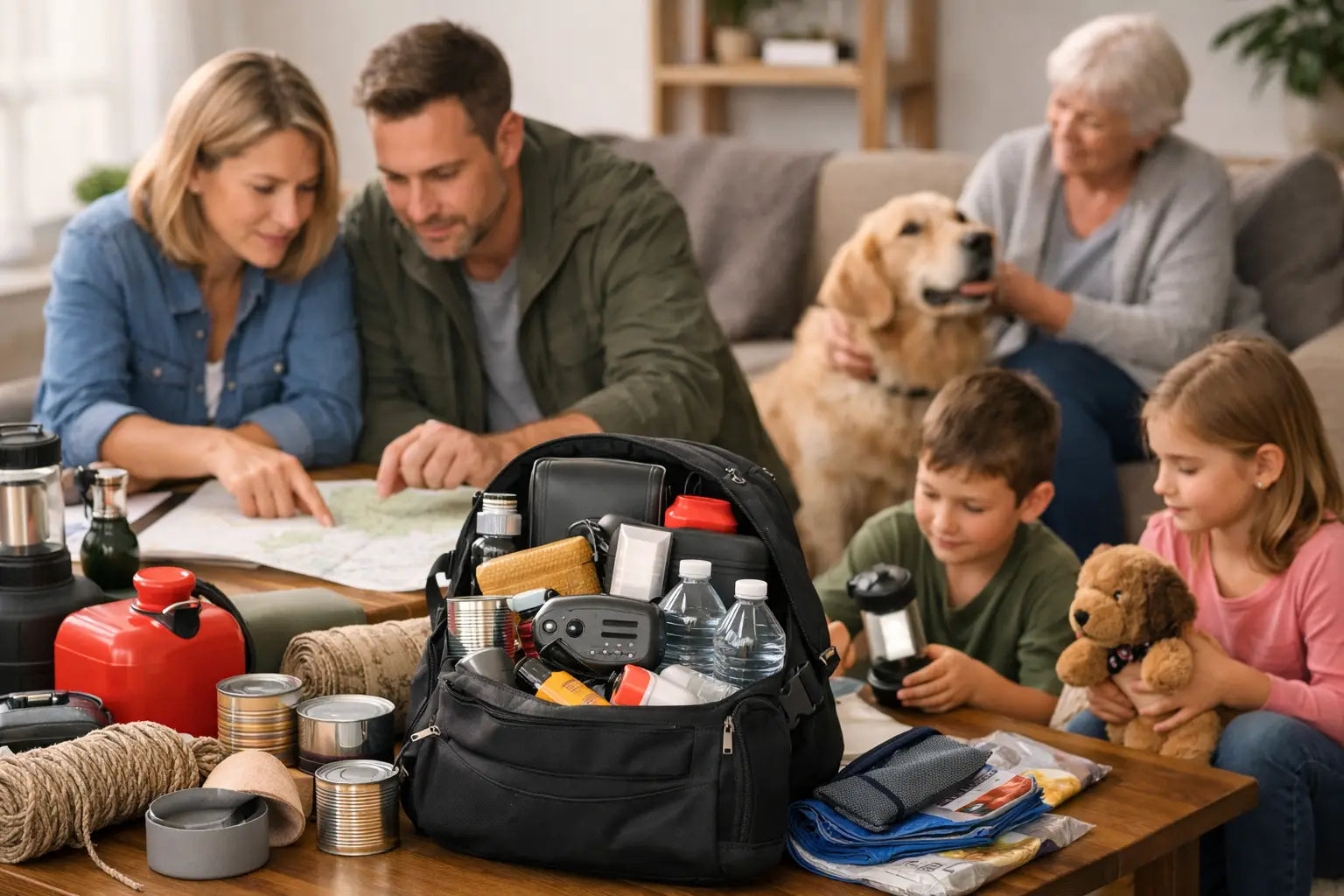
The moment most families start thinking seriously about family preparedness is not dramatic. It is usually ordinary and frustrating. The power goes out for two days. Store shelves thin out. A storm shifts direction. School closes. Cell service gets spotty. You realize you are making decisions on the fly with kids, pets, medications, and a refrigerator full of food.
That is why good preparedness is not about looking extreme. It is about making your home less fragile. When a disruption hits, your family should have water to drink, food to cook, light after dark, a way to stay warm or cool, and a clear plan for what happens next. That is the goal. Not fear. Not fantasy. Just fewer bad surprises.
What family preparedness really means
For most households, family preparedness means being ready for the emergencies that actually happen where you live. That could be hurricanes on the Gulf Coast, wildfires in the West, ice storms in the Midwest, earthquakes on the West Coast, or extended outages almost anywhere. It can also mean less dramatic but still disruptive problems like a boil-water notice, a supply shortage, or a winter storm that traps you at home for several days.
The best plans are built around function, not labels. Can your family drink safely? Eat without a grocery run? Charge essential devices? Handle basic injuries? Stay informed? Sleep in reasonable comfort? If the answer is yes for at least a few days, you are already ahead of most households.
That is also why preparedness looks different from family to family. A retired couple in Florida may need backup power for refrigerated medication. A household with young children may care more about shelf-stable meals, comfort items, and sanitation supplies. A rural family may need deeper food storage and water options because help takes longer to arrive. The basics overlap, but the details depend on your real life.
Start with the four pressure points
When families feel overwhelmed, it helps to narrow the problem. In most emergencies, the first stress shows up in four places: water, food, power, and medical needs.
Water comes first because the margin for error is small. You can go a while eating simple meals. Water is less flexible. A useful rule is one gallon per person per day for at least three days, and many families are better served by planning for two weeks. That amount covers drinking and light sanitation, but households in hot climates, homes with pets, and families with nursing mothers often need more. Stored water is the simplest answer, but filtration and purification matter too, especially for longer disruptions.
Food is next, and this is where many people overcomplicate things. Start with what your family will actually eat. If your kids hate the meals you bought in bulk, that food is less useful than you think. Build in layers. Pantry staples cover short disruptions. Shelf-stable emergency meals help when cooking is limited. Long-term storage makes more sense once your short-term system is already solid. The right setup depends on budget, space, and how often you want to rotate inventory.
Power is not just about convenience. It affects lighting, communication, refrigerated food, medical equipment, heating and cooling, and the ability to work from home. A small backup power setup can make a big difference without turning your garage into a project. For some families, power means flashlights, lanterns, and battery banks. For others, it means a portable power station, solar charging, or a generator. The trade-off is usually cost, runtime, and noise.
Medical readiness often gets pushed aside because it feels intimidating. It should not. Most families do not need a trauma room at home. They need a thoughtful first aid setup, an updated list of prescriptions, spare glasses, personal hygiene items, over-the-counter medications they already use, and a plan for anyone with chronic conditions. If someone in the home relies on powered medical devices, preparedness needs to account for that first, not last.
Family preparedness at home is the priority
People often picture evacuation first, but sheltering at home is more common. That is where your planning should start.
Home readiness is about buying time and reducing chaos. Think in terms of zones. The kitchen needs backup cooking options, safe water, manual tools, and food your family can prepare under stress. Bedrooms need warmth, light, and comfort. Bathrooms need sanitation backups. Your entryway or garage may need grab-and-go supplies if you have to leave quickly.
This is where category-based planning helps. Family emergency kits are useful, but they work best as part of a broader system. Water storage and filtration solve a different problem than shelf-stable meals. Power outage essentials address a different weakness than first aid or shelter supplies. Organizing by need makes it easier to spot what you have and what is still missing.
A common mistake is buying one impressive item and assuming the problem is solved. A generator without stored fuel, extension planning, or a safe operating plan is incomplete. A large food supply without a way to heat water or cook is only half a solution. Good family preparedness is not about owning the most gear. It is about creating systems that still work when life gets messy.
Build your plan around your household, not a checklist
Every family has weak points. The goal is to know yours before an emergency exposes them.
Start with the people in your home. Consider ages, mobility, medical needs, dietary restrictions, and comfort levels. Young children need simple food, familiar routines, and emotional reassurance. Teenagers can help more than most parents expect if they know the plan. Older adults may need backup hearing aid batteries, mobility support, or easier-to-open food packaging. Pets need food, water, medications, crates, and a place in both your stay-home and evacuation plans.
Then look at your house. Do you lose power often? Is your area wildfire-prone? Are you on a well? Do you have electric-only cooking? Is your neighborhood likely to flood? These details matter more than generic advice. A suburban family with reliable municipal water but frequent outages should plan differently than a rural household with a well pump and long drive times to town.
Communication deserves special attention. During a stressful event, family members do not rise to the occasion. They fall to the level of their preparation. Decide how you will communicate if phones are unreliable, where you will meet if you get separated, and who your out-of-area contact is. Write it down. Do not assume everyone will remember in the moment.
Buy in stages and avoid expensive mistakes
Preparedness does not need to happen in one weekend. In fact, it usually works better when it does not.
A smart first stage covers 72 hours at home. Water, simple food, lights, batteries, first aid, medications, hygiene items, and a basic way to cook or boil water. That alone puts you in a stronger position than most households.
The second stage extends your runway to two weeks. This is where additional water storage, more substantial food supplies, sanitation options, and backup power begin to matter. If you have the budget, this is often the point where quality equipment starts paying off. Better water storage is easier to manage. Better power solutions are quieter and simpler to use. Better medical kits are organized for real stress, not just appearance.
Longer-term readiness comes after that. Freeze-dried food, home food preservation, larger power systems, deeper water strategies, gardening, and food independence all have a place. But they are not the first step for every family. Start small, scale smart, and make sure each layer works before adding the next.
That is one reason families appreciate a retailer like SHTF Prepper Club. The product categories reflect real household priorities instead of pushing everyone toward the same setup. You can solve the problem you actually have first.
Why consistency beats intensity
The families who handle emergencies best are rarely the ones with the most dramatic stories. They are the ones who checked expiration dates, topped off supplies, rotated food, tested batteries, and replaced what they used.
Preparedness is less about one big purchase and more about a steady habit. Review your supplies twice a year. Revisit your plan before storm season or winter. Ask whether your children still fit the clothing in the evacuation bag. Replace used first aid items. Update prescription lists. Test the lantern that has been sitting in the closet since last summer.
That kind of maintenance is not exciting, but it is what makes the whole system trustworthy. When the lights go out, confidence comes from knowing where things are and how they work.
Family preparedness is really an act of care. It says your household deserves a calmer response when life gets disrupted. You do not need to do everything this month. Just solve the next obvious problem, then build from there.