
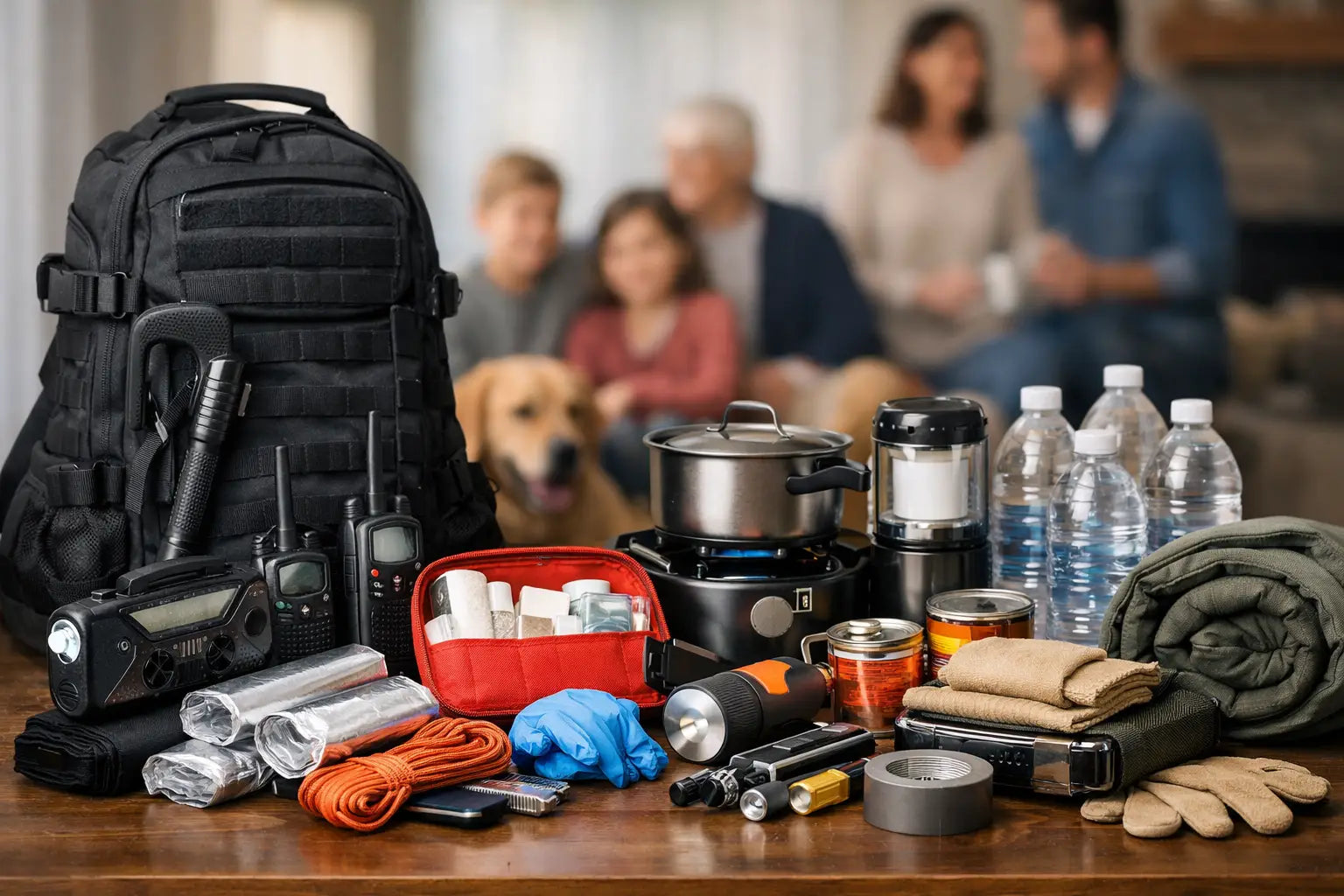
You do not notice the gaps in your emergency setup on a calm Saturday. You notice them when the power has been out for 18 hours, the freezer is softening, your phone battery is at 12 percent, and your kids are asking what the plan is. If you have ever wondered about the gear my family needs in emergency situations, the right answer is not more stuff. It is the right categories, in the right order, for the way your household actually lives.
That matters because most families do not need a movie version of survival gear. They need dependable basics for the disruptions that really happen: storms, outages, boil-water notices, wildfire smoke, supply shortages, and sudden evacuations. Good preparedness is less about drama and more about reducing friction when life gets hard.
The gear my family needs in emergency starts with water
Water is not the most exciting purchase, but it is the most urgent. A family can improvise meals for a day or two. Water gets serious fast. For most households, a practical baseline is enough stored water for drinking, basic food prep, and limited hygiene for at least several days, then a way to make more water safe if the outage or disruption stretches on.
That usually means two layers. The first is stored water you can use immediately. The second is filtration or purification for backup. If you live in hurricane country, this may mean larger storage containers and bathtub storage options before a storm. If you live in earthquake or wildfire country, portable water containers matter more because access can change quickly.
What trips families up is assuming bottled water from the garage solves everything. It helps, but it runs out faster than most people expect, especially in heat, with pets, or when sanitation becomes an issue. A realistic setup includes dedicated water storage plus a proven filter or purifier that adults in the house know how to use.
Food should be easy, familiar, and low-stress
Emergency food is not just about calories. It is about feeding people who are tired, worried, cold, or bored without creating extra work. For most families, the best approach is a mix of pantry food you already eat, shelf-stable backup meals, and a longer-term layer if you want more resilience.
Start with food that needs little or no cooking. Peanut butter, oats, canned soups, pasta, rice, canned chicken, fruit cups, protein bars, and shelf-stable milk go a long way. Then add a dedicated emergency food layer that can sit untouched and still be ready when you need it. This is especially helpful for families who want to stop raiding the emergency shelf every week.
The trade-off is convenience versus cost. Ready-to-eat foods are easier during a power outage, but they cost more per meal. Bulk staples are cheaper and flexible, but they often require water, fuel, and time. Most homes need both. And if anyone in the family has allergies, diabetes, or sensory-related food preferences, build around that now, not later.
Don’t forget the way you will cook
A garage full of food does not help much if your stove is down and you have no safe backup. For many households, a simple camp stove or emergency cooking system is enough. In cold-weather areas, warm drinks and basic hot meals do more than feed people. They calm the house down.
Fuel planning matters here. Store what your cooking setup requires, and think through ventilation and indoor safety. A backup cooking option should make your life easier, not create new risks.
Power outage gear is where most families feel the pain first
When people ask about the gear my family needs in emergency planning, they are often really asking about blackout life. That makes sense. Power touches almost everything: lights, phones, refrigerators, medical devices, internet, garage doors, and sometimes water if you rely on a well.
A solid family setup starts small and scales smart. You need reliable light first. That means headlamps, lanterns, and spare batteries placed where they will actually be used, not buried in a holiday bin. After that, keep your phones charged with battery banks. Then think about larger backup power if your risk profile justifies it.
Portable power stations make a lot of sense for modern families because they are quiet, simple to use, and useful even outside emergencies. They can keep phones, laptops, routers, CPAP machines, and small appliances going. But they are not magic. A compact unit handles different needs than a whole-home generator. The right choice depends on whether you are preparing for eight hours without power or five days.
Refrigeration is where expectations need to be realistic. If preserving a fridge full of groceries is a top priority, size your backup power around that from the start. If not, plan to protect medications, charge devices, run lights, and keep communications going. Clear priorities prevent expensive mistakes.
First aid should match your family, not a generic checklist
Many first aid kits are fine for scraped knees and headaches. Fewer are built for a real emergency, when help may be delayed and stress is high. A better approach is to think in layers: everyday injuries, more serious trauma, and prescription or personal medical needs.
At minimum, your household should have a well-stocked first aid kit, backup medications where legally and medically appropriate, and a written list of prescriptions, dosages, allergies, doctors, and emergency contacts. If someone wears glasses, keep a spare pair. If someone uses hearing aids, think batteries. If someone relies on refrigerated medication, that connects directly back to your power plan.
The right kit for a family with small kids is different from the right kit for grandparents with cardiac concerns. That is normal. Emergency readiness is personal. The point is not to own the biggest medical bag. The point is to be ready for the problems most likely to happen under your roof.
Shelter and warmth are not just for wilderness scenarios
A lot of people underestimate how uncomfortable and even dangerous a house can become when heat or air conditioning goes down. You do not need mountaineering gear. You do need practical ways to keep people warm, dry, and rested.
Blankets, sleeping bags, extra socks, rain gear, tarps, and ways to block drafts can make a huge difference in winter outages. In hot climates, shade, fans that work with battery backup, cooling towels, and hydration become the focus. If evacuation is possible, keep compact shelter and comfort items packed and easy to grab.
Children handle discomfort differently than adults. So do older relatives. A preparedness plan that looks fine on paper can fall apart quickly if nobody sleeps well, everyone is cold, and the dog has not eaten. Comfort is not a luxury in an emergency. It helps the whole household function.
Communication and documents deserve their own place
Families often remember gear and forget information. That is backward. During an evacuation or major local disruption, knowing where your documents are and how you will communicate matters just as much as having flashlights.
Keep printed copies of IDs, insurance information, medical details, and key phone numbers in a waterproof folder. Store some cash in small bills. Decide how your family will check in if cell service is overloaded. If you have older kids, make sure they know the plan too.
This is also where evacuation bags earn their keep. They do not need to be dramatic. They need to be ready. A change of clothes, medications, chargers, water, snacks, hygiene basics, pet supplies, and copies of critical documents cover a lot of ground.
How to choose gear my family needs in emergency planning
The easiest way to waste money is to buy for somebody else’s scenario. Buy for yours. A suburban family in Texas worrying about grid failure and heat has different needs than a household in the Carolinas planning for hurricanes or a family in the Pacific Northwest preparing for earthquakes and winter outages.
Start with the rule of two questions. What is most likely to happen where we live? And what gets hardest the fastest when it does? For many homes, the answer is water, food, light, power, and medical support. Once those are covered, you can improve storage, add redundancy, and think about longer-term food independence.
It also helps to choose gear that serves normal life. A power station that comes on road trips, a water container used for camping, or shelf-stable meals that back up a busy pantry are easier purchases to justify and maintain. Preparedness works best when it fits your real household rhythms.
If you are starting from scratch, keep it simple. Build one dependable layer at a time. A family emergency kit, stored water, shelf-stable food, backup lighting, power banks, and a practical first aid setup will put you ahead of most households. That is not perfection. It is progress. And progress is what gets a family through the next hard week with a lot more calm.
At SHTF Prepper Club, we believe families do best when readiness feels approachable, not overwhelming. Start with the basics you will truly use, then keep going while life is still quiet.