
The lights usually go out at the worst possible time. Dinner is half-cooked, phones are at 18 percent, and somebody asks where the flashlight is. If you have ever had that moment, you already understand why learning how to build a home emergency kit matters. A good kit does not turn your house into a bunker. It simply helps your family stay safe, fed, warm, informed, and a lot less stressed when normal life pauses.
The best home emergency kits are not built in one giant shopping trip. They are built in layers. That matters because every family is different. A household in hurricane country needs some things a family in wildfire or winter storm territory may not. An apartment, a large suburban home, and a rural property also have different weak spots. Start with the basics, cover your biggest risks, and then improve the kit over time.
How to build a home emergency kit without overbuying
A lot of people get stuck because they think they need a perfect setup from day one. You do not. You need a useful one. The simplest way to approach this is to think in terms of functions instead of random gear. Your kit should help your family handle water, food, light, power, first aid, sanitation, warmth, communication, and basic safety for at least 72 hours. For many households, building toward one to two weeks is even better.
Water comes first because it becomes a problem fast. Store enough drinking water for every person in the house, and do not forget pets. A common baseline is one gallon per person per day, but that can be too low in hot climates, during illness, or if you are also using stored water for minimal cleaning. If you have the space, more is better. If you do not, start with what you can store safely and add a backup filtration or purification option.
Food is next, but this is where people often waste money. Your emergency food does not need to be exotic. It needs to be shelf-stable, familiar, and easy to prepare. Canned soups, protein bars, nut butters, rice, oats, pasta, ready-to-eat meals, and freeze-dried foods all have a place depending on your budget and storage space. The trade-off is convenience versus shelf life. Grocery items are cheaper and easier to rotate. Long-term storage foods last much longer but cost more upfront.
Lighting and power are the next major stress points. Keep flashlights where you can actually reach them, not buried in one central tote. Headlamps are even better for hands-free tasks. Add extra batteries, power banks for phones, and, if your budget allows, a portable power station for small essentials. That does not mean you need whole-home backup power immediately. It means you should know what matters most in your house, whether that is charging devices, running a CPAP machine, keeping medications cool, or powering a few lights.
The core supplies every home emergency kit should include
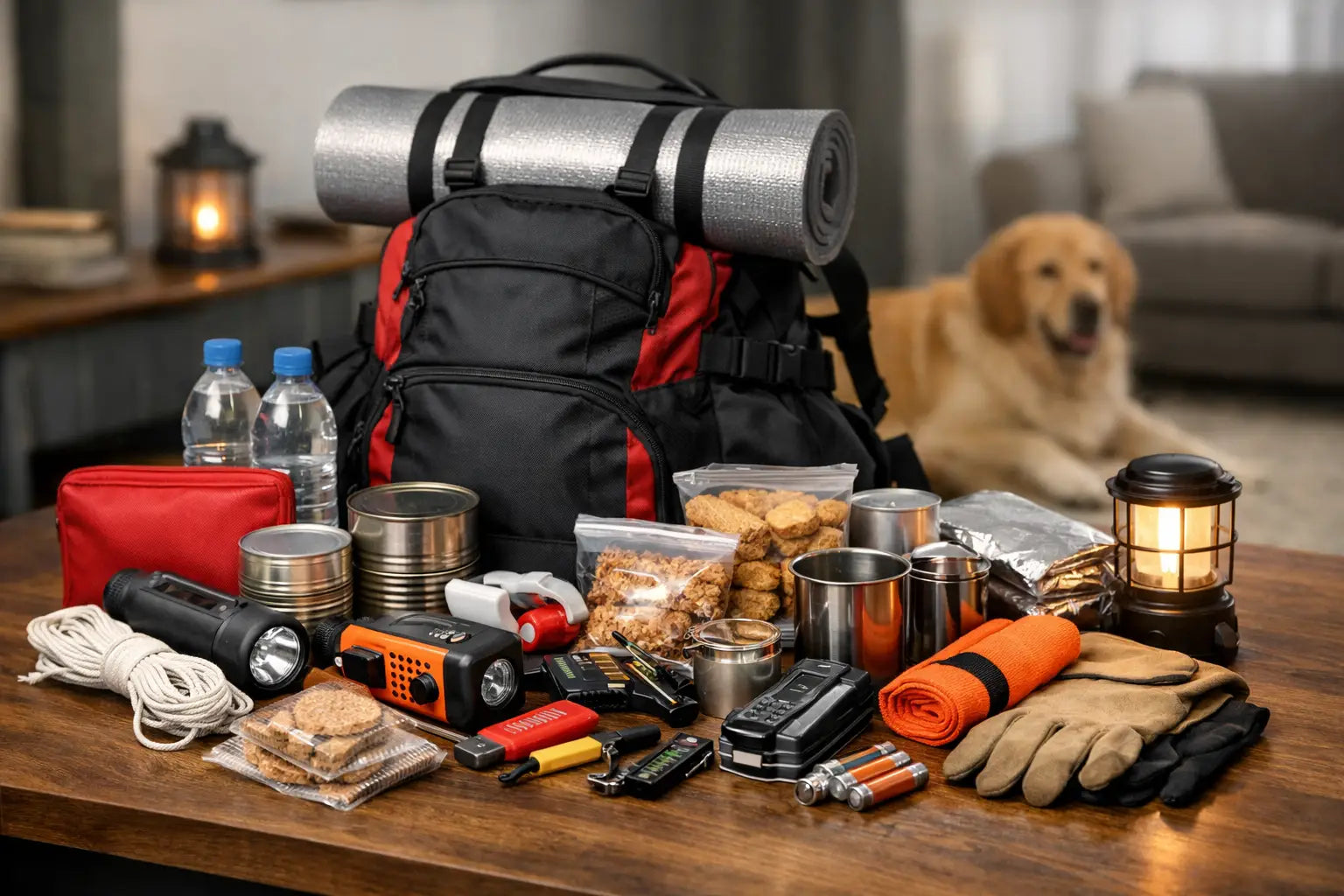
Once you think in functions, the contents become much clearer. Every home emergency kit should include stored water, shelf-stable food, a manual can opener, flashlights or headlamps, spare batteries, phone charging options, a first aid kit, sanitation supplies, medications, copies of important documents, blankets, and basic tools.
Sanitation is easy to overlook until water service is disrupted. Wet wipes, trash bags, gloves, toilet paper, and hygiene items make a miserable situation more manageable. If your household includes young kids, add diapers, formula, and comfort items. If you have older relatives or medical needs in the home, include spare glasses, hearing aid batteries, mobility support items, and backup prescriptions if possible.
Documents deserve more attention than they usually get. Keep printed copies of insurance information, identification, emergency contacts, medication lists, and key account numbers in a waterproof pouch. During an evacuation or communications outage, having that information on paper can save time and reduce confusion.
Basic tools matter too. A small fire extinguisher, work gloves, duct tape, a wrench for turning off utilities if needed, and a weather radio are practical additions. None of this is glamorous. That is the point. Real preparedness is often boring until the day it is incredibly useful.
Build around your real risks, not somebody else's
This is where a generic checklist stops being enough. A home emergency kit should reflect what is most likely where you live. If you are in Florida or the Gulf Coast, long power outages and water issues after hurricanes are a real concern. In California, wildfire smoke, evacuation speed, and backup power may matter more. In the Midwest, tornado shelter supplies and injury response could move higher on the list. In northern states, warmth and safe indoor cooking options become much more important during winter storms.
Think through the last disruption your family experienced. What ran out first? What did you wish you had? That is often the most honest starting point.
If outages are your main concern, prioritize battery lighting, charged power banks, a larger backup power source, and easy meals that require little prep. If sheltering in place for severe weather is more likely, focus on water, food, first aid, sanitation, and ways to stay warm or cool. If evacuation is a possibility, your home kit should work alongside a smaller evacuation bag for each family member.
Where to store your kit so it is actually useful
One giant bin in the garage sounds organized, but it is not always practical. Garages can get too hot, too cold, or too damp for food, batteries, and medications. A better approach is a split system. Keep a main supply area in a climate-controlled part of the house, then stage smaller essentials where problems happen.
Put flashlights in bedrooms and the kitchen. Store first aid where adults can reach it quickly. Keep shoes and work gloves near beds if earthquakes, storms, or storm debris are a concern. If your family has multiple floors, do not make everyone run to one closet in the dark.
The right storage setup depends on your house. Some families do well with labeled bins. Others prefer shelving with clearly grouped categories like water, food, medical, and power. The best system is the one your household can understand at a glance.
How to build a home emergency kit on a real budget
You do not need to spend thousands of dollars to make meaningful progress. If your budget is tight, cover the non-negotiables first: water, food, light, first aid, medications, and sanitation. That alone puts you ahead of most households.
From there, add one category at a time. One month you might buy extra water storage. The next month, a better medical kit. Then a radio, power bank, or a few weeks of shelf-stable meals. This slower approach has an advantage. It gives you time to choose better gear and avoid buying cheap items twice.
There is also a point where spending more makes sense. If your family has recurring outage issues, a reliable power station can be a quality-of-life upgrade and a safety tool. If grocery shortages or inflation are on your mind, deeper pantry storage or long-term food can reduce stress. If you live far from services, stronger water storage and filtration are worth the investment. Preparedness should match your reality, not somebody else's social media setup.
Maintain it or it will quietly fail you
A neglected emergency kit can create false confidence. Batteries leak. Food expires. Kids outgrow clothing. Prescription needs change. Set a reminder twice a year to check everything.
Replace expired items, recharge power banks, rotate food into regular meals, and update documents. Test flashlights and radios. If something in the kit requires instructions, make sure at least two adults in the house know how to use it. This is especially true for water filters, camp stoves, and medical supplies.
It also helps to practice small scenarios. Try a no-power evening at home. Cook a meal using only what is in your kit. See if your family knows where the headlamps are. You will learn more from one calm practice night than from reading ten gear lists.
Preparedness is not about fear. It is about reducing friction during a hard week. If you build your home emergency kit around the way your family actually lives, you will make better decisions, waste less money, and feel more steady when the next disruption hits. Start with what would help this month, not with a fantasy version of readiness. That is how families build resilience that lasts.