
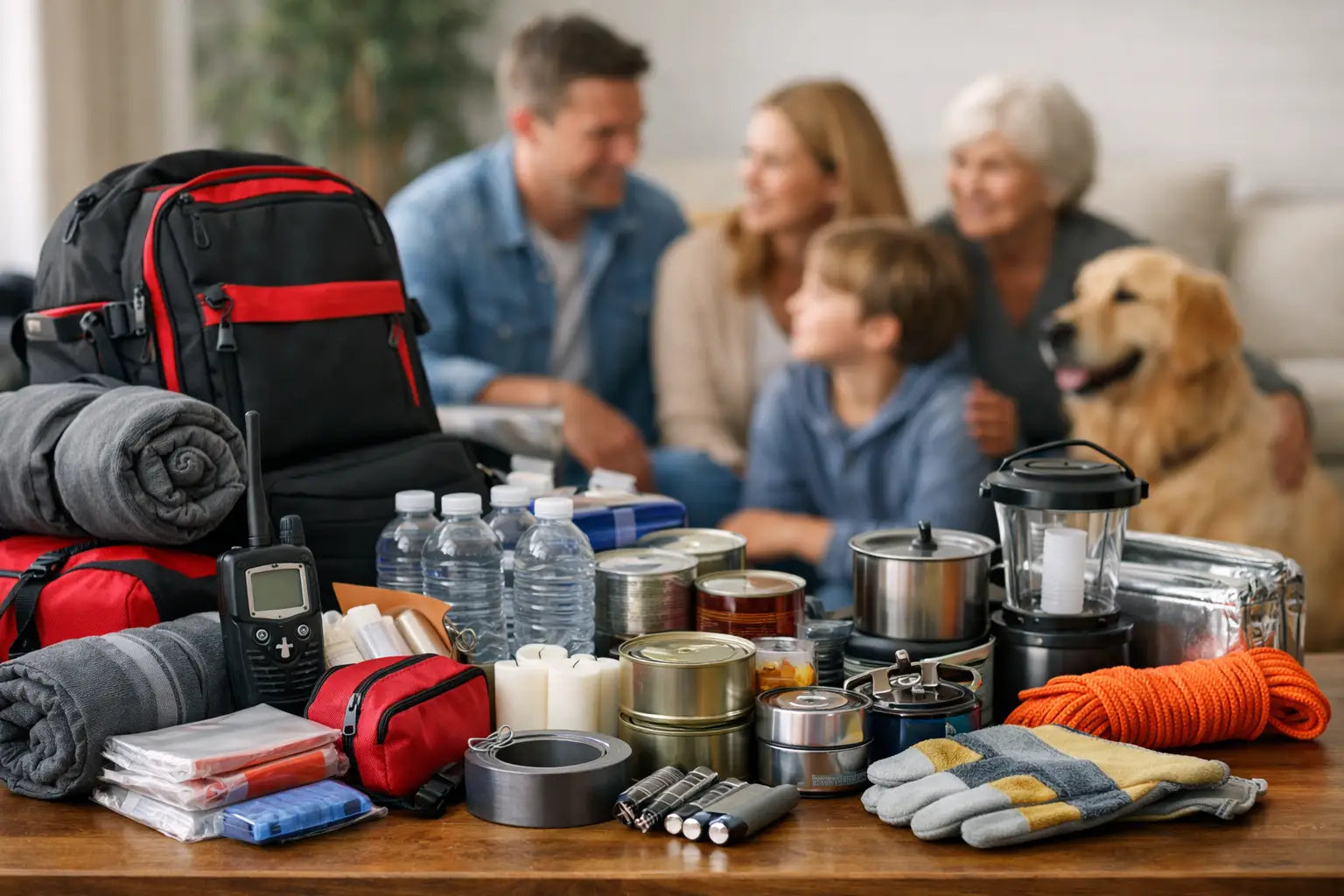
The gap usually shows up at 9:30 p.m. The power is out, the phones are half charged, the pantry looks fuller than it is, and someone asks, "Do we actually have what we need?" That is the moment a family emergency protection kit stops being a vague idea and becomes a real household priority.
For most families, the goal is not to prepare for every possible disaster. It is to cover the disruptions that actually happen: a three-day outage, a boil-water notice, a winter storm, a fast evacuation, a week of empty shelves after a hurricane warning. A good kit gives your household a calmer first 72 hours and a much easier first week. It also keeps you from making expensive, rushed decisions when stores are crowded and inventory is picked over.
What a family emergency protection kit should really do
A lot of people picture one giant bin in the garage. That can be part of it, but the better approach is to think in layers. Your family emergency protection kit should help you shelter at home, leave quickly if needed, and function when normal services are down.
That means covering the basics first: safe water, food that does not depend on perfect conditions, light, backup power, first aid, warmth, sanitation, and a way to access critical information. If a kit looks impressive but misses drinking water or prescription backup plans, it is not doing the job.
It also needs to fit your household. A retired couple in Florida, a family of five in the suburbs, and grandparents who regularly host grandchildren all need something slightly different. The right kit is not the biggest one. It is the one your family can use under stress.
Start with the risks you are most likely to face
Preparedness gets easier when you stop treating every emergency as equal. Build around probability first, then expand. If you live in Texas, long summer outages and storm damage may matter more than blizzards. If you are in California, wildfire smoke, fast evacuation, and utility shutoffs deserve more attention. In the Carolinas or Florida, hurricanes can affect power, water, fuel, and groceries all at once.
This matters because your kit should solve local problems. In a wildfire zone, N95 masks, document protection, and grab-and-go organization matter more. In a winter storm region, extra blankets, safe indoor heat planning, and food that can be prepared without a full kitchen rise to the top. In earthquake country, sturdy shoes by the bed and water storage become especially practical.
The mistake many families make is buying gear for dramatic scenarios while skipping the boring essentials. Start with the emergency you have already lived through. That is usually the best blueprint.
The core categories every family should cover
Water comes first. Not sports drinks, not a few random bottles in the trunk, but real water planning. A useful baseline is one gallon per person per day for at least three days, with a week being more realistic for many households. Families with pets, medical needs, or hot-weather exposure should store more. Alongside stored water, add a reliable purification option in case supplies run short or water quality becomes uncertain.
Food is next, but this is where people often overcomplicate things. Your kit needs calories your family will actually eat, with a mix of everyday shelf-stable food and longer-term emergency food storage if your budget allows. Think easy meals, simple prep, and minimal cleanup. If the power is out and everyone is stressed, this is not the time to discover your emergency meals require more water, more fuel, or more patience than you have.
Lighting and power backup matter more than most first-time buyers expect. A flashlight is not a plan. A household kit should include dependable area lighting, individual lights people can grab quickly, charging options for phones, and a larger backup power solution if outages are common where you live. For many families, a power station is one of the most-used emergency purchases because it helps in ordinary outages, not just major disasters.
First aid should match your family, not just a generic checklist. A basic store-bought kit is better than nothing, but households with kids, older adults, or regular medications need more thought. Include over-the-counter basics, spare prescription information, and supplies you know how to use. If someone in the home has asthma, diabetes, severe allergies, or mobility limitations, your medical plan should be built around that reality.
Shelter, warmth, and sanitation are easy to underestimate because they feel secondary until they are not. If heat goes out in January or water service is interrupted for two days, comfort turns into a health issue fast. Blankets, weather-appropriate layers, rain protection, hygiene supplies, and a simple sanitation plan deserve a place in every kit.
One big mistake: keeping everything in one place
A practical family emergency protection kit is usually spread across three zones. One part stays at home for sheltering in place. One part is packed for fast evacuation. A smaller part rides in the car.
The home kit is your foundation. This is where the bulk water, food, cooking backup, larger medical supplies, and power solutions live. It should be organized enough that another adult in the house can find what they need without asking you.
Your evacuation bag is different. It should be lighter, faster, and focused on 24 to 72 hours away from home. That means medications, copies of documents, chargers, snacks, water, a change of clothes, basic hygiene items, cash, and comfort items for children if you have them. If you have pets, build their travel supplies at the same time.
The car kit fills the middle ground. It helps with road closures, weather delays, and situations where you are not home when a disruption begins. Keep it simple but useful: water, snacks, phone charging, first aid, weather layers, and a flashlight.
Buy for the first week, not the fantasy scenario
There is a reason many families quit before they start. The category can make preparedness look all-or-nothing. It is not. You do not need a garage full of gear to make a meaningful upgrade in household resilience.
If your budget is around $200, build a strong first layer: water storage, shelf-stable food, flashlights, batteries, a radio, basic first aid, and document protection. If you can spend more, the next upgrades are usually better water capability, better power backup, more complete medical supplies, and longer-duration food storage.
A larger budget can absolutely improve comfort and self-sufficiency, especially if you add solar charging, home water systems, or freeze-dried meal depth. But more gear also creates more maintenance. Batteries need charging. Food needs rotation. Medical supplies expire. Complex setups are only helpful if your household will keep them ready.
That is why the best kits grow in stages. Start small, scale smart, and build the habit of checking your supplies twice a year.
How to choose better gear without overspending
Quality matters most in the categories that fail under stress. Water filtration, power backup, medical supplies, and lighting are not where you want to buy the cheapest possible option. A low-cost blanket or tote may be fine. A poor-quality filter or unreliable battery unit is a different story.
At the same time, not every category needs premium pricing. Families often overspend on flashy multi-tools or specialized gadgets and underspend on boring workhorses like extra stored water, headlamps, fuel, and simple food everyone will eat. The right balance is dependable basics first, upgrades second.
It also helps to buy from preparedness retailers that are organized by real household needs instead of novelty. That is one reason stores like SHTF Prepper Club resonate with family buyers. The categories map to how families actually prepare: water, food, first aid, power, shelter, and longer-term resilience.
Don’t forget the people, pets, and paperwork
Every family has details that make a generic kit incomplete. Babies need formula and diapers. Older adults may need hearing-aid batteries, backup glasses, or mobility support. Teens may be fine eating anything, or they may have food allergies that change your entire storage plan. Pets need food, bowls, medications, and a safe way to travel.
Documents are just as practical. Keep copies of insurance cards, IDs, medical information, contact lists, and key account details in a waterproof format you can grab quickly. If phones are dead or cell service is overloaded, having printed information can save time when time matters.
There is also an emotional side to readiness. If you have children or grandchildren, a familiar snack, a deck of cards, or one comfort item can make a hard night go much better. That is not extra. That is part of protecting the family.
Build it once, then make it easier to keep
The most useful emergency kit is not the one with the longest checklist. It is the one your household can maintain. Label bins. Keep like items together. Date what can expire. Put a simple inventory on paper or in your phone. Make sure everyone in the home knows where the essentials are.
Preparedness should lower stress, not add to it. If your current setup is a closet full of good intentions, that is okay. Pick one category this week and fix it. Water, power, food, first aid - any one of those is a real step forward.
Your family does not need perfect readiness. They need a system that works when the lights go out and the questions start.