
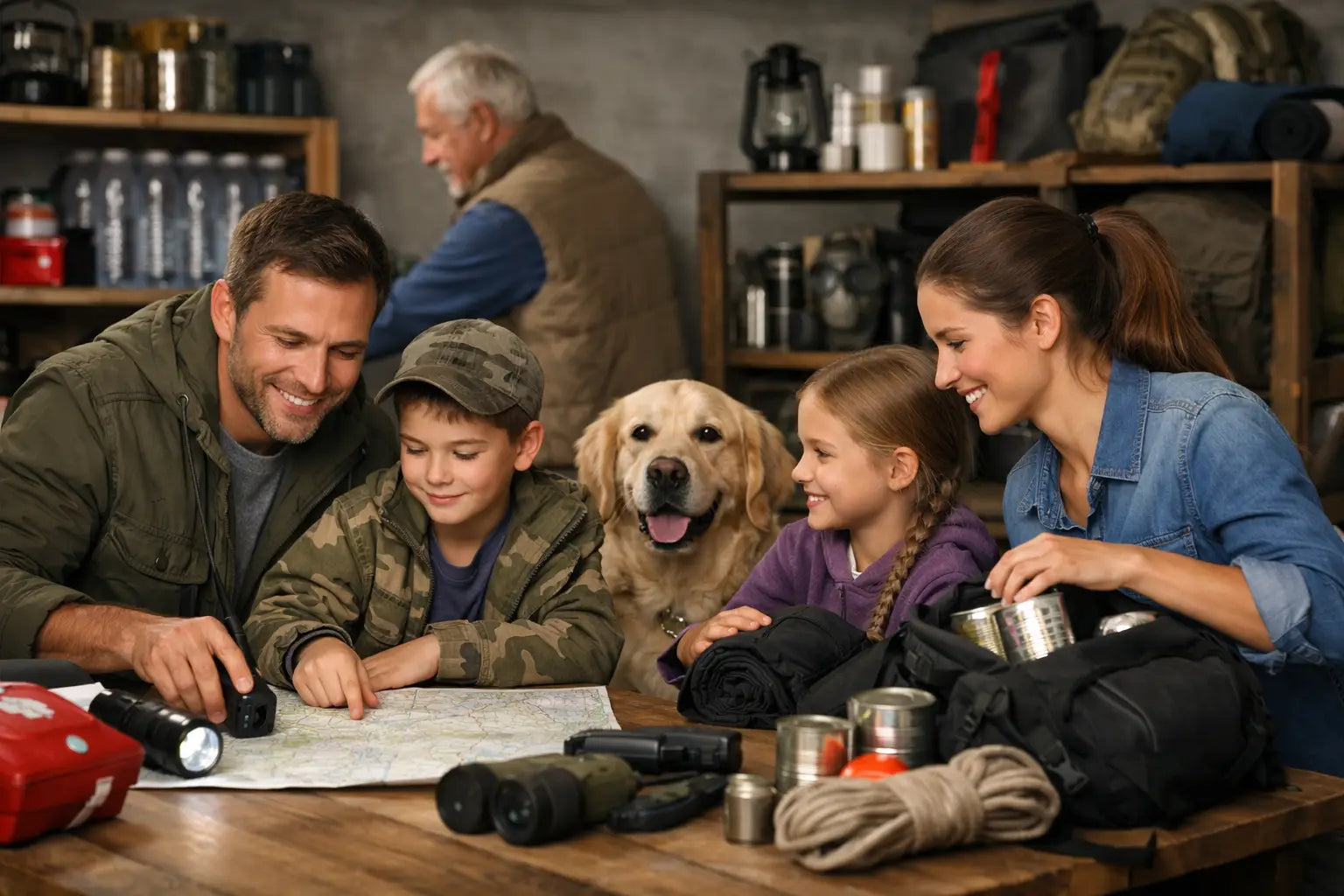
The pantry looked full until the power went out for three days.
That is how a lot of families realize they are not as prepared as they thought. A few flashlights, some bottled water, and whatever is already in the kitchen can get you through a rough evening. It is not always enough for a storm week, a boil-water notice, a wildfire evacuation, or a winter outage with kids at home. If you are building an shtf prepper family plan, the goal is not to become extreme. The goal is to make sure your household can stay safe, fed, warm, connected, and steady when normal systems stop working for a while.
For most families, preparedness gets easier when you stop thinking in dramatic terms and start thinking in categories. Water. Food. Power. Medical. Shelter. Communication. Transportation. If those areas are covered in a realistic way, your family is already ahead of most households.
What a family-first preparedness plan really looks like
A solid family plan does not start with gadgets. It starts with your actual life. How many people are in the home? Are there babies, pets, aging parents, or medications that need refrigeration? Do you live where hurricanes, tornadoes, earthquakes, or ice storms are the bigger risk? Do you expect to shelter in place most of the time, or is evacuation more likely?
Those answers shape everything else. A family in Florida needs a different setup than a family in Colorado. A suburban household with two teens and a dog needs different backup supplies than grandparents preparing for holiday visits from grandchildren. Preparedness is not one-size-fits-all, and that is why families get frustrated when advice feels too generic.
The best plans are layered. You prepare for the most likely short disruption first, then build toward longer events. Start with 72 hours. Then aim for two weeks. After that, you can think about deeper food storage, larger water capacity, backup power, and long-term food independence. That progression keeps the process affordable and manageable.
The core of an shtf prepper family setup
If you strip away the noise, every household needs the same basic capabilities.
Water comes first. Your family needs enough stored water to drink, cook minimally, and handle basic hygiene. A common target is one gallon per person per day, but that is a floor, not a ceiling. Hot climates, nursing mothers, larger adults, and families with pets often need more. Storage matters, but so does filtration. Stored water can run out. A reliable filter or purification option gives you flexibility if the outage or disruption lasts longer than expected.
Food comes next, and this is where many families overbuy the wrong things. Start with foods your household will actually eat. Shelf-stable staples, ready-to-eat meals, simple breakfasts, kid-friendly snacks, and foods that require minimal water or cooking are usually smarter than jumping straight into obscure bulk ingredients. Long-term food storage has real value, especially for households preparing for supply shortages or wanting deeper resilience, but your first job is to make sure dinner is still possible on day four when the refrigerator is warm and the grocery store shelves are thin.
Power is the category people underestimate until they lose it. Light is easy. Charging phones, keeping medical devices running, powering a freezer, or using a fan during extreme heat is where planning gets serious. A good family power plan usually includes small lighting solutions, battery banks, and a larger backup battery or generator option based on your budget and your risks. There is a huge difference between wanting to charge phones and needing to preserve insulin.
Medical readiness deserves more attention than it usually gets. Most homes have a basic first aid kit, but many do not have enough bandages, over-the-counter medicine, fever reducers, electrolyte support, gloves, wound care, or backup prescription planning for a week or more. Families with children should think through common issues like cuts, burns, stomach bugs, seasonal allergies, and fever management. The point is not to replace professional care. It is to bridge the gap safely when access is delayed.
Build around the disruptions your family is most likely to face
Preparedness gets expensive when you buy for every scenario at once. It gets practical when you build around probability.
If you live in hurricane country, your plan should focus heavily on evacuation bags, storm-proof food and water storage, backup power, and ways to manage heat and humidity after landfall. If wildfires are your bigger risk, smoke, rapid evacuation, vehicle readiness, and document organization matter more than a deep home shelter setup. If winter storms are common, warmth, indoor-safe cooking, battery-powered lighting, and frozen-pipe prevention move up the list.
That does not mean you ignore everything else. It means you prioritize in the right order. Most families are better served by being very prepared for three likely events than vaguely prepared for twenty.
Why family preparedness fails in real life
Usually, it is not a lack of concern. It is friction.
People buy supplies without organizing them. They store food nobody wants to eat. They forget to rotate batteries and medicines. They put all the gear in the garage, then realize they cannot reach it easily during a storm warning. Or one spouse takes preparedness seriously while the other thinks the whole thing has gotten out of hand.
The fix is simple, but not always glamorous. Make preparedness visible, organized, and normal. Label bins. Keep a written inventory. Put daily-use flashlights where you can grab them in the dark. Store emergency food in places where you can rotate through some of it. Keep your evacuation bags accessible. Make sure everyone in the house knows where the basics are.
Children do not need dramatic explanations. They just need familiarity. If the power goes out, they should already know where the lantern is, what snacks are set aside, and how the family will handle the evening. Calm routines reduce fear.
A realistic buying order for the prepper family
This is where many families either overspend or stall out. They think they need a giant setup all at once, then do nothing.
A better approach is to buy in layers. First, cover immediate essentials: drinking water, simple food, lights, batteries, first aid, and a way to charge phones. Then add category depth: larger water storage, better filtration, stronger power backup, indoor-safe cooking, sanitation supplies, and more complete medical gear. After that, move into resilience upgrades like long-term food storage, solar generators, freezers, freeze dryers, garden seed storage, and tools that support more independence.
That progression works because each stage gives your family a clear benefit. You are not chasing a fantasy setup. You are solving the next real problem.
For many households, this is also where a trusted family-focused store helps. SHTF Prepper Club serves families best when it cuts through random buying and helps people organize by need, not hype. That matters when you are trying to compare emergency food, water filtration, backup power, and medical gear without turning it into a second job.
The emotional side of preparing your family
This part is easy to ignore, but it matters.
Preparedness is partly logistical and partly emotional. Parents want to feel that if something goes wrong, the household will not immediately slide into chaos. Grandparents want confidence that if grandchildren are visiting during a storm, they have what they need. Homeowners want to know they are not one outage away from scrambling for basics.
There is peace in having a plan. Not because you expect disaster every week, but because you know your family can absorb disruption without panic. That is a very different mindset from fear-based prepping. It is quieter. More stable. More sustainable over time.
It also makes decision-making easier when budgets are tight. You can say, we are buying water storage this month, better first aid next month, and backup cooking after that. Progress counts, even when it is gradual.
The best shtf prepper family plan is the one you can maintain
A beautiful storage wall is not the goal. A dependable household is.
Choose gear you will actually use. Buy enough to matter, but not so much that it creates clutter and confusion. Revisit your plan twice a year. Replace expired items. Update clothing sizes in evacuation bags. Check battery health. Review medications. Adjust your food storage to match what your family eats now, not what they liked three years ago.
If you want to go deeper, do it thoughtfully. More water capacity, stronger backup power, larger medical supplies, and long-term food independence all make sense when your basics are already in place. But the strongest preparedness plans are not built on intensity. They are built on consistency.
Start with the next thing your household actually needs. Then build from there. Your family does not need perfection. It needs a plan that still works when the lights go out and everyone looks to you for what happens next.