
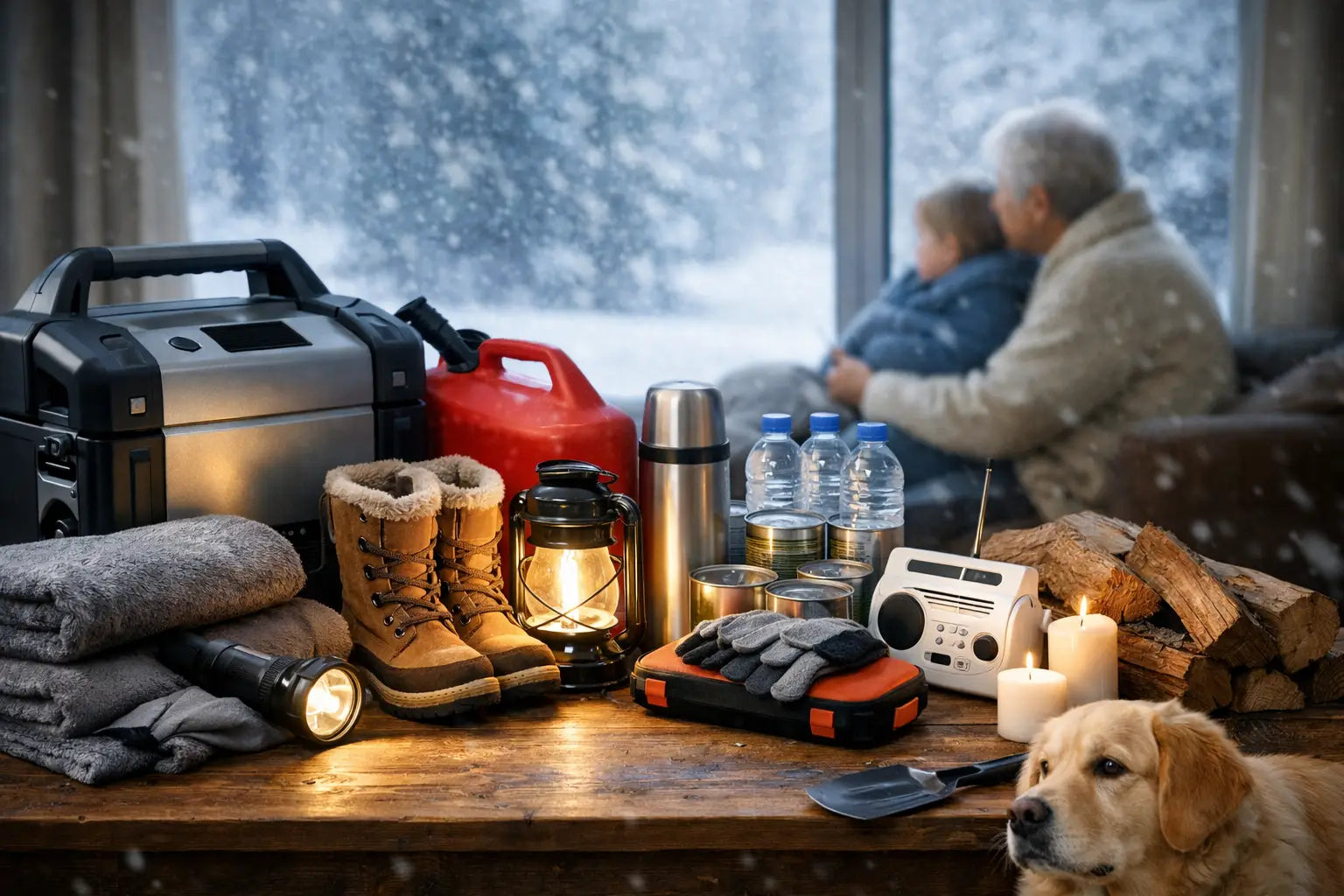
The hard part about winter weather is not the snow. It is what snow, ice, and extreme cold do to normal life. A short drive becomes dangerous. A neighborhood outage becomes a cold house by midnight. A delayed delivery means the groceries you planned to buy tomorrow are not coming. Good winter storm preparedness is really about keeping family life stable when the systems around you are not.
For most households, that means planning for the boring problems first. Heat. Water. Food. Light. Medication. Charged phones. A way to cook. A way to stay informed. You do not need a bunker or a dramatic mindset. You need a realistic plan built around how your family actually lives.
What winter storm preparedness really means at home
If you have been through even one multi-day outage, you already know the pattern. At first, it feels manageable. Then the temperature indoors starts dropping. The fridge becomes a question mark. Everyone is suddenly charging devices in the car. Kids get restless. Pets need extra attention. Small gaps in planning turn into stress fast.
That is why winter storm preparedness should start with time horizons. Ask yourself what your home needs for 24 hours, 72 hours, and one full week without reliable power or safe travel. A one-day plan can lean on convenience. A one-week plan needs real supplies, better storage, and more thought about heat, sanitation, and food variety.
The goal is not to prepare for every imaginable disaster at once. The goal is to get your family through a storm with less risk and less chaos.
Start with warmth, because cold changes everything
In a winter storm, temperature is the issue that can turn serious the fastest. If your furnace depends on electricity, a power outage can leave you without heat even if you have natural gas. If you live in a rural area, road conditions may delay repair crews longer than expected. That means your backup warmth plan matters.
Begin with layers that protect people, not just the house. Extra blankets, cold-weather sleeping bags, thermal base layers, wool socks, hats, and gloves should be easy to reach, not buried in a garage tote. If you have children or older adults in the home, plan for them first. They generally feel the cold sooner and tolerate it less well.
Then think about keeping one or two rooms warmer rather than trying to heat the whole house. Closing off unused rooms, hanging blankets over drafty areas, and gathering the family in one insulated space can make a real difference. Safe indoor heating options depend on your equipment and your home, and that is where trade-offs matter. A generator can support existing systems but requires fuel, maintenance, and safe outdoor use. Portable power stations are simpler and quieter but may not run large heating loads for long. Propane heaters can help in some homes, but only if they are rated for indoor use and you follow ventilation and carbon monoxide guidance carefully.
This is one area where buying the cheapest option often costs more later. Reliable warmth is not glamorous, but it is one of the smartest categories to build out over time.
Food and water: plan for disruption, not perfection
Most families already have some food in the house. The problem is that much of it assumes a working stove, fresh ingredients, or a quick store run. Winter storm preparedness works better when you separate food into two groups: what you will eat first, and what will still work if the outage stretches on.
Your first group is your normal pantry plus refrigerator food that needs to be used quickly. Your second group should include shelf-stable meals, simple proteins, ready-to-eat snacks, comfort foods, and a few items that can be prepared with minimal fuel. If your family has dietary restrictions, build around those now, not during an emergency. A storm is a bad time to realize all your backup meals are food your child will not eat.
Water is easier to underestimate in winter because people think less about dehydration when it is cold. But winter storms can interrupt municipal systems, freeze pipes, or leave you unable to reach stores. A practical baseline is enough drinking and basic sanitation water for every person and pet for several days, with more if your area regularly deals with long outages or road closures.
If you have space, stored water gives peace of mind quickly. If you have less space, combine smaller containers with filtration and purification options. The right setup depends on your home, your climate, and whether your main concern is a short outage or a longer infrastructure problem.
Power outage essentials are the backbone of a storm plan
When families say they want to be more prepared, they often mean they do not want to be helpless when the power goes out. That is a good place to focus. A strong outage setup reduces stress across almost every other category.
Start with lighting. Not one flashlight in a junk drawer. Real lighting in the rooms you use most, plus headlamps so adults can move around safely while carrying kids, pets, or supplies. Keep extra batteries together and labeled.
Next comes power for communication and critical devices. Phones, medical equipment, Wi-Fi if your internet stays up, and rechargeable lanterns all compete for power fast. Small battery banks help, but most families are better served by stepping up to a larger backup power solution if budget allows. The right size depends on whether you only want to charge devices or also run a fridge, freezer, sump pump, CPAP, or other essentials.
Generators are useful, but they are not plug-and-forget purchases. They need fuel rotation, safe placement outdoors, weather-aware operation, and regular testing. Portable power stations are easier to use and better for many suburban households, though they have limits with heavy loads and extended outages unless paired with additional charging options.
If you are just starting, do not get stuck trying to build the perfect power system. Build the next useful layer. Better lights. Better charging. Then backup refrigeration or heat support. Progress counts.
Your winter storm preparedness plan should include staying put and leaving
Most winter storms are shelter-in-place events. But not all of them. A prolonged outage in deep cold, a burst pipe that makes the home unlivable, or an ice event that brings down lines for days can force a temporary move.
That is why every household should prepare for both scenarios. At home, keep supplies organized enough that you can find them in the dark and use them under stress. If you need to leave, have an evacuation bag for each family member with cold-weather clothing, medications, chargers, copies of key documents, snacks, and basic toiletries.
Your vehicle matters too. Winter travel can become dangerous fast, especially when drivers assume four-wheel drive solves everything. It does not. Keep your gas tank above half during storm season. Store blankets, gloves, traction aid, a shovel, phone charging cables, water, and shelf-stable snacks in the car. If you have young children, rotate sizes and supplies as they grow. If you have grandchildren visiting regularly, build that into your planning now instead of improvising later.
Do not forget the weak points: pets, pipes, and prescriptions
The best family plans usually fail in small, predictable places. Pets run out of food. A prescription refill gets delayed. Pipes freeze in a room no one checked. These are not dramatic mistakes. They are normal oversight.
Make a simple pass through your home and ask what becomes a problem by day two or day three. Pet food, litter, backup meds, baby supplies, hygiene items, and ways to keep pipes from freezing all belong on your list. So does a weather radio or another reliable source of updates if cell service becomes spotty.
If someone in your home relies on refrigerated medication or powered medical devices, that changes your priorities completely. In that case, winter storm planning should start with those needs, then work outward to the rest of the household.
Build your setup in layers, not one giant shopping trip
This is where many people freeze up. They picture a huge bill, a packed garage, and a complicated system they may never fully use. The better approach is layered readiness.
Start with the gaps that create the most immediate risk. For most families, that is warmth, light, water, and backup food. Then add communication and power. Then improve storage, cooking, sanitation, and longer-duration comfort. This is the approach we encourage at SHTF Prepper Club because it works for real households. You can start small, make smart upgrades, and end up with a system your family actually understands.
Preparedness is not about proving anything. It is about reducing preventable hardship. A winter storm will still be inconvenient. The roads may still be bad. School may still be canceled. But when your house has light, warm layers, drinkable water, familiar food, and a plan everyone knows, the whole experience changes.
Give yourself permission to build that one step at a time. The family that prepares early usually looks calm for a reason.