
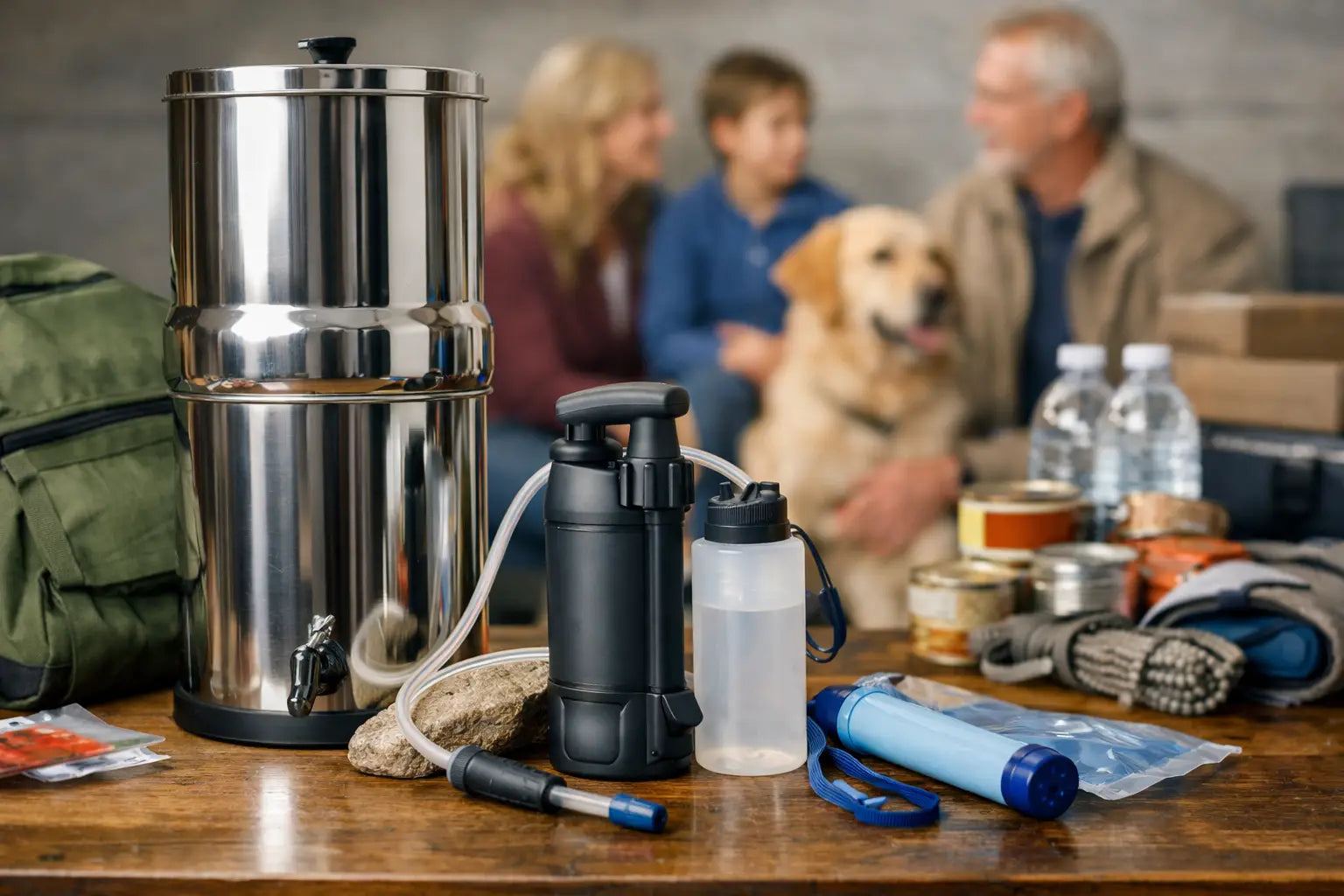
The first time you lose water service for more than a few hours, bottled water stops feeling like a plan and starts feeling like a placeholder. If you're trying to choose the best water filter for emergency preparedness, the real question is not which model looks impressive. It is which type will keep your family supplied with safe water when the power is out, stores are picked over, and you need something that works without drama.
That answer depends on how your household is likely to use it. A family sheltering at home after a hurricane needs something different from a couple building evacuation bags for wildfire season. A suburban homeowner with room for stored water has different needs than grandparents setting aside backup supplies for occasional outages. The right filter is the one that fits your water sources, your household size, and your tolerance for maintenance.
What makes the best water filter for emergency preparedness?
For most families, the best emergency water filter does three things well. It removes the contaminants most likely to matter during a real disruption, it produces enough water for more than one person, and it is simple enough to use when everyone is tired and stressed.
That sounds obvious, but this is where many people get tripped up. They buy a compact backpacking filter because it is affordable and highly rated, then discover it is painfully slow for a household of four. Or they choose a large countertop system that works beautifully at home but is useless if they need to leave fast. Emergency preparedness is not one-size-fits-all, and water filtration is a perfect example.
You also want to separate filtration from purification. Many filters are excellent at removing bacteria and protozoa from streams, ponds, and collected rainwater. Fewer are designed to handle viruses. In the United States, viruses are less common in remote backcountry water but can become a bigger concern after flooding, sewage overflow, or compromised municipal systems. In some emergencies, a filter alone is not enough, and adding a purifier, chemical treatment, or boiling step makes sense.
The main filter types, and where each one fits
Gravity filters are the best fit for most families at home
If your goal is reliable water for several people during a multi-day outage, gravity filters are usually the strongest choice. You fill a dirty-water chamber, hang or set the system in place, and let gravity do the work. There is no pumping, no batteries, and no need to crouch by a creek for an hour while everyone waits for their turn.
This style works especially well for shelter-in-place scenarios. Think hurricanes, winter storms, boil-water notices, or earthquake disruptions where you may still have access to collected rainwater, bathtub reserve water, or water from nearby natural sources. A good gravity system can keep a family moving with less effort than smaller personal filters.
The trade-off is size. Gravity systems are not ideal for fast evacuation, and they are not all equally portable. Some are perfect for home use, RVs, and cabins but less practical in a small car loadout.
Squeeze and straw-style filters are better for go-bags and backup
Smaller squeeze filters and personal straw-style units are popular because they are compact, inexpensive, and easy to stash. They make sense in evacuation bags, glove boxes, and emergency bins where space matters.
But these are best viewed as individual tools, not full family water plans. They can be excellent for one person on the move. They are much less convenient when you are trying to fill cooking pots, keep kids hydrated, or process enough water for a household over several days.
If you already have stored water at home, these smaller filters still earn their place. They are smart backup gear in case your main system fails or you need to leave quickly.
Pump filters work, but effort matters
Pump filters can process water quickly and are often more versatile than ultra-light personal filters. They are a solid middle ground for small families, short-term use, or situations where you need more control over drawing from shallow water sources.
The downside is fatigue. Pumping gallon after gallon gets old fast, especially if you are filtering for children, pets, or aging family members. For occasional use they are fine. For a five-day outage with four people in the house, they can become a chore.
Purifiers and chemical treatments fill an important gap
Chemical drops and tablets, as well as certain purifier systems, are worth considering as part of a layered plan. They are lightweight, shelf-stable, and useful when viral contamination is a concern. Products like Aquamira are popular for that reason.
The drawback is wait time and taste. Some people also dislike relying on chemicals as their only treatment method. For many households, the best approach is using filtration as the main system and purification as the backup or second step when conditions call for it.
How to choose the right system for your household
Start with your most likely emergency, not the most extreme one you can imagine. If you live in the Carolinas or Florida, storm-related outages and boil-water advisories may be your top concern. In California, wildfire evacuations and smoke-driven utility shutoffs may shape your plan. In the Midwest, winter storms and grid failures matter more than wilderness water collection.
Then think about volume. Most families underestimate how much water they actually use. Drinking water alone adds up quickly, and that is before you count simple cooking, formula prep, medications, and pet needs. If your filter produces clean water very slowly, you will feel that limitation on day one.
Ease of use matters just as much. In an emergency, the best gear is often the gear that requires the least explanation. If your spouse, teenage child, or visiting grandparent cannot figure it out quickly, that is a weakness. Look for systems that are intuitive, dependable, and easy to clean.
Finally, think in layers. The strongest family setup is usually not one filter. It is stored water for immediate use, a primary filtration method for extended disruption, and a lightweight backup for evacuation or redundancy.
Features that matter more than marketing
Filter ratings can get technical fast, but a few practical details are worth your attention. Capacity matters because replacement schedules become very real when water service is unstable. Flow rate matters because a system that filters too slowly creates friction every time you use it.
You should also pay attention to what the filter is actually certified or designed to remove. Bacteria and protozoa are standard targets. Viruses are a separate category. Chemical contamination is another issue entirely. No filter does everything, and anyone telling you otherwise is oversimplifying.
Durability counts too. Emergency gear gets stored, moved, bumped, and sometimes forgotten until the day you need it. A system with fragile parts or fussy maintenance may test well on paper but disappoint in a family setting.
The best water filter for emergency preparedness for most people
For most households, a gravity-fed system is the best water filter for emergency preparedness because it balances output, ease of use, and reliability. It is the closest thing to a practical family solution rather than a personal survival gadget.
If you are building a home-focused emergency water plan, start there. Pair it with a sensible amount of stored water so you are not forced to filter every sip from the first hour of an outage. Then add a small personal filter or purifier to each evacuation bag for mobility.
That combination works because it matches how real emergencies unfold. Most families are not hiking into the woods. They are staying home without power, dealing with a damaged local water system, or leaving on short notice with limited space. Your gear should reflect that reality.
A simple family-ready setup
A good starter plan is straightforward. Store enough water for the first few days if you can. Add a gravity filter for extended needs at home. Keep purification drops or tablets as backup. Place a compact squeeze filter in each evacuation bag.
That may sound less exciting than buying one premium gadget and calling it done, but it is a far more resilient system. It covers short outages, longer disruptions, and quick departures without forcing one tool to do every job.
If you are just getting started, that is enough. You do not need a perfect setup this week. You need a workable one that makes your family less vulnerable than you were yesterday.
Preparedness tends to get easier once water is handled. Food, power, first aid, and communications all feel more manageable when you know your household can keep drinking safely for the next several days. Start with the filter that matches your real life, practice with it once before you need it, and let that small decision do what good preparedness always does - bring a little more calm to a hard situation.