
A power outage gets uncomfortable fast. A water outage gets serious. If you are figuring out how to store emergency water at home, the goal is not to build a bunker supply overnight. It is to make sure your family can drink, cook, and handle basic hygiene when the tap stops working for a few days.
For most households, water storage feels simple until you start asking real questions. How much do we need? Where does it go? Is bottled water enough? What if we live in a small house, have pets, or need to evacuate? Those are the right questions. Good water storage is less about buying the biggest container and more about building a system your family can actually maintain.
How much emergency water should you store?
The standard baseline is one gallon per person per day for at least three days. That is the minimum. For most families, a better home target is two weeks if space and budget allow.
That one gallon covers drinking and very basic sanitation, but real life usually asks for more. Hot climates, pregnancy, nursing, physically demanding work, illness, and children who spill half their cup all change the math. Pets count too. A medium dog can easily need a half gallon or more per day once you include drinking and a little extra for cleanup.
If you have the room, think in layers. Keep a small, easy-access supply for short outages, then a larger reserve for longer disruptions. That gives you flexibility without making the project feel overwhelming.
The best way to store emergency water at home
The best approach is simple: use food-grade containers, keep them clean, store them in a cool dark place, and rotate when needed. The details matter, but they do not need to be complicated.
Commercially sealed bottled water is the easiest starting point. It is affordable, familiar, and easy to stack. It also works well for families who want to get prepared this week, not six weekends from now. The downside is that small bottles take up more space, create more plastic waste, and are less efficient for a larger household.
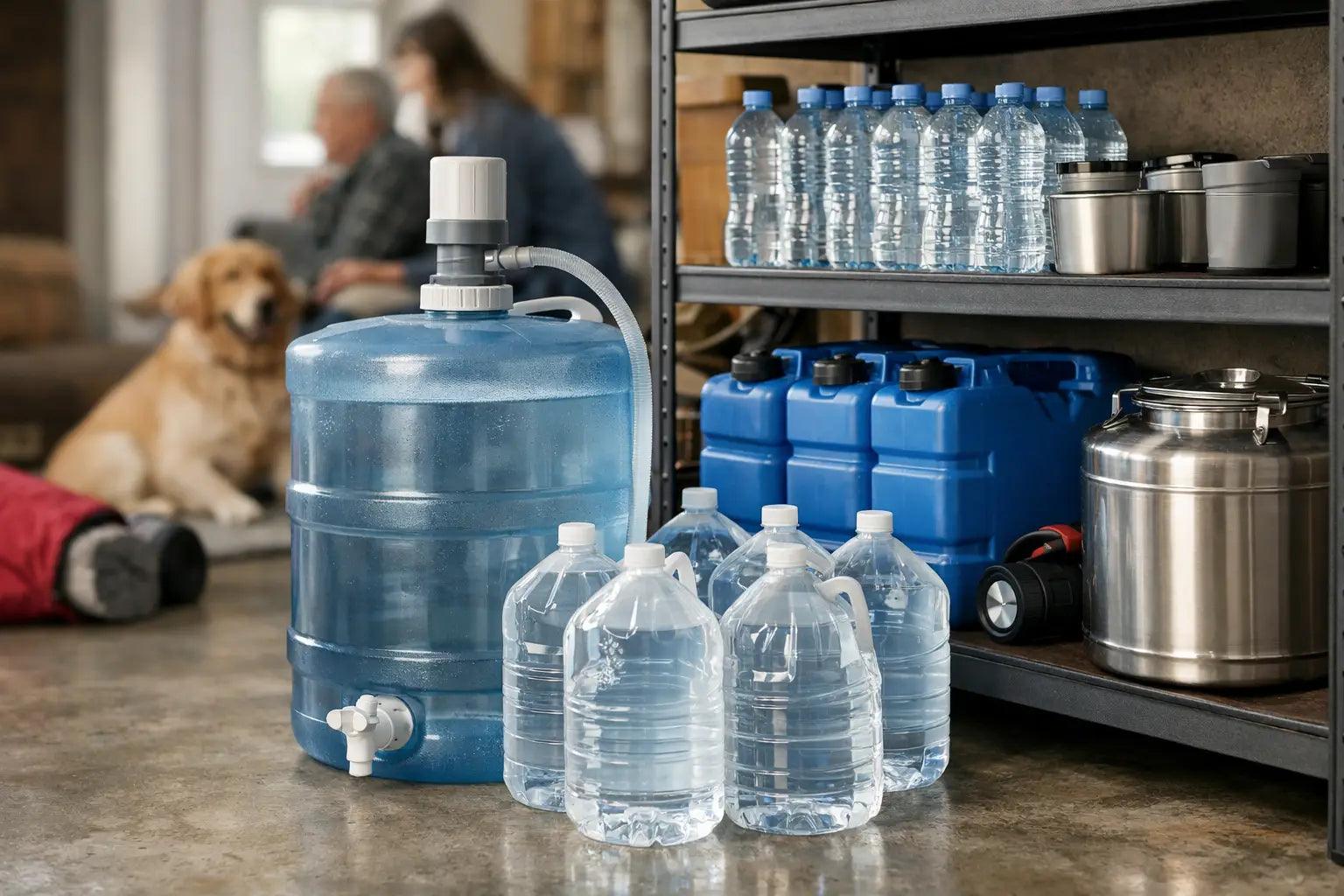
Larger purpose-built water containers are usually a better long-term answer. Five- to seven-gallon jugs are manageable for most adults and practical for garage or pantry storage. Bigger tanks and barrels store more water per square foot, but they are heavier, harder to move, and not always realistic if you may need to relocate supplies or clean around them.
That is the trade-off with all water storage. Bigger containers are efficient. Smaller ones are easier to handle. Most families do best with both.
Choose the right containers
Use containers made for drinking water. Food-grade plastic containers designed for water storage are the safest bet for most homes. Stainless steel can also work in some cases, but purpose-built emergency water containers are usually easier to find and use.
Avoid old milk jugs. They break down, leak, and are difficult to sanitize properly. Juice bottles and soda bottles are not ideal either unless you are in a temporary pinch and clean them very thoroughly. If you are going to take the time to store water, use containers you can trust.
Container shape matters more than people think. Stackable rectangular containers use space better than round ones. If you are storing water in a garage, basement, utility room, or under sturdy shelving, shape can make the difference between a neat system and a clutter problem.
Where to store it
Store water somewhere cool, dry, and out of direct sunlight. Heat and light speed up plastic breakdown and can affect water quality over time. That is why a shaded interior closet, pantry, or temperature-stable garage is usually better than an attic or backyard shed.
Keep containers away from gasoline, pesticides, paint, and cleaning chemicals. Water containers can absorb odors and vapors, especially over long periods. You do not want your emergency supply sitting next to lawn fuel or pool treatment chemicals.
Think about access too. During an emergency, you may not want to dig behind holiday decorations and camping gear to reach your water. Store at least part of your supply where it can be grabbed quickly during a storm warning, boil-water advisory, or evacuation.
Can you fill containers from the tap?
Yes, in most homes you can store tap water if your municipal source is already safe to drink. Clean and sanitize the container first, fill it, and seal it tightly. If you are using containers meant for long-term water storage, follow the manufacturer instructions.
Some people add unscented household bleach when storing tap water. Whether that is necessary depends on the container, your water source, and how long you plan to store it. If your tap water is already chlorinated city water and the container is sanitized, extra treatment may not always be needed for shorter-term storage. For well water or uncertain water quality, treatment matters more.
This is one of those areas where it depends. If you want the simplest path, commercially bottled water removes a lot of guesswork. If you want a larger and more economical reserve, filled storage containers make more sense.
How often should you rotate stored water?
Commercial bottled water can usually be stored for a long time if kept in good conditions, though it is smart to check packaging for damage and replace it periodically. Home-filled containers should be rotated more regularly based on container type and storage conditions.
A practical habit is to check your stored water every six to twelve months. Look for leaks, bulging containers, broken seals, discoloration, or off smells. If anything seems off, replace it. If your system is well organized, rotation becomes a calendar task, not a stressful project.
Label containers with the fill date or purchase date. That one small step prevents a lot of confusion later.
How to store emergency water at home if space is tight
Many families do not have a basement or a dedicated storage room. That does not mean you are out of options. It just means you need to be more intentional.
Start with the dead space you already have. Guest room closets, under-bed storage, the back of pantry shelves, mudroom cabinets, and sturdy garage shelving all work. A townhouse family may build a water plan very differently than a family on acreage, and that is fine. Preparedness should fit the home you actually live in.
If space is limited, prioritize portable storage first. A mix of cases of bottled water and a few stackable containers is easier to live with than one oversized barrel you resent every time you park the car.
If your family size makes storage feel impossible, remember that emergency water does not all have to be pre-positioned in one format. Some can be stored. Some can be treated. That is where filtration and purification become part of the plan.
Stored water is step one, not the whole plan
The strongest family water plan has two parts: stored water and a way to make more water safe. Stored water buys you time. Filtration and purification give you options if the outage runs longer than expected.
That matters in hurricanes, winter storms, wildfire disruptions, and municipal system failures. It also matters if you need to shelter with extended family or neighbors and your original supply starts disappearing faster than planned.
A practical setup might include ready-to-drink stored water for immediate use, plus a reliable water filter or purification method as backup. That is especially wise for larger households, rural homes on wells, and anyone who has lived through a multi-day outage before.
Don’t forget daily use and special needs
Families often calculate drinking water and stop there. Real emergencies involve more than that. You may need water for infant formula, medications, basic cooking, brushing teeth, handwashing, and pets. If someone in your home has a medical condition, you may need more than the standard recommendation.
Grandparents preparing for visiting grandkids should store with those visits in mind. Pet owners should count every animal. If you live in a hot state or face hurricane-season outages, your margin should be higher, not lower.
This is also why convenience matters. If your water is too heavy to pour, too buried to reach, or too complicated for another family member to manage, your system needs work.
A simple water storage plan for most homes
If you want a realistic place to start, build in stages. Start with three days of commercially bottled water for every person and pet. Then add a few larger food-grade containers for a deeper reserve. After that, add filtration or purification so your family is not relying on stored water alone.
That approach works because it is manageable. You can start this month, improve it next month, and keep going without turning preparedness into a second job. That is the mindset we encourage at SHTF Prepper Club - start small, scale smart, and build a system you will still trust a year from now.
Water storage does not have to be dramatic to be effective. A calm, well-planned supply in the right containers can carry your family through the kind of disruptions that happen every year, in ordinary neighborhoods, to people who thought they had more time.