
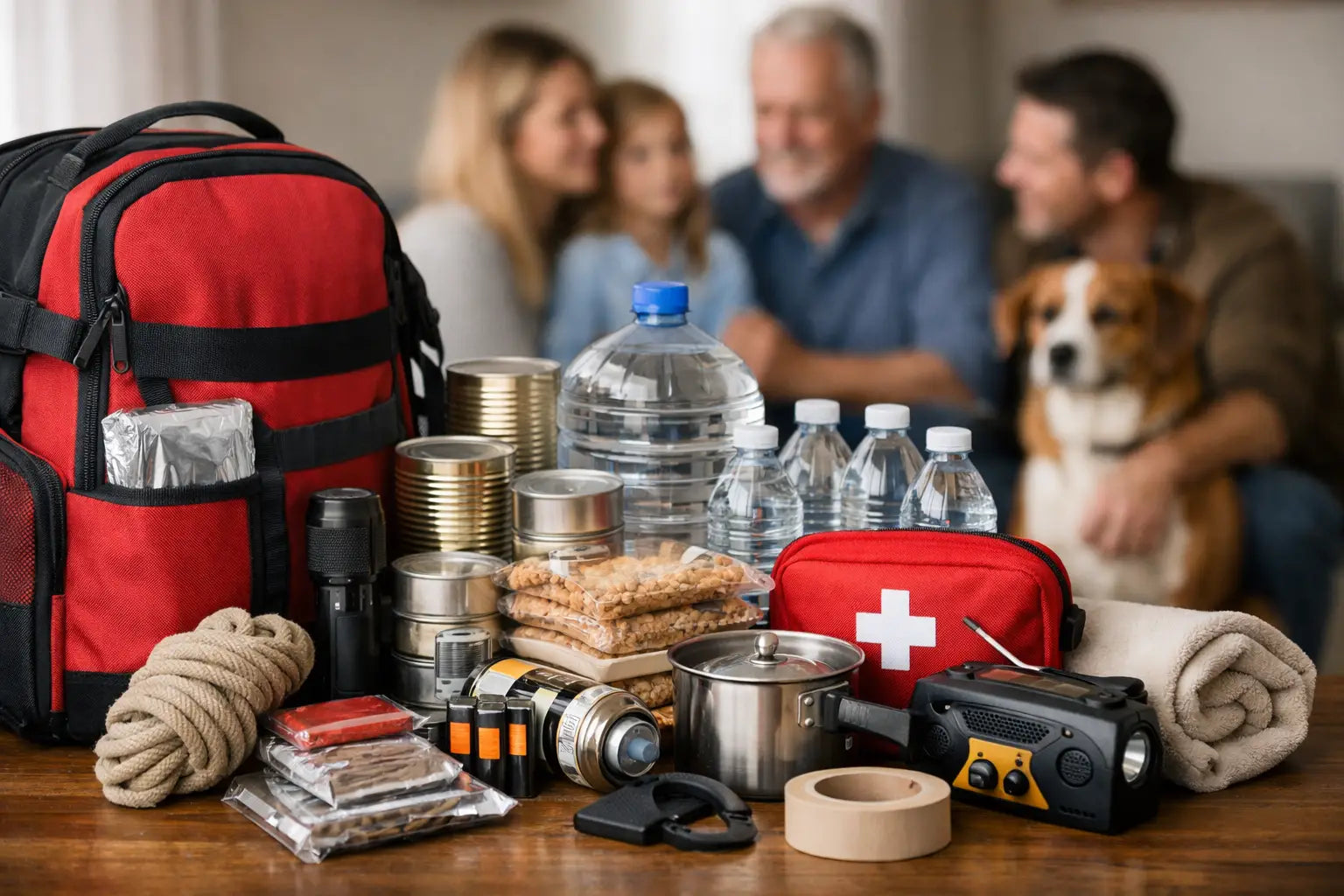
When the power goes out at 7:12 p.m. on a school night, your family does not need a dramatic survival plan. You need flashlights that work, water you can trust, food your kids will actually eat, and a way to get through the next 72 hours without turning your house upside down. That is why building emergency supplies for families works best when it starts with real life, not fantasy.
Most households already know this at some level. They have lived through a hurricane warning, a winter storm, a wildfire evacuation notice, or the bare shelves of a supply shortage. The problem usually is not motivation. It is volume. There are too many products, too many opinions, and too much advice built for extremes instead of everyday households.
A better approach is simpler. Think in layers. First, cover the basics that keep your family safe and stable during a short disruption. Then add depth for longer outages, more difficult seasons, and the specific risks where you live.
The core emergency supplies for families
Every family needs the same five categories first: water, food, light and power, first aid, and sanitation. If one of those is missing, the rest of your plan gets shaky fast.
Water comes first because it becomes a problem faster than most people expect. A common planning target is one gallon per person per day, but that is a minimum for drinking and basic hygiene. Families with young children, nursing mothers, hot climates, or limited mobility may need more. Pets count too. Stored water is the easiest place to start, but storage alone is not the whole answer. A family that has both stored water and a dependable filtration or purification backup is in a much stronger position.
Food should be easy, familiar, and low-stress. This is where people often overbuy and underthink. You do not need a garage full of obscure meals before you have breakfast covered for three days. Start with food that requires little fuel, little water, and minimal cleanup. Then add shelf-stable staples and longer-term options over time. The right mix depends on your family. Small kids, dietary restrictions, and elderly relatives all change the math.
Light and power matter more than people assume because outages create a chain reaction. No lights means no normal routine. No charged phones means weaker communication. No backup power can also affect medications, mobility devices, garage access, and remote work. A few quality lanterns, headlamps, battery storage, charging cables, and a practical backup power source can calm a house down quickly.
First aid is not just bandages in a plastic box. A family-ready setup should cover common cuts, burns, sprains, fevers, stomach issues, and prescription interruptions. If someone in the house has asthma, diabetes, severe allergies, or another ongoing condition, your medical planning needs to reflect that. The same goes for glasses, hearing aid batteries, infant medicine, and pet medications.
Sanitation is the category many families forget until it becomes urgent. If water service is interrupted, toilets back up, or an evacuation puts you in a crowded temporary space, hygiene becomes a quality-of-life issue fast. Hand sanitizer, wipes, trash bags, gloves, toilet backup options, and basic cleaning supplies do more than keep things comfortable. They help prevent a difficult situation from getting worse.
Build for your actual risks
A family in coastal Florida does not need the exact same kit as a family outside Denver. The basics stay the same, but the details should reflect what is most likely where you live.
If hurricanes are part of life, longer power outages and water interruptions deserve more attention than a small evacuation bag alone. If wildfires are a concern, smoke, fast-moving evacuation windows, and vehicle readiness may matter more. In winter storm regions, heat retention, alternate cooking, and pipe protection move up the list. In earthquake zones, securing supplies and planning for disrupted transportation becomes more important.
This is where some restraint helps. You do not need to prepare equally for every possible emergency. You need to be solid for the disruptions your family is most likely to face, then reasonably covered for the rest.
Family emergency kits vs. home supplies
These are not the same thing, and treating them like they are can leave gaps.
A home setup is what supports your household during shelter-in-place situations like outages, storms, or short-term shortages. This includes stored water, shelf-stable food, backup lighting, power stations, cooking options, blankets, first aid, and sanitation supplies.
A family emergency kit is about mobility. If you need to leave quickly, each person should have access to essentials without sorting through closets under stress. For most families, that means evacuation bags with clothing, medications, copies of key documents, chargers, snacks, water, hygiene items, and comfort items for children. Keep them practical. The point is to bridge a bad day, not recreate your whole house in a backpack.
The trade-off is cost and maintenance. Home supplies can be more complete and more economical per use. Evacuation bags need to stay lighter and simpler, and they require more frequent checks because clothing sizes, medications, and family needs change.
How much is enough?
This is the question almost every family asks, and the honest answer is that it depends on your goals.
If you are just starting, aim for 72 hours at home and a basic evacuation setup for each family member. That alone puts you ahead of most households and covers a surprising number of real events.
After that, move to two weeks. For many families, two weeks is the most practical target. It covers common outages, delayed deliveries, regional disasters, and school or work disruptions without requiring a major lifestyle change.
Longer-term readiness makes sense for some households, especially those in high-risk areas or those who want stronger food independence. But going from zero to a one-year plan is where many people get overwhelmed and quit. Start where success is likely.
The supplies families forget
The missing items are often small, but they create big problems.
Families regularly forget manual can openers, extra phone charging cables, spare prescription glasses, cash in small bills, and simple comfort items for children. They forget pet food, leashes, litter, and vaccination records. They forget backup ways to heat food, not just store it. They forget that a power outage can also mean a garage door that will not open, a sump pump that will not run, or refrigerated medicine at risk.
There is also the boredom factor, which sounds minor until day two. A deck of cards, books, crayons, and downloaded entertainment can reduce stress in a house that has already had enough of it.
Buying smart without overbuying
Preparedness should feel steady, not frantic. The best buying strategy for most families is category by category.
Start with water and lighting because they solve immediate problems. Then build out food, first aid, sanitation, and backup power. After that, add shelter and warmth items, then region-specific gear. This keeps your spending organized and prevents the common mistake of buying impressive equipment before covering basic needs.
Quality matters, but not every item needs to be premium. A dependable water storage system or power solution is worth careful selection. On the other hand, some low-cost basics like gloves, wipes, trash bags, and shelf-stable pantry foods do exactly what they need to do. Spend more where failure would matter most.
This is also where trusted category-based retailers can help. A family-first preparedness store such as SHTF Prepper Club can make the process easier by organizing solutions around real household needs instead of pushing tactical gear that does not fit how most families live.
Maintenance is part of readiness
Buying supplies is only the first half. If your batteries are dead, the kids outgrew the clothes in the bag, or the stored food passed its date three summers ago, the plan is weaker than it looks.
Check your supplies twice a year. Daylight saving time works well as a reminder. Rotate water if your storage method calls for it, replace expired medications, test lights and power gear, update documents, and refresh food your family has already eaten through. Keep the system boring and repeatable.
A visible, organized setup helps here. Clear bins, labeled shelves, and simple category grouping make maintenance easier and make supplies easier to use under stress. The best emergency supplies for families are not hidden so well that nobody can find them.
Preparedness does not have to start with a perfect room, a giant budget, or a ten-page checklist. It can start with enough water for the week, a reliable lantern, a better first aid kit, and a shelf of food you know your family will use. That is not a small step. That is how stable households are built before the next disruption tests them.