
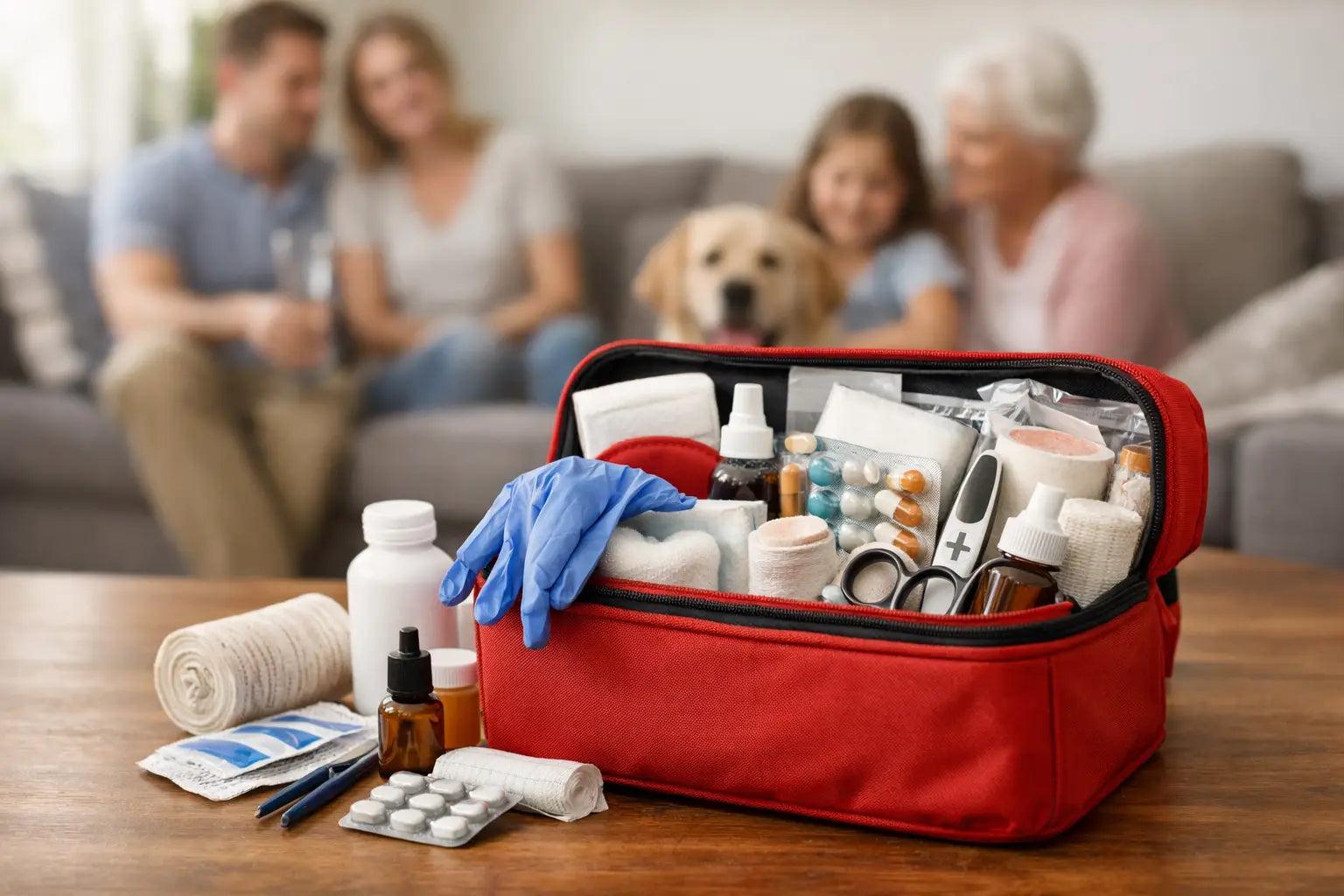
A scraped knee is easy. A power outage, storm injury, kitchen burn, or a child with a high fever at 2 a.m. is where a real first aid kit for family emergencies starts to matter. Most households already own "some medical stuff," but in an actual emergency, loose bandages in a bathroom drawer are not the same as a kit that is organized, current, and built for the people under your roof.
That difference matters more than most families realize. Emergencies are rarely dramatic in the movie sense. More often, they are messy, inconvenient, and badly timed. The goal is not to turn your home into a clinic. It is to make sure you can handle the first 10 minutes, the first night, or the first few days with more confidence and less scrambling.
What a first aid kit for family emergencies should actually do
A good family kit has one job: help you stabilize common injuries and illnesses until things calm down, professional care is available, or you can safely get to it. That means treating cuts, burns, sprains, headaches, fever, stomach issues, blisters, and minor allergic reactions. It also means being ready for the problems that show up during outages, storms, evacuations, and disrupted routines.
For a family, the kit should fit your real life. A household with toddlers needs different supplies than a home with teenagers. Grandparents may need duplicate prescription support items, extra reading glasses, or blood pressure supplies. If your family includes pets, that should affect your planning too, even if pet care items live in a separate pouch.
This is where many people overbuy in one direction and underprepare in another. They load up on trauma gear they do not know how to use, then forget child-safe pain relievers, electrolyte packets, or spare daily medications. The best kit is not the most tactical-looking one. It is the one your family can use correctly under stress.
Start with likely scenarios, not worst-case fantasies
If you live in Florida, a hurricane and multi-day outage are more likely than a wilderness survival event. In California, wildfire smoke, evacuation, and burn risks may shape your choices. In the Midwest, ice storms and tornado cleanup injuries are common. For many families, the most realistic medical issues during a disruption are dehydration, cuts, strains, headaches, stomach upset, and stress-related flare-ups.
That is why practical preparedness works better than fear-based buying. Build your kit around events you have already seen or can reasonably expect. Ask simple questions. If the power is out for three days, what medical needs become harder? If we have to leave home fast, what do we need in the car? If roads are blocked or urgent care is closed, what can we handle ourselves?
Those answers shape a much better kit than shopping from a generic checklist alone.
The core supplies every family kit needs
Every first aid kit for family emergencies should include wound care basics, medications for common symptoms, simple support tools, and personal medical essentials. You do not need hundreds of items, but you do need enough depth to handle repeated use over several days.
Wound care should cover adhesive bandages in multiple sizes, sterile gauze, rolled gauze, medical tape, antiseptic wipes, antibiotic ointment, and a way to clean and protect cuts. Add burn gel or burn dressings, blister care, tweezers, trauma shears, gloves, and instant cold packs. An elastic wrap and a basic splinting option can be very useful during storms, cleanup, or falls.
Medication support matters just as much. Keep pain relievers and fever reducers for adults and children, antihistamines, anti-diarrheal medication, oral rehydration or electrolyte support, cough or cold basics that fit your household, and any doctor-recommended allergy response items. If someone in your family uses an inhaler, EpiPen, glucose monitoring supplies, or prescription medication, your emergency planning is incomplete without backup access and a rotation system.
Then come the overlooked items that make a kit truly usable: a thermometer, emergency blanket, saline wash, hand sanitizer, notepad, permanent marker, and printed medical information. If you wear contacts, glasses, or hearing aids, include backups or support items. A small flashlight belongs in the kit too. Treating an injury in the dark is not the time to realize your phone battery is at 8 percent.
Build for your household, not a generic family of four
This is where a lot of kits fall short. They are assembled for an imaginary average household. Real homes are not average.
If you have young kids, focus on child-appropriate medication dosing, comfort items, fever management, and supplies that work on smaller bodies. If you have teens in sports, include more wraps, cold packs, blister care, and pain relief. If an older adult visits often or lives with you, include extras that support mobility, chronic conditions, and medication organization.
The same goes for location and lifestyle. A suburban family that shelters at home during winter storms may prioritize backup medication, heat-related burn care from alternate cooking, and injury supplies for ice and fallen branches. A family with long commutes may need a smaller duplicate kit in each vehicle. A household in wildfire country should think about smoke irritation, evacuation copies of prescriptions, and grab-and-go organization.
Preparedness gets easier when you stop asking, "What should everyone have?" and start asking, "What does our family need first?"
One big kit is not enough
Most families need three layers of medical readiness. The home kit is the main one. It should be the most complete and the easiest to restock. Then you need a smaller car kit for breakdowns, school pickup delays, roadside injuries, and weather disruptions. Finally, if your family keeps evacuation bags, each one should include a compact medical pouch tailored to that person.
This layered approach solves a common problem: having supplies, but not having them where the emergency happens. A great closet kit does not help much when your child gets hurt at the ball field or you are stuck in traffic during a winter storm.
You do not have to duplicate everything. Think in terms of role. The home kit handles depth. The car kit handles mobility. The evacuation kit handles the first stretch away from home.
Organization matters as much as the supplies
In an emergency, time and clarity beat quantity. A family first aid kit should be easy to open, easy to carry, and easy to understand at a glance. Clear pouches or labeled sections help more than people expect. Separate wound care from medications. Keep gloves and trauma shears visible. Store children’s items where they are not buried.
A written inventory is worth the few minutes it takes to make one. So is a medication sheet with names, dosages, allergies, doctors, and emergency contacts. If a spouse, grandparent, or older child needs to use the kit without you, labeling becomes part of preparedness.
Storage location matters too. Cool, dry, and accessible is ideal. Not the attic. Not the trunk in extreme summer heat if you can avoid it. Not buried behind holiday decorations. If your area deals with hurricanes, earthquakes, or wildfire risk, think about whether you can grab the main kit in under 30 seconds.
The smartest kits are maintained, not just bought
Medical supplies are not a one-and-done purchase. Kids grow. Medications expire. Adhesives fail in heat. Family needs change. The kit you built three years ago may not match the household you have now.
A quick check every six months usually works well. Replace expired meds, restock used items, update prescription copies, and review sizes and dosages. Tie it to something easy to remember, like daylight saving time changes or the start of hurricane or winter storm season.
This is also a good time to ask one simple question: if something happened tonight, would this kit actually help us? If the answer is mostly yes, you are doing well. Preparedness does not have to be perfect to be useful.
Should you buy a ready-made kit or build your own?
It depends on your starting point. A quality ready-made kit is often the best move for busy families who need a solid foundation fast. It saves time, gives you structure, and gets you out of the "we should really do this someday" stage.
But most ready-made kits still need customizing. They may be light on medications, weak on family-specific needs, or built for short-term minor injuries rather than a multi-day disruption. Building your own gives you precision, but it takes more effort and usually more follow-through.
For many households, the best answer is a hybrid approach. Start with a strong base kit, then add what your family actually needs. That keeps the process manageable. It also fits the way most people build readiness over time - start small, improve deliberately, and avoid wasting money on gear that does not match your life.
If you are building out broader household readiness, SHTF Prepper Club approaches first aid the same way families should: practical, scalable, and centered on real disruptions rather than fantasy scenarios.
A good first aid kit will not remove the stress of an emergency. It will do something more useful. It will give your family a calmer first response, and that alone can change the outcome.