
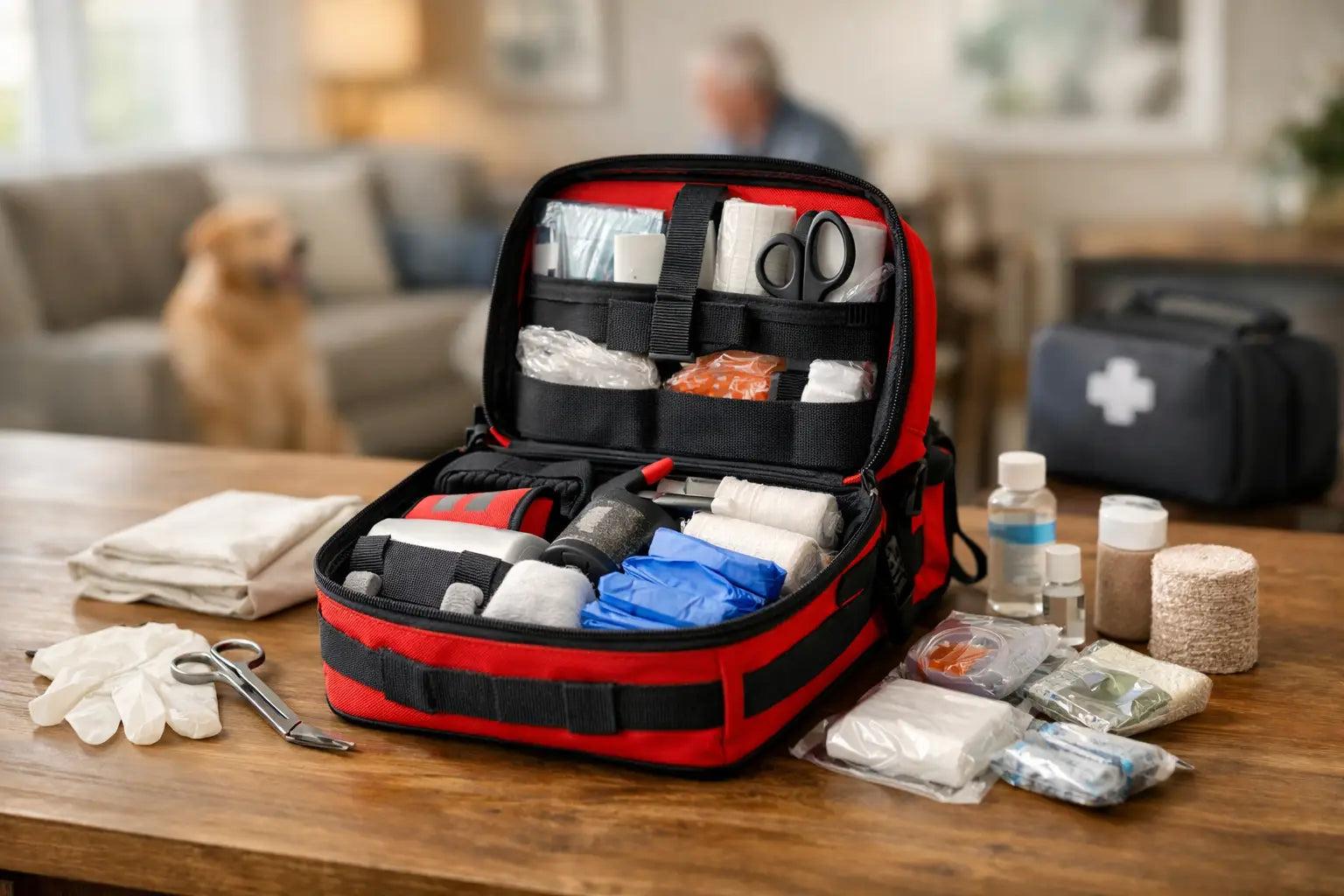
A bad fall on the stairs. A deep cut from broken glass after a storm. A chainsaw injury during cleanup. Most families do not need a hospital-grade supply room at home, but they do need a plan for the kind of injury that cannot wait politely for a pharmacy run. That is where a trauma kit for home earns its place.
This is not the same as the basic first aid box in the bathroom cabinet. Bandages, antiseptic wipes, and ibuprofen matter, but trauma care starts where ordinary first aid stops. You are preparing for severe bleeding, major wounds, burns, fractures, and the first critical minutes before EMS arrives or before you can safely get someone to higher care.
What a trauma kit for home is really for
A home trauma kit is meant to stabilize, not solve. That distinction keeps people from overbuying the wrong gear or underpreparing because the whole category feels intimidating. You are not trying to replicate an emergency room. You are buying time, controlling immediate threats, and making a bad situation less dangerous.
For most households, the biggest priorities are bleeding control, wound packing, pressure dressings, gloves, shears, and a few core items for burns and splinting. If you live in a storm zone, a wildfire area, or a rural location where response times may stretch, that kit matters even more. The same is true if your family uses power tools, ladders, firearms, chainsaws, or has an active home workshop.
It also helps to think in terms of realistic use cases. A kitchen injury is more likely than a movie-scene emergency. Cleanup after a hurricane or tornado often creates sharp metal, broken glass, exposed nails, and unstable debris. Winter storms bring falls. Summer brings boating, grilling, and outdoor equipment injuries. The best trauma kit is not dramatic. It is specific to how your family actually lives.
The supplies that matter most
If you are building a trauma kit for home, start with bleeding control. Severe blood loss is one of the few emergencies where the right tools and a little training can make an immediate difference. A quality tourniquet, compressed gauze, hemostatic gauze if you are trained to use it, and one or two pressure bandages form the core.
Gloves belong in the kit, and more than one pair. Trauma shears matter because cutting away clothing quickly is often necessary. A permanent marker helps record the time a tourniquet was applied. Those may sound like small details, but they become very important under stress.
After bleeding control, think about wound coverage and protection. Sterile gauze pads, rolled gauze, medical tape, and chest seals can be valuable, although chest seals are more situation-specific and less likely to be used in a typical suburban household than bleeding supplies. Burn dressings or burn gel are worth including, especially if you cook often, use a generator, or live in a wildfire-prone area.
Splinting materials deserve a place too. A flexible splint and an elastic wrap can help immobilize a suspected fracture or severe sprain until you reach care. Add a cold pack, but do not let that crowd out life-threatening priorities. Ice packs are common. Severe bleeding control is often not.
A flashlight or headlamp belongs in the pouch as well. Many home injuries happen during power outages, in garages, or outside at dusk. Good light makes everything easier and safer.
What not to stuff into your home trauma kit
This is where a lot of families waste money. A trauma kit for home does not need ten types of bandages, expired bargain-bin supplies, or advanced medical tools you do not know how to use. If an item looks impressive but you could not explain when to use it, it probably does not belong in your first build.
Skip the temptation to build for every possible medical event in one bag. Medications for fever, stomach upset, or allergy relief belong in your broader first aid and medical setup. Your trauma kit should stay focused and easy to use fast.
Be careful with very cheap kits sold on price alone. Many contain a lot of filler and not enough of the items that actually matter. One good tourniquet and high-quality gauze are more useful than a pouch full of mini tools and novelty extras. This is one preparedness category where quality matters.
Where to keep it and how many you need
One trauma kit in the back of a closet is better than none, but access matters. If the only kit is upstairs and the injury happens in the garage, those extra minutes count. For many families, the right answer is one main trauma kit in a central location and smaller bleeding-control supplies in higher-risk areas like the workshop, kitchen, barn, or vehicle.
The best location is dry, easy to reach, and known to every adult in the house. If you have older children or teens, they should know where it is too. You do not need to turn this into a family drill night, but a simple walk-through helps. In an emergency, people do not rise to the occasion. They fall back on what they already know.
If you have a large home, detached garage, or acreage, one kit may not be enough. If you live in a compact house or condo, a single well-built kit may cover you fine. It depends on layout, lifestyle, and how far help is likely to be.
Build around your risks, not someone else’s checklist
This is the part many guides skip. The best trauma kit for home in coastal Florida may not look identical to the best one for a family in Colorado or rural Texas. Regional risks shape priorities.
Storm and hurricane households should think about debris injuries, lacerations, and delayed emergency response. Wildfire regions may want stronger burn care and smoke-related planning in the larger household medical setup. Homes with pools, boats, ATVs, or regular hunting trips should think about where injuries are most likely to happen and whether a second kit belongs outside the house.
Age matters too. Grandparents with frequent grandkid visits may want a trauma kit that is still capable for adults but stored alongside child-friendly basics in a broader first aid system. Families with pets should remember that pet injuries during disasters are common, but animal-specific care may require separate supplies and training.
A realistic kit is always better than a fantasy kit. Start with what matches your life now.
Training changes the value of every item
Gear helps. Skills matter more.
A tourniquet in a pouch is reassuring. A tourniquet you have practiced applying one-handed is far more useful. The same goes for wound packing, pressure dressing placement, and knowing when to call 911 immediately. Even a short bleeding-control class can make your supplies dramatically more effective.
This does not mean you need to become a medical hobbyist. It means your family should be familiar with the core tools you keep. Open the kit. Read the labels. Check expiration dates. Replace what gets used. If you buy a prebuilt kit, inspect it the day it arrives instead of assuming it is ready forever.
For many households, that is the right balance - buy proven supplies, learn the basics, and keep the system simple enough that anyone calm and capable in the home can use it.
Prebuilt kit or DIY?
Both approaches can work. A prebuilt trauma kit saves time and reduces guesswork, especially if it comes from a preparedness company that understands real emergency use rather than novelty marketing. For a busy family, that convenience is worth a lot.
DIY gives you more control. You can adjust for allergies, local risks, storage space, and budget. You can also choose better versions of critical items instead of accepting whatever a mass-market kit includes.
The trade-off is that DIY takes more effort and a little more knowledge. Many families do best with a hybrid approach: start with a quality core kit, then customize. That approach keeps momentum up and avoids the common mistake of researching for six months while still having no real supplies on hand.
At SHTF Prepper Club, that practical middle ground is where many families start - not chasing perfection, just getting real capability into the house and improving from there.
A smart home setup goes beyond the kit
A trauma kit works best inside a larger emergency plan. If someone is badly hurt during a power outage or after a storm, you may also need backup lighting, charged power banks, clean water, extra medications, and a way to communicate if cell service is spotty. Medical readiness is rarely just medical.
That is why it helps to treat your trauma kit as one layer, not the whole answer. Keep it visible. Keep it stocked. Pair it with a broader first aid supply, a household emergency plan, and enough basic preparedness that an injury does not become more dangerous because your home is already in crisis.
You do not need to buy everything this weekend. But if your house has the usual mix of tools, stairs, weather, and everyday chaos, a good trauma kit is not overreacting. It is a quiet, grown-up kind of readiness that protects the people under your roof when minutes matter most.