
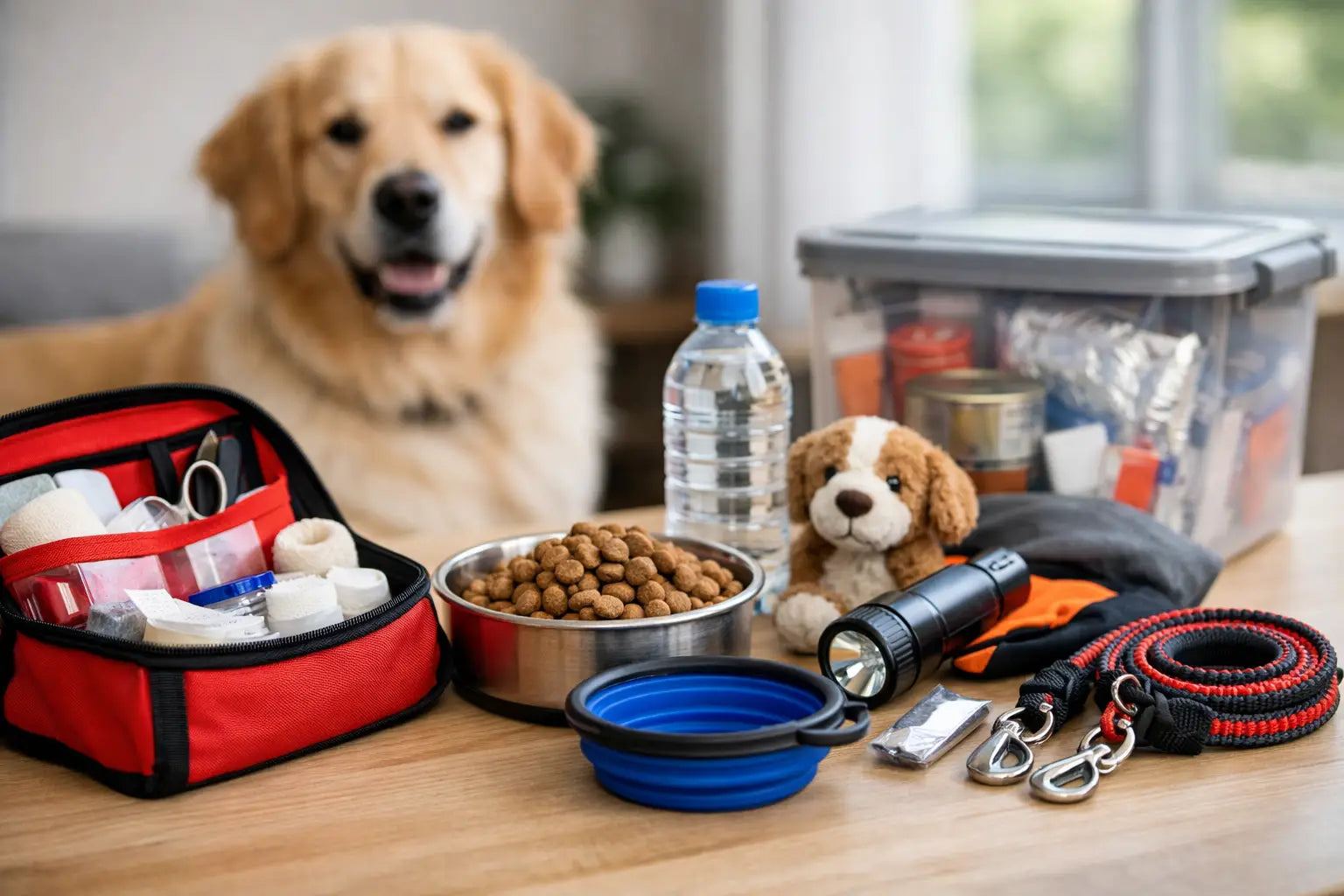
The problem usually shows up at the worst possible moment. Power is out, the weather is turning, your phone is half charged, and suddenly you realize your dog’s medication is almost empty or the cat carrier is buried in the garage. A pet emergency kit fixes that kind of scramble before it starts.
If your pets are part of your family, they belong in your emergency plan from the beginning, not as an afterthought. The goal is not to build a complicated system. It is to make sure you can care for them for at least 72 hours, and ideally longer, whether you are sheltering at home or leaving in a hurry.
What a pet emergency kit needs to do
A good kit does three jobs. First, it keeps your pet alive and stable with food, water, medication, and shelter basics. Second, it helps you move quickly if you need to evacuate. Third, it gives you the records and control items that make a stressful situation easier to manage.
That means your kit should be practical, portable, and specific to your animal. A Labrador in hurricane country needs something a little different than an indoor cat during a winter storm. If you have birds, rabbits, reptiles, or livestock, the planning gets more specialized. The principle stays the same - cover essentials, mobility, and safety.
Start with the basics your pet cannot go without
Food and water come first. Pack at least three days of pet food in airtight, clearly labeled containers. If your area deals with long outages, wildfire evacuations, or storm cleanup delays, a seven-day supply is wiser. Dry food is easier to store, but if your pet only tolerates canned food, include that and rotate it before expiration.
Water matters just as much. Pets need their own supply, especially when municipal water is shut off or contaminated. Store enough for drinking and, if needed, a little extra for cleaning paws, rinsing bowls, or flushing out irritated eyes. A collapsible bowl takes up almost no space and solves a lot of problems fast.
Medications should be packed with the same seriousness as food. If your pet takes insulin, seizure medication, heart medication, or anything daily, keep an extra supply if your veterinarian allows it. Include printed dosing instructions. In an emergency, stress and fatigue make people forget simple things.
Comfort items help more than many people expect. A familiar blanket, small toy, or worn T-shirt can calm a frightened animal in a shelter, hotel, car, or dark house. That is not fluff. A calmer pet is easier to feed, transport, and keep safe.
Your pet emergency kit should include control items
When people build kits, they often focus on supplies and forget handling. But during an emergency, control is safety.
For dogs, pack a sturdy leash, backup leash, collar or harness, and a crate if one is practical for your size of dog. For cats, a secure carrier is non-negotiable. Cats can bolt through a half-open car door in seconds, especially when alarms, strangers, and bad weather are involved.
If your pet is not already microchipped, this is worth addressing now. Also make sure tags are current and readable. Put a copy of vaccination records, vet contact information, and a recent photo in a waterproof sleeve. If you get separated, those details matter. A photo of you with your pet can also help prove ownership if needed.
Waste supplies belong in the kit too. Dog waste bags, paper towels, disinfecting wipes, litter, a small litter pan, and disposable gloves can make temporary sheltering much easier. This is one of those categories that feels minor until you need it.
Build for sheltering at home and leaving fast
Most families think first about evacuation. That makes sense, especially in wildfire, flood, and hurricane zones. But many emergencies involve staying home without power, heat, air conditioning, or normal supply runs. Your pet emergency kit should work for both situations.
For sheltering at home, think in layers. Food, water, medications, cleaning supplies, and comfort are your base layer. Then add what your climate demands. In a winter storm, that may mean extra bedding and a way to keep smaller pets warm. In summer outages, it may mean battery-powered fans, cooling mats, and careful planning around heat exposure.
For evacuation, portability matters more. Keep the main kit in one easy-to-grab container, and keep carriers, leashes, and travel bowls stored nearby. If your dog rides poorly or your cat panics in the car, do not assume you will figure it out under pressure. Practice loading them. Even one short trial run can reveal what is missing.
Don’t forget pet first aid
A household first-aid kit is not enough by itself. Your pet kit should include a few animal-specific medical basics, especially if your area is prone to debris, broken glass, heat, smoke, or storm damage.
A solid pet first-aid section often includes gauze, nonstick bandages, adhesive tape, blunt-tip scissors, tweezers, saline wash, styptic powder, and a digital thermometer. Add any species-specific supplies your veterinarian recommends. Keep emergency numbers with the kit, including your vet, the nearest emergency animal hospital, and poison control guidance relevant to pets.
There is a trade-off here. You do not need to become your own field veterinarian. In fact, overpacking specialized medical gear you do not know how to use can create false confidence. Focus on stabilization, wound protection, and getting help.
Customize by species, age, and health needs
This is where a lot of generic advice falls short. A pet emergency kit for a healthy adult dog is not the same as one for a senior cat with kidney disease or a rabbit that is sensitive to heat.
Puppies, kittens, and senior pets may need more frequent feeding, extra warmth, or closer medication timing. Anxious animals may do better with a crate cover or pheromone spray if your veterinarian has approved it. Pets with special diets need backup food they can actually tolerate, not just whatever is on sale when you build the kit.
If you have exotic pets, planning gets more technical. Reptiles may need heat support. Birds are sensitive to smoke and temperature swings. Small animals need secure travel enclosures and bedding that stays dry. In these cases, your veterinarian’s input is especially valuable.
Where most families get this wrong
The biggest mistake is building a kit once and forgetting it. Pet food expires. Medications change. Vaccination records get outdated. Pets gain weight, age, develop allergies, or switch diets. The kit has to keep up.
The second mistake is storing everything in three different places. If food is in the pantry, meds are upstairs, carriers are in the attic, and records are in a desk drawer, you do not have a real system. You have a scavenger hunt.
The third mistake is assuming public shelters, hotels, or relatives can easily take your pet. Sometimes they can. Sometimes they cannot. It depends on the emergency, the facility, and the animal. Planning ahead gives you more options.
How to organize a pet emergency kit without overcomplicating it
Keep it simple enough that you will maintain it. A lidded tote works well for home supplies. A smaller grab-and-go bag can hold records, leash or harness, bowls, waste bags, and a few days of essentials. Label both clearly.
Put a review reminder on your calendar every six months. Rotate food and water, check medication dates, replace worn leashes, and update records and photos. If your region has a clear disaster season, like hurricane season or winter storm season, review the kit before it starts.
Store the kit where you can reach it quickly. Not buried behind holiday decorations. Not in a hot shed if medications or food quality could be affected. Easy access beats perfect storage plans that fail under stress.
For families just getting started, this does not have to be expensive. A basic setup with food, water, a carrier, medication copies, sanitation supplies, and comfort items is already far better than nothing. You can build from there over time, the same way SHTF Prepper Club encourages families to approach the rest of their readiness plan.
A pet emergency kit is really a family decision
Preparedness gets easier when everyone in the house knows the plan. Make sure family members know where the kit is, who grabs which pet, and what happens if you need to leave while someone is at work or school. If grandparents watch the kids or pets regularly, they should know the basics too.
That small bit of coordination makes a real difference when the weather alert comes in or the power has already been out for twelve hours. You are not improvising. You are following a plan you already made.
Your pets count on you every ordinary day. Building their kit is one of the clearest ways to show that your emergency plan includes every member of the household, even the ones with paws, whiskers, or feathers.