
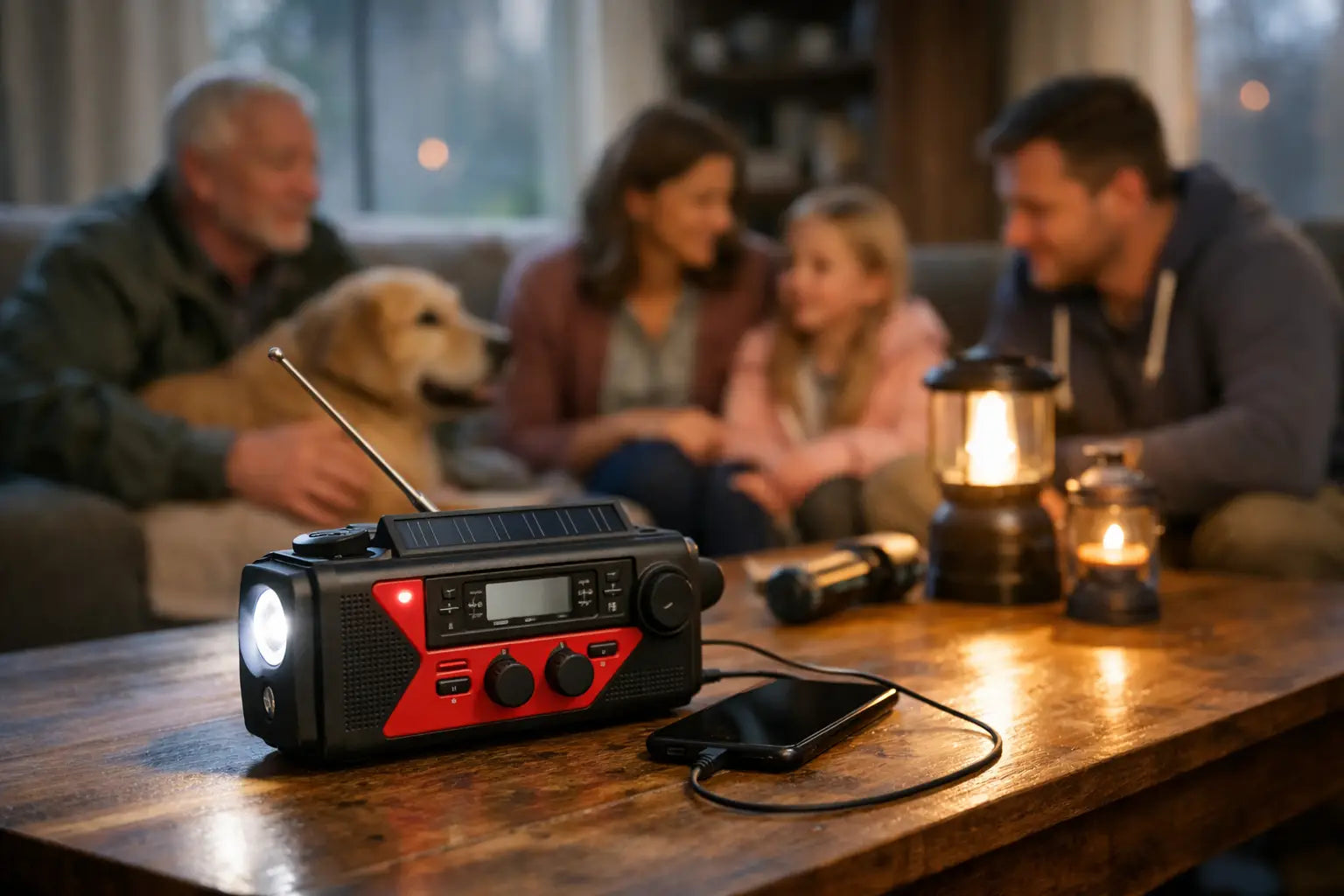
The lights go out at 9:14 p.m. Your phone is at 32 percent. Cell service gets spotty an hour later. By morning, your group texts are stalled, the Wi-Fi is dead, and nobody is quite sure whether the outage will last six hours or three days. That is where an emergency radio stops being a nice extra and starts pulling real weight.
For most families, the point of an emergency radio is simple. It gives you information when the systems you rely on every day are down or unreliable. Weather alerts, evacuation notices, boil water advisories, shelter locations, road closures - those details matter fast, especially when you are making decisions for kids, older parents, or pets.
Why an emergency radio still matters
A lot of people assume their phone has replaced the radio. Most of the time, that feels true. But during hurricanes, wildfires, tornado outbreaks, ice storms, and extended blackouts, the weak point is not access to apps. It is power, signal, and battery life.
An emergency radio gives you a layer of independence. You are not waiting on social media rumors or hoping one bar of service holds long enough to load a county alert page. You are getting broadcast information designed for exactly these situations.
That does not mean every household needs the same model. A family in coastal Florida preparing for hurricane season may care most about long battery life and NOAA weather alerts. A homeowner in California wildfire country may care more about quick evacuation updates and easy grab-and-go charging. A Midwestern family dealing with tornadoes may want a bedside unit that wakes them up at 2 a.m. when watches turn into warnings.
What an emergency radio should actually do
This is where people get distracted by marketing. A good emergency radio is not about having the most features on the box. It is about doing a few important jobs reliably.
First, it should receive NOAA weather radio if you are in the United States. That gives you direct access to official weather alerts and hazard information. The alert function matters just as much as the basic radio reception. In a fast-moving weather event, the radio should be able to notify you, not just sit quietly on a shelf.
Second, it should have more than one way to stay powered. Battery-only radios can work well, but they create one more thing you have to keep stocked and rotated. Rechargeable units are convenient until nobody remembers to charge them. The strongest setup usually includes at least two of these: USB charging, replaceable batteries, a hand crank, or a small solar panel.
Third, it should be simple to use under stress. That sounds obvious, but it is where many radios fall apart. Tiny tuning dials, vague battery indicators, flimsy ports, and hard-to-read labels are annoying on a normal day. During an emergency, they become real problems.
Reception, durability, and volume also matter. If the speaker is weak or the antenna struggles indoors, the radio becomes more frustrating than helpful. If you have ever tried to catch a storm update in a noisy kitchen with kids talking and a generator humming outside, you know why clear audio matters.
The features that are worth paying for
Not every extra feature is fluff. Some really do make family readiness easier.
A built-in flashlight is useful, especially in a bedside or kitchen radio. A phone charging port can help in a short outage, though families should be realistic here. Most emergency radios are not large power banks. They may top off a phone enough to send updates or check alerts, but they are not meant to replace dedicated backup power.
An alert lock function is another strong feature. It lets the radio stay on standby for emergency broadcasts without you having to constantly monitor it. If you live in a storm-prone area, that can be one of the most valuable functions in the whole unit.
Some families also benefit from radios with AM and FM access in addition to weather bands. Local stations often carry practical information that official weather channels do not, especially during longer regional disruptions. You may hear updates on school closures, fuel availability, shelter operations, and local road conditions.
If you are building out your home preparedness in layers, an emergency radio with USB charging often fits well alongside power outage essentials like lanterns, battery banks, and a small portable power station. It is not the hero of the whole setup, but it is one of the pieces that helps the rest of your plan work better.
What to skip or treat with caution
The hand crank feature gets a lot of attention, and it is useful. But it should not be the main reason you buy a radio. Crank charging is best treated as a backup to the backup. It works when you need it, but it can be slow and tiring, and output is usually limited.
Tiny built-in solar panels can also be oversold. They are helpful for maintaining charge over time or adding a bit of emergency power in good conditions. They are not a replacement for intentional charging before a storm or for stored batteries.
The same goes for bargain-bin radios with every feature imaginable. If a unit promises radio, flashlight, siren, Bluetooth speaker, giant battery bank, reading lamp, and ten charging modes at a suspiciously low price, something usually gives. For most families, reliability beats novelty every time.
How to choose the right emergency radio for your home
Start with where and how you will use it. That answer usually narrows the field quickly.
If you want one radio for the house, keep it in a central location like the kitchen, mudroom, or primary bedroom. Choose a model with strong reception, NOAA alerts, simple controls, and multiple charging options. This is the practical pick for most households.
If you also keep evacuation bags ready, a second smaller radio can make sense. In that case, weight and portability matter more. You may accept a smaller speaker or fewer extras because the goal is mobility.
If you care for older relatives, think about readability and ease of use. Large buttons, clear labels, and straightforward tuning are not luxury features. They are what make a tool actually usable when someone is tired, anxious, or not tech-comfortable.
Families with children should also think about where the radio lives. If it is buried in a basement tote under holiday decorations, it may as well not exist. Put it somewhere accessible, and let everyone in the house know what it is for.
Where an emergency radio fits in your larger plan
A radio is information, not comfort. It does not keep food cold, lights on, or water safe. But it helps you make better decisions about all three.
That is why the best way to think about an emergency radio is as part of a system. Pair it with backup lighting, stored water, shelf-stable food, first aid, and a way to charge essential devices. If your area sees regular outages, add a power station or generator plan. If wildfire or hurricane evacuation is a real possibility, keep a portable radio with your evacuation supplies.
At SHTF Prepper Club, that is how we encourage families to build readiness in general - not by chasing one magic item, but by covering the basics in a calm, organized way.
A few smart habits matter more than the model
Even a great emergency radio will disappoint you if it is neglected. Test it before storm season. Charge it. Store extra batteries if your unit uses them. Extend the antenna and make sure you know how to find your local weather band. If it has an alert mode, turn it on and confirm you understand how it works.
It also helps to decide ahead of time what information you are listening for. Weather track updates, evacuation notices, utility restoration estimates, and local shelter instructions are all more useful when you are calm enough to act on them. A radio cuts through uncertainty, but only if you treat it like a tool instead of a decoration.
The right emergency radio will not make your family anxious. It usually does the opposite. It gives you one more steady, dependable way to know what is happening when the normal flow of information breaks down. And on a hard night, that kind of clarity is worth more than people think.