
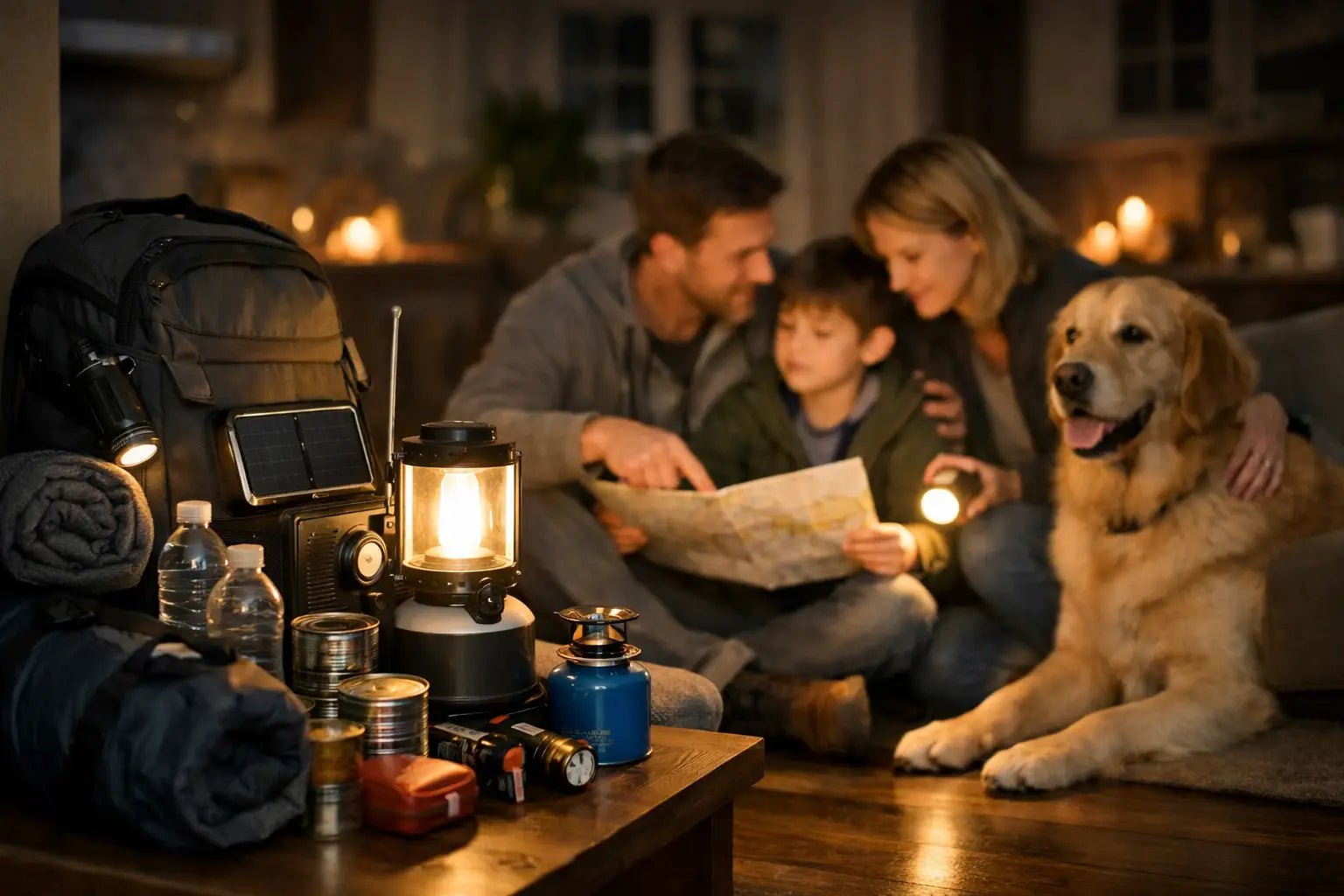
The hardest part of a long power outage is not darkness. It is the moment your family realizes the systems you count on every day - lights, refrigeration, water pressure, cell service, card payments - may not be back by bedtime. Grid down family preparedness is about closing that gap before stress takes over.
For most households, this does not mean building a bunker or buying a year of gear in one weekend. It means thinking clearly about what breaks first in your home, what your family uses every day, and how to keep everyone safe, fed, warm, informed, and reasonably comfortable if the power stays out longer than expected.
What grid down family preparedness really means
A grid-down event can be as local as an ice storm that knocks out power to your county or as wide as a hurricane, wildfire, or cascading infrastructure failure affecting several states. The exact cause matters less than the practical result. Your home loses electricity, supply runs become harder, and normal routines stop working.
That is why family preparedness should be built around functions, not fantasy scenarios. Start with water. Then food. Then light, heat or cooling, sanitation, communications, medication, and basic security. If those areas are covered, your household is in a far better position than most.
This is also where many families overbuy in one category and ignore another. A garage full of canned food will not help much if you cannot open it, cook it, or keep drinking water available. A large generator sounds reassuring, but it may not solve indoor cooking, prescription storage, or a child’s comfort at night. Balance matters.
Start with the rule of 72 hours, then stretch to two weeks
Three days is a smart starting point because it feels manageable and covers many common emergencies. But for grid down family preparedness, two weeks is often the better real-world benchmark. Utility restoration can drag on. Roads can stay blocked. Stores can reopen with thin shelves. Fuel can become the choke point.
If two weeks sounds like a lot, do not let that stop you. Build in layers. Get three days right. Then seven. Then fourteen. Families who stay consistent usually get further by adding a little every month than by making one oversized, stressful purchase.
Water is the first problem, not the fifth
Most people think about flashlights first. Water should come before lighting, because dehydration and sanitation problems show up fast. Store enough drinking water for every person and pet in the house, and remember that cooking and hygiene push your true need higher.
A practical baseline is one gallon per person per day for drinking and minimal sanitation, but many families are more comfortable planning for more. If you have infants, nursing mothers, elderly relatives, large dogs, or live in hot weather, your margin should be bigger.
Stored water is the simplest layer. After that, add a treatment option. If municipal water pressure drops, pipes freeze, or local contamination becomes a concern, you need a way to make questionable water safer. This is one area where redundancy is wise. Storage solves immediate needs. Filtration and purification extend your options.
Food should be easy to serve, not just easy to store
The best emergency food is the food your family will actually eat under stress. That includes shelf-stable pantry items, ready-to-eat meals, and longer-term food storage if you want deeper resilience. Think less about novelty and more about calories, familiarity, and prep requirements.
A useful food plan has layers. First, keep a stocked pantry of regular foods your household rotates anyway. Second, add foods that require little or no cooking. Third, build a deeper reserve of longer-shelf-life meals and staples. Families with children should pay close attention to routine comfort foods. In an emergency, emotional steadiness matters too.
Be honest about cooking constraints. If the grid is down, your electric stove and microwave may be useless. That means your food plan should match your backup cooking plan. If you can only boil water outdoors, freeze-dried meals may fit. If you want to cook soups, rice, or simple one-pot meals, make sure your fuel, cookware, and ventilation plan are realistic.
Power outages are really a chain of smaller failures
When people say they want backup power, they often mean they want normal life to continue. That is understandable, but expensive. A more grounded approach is to identify what truly needs electricity.
For one family, that may be refrigeration for medication, charging phones, powering a router, and running a few lights. For another, it may also include a CPAP machine, freezer backup, or limited cooking support. A portable power station can cover many household essentials quietly and safely indoors, while a generator may be better for higher loads if you can manage fuel, storage, and safe operation.
There is no single right answer. Batteries are simple and low-maintenance, but capacity is finite and recharging can become the issue. Generators can do more, but they add noise, fuel dependence, and safety responsibilities. Many families do best with both: battery power for daily essentials and a generator for heavier demands.
Heat, cooling, and shelter are where discomfort turns into risk
A cold house gets dangerous fast, especially for young children, older adults, and anyone with health concerns. The same is true in extreme heat. Grid down family preparedness should account for your climate, your home’s insulation, and where your family can safely spend time if temperatures become unsafe.
In winter, concentrate your family into one or two rooms, block drafts, and have layered bedding, warm clothing, and backup heating that is appropriate for your space. In summer, focus on shade, airflow, hydration, and knowing when the safer option is to leave for a cooling center, hotel, or relative’s home.
This is one of those areas where pride can get in the way. Staying home is not always the best choice. Preparedness includes having the supplies to shelter in place and the judgment to relocate when needed.
Communication plans matter more than another gadget
When the power is out and cell networks are overloaded, confusion spreads quickly. Families need a simple plan for where to meet, who to contact, and how to handle separation if adults are at work or children are at school.
Keep this simple enough that everyone remembers it. Write down key phone numbers. Choose an out-of-area contact who can relay messages. Decide how long you will stay home before changing plans. If you have older parents, college-age kids, or grandchildren who visit often, include them now rather than trying to improvise later.
Information also matters. A battery-powered or hand-crank weather radio is still worth having because it gives you a way to hear official updates when the internet is unreliable.
The overlooked pieces: sanitation, first aid, and cash
The uncomfortable parts of emergency planning are often the most useful. If water service is disrupted or plumbing becomes unreliable, sanitation gets ugly quickly. Store toilet paper, trash bags, wipes, soap, and a backup toilet solution if your area is vulnerable to water or sewer interruptions.
Medical readiness deserves the same attention. Keep prescriptions filled as consistently as possible, maintain a well-stocked first aid kit, and think through the real needs in your home - asthma, diabetes, severe allergies, mobility issues, or infant care. Generic kits are helpful, but they do not replace your family’s specific medical plan.
Cash is another easy miss. In a local grid-down event, card systems and ATMs may be offline. Small bills can solve practical problems when digital payments cannot.
Build your plan around your actual family
A good preparedness setup reflects real life. If you have teenagers, involve them. If you have pets, store their food, meds, leashes, and waste supplies. If your grandchildren stay over often, keep child-friendly food, blankets, and comfort items on hand. If someone in the house works from home, think about backup power for key devices. If your region deals with hurricanes, wildfire smoke, or ice storms, prepare for those first.
This is where a family-first approach beats generic advice. The right setup for a Florida household is not the same as the right setup for a family in Minnesota or Northern California. Your risks, storage space, budget, and health needs all shape the plan.
If you are just starting, focus on five categories first: water, food, backup power, first aid, and safe shelter. Get those into good shape, then improve depth and convenience over time. That is how practical households build readiness that lasts. It is also how SHTF Prepper Club encourages families to prepare - start small, scale smart, and make each purchase solve a real problem.
Preparedness should leave your family feeling calmer, not more afraid. If your next outage lasts longer than the last one, the goal is simple: fewer surprises, better options, and a home that can carry the people you love through a hard week.