
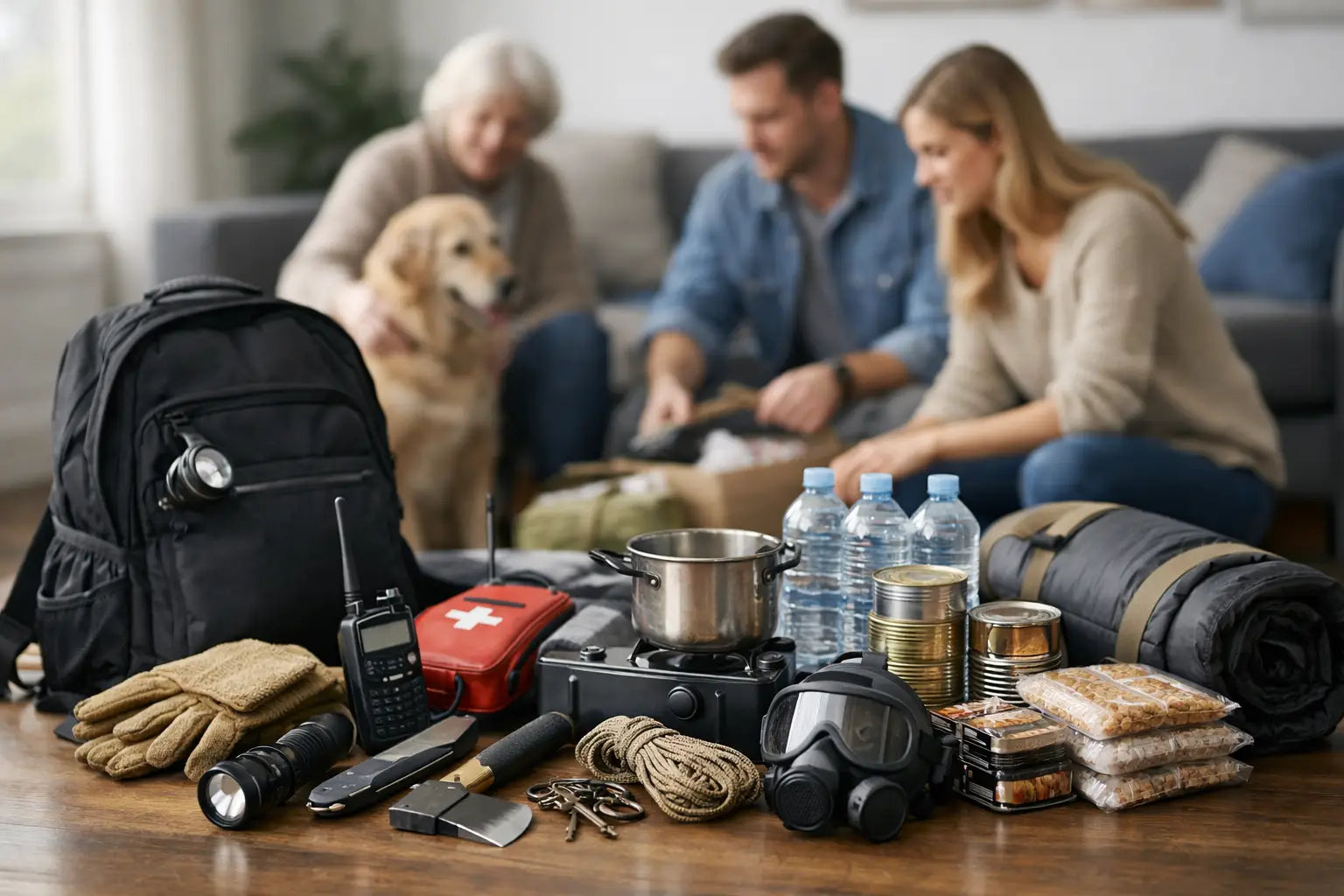
The first 72 hours of an emergency are rarely dramatic. More often, they look like a dark house, a dead fridge, spotty cell service, closed stores, and a family asking what the plan is. If you are thinking about no gun license emergency preparedness, that is a practical place to start. You do not need a firearm permit to make your home safer, more stable, and far better equipped for real-world disruptions.
For many families, this topic comes with some hesitation. Maybe you do not want firearms in the house. Maybe local laws are strict. Maybe you are focused on storms, blackouts, and supply shortages rather than personal defense. All of that is reasonable. Emergency preparedness is much bigger than one tool. In most situations households face, water, food, backup power, first aid, and communication matter more often and more immediately.
What no gun license emergency preparedness really means
At its core, no gun license emergency preparedness means building resilience with tools and systems that do not depend on a firearms permit. It is not about pretending security does not matter. It is about recognizing that preparedness starts with the basics your family will use first and most often.
That includes safe water, shelf-stable food, lighting, power for phones and medical devices, sanitation, warmth, and a plan for staying put or leaving quickly. It also includes legal and low-drama ways to improve home security, such as stronger locks, better outdoor lighting, reinforced doors, and cameras. Those steps are useful every day, not just during a major emergency.
This approach also lowers the barrier to entry. A parent can start with a water plan and a power station this month, then add food storage and medical supplies next month. You are not waiting on a permit, a class, or a decision you may never want to make. You are improving your readiness now.
Start with the emergencies your family is most likely to face
A realistic plan begins with the disruptions common to your area and your life. In Florida or the Carolinas, that may mean hurricanes and long outages. In California, wildfire smoke and evacuation. In the Midwest, ice storms or tornadoes. For many families, the most likely emergency is still a boring one: the power goes out for three days and stores are picked over.
That matters because your gear should match your risks. If your biggest threat is winter weather, heat, blankets, indoor-safe cooking options, and backup battery power move up the list. If you live where evacuation is more likely, your vehicle kit, paper documents, pet supplies, and portable water storage deserve more attention.
Preparedness gets expensive when people buy for fantasy scenarios. It gets effective when they buy for the next credible problem.
Water is the first priority
If you do nothing else this month, improve your water situation. A family can go without many comforts. Water is not one of them.
Store enough for drinking, basic cooking, and simple hygiene. The common starting point is one gallon per person per day, but that is often a bare minimum, especially in heat or with children. Pets count too. If someone in the house uses formula, has medical needs, or takes medications that require water, your margin should be bigger.
Storage and filtration work best together. Stored water covers immediate needs. Filtration gives you options if the outage lasts longer, a boil notice is issued, or supply gets interrupted. This is one of the strongest examples of no gun license emergency preparedness being both simple and powerful. Water storage is quiet, practical insurance.
Food storage should reduce stress, not create clutter
Most families do not need a bunker pantry. They need enough food to keep everyone fed when stores are closed, roads are blocked, or life gets busy and strange for a week.
Start with foods your household will actually eat. Then add longer-term options that store well and are easy to prepare with limited utilities. A mix usually works best. Everyday pantry foods are familiar and cheaper. Dedicated emergency food adds shelf life and convenience. If you have dietary restrictions, young children, or older relatives in the home, plan around those needs first rather than trying to force a generic food kit to fit.
A useful test is this: could you feed your family for seven days without opening the refrigerator much, driving to a store, or using a full kitchen? If the answer is no, that is a clear place to improve.
Power outage readiness is where most families feel the difference
When the lights go out, preparedness stops feeling theoretical. Reliable lighting, device charging, and a way to keep critical equipment running make a huge difference in comfort and safety.
Flashlights and headlamps beat candles for most households. Portable power stations are often a better fit than gas generators for families who want low maintenance, indoor-safe backup power for phones, radios, fans, routers, and small medical devices. Generators still have a place, especially for larger loads, but they bring fuel, noise, storage, and operating considerations. It depends on your home, budget, and outage pattern.
Think in layers. Small lights for every room. Battery banks for phones. A larger backup power option for essentials. If someone depends on refrigerated medication, a CPAP, or mobility equipment, this category moves from convenience to priority.
First aid is part of no gun license emergency preparedness too
Many people hear preparedness and think about gear for dramatic moments. In practice, you are more likely to need a thermometer, pain reliever, bandages, wound care supplies, gloves, and backup prescriptions than anything else.
A solid family medical setup should cover common injuries and illness during an outage or evacuation, when pharmacies may be closed or hard to reach. That means basic trauma care, everyday medications, extra prescription planning where possible, and supplies tailored to the people in your house. Children, grandparents, and pets all change the list.
Training matters here. The best kit in the closet is less helpful if nobody knows how to use it. A basic first aid or CPR class can do more for family safety than a lot of expensive purchases.
Security without a firearms permit
Security still matters, and this is where nuance helps. No gun license emergency preparedness does not mean ignoring personal safety. It means building a layered home security plan with options that are legal, realistic, and appropriate for your comfort level.
Start with the house itself. Good locks, reinforced strike plates, solid exterior doors, motion lights, trimmed landscaping around entry points, and visible cameras can reduce risk before a confrontation starts. A monitored alarm or even a simple local alarm can buy time and attention. Window coverings matter more than many people realize during outages, when dark homes and occupied homes are easier to read from outside.
Personal safety tools vary by state and local law, so families should check what is legal where they live. Pepper spray, personal alarms, and self-defense training may fit some households. The goal is not to create false confidence. The goal is to reduce vulnerability and improve response options.
Your family plan matters more than one more gadget
Gear helps. A plan keeps gear useful.
Every household should know where flashlights are, how to shut off water or gas if needed, who handles pets, where documents are stored, and how to reconnect if cell service is unreliable. If your children are old enough, they should know the basics without being scared by them. If grandparents visit often, make sure they can find what they need too.
Write things down. Phone numbers, meeting places, medication lists, and evacuation routes are hard to remember when stress is high. A simple binder or folder can outperform a phone full of notes when batteries are low.
This is also where evacuation bags earn their place. You may never need to leave in a hurry, but when you do, there is no time to assemble chargers, medications, snacks, documents, pet supplies, and clothes from memory.
Build in stages and buy for real use
A lot of families stall because they think preparedness requires a giant shopping spree. It does not. Start with a 72-hour foundation, then build toward two weeks, then longer if that fits your goals.
A sensible order for most homes is water, food, lighting, power, first aid, sanitation, and then expanded comfort and redundancy. After that, look at cooking, heating, air quality, communications, and food independence. If your budget is tight, buy fewer things and buy better where failure would hurt most.
At SHTF Prepper Club, we believe readiness should be approachable. That means starting small if needed, choosing gear your family will actually use, and improving one category at a time. Calm progress beats a garage full of random gadgets.
Preparedness is not a statement about politics or fear. It is a decision to make a hard week less hard for the people you love. If you are building a no-gun-license plan, you are not skipping preparedness. You are focusing on the parts that carry the most weight in everyday emergencies, and that is a smart place to begin.