
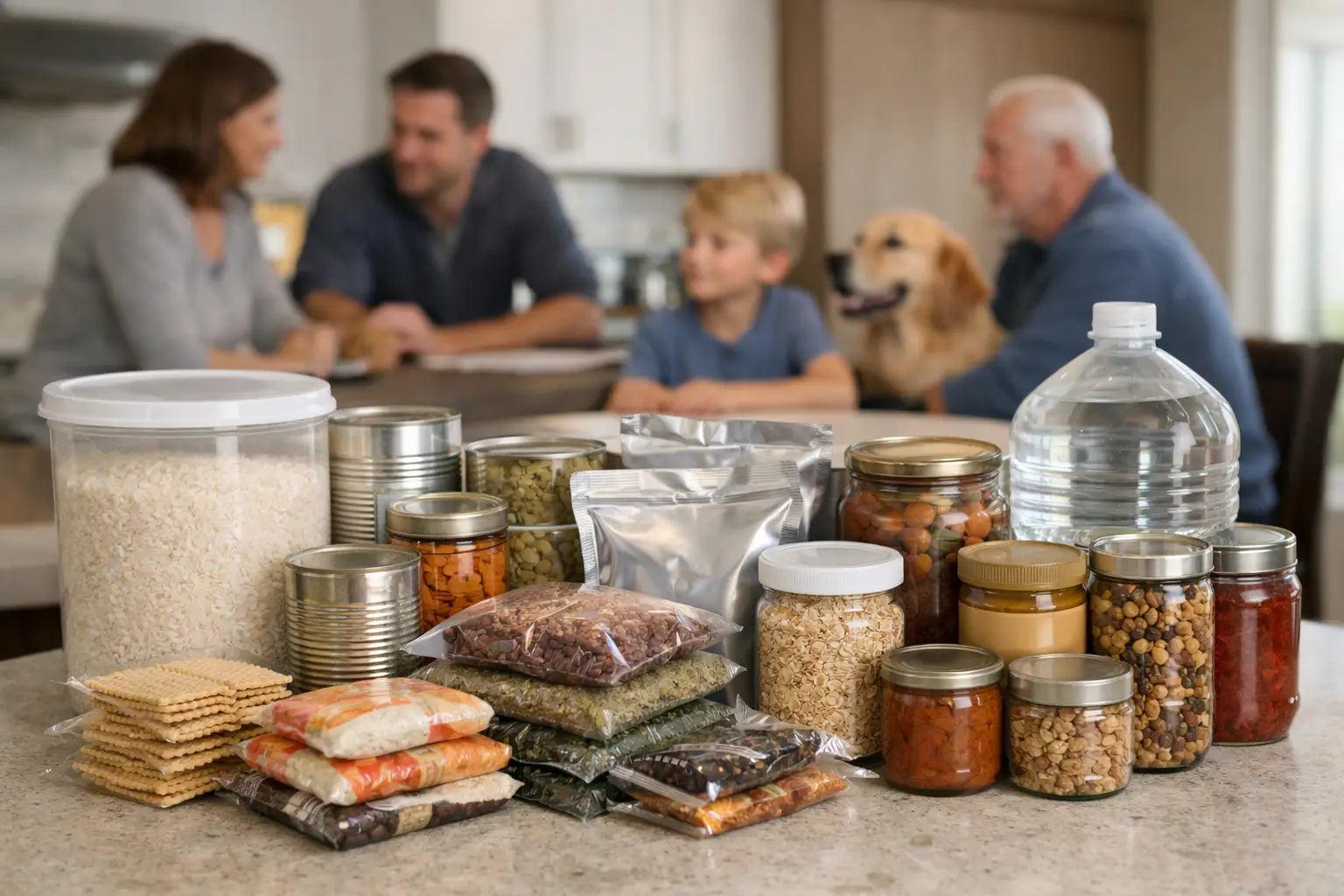
The question usually hits after a real inconvenience. The power was out for three days. The grocery shelves were thin for a week. A storm warning turned into school closures, canceled work, and a scramble for basics. That is when emergency food supply for families stops sounding like a prepper hobby and starts sounding like a normal part of running a household well.
The honest answer is that there is no single right number. Three days is the minimum. Two weeks is a strong working goal. Thirty days changes your margin for error in a big way. Beyond that, you are moving from short-term disruption planning into true resilience. What your family needs depends on where you live, how many mouths you feed, how much storage space you have, and whether you want to ride out inconvenience or stay steady through a serious disruption.
Emergency food supply for families: start with 3 days
Three days is the floor, not the finish line. It covers the most common disruptions most families actually face - a winter storm, a local power outage, a boil-water notice, a short evacuation delay, or a few days of road closures after severe weather.
If you have children, three days goes fast. People snack when stressed. Teenagers eat more than you think. If the fridge warms up, some of your normal food stops being part of the plan. That means your emergency food should not depend on refrigeration, complicated cooking, or ingredients you only use when everything is calm.
For a three-day supply, think in terms of familiar, low-stress meals. Oatmeal, cereal, shelf-stable milk, peanut butter, crackers, canned soups, pasta, canned chicken, fruit cups, applesauce, granola bars, rice, beans, and simple comfort foods matter more than tactical calories. Babies, grandparents, and anyone with dietary restrictions need their own lane in the plan.
This level is affordable and achievable for almost every household. It is also the easiest place to make mistakes. Families often store food they do not like, forget a manual can opener, or build a plan that assumes the stove still works. A three-day supply should be easy to grab, easy to rotate, and easy for another adult in the house to understand without a long explanation.
Why 2 weeks is the sweet spot for most households
If you want one practical target, make it 14 days. Two weeks is where emergency food supply for families starts to feel less reactive and more reliable. It covers the gap between a short outage and a real regional disruption, which is exactly where many families have found themselves in hurricanes, wildfire evacuations, ice storms, and supply-chain shortages.
Two weeks gives you breathing room. If stores are open but picked over, you are not forced into panic buying. If roads are blocked for several days, you are still fine. If one family member gets sick and you want to stay home instead of making grocery runs, you can.
This is also the point where food variety matters. A family can tolerate repetitive meals for three days. By day nine, morale starts to matter. People eat better when the food is familiar and not miserable. That means balancing calories with convenience and comfort.
A good two-week pantry usually combines regular grocery items with purpose-built emergency food. Grocery staples are often cheaper and easier to rotate. Dedicated emergency meals can fill gaps, store longer, and reduce planning friction. Used together, they make sense.
For many suburban families, this is the smartest next step. It does not require a basement full of buckets or a major budget. It does require a little math, some shelf space, and the discipline to store what your family will actually eat.
When 30 days makes sense
Thirty days is where your plan begins to absorb real uncertainty. This is a strong target for families in hurricane zones, wildfire regions, remote rural areas, earthquake-prone areas, or any place where recovery can be uneven. It is also wise for larger households, pet owners, and anyone supporting aging parents or frequent grandkid visits.
At 30 days, you stop planning only for a disruption and start planning for delays in the whole system. Store shelves might restock, but not evenly. Utilities might come back, but not all at once. School may reopen while the local supply chain is still a mess. One paycheck interruption can make food reserves as valuable as any generator.
There are trade-offs. Thirty days takes more room, more up-front spending, and better organization. You need to think about calories, protein, meal fatigue, and cooking methods. If your plan depends on boiling water for every meal, do you have enough fuel? If your family includes picky eaters, have you planned around that reality or just hoped they will adapt?
This is often where freeze-dried foods and longer-term storage foods earn their keep. Not because every meal should come from a pouch, but because they extend your options. They reduce dependence on frequent rotation and can sit quietly in the background while your everyday pantry does the daily work.
Should you store more than 30 days?
For some families, yes. Not because the world is ending, but because a deeper pantry creates stability. If you live in a remote area, have a large household, rely on one income that could be interrupted, or simply want a stronger cushion against shortages and inflation, building beyond 30 days is reasonable.
But this is where purpose matters. A 90-day supply is different from a one-year food plan. The first is often about disruption insurance. The second starts to overlap with food independence, bulk storage systems, garden harvest preservation, and long-term rotation.
More is not automatically better. A badly planned six-month food supply can be less useful than a well-organized 14-day pantry. If the food is packed where you cannot access it, if no one knows how to prepare it, or if your family refuses to eat it, the number on paper means very little.
A better way to think about longer storage is in layers. Keep a working pantry for normal life. Build a deeper reserve for disruptions. Then add true long-shelf-life food for the events you hope never happen but would be grateful to be ready for.
How to decide what your family actually needs
Start with the disruptions most likely to affect your home, not the most dramatic ones online. A family in coastal Florida may need a different food timeline than a family outside Seattle or in suburban Oklahoma. If you have lived through a four-day outage, use that memory. If wildfire smoke kept you indoors for a week, plan around that.
Next, count real eaters and real appetites. Adults are one thing. Teen boys are another. Small kids may need more snacks than meals. Pets count too. So do guests if your house is the one relatives run to when the weather gets bad.
Then look at your constraints. Space matters. Budget matters. Time matters. A family in a townhome may need to be smarter about compact storage. A family with a chest freezer and shelving in the garage has more options, but should still avoid overbuying food they will not rotate.
Finally, separate shelf-stable food from total food security. If you have a generator, freezer inventory may stay in play. If you have a way to cook off-grid, dry staples become more useful. If not, ready-to-eat foods deserve a larger share of your plan.
A practical way to build up without wasting money
Start where you are and build in stages. Three days first. Then 14. Then 30 if it fits your risk level and budget. That approach keeps the project manageable and gives you time to notice what your family actually uses.
One smart method is to build around breakfast, lunch, dinner, and snacks instead of chasing calorie charts alone. Parents know this instinctively. Families handle stress better when mealtimes feel familiar. A pantry that supports routine often works better than one that looks impressive on paper.
It also helps to split food into three categories: everyday pantry staples you rotate constantly, convenience foods for no-power or low-energy situations, and long-term backup foods with extended shelf life. That mix gives you flexibility without turning preparedness into a second full-time job.
At SHTF Prepper Club, this is the mindset we encourage. Start small, scale smart, and build a food plan your household can live with.
The best emergency food supply is not the biggest one. It is the one that fits your family, matches your risks, and is already in place before the next storm warning pops up on your phone.