
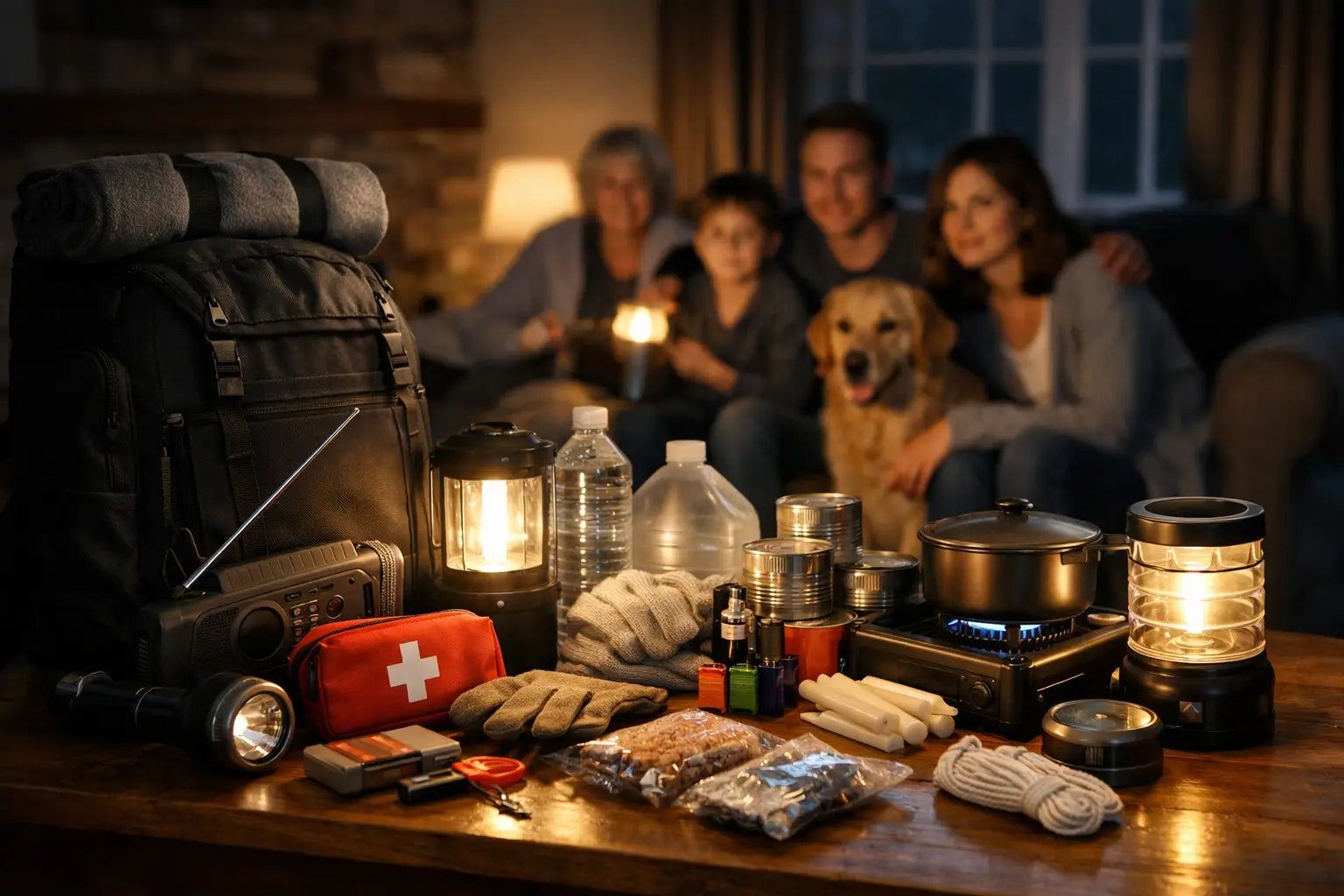
The last time the lights went out in your neighborhood, you probably learned two things fast: batteries disappear quicker than you thought, and a refrigerator full of food turns into a countdown clock. That is why a family power outage kit: what to have before the grid goes down is less about fear and more about buying your household time, comfort, and better decisions.
A good outage kit keeps normal life functioning as long as possible. Kids still need food. Phones still need power. Medications still need to stay organized. If the outage stretches from a few hours into a few days, the families who do best are usually not the ones with the fanciest gear. They are the ones who planned for the basics first.
What a family power outage kit should actually do
A family power outage kit is not just a bin of random flashlights and canned soup. It is a system for covering the jobs electricity normally handles in your home. Think in categories: lighting, communications, food, water, refrigeration, medical needs, warmth or cooling, cooking, sanitation, and power for essential devices.
That shift matters. When you plan by job instead of gadget, you stop buying duplicates and start spotting gaps. For one family, the urgent need may be keeping insulin cold. For another, it is powering a CPAP machine, garage freezer, or well pump. What goes into your kit depends on your house, your region, and who depends on you.
Start with the first 72 hours
If you are building from scratch, plan for three days first. That is manageable, affordable, and enough to handle many storm-related outages. Once that is covered, extend to one week.
Water comes first. Store at least one gallon per person per day, and more if you live in a hot climate, have children, or may need extra water for pets, formula, or basic cleanup. A case of bottled water is a start, but it is not a long-term plan for a family of four. Dedicated water storage containers make more sense once you calculate real usage.
Food should be simple, familiar, and easy to prepare. During an outage, your family is already stressed. That is not the moment to test whether your kids will eat freeze-dried vegetable stew. Keep shelf-stable foods your household already uses, then add longer-storage emergency meals for backup. Peanut butter, crackers, oatmeal, canned soup, tuna, protein bars, fruit cups, powdered milk, and ready-to-eat meals all earn their place because they are practical.
Lighting is next. Every household should have multiple flashlights, extra batteries, and at least one lantern for shared spaces. Headlamps are especially useful because they keep both hands free when checking breakers, carrying supplies, or helping a child in the dark. Candles are common, but they add fire risk, especially with pets or tired kids moving around the house.
Power is where most families underprepare
People often assume a few battery banks solve the problem. They help, but they do not solve it for long. A small phone charger may buy you a day or two of communication. It will not run a refrigerator, medical device, fan, modem, or portable heater.
That is why backup power should be planned in layers. Start small and work up.
The first layer is personal power. Keep power banks charged for phones, tablets, rechargeable lanterns, and small USB devices. The second layer is household power through a portable power station. This is where many families see the biggest quality-of-life improvement. A well-sized unit can run lights, charge devices, support internet gear, and in some cases power a medical device or small appliance. The third layer is extended resilience, usually through a larger generator or solar-capable setup if your outage risks are frequent or long.
The right choice depends on how you live. Apartment households may lean toward battery power stations. Suburban homeowners may combine a portable generator with fuel storage. Rural families with freezers, sump pumps, or well water often need a more serious solution. There is no prize for overbuying, but underbuying can be expensive if food spoils or essential equipment fails.
Family power outage kit: what to have before the grid goes down
The heart of your outage kit should cover the basics without forcing you to improvise. In plain terms, that means enough water and food for everyone, reliable lighting, a way to charge and power critical devices, a weather radio, first aid supplies, medications, blankets, sanitation items, and a safe way to cook or heat water if needed.
A battery or hand-crank radio matters more than many people realize. During a widespread outage, cell service may lag, and internet access may come and go. Local updates about shelters, road closures, boil-water notices, and restoration timelines are useful when rumors start flying through group texts.
Your medical supplies deserve extra attention. Keep prescriptions, backup glasses, pain relievers, fever reducers, bandages, thermometer, and any specialty items together and easy to grab. If someone in your home uses refrigerated medication, build a cooling plan ahead of time. If someone uses an electrically powered medical device, that should shape your entire backup power strategy.
Sanitation tends to get ignored until water service drops or the outage lasts longer than expected. Baby wipes, trash bags, paper towels, hand sanitizer, toilet paper, and basic cleaning supplies can make a hard situation much more manageable. If you have young children, elderly relatives, or pets, this category becomes even more important.
Don’t forget the kitchen and the fridge
Most families lose money in a power outage through spoiled food. A refrigerator stays cold for only so long, and every unnecessary door opening speeds the process up. Put a refrigerator thermometer and freezer thermometer in place now so you are not guessing later.
Have a plan for meals that uses the most perishable items first. Eat refrigerator foods before freezer foods if safety allows. Keep a cooler and ice packs ready to stretch the life of high-priority items like milk, medication, and baby food. If outages are common where you live, backup power for refrigeration is often one of the smartest upgrades you can make.
Cooking is another place where small choices make a big difference. A camp stove, outdoor propane stove, or other off-grid cooking option can turn an outage from miserable to manageable. But it has to be used safely and according to manufacturer guidance. Indoor carbon monoxide risk is serious. The goal is comfort, not creating a second emergency.
Comfort matters more than people admit
When outages drag on, morale becomes part of preparedness. A cold, dark, hungry household makes worse decisions. A house with light, hot drinks, phone charging, and a way to keep kids occupied feels far more stable.
That means your kit should include warmth layers in winter and cooling options in summer. Blankets, sleeping bags, wool socks, hand warmers, and insulated curtains help retain heat. In hot regions, battery-powered fans, shade management, and extra water are not luxuries. They are part of staying functional.
If you have children, add comfort items on purpose. Favorite snacks, card games, books, glow sticks, comfort blankets, and downloaded entertainment help reduce stress. For grandparents and pet owners, the same principle applies. Preparedness works better when it accounts for real family behavior, not ideal behavior.
Build your kit in stages if budget matters
Most households do not assemble a complete family power outage kit in one weekend. That is fine. Start with what covers the biggest risks first.
A sensible first stage might be water, shelf-stable food, flashlights, batteries, a lantern, a radio, first aid, medications, and a few power banks. Stage two could add a camp cooking option, cooler support, better storage bins, and more food depth. Stage three is where many families add a portable power station or generator, plus fuel or solar charging.
This is one place where SHTF Prepper Club’s family-first approach makes sense. Start small, fill the obvious gaps, and scale your setup as your budget and confidence grow. Readiness does not have to look dramatic to be effective.
Store it so you can use it
The best gear in the world does not help if no one can find it in the dark. Keep outage supplies organized in one or two clearly marked locations, not scattered across the garage, pantry, and junk drawer.
Store heavy-use items where you can reach them fast. Flashlights should not all live in one tote in the attic. Put at least one on every level of the house and in each bedroom. Keep fuel stored safely, batteries rotated, and power stations charged according to manufacturer recommendations. Check food, medicine, and seasonal supplies twice a year.
Just as important, make sure everyone in the house knows the plan. Show older kids where the lanterns are. Explain which devices get charged first. Write down key phone numbers. If you use a generator, review safety rules before storm season, not during it.
A better kit makes the whole house calmer
A power outage kit is not really about stuff. It is about shortening the list of problems your family has to solve under stress. When water is stored, lights work, food is covered, and backup power has a job, the outage feels smaller. That is the point.
You do not need to prepare for every scenario this week. Just make sure the next outage does not catch your family the same way the last one did.