
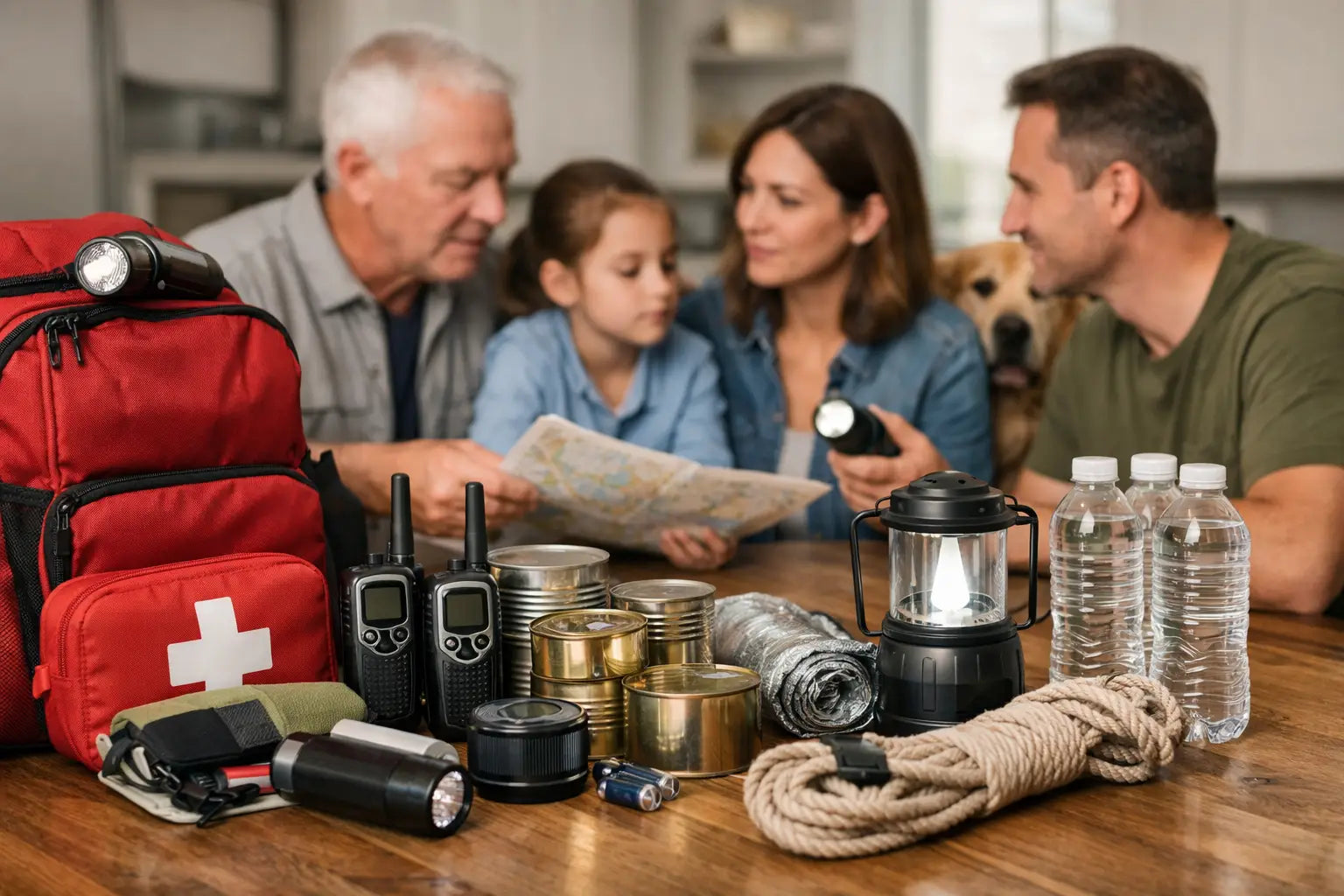
The last time your power went out for more than a few hours, you probably learned something about your house. Maybe it was how fast the fridge warmed up, how little backup light you had, or how quickly everyone started asking the same question: now what? That is where family emergency preparedness readiness stops being an abstract idea and becomes a household priority.
For most families, readiness does not begin with dramatic scenarios. It begins with ordinary disruptions that turn inconvenient fast - a winter storm, a wildfire evacuation, a hurricane track that shifts overnight, a boil-water notice, or a week when store shelves look thin. The goal is not to prepare for everything at once. The goal is to make sure your family can stay safe, fed, informed, and reasonably comfortable when normal systems fail for a few days or longer.
What family emergency preparedness readiness really means
A lot of people hear the word preparedness and picture a basement full of gear they will never use. That is not what most households need. Real family emergency preparedness readiness is simpler than that. It means your home can handle the first 72 hours without panic, and your family has a workable path if the disruption lasts longer.
That starts with the basics. You need safe water, enough food that does not depend on daily grocery runs, light after dark, a way to keep phones charged, first aid supplies that go beyond a few bandages, and a plan for where everyone goes and who does what. If you have children, older parents, pets, or anyone with medications or mobility needs, your plan needs to reflect real life instead of a generic checklist.
The trade-off is straightforward. The more complete your preparation, the less stress you carry in the moment. But getting there takes time, space, and money. That is why the smartest families build in layers instead of trying to buy peace of mind in one weekend.
Start with the four systems every home depends on
If you are not sure where to focus first, think in systems rather than products. Most emergencies disrupt the same four areas: water, food, power, and shelter.
Water comes first
Water is the category families underestimate most often. You can improvise dinners more easily than drinking water. A practical starting point is enough stored water for every person and pet in your home for at least three days, with two weeks being a far better target if you have the room. Drinking, basic cooking, and minimal sanitation add up quickly.
Stored water matters, but so does backup filtration. Cases of bottled water are fine for a short event. They are not a complete strategy. If a storm, earthquake, or contamination event affects your local supply longer than expected, filtration and larger-capacity storage give you options instead of deadlines.
Food should be easy, familiar, and shelf-stable
Emergency food does not need to look extreme. It should look usable. Start with foods your household will actually eat, then add shelf-stable meals and staples that can carry you through a week, then a month, then beyond. For some families, that means canned soups, oatmeal, rice, peanut butter, and pasta at first. For others, it means adding long-term food storage, bulk ingredients, or even freeze-dried meals for speed and convenience.
There is no single right mix. Ready-to-eat options are easier during outages and evacuations. Bulk staples stretch farther and cost less per meal, but they require water, fuel, and some skill. Families do best when they combine both.
Power is about function, not comfort alone
Backup power is not just about keeping everyone less annoyed. It protects communication, refrigeration for medications, basic lighting, internet access where available, and some level of normalcy for children and older adults. A good portable power setup can keep phones, small devices, lights, and select appliances running. A larger system can support more of the home, but cost rises fast.
This is one of the clearest areas where it depends on your household. If someone relies on powered medical equipment, backup power moves to the top of the list. If not, you may be able to start with lanterns, battery banks, and a modest portable power station, then scale up over time.
Shelter means staying warm, cool, dry, and safe
Most families think of shelter as the walls of the house. In an emergency, shelter is broader than that. It includes warm bedding during a winter outage, fans or cooling plans during dangerous heat, simple cooking options when the stove is down, and a clean, dry place to sleep if part of the home is compromised.
If evacuation is a real possibility where you live, shelter also includes a ready-to-go evacuation bag for each family member, pet supplies, copies of key documents, and a plan for where you will actually go. People often build the bag and forget the destination. The destination matters more.
Your family plan matters as much as your gear
The best supplies in the world cannot compensate for confusion. If your spouse is at work, one child is at practice, and cell service is spotty, everyone needs a simple plan they already know. Not a binder no one has opened. A real plan.
That plan should answer a few specific questions. Where do you meet if the house is not safe? Who picks up which child? Which out-of-area contact should everyone text if local calls are failing? Where are the shutoffs for water, power, and gas? What is the trigger for staying put versus leaving early?
Keep this plain. Kids do not need a lecture. They need repetition. Grandparents do not need a complicated system. They need clear instructions and access to medications, contacts, and comfort items. If you have pets, build them into the plan from the start. In real evacuations, people do not leave because they refuse to abandon animals. That is understandable. Plan for them now.
Build family emergency preparedness readiness in phases
Trying to solve preparedness in one giant purchase usually leads to wasted money. A phased approach works better.
The first phase is immediate readiness. Think 72 hours. Water, food that needs little prep, flashlights, batteries, first aid, sanitation basics, medications, phone charging, cash, and an evacuation bag. This is the layer that covers the most common disruptions.
The second phase is two-week resilience. Now you are adding deeper food storage, better water capacity, improved backup power, cooking options, warmth or cooling support, and stronger household organization. This is where most families begin to feel a real drop in emergency stress.
The third phase is sustained readiness. That might include larger water systems, significant food storage, solar-compatible power, home hardening, better medical preparedness, and long-term food independence tools. Not every family needs this phase right away, but many eventually want it after living through one serious event.
This layered approach is how practical households stay realistic. You do not need to become someone else. You just need to become harder to destabilize.
The most common mistakes families make
The biggest mistake is buying gear before thinking through how the household actually functions. A family of five with two young kids, a dog, and one parent who travels has very different needs than a retired couple. Readiness should fit your daily life.
The second mistake is underestimating water. The third is forgetting rotation. Food expires. Batteries fail. Children outgrow clothes in evacuation bags. Medications change. Preparedness is not a one-time event. It is a light maintenance habit.
Another common issue is overemphasizing one category while neglecting others. A garage full of food does not solve a water problem. A large generator does not replace a first aid kit, sanitation plan, or communication strategy. Balanced readiness is less exciting than buying one big item, but it works better.
Keep it practical enough to sustain
Readiness should reduce anxiety, not become another source of it. That means your system has to be maintainable. If your supplies are too scattered, too complicated, or too expensive to keep up with, you will avoid them. The best setup is one your family understands and can use under stress.
This is also why brand trust and product quality matter. When you are storing food for years, depending on a water filter, or counting on backup power during a real outage, cheap mistakes become expensive fast. At SHTF Prepper Club, the strongest solutions are the ones that help ordinary families start small, scale smart, and build confidence with each layer.
If you are beginning today, do not worry about doing it perfectly. Store more water than you think you need. Add food your family will actually eat. Give yourself backup light and power. Build a plan simple enough that everyone can follow it. Then improve one category at a time. A prepared home is not built in a burst of fear. It is built in calm, steady decisions that make the next emergency a lot less chaotic.