
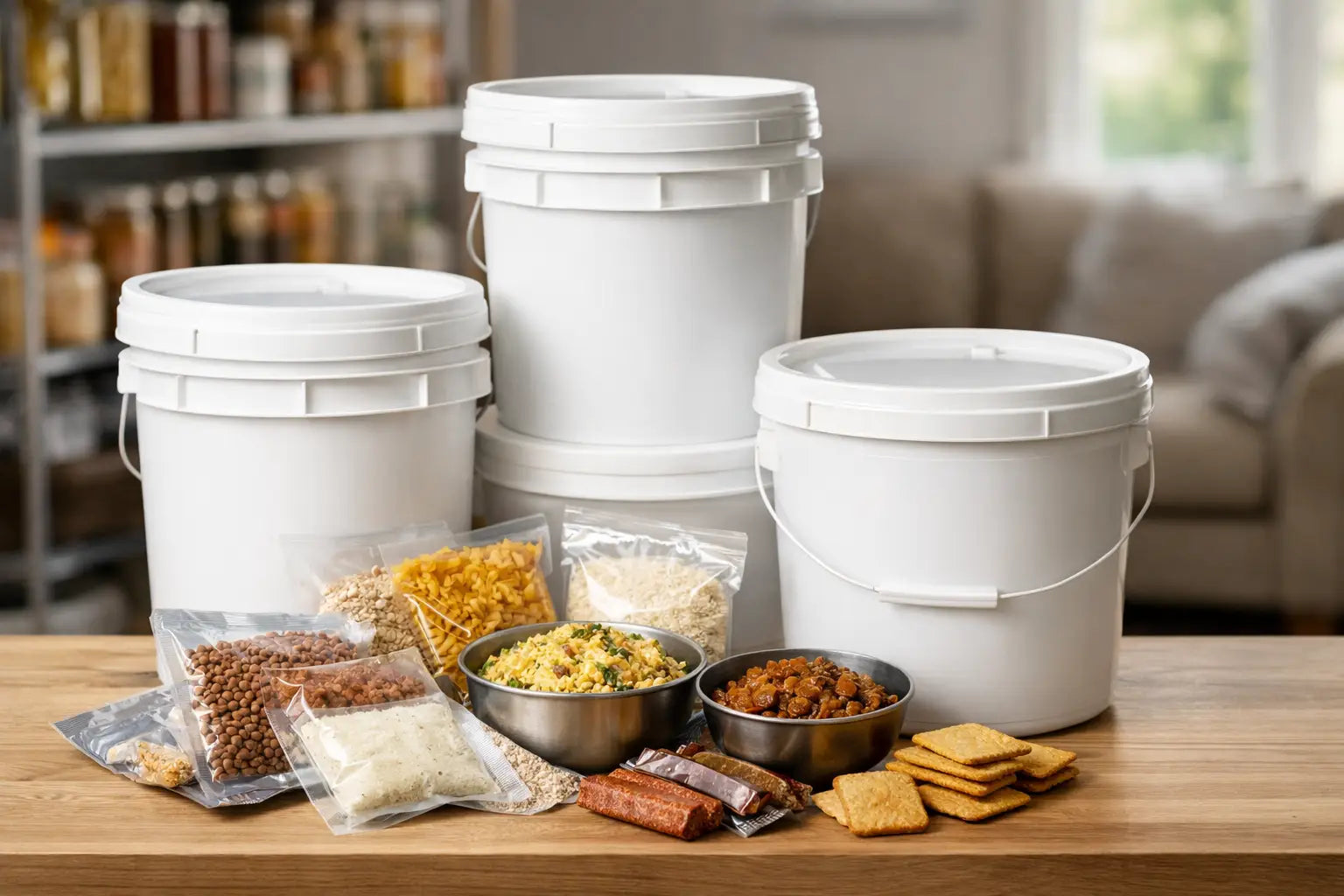
A lot of families start food storage the same way - with good intentions, a warehouse run, and a few extra cans that somehow turn into taco shells, soup, and snack bars nobody wants to eat during an actual outage. Long term food buckets appeal because they solve a real problem fast. They give you organized, shelf-stable calories in one stackable package instead of a scattered pantry plan that falls apart the first time power is out for three days.
That does not mean every bucket is a smart buy.
If you are building readiness for your family, long term food buckets can be a strong starting point. They are simple to store, easy to rotate around other supplies, and much less intimidating than trying to calculate every grain, bean, and calorie from scratch. But they are also one of the most misunderstood food storage products on the market. The label may say 30 days, 60 servings, or emergency supply, yet the real value depends on what is inside, how many people you are feeding, and whether you can actually prepare the food when you need it.
Why long term food buckets work for real households
For a busy household, convenience matters. A bucket gives you packaging, portability, and shelf life in one purchase. That matters when you are preparing for hurricane season, wildfire smoke, winter storms, or supply disruptions and do not want to reinvent your pantry strategy from the ground up.
Buckets also help with mental clutter. Instead of trying to answer ten questions at once, you solve one. Do we have backup food if the stores are empty or the roads are closed? A good bucket gives you a clear yes, even if it is only for a few days at first.
There is another reason they work. They are easy to scale. A family can start with one bucket, then add more over time, then fill in gaps with water storage, cooking backup, and everyday pantry items. That is a much more realistic path than expecting a new prepper household to build a six-month food plan in one weekend.
What long term food buckets usually get right
The best buckets are built for storage, not impulse buying. They use durable containers, sealed interior pouches, and foods chosen for shelf life and calorie density. That is useful when space is limited and you need food that can sit in a closet, basement, mudroom, or garage shelf for years.
They also create order. One bucket can hold breakfasts, entrees, and basics in a format that is easier to grab during an evacuation or move upstairs during a flood warning. For grandparents, second homes, cabins, or a backup supply in an RV, that simplicity is hard to beat.
And for families who feel behind, a bucket creates momentum. Preparedness gets easier once there is something concrete in place.
Where long term food buckets fall short
The biggest issue is expectation. Many buckets are sold with large serving counts that sound generous until you look at calories. Sixty servings can mean very little if those servings are small. A family of four is not worried about abstract servings during an emergency. They need enough actual food to keep energy up, stress down, and everyone functioning.
Taste is another weak spot. Some meals are perfectly decent. Others are just edible enough to get by. In a short emergency, that may be fine. In a week-long outage with kids already tired, cold, or anxious, food fatigue becomes real fast.
Preparation can also be a problem. Most bucket meals need water, and many need hot water. If your emergency plan assumes an electric stove and full water pressure, then the bucket is only half a solution. This is why food storage should always be paired with a realistic plan for water and backup cooking.
Finally, buckets often lack balance. They may cover calories but not comfort foods, protein variety, or meals that fit allergies and preferences. If someone in your house avoids dairy, gluten, or excessive sodium, reading labels matters.
How to judge a food bucket before you buy
Start with calories, not servings. This is the easiest way to compare products honestly. A bucket meant for one adult for several days should provide enough energy to match real life, especially if you are cleaning debris, managing kids, or living without normal conveniences. Serving counts can be marketing. Calories are harder to hide.
Then check the actual menu. Look for meals your family would willingly eat, not just survive on. Rice dishes, soups, pasta, oatmeal, and simple skillet-style meals usually make more sense than novelty items. In a stressful week, familiar food wins.
Packaging matters too. Individual pouches inside the bucket are more practical than one giant bulk bag. Once a pouch is opened, storage life drops. Smaller pouches help with portion control and reduce waste.
Pay attention to water needs. Some freeze-dried meals are excellent, but they can require more water than families realize. In a short disruption, that may be manageable. In a regional emergency with limited resupply, it changes your whole plan.
Shelf life should be read carefully. A 25-year shelf life sounds reassuring, but it depends on storage conditions. Heat is not your friend. If you live in Texas, Florida, Arizona, or anywhere your garage turns into an oven, climate-controlled storage is a much better choice.
Best use cases for long term food buckets
Buckets make the most sense when they are part of a layered plan.
They are excellent for short-to-medium disruptions, especially when stores are closed or stripped down. Think hurricanes, ice storms, wildfire evacuations, or a week of no power after a major weather event. In those moments, simple shelf-stable meals are more useful than a pantry full of ingredients that require time, refrigeration, and clean-up.
They also work well as your insurance supply. You hope you never need all of it, but you are relieved it is there. For many households, that peace of mind is worth the cost.
They are less ideal as your only food strategy for months on end. If your goal is true long-term food independence, buckets should sit alongside pantry staples, canned proteins, grains, baking basics, garden production, or freeze-dried ingredients you assemble yourself. A family that wants resilience over years needs more variety and more control than prepacked buckets alone can offer.
A smart family approach to long term food buckets
The best approach is usually boring, which is another way of saying effective.
Start with enough food for 72 hours to two weeks, depending on your budget and risk level. Choose one or two buckets with decent calories and familiar meals. Add water storage and a simple backup cooking method at the same time. That keeps your plan grounded in reality.
After that, test a few meals on an ordinary night. This step gets skipped all the time, and it should not. You want to know whether your kids will eat the cheesy rice, whether the soup needs extra seasoning, and how much water each pouch really takes. A calm Tuesday is the right time to learn that, not the night after a storm.
Next, widen the food base. Add pantry foods your family already uses, especially easy proteins, canned fruits, peanut butter, pasta, rice, oats, and comfort foods that help morale. Long term food buckets are a foundation, not the whole house.
If you want a stronger system, organize by scenario. Keep a small amount for grab-and-go evacuation use, a deeper supply for sheltering at home, and a separate reserve for true long-duration disruption. That structure helps families avoid overspending on the wrong category.
At SHTF Prepper Club, this is the part we care about most - helping families build readiness that fits real life, not a fantasy checklist.
Who should skip them or buy less than they think
Not every household needs a wall of buckets.
If you already keep a deep pantry, rotate food consistently, and have reliable bulk storage habits, buckets may only need to fill specific gaps. The same goes for households with strict medical diets or very young children with narrow food preferences. In those cases, custom storage often makes more sense.
There is also a budget trade-off. Buckets are convenient, but convenience costs money. For some families, the best move is one ready-made bucket for speed and backup, then a slower build with staple foods that stretch the budget further. That is not cutting corners. It is smart prioritization.
The goal is not to own the most food storage. The goal is to have enough of the right food, stored the right way, for the problems your family is most likely to face.
Long term food buckets are not magic, and they are not a gimmick either. They are a useful tool when you buy them with clear eyes. If a bucket helps your family go from unprepared to ready for the next outage, storm, or supply disruption, that is a meaningful step. Start there, keep it practical, and let your food storage grow into something your household can actually use.