
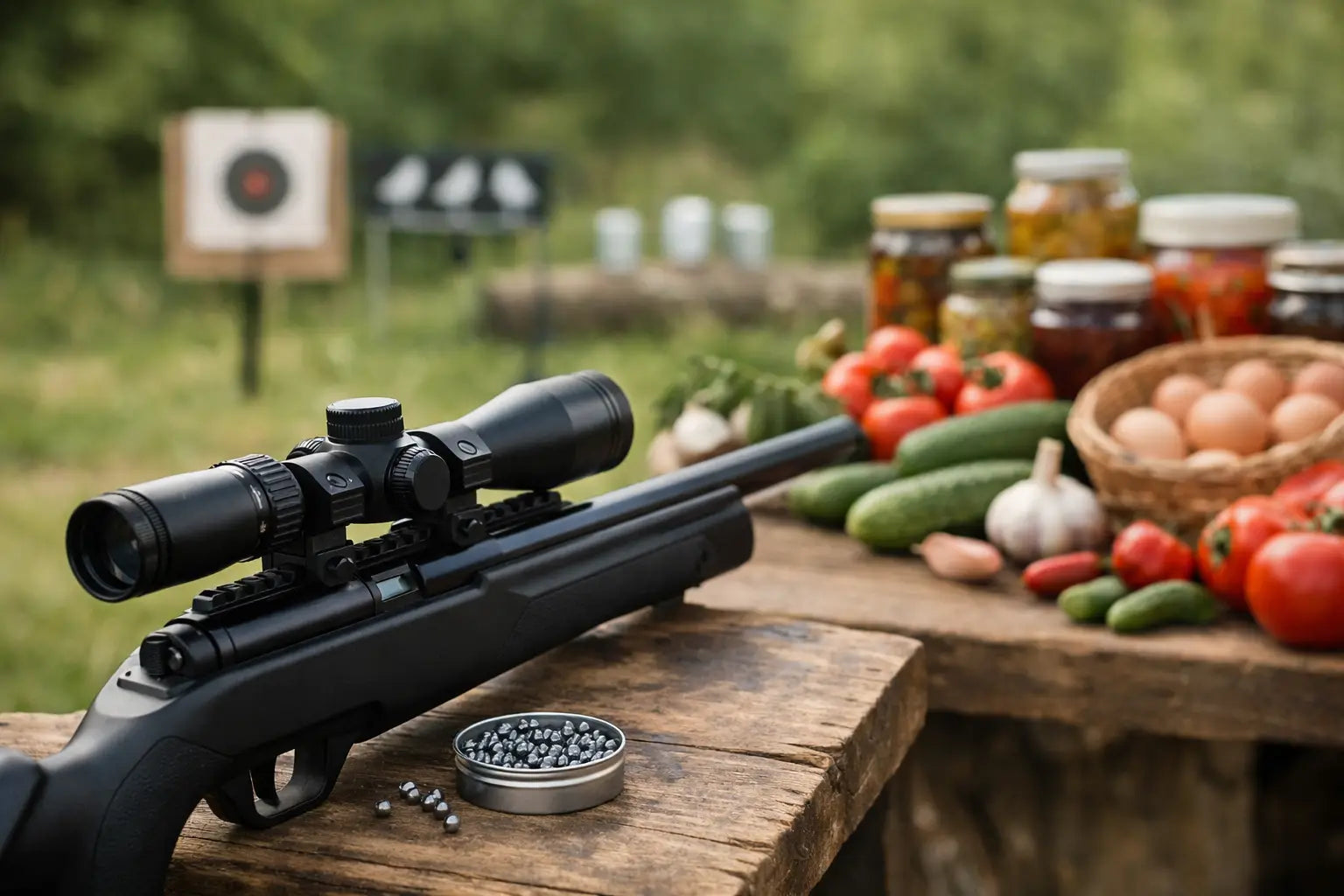
A garden gets cleaned out fast when rabbits, squirrels, or nuisance birds figure out where the easy meals are. For many families, that is where the question starts - how airguns can both be a deterant & help in food preparedness is less about hobby shooting and more about protecting what you have worked to grow, store, and preserve.
This topic deserves a calm, practical look. Airguns are not magic tools, and they are not right for every household. But in the right setting, used legally and safely, they can serve two useful purposes in a family preparedness plan: discouraging small animal pressure around gardens and outbuildings, and in some cases helping secure small game when normal food access is strained.
Why airguns fit some family preparedness plans
Most households are not trying to build a wilderness survival setup. They are trying to make their homes more resilient. That means keeping a backyard garden productive, protecting feed or stored grain from pests, and adding reasonable food options if stores are empty for longer than expected.
That is where airguns can make sense. Compared with many firearms, they are often quieter, easier to store, and cheaper to practice with. For suburban, exurban, or rural families, that matters. Noise, neighbor concerns, and limited space are real factors, especially if your goal is practical readiness instead of collecting gear.
There is also a learning curve benefit. A responsible adult can usually build marksmanship skills with an airgun at lower cost than with centerfire ammunition. That does not remove the need for training, supervision, or caution. It simply makes regular practice more realistic for many families.
How airguns can both deter and help in food preparedness
Preparedness is not just about stacking pantry shelves. It is also about protecting the systems that feed your family over time. If you keep a vegetable garden, berry patch, chicken feed, or bulk food stores, pests can chip away at your food security a little at a time until the loss becomes significant.
An airgun can help as a deterrent when small pests start associating your yard with risk instead of easy food. Sometimes that means dispatching a few destructive animals. Sometimes it means simply creating enough pressure that they stop visiting as often. The effect depends on the species, the property, and how consistently the problem is managed.
The second role is food acquisition. In areas where it is legal, and where the shooter is skilled enough to make clean, ethical shots, an airgun may be used for small game such as rabbits or squirrels. That is not a primary food plan for most families. It is a supplemental option. A freezer, shelf-stable food storage, and a realistic pantry still matter more. But small game can add protein when times are tight, especially for rural households already familiar with the land around them.
Deterrence works best when it is part of a system
This is where families sometimes get frustrated. They buy one tool and expect it to solve a bigger property problem. In reality, airguns work best alongside fencing, covered beds, secure trash, feed storage, and habitat management.
If rabbits are getting into raised beds, the first fix is often physical exclusion. If squirrels are raiding fruit trees or feed bins, cleanup and storage matter as much as pressure from above. If birds are destroying seedlings, netting may do more than any shooting solution ever will.
Think of an airgun as one layer, not the whole answer. That mindset fits preparedness well. The same way you would not rely on one flashlight for a week-long outage, you should not rely on one tool to protect your food sources.
Choosing the right role for your household
Not every family needs an airgun in the plan. The question is whether it solves a real problem you already have.
If you live on a quarter-acre lot with close neighbors and no garden, it may not add much value. If you have raised beds, fruit trees, a shed with feed, or a property where small pests cause steady damage, it may be worth considering. Rural and edge-of-suburb properties often see the most practical benefit.
Your comfort level matters too. Some households are experienced with safe shooting and outdoor skills. Others are not. That does not mean you cannot learn. It does mean this should be approached as a responsibility, not an impulse buy.
Legal and ethical limits matter
Before using any airgun for pest control or hunting, check state and local laws. Rules vary widely. Some places limit discharge within city limits. Others have specific regulations on game species, seasons, and acceptable equipment.
This is especially important for families in suburban neighborhoods. Even if an airgun is legal to own, that does not mean it is legal to use in your yard. It also does not mean it is the safest option for your lot size or layout.
Ethics matter just as much as legality. If the goal is harvesting small game, the shooter needs enough accuracy and judgment to make humane shots. Wounding an animal because someone wanted to test gear in a stressful moment is not preparedness. It is poor planning.
Safety is the deciding factor
Any honest discussion of how airguns can both be a deterant & help in food preparedness has to stay grounded in safety. If a household cannot commit to safe storage, controlled use, and regular practice, this tool does not belong in the plan.
That means treating an airgun with the same respect you would give any projectile weapon. Muzzle discipline, a safe backstop, eye protection, and secure storage all count. Children should never have unsupervised access. Adults should know exactly where pellets may travel if a shot misses or passes through.
It also means thinking beyond the target. In a backyard, what is behind the garden bed? A fence, a neighbor's shed, a road, a pet area? A good preparedness tool should reduce risk, not create a new one.
Airguns are not a substitute for stored food
This is the trade-off that needs saying plainly. Even if you own an airgun and know how to use it well, it should support your food preparedness plan, not replace it.
Families are better served by building reliable layers first: a stocked pantry, longer-term staples, water storage, simple cooking options during outages, and if possible, some form of long-term food independence such as gardening, seed saving, or preserving harvests. An airgun sits farther down that list.
That does not make it unimportant. It just puts it in the right place. If your shelves are empty and your water plan is weak, this should not be your first purchase. If your basics are covered and you want to protect a garden or add a realistic small-game option, then it may be a smart next step.
Practice before you need it
The worst time to learn any preparedness skill is during an emergency. If your family decides an airgun belongs in the plan, practice should happen long before there is pressure on the food supply.
That means learning your local rules, understanding your airgun's range and accuracy, and building consistency at reasonable distances. It also means practicing from realistic positions, not just perfect benchrest setups. Garden pest control rarely happens under ideal conditions.
For households new to this, slow and steady is the right pace. Start with safety. Then accuracy. Then judgment about when not to take a shot. That last part is often the most important.
A realistic way to think about value
Preparedness works best when every tool earns its place. An airgun earns its place when it protects food production, reduces losses, and adds a modest but real layer of food resilience. It loses value when it is bought for fantasy scenarios or treated like a shortcut around better planning.
For many families, the most practical use will be simple: protecting a garden, feed, or outbuilding from recurring small pests. For some rural households, there is also a clear secondary role in small-game harvest. Both can matter. Neither should be exaggerated.
At SHTF Prepper Club, we encourage families to build readiness in layers they can actually use. That usually starts with food, water, power, shelter, and medical basics. Then you add tools that fit your property, your skill level, and the disruptions you are most likely to face.
If an airgun fits that picture for your household, approach it the same way you would any other preparedness investment - with clear purpose, legal awareness, steady practice, and respect for the responsibility that comes with it. The goal is not to look prepared. It is to quietly make your family harder to disrupt.