
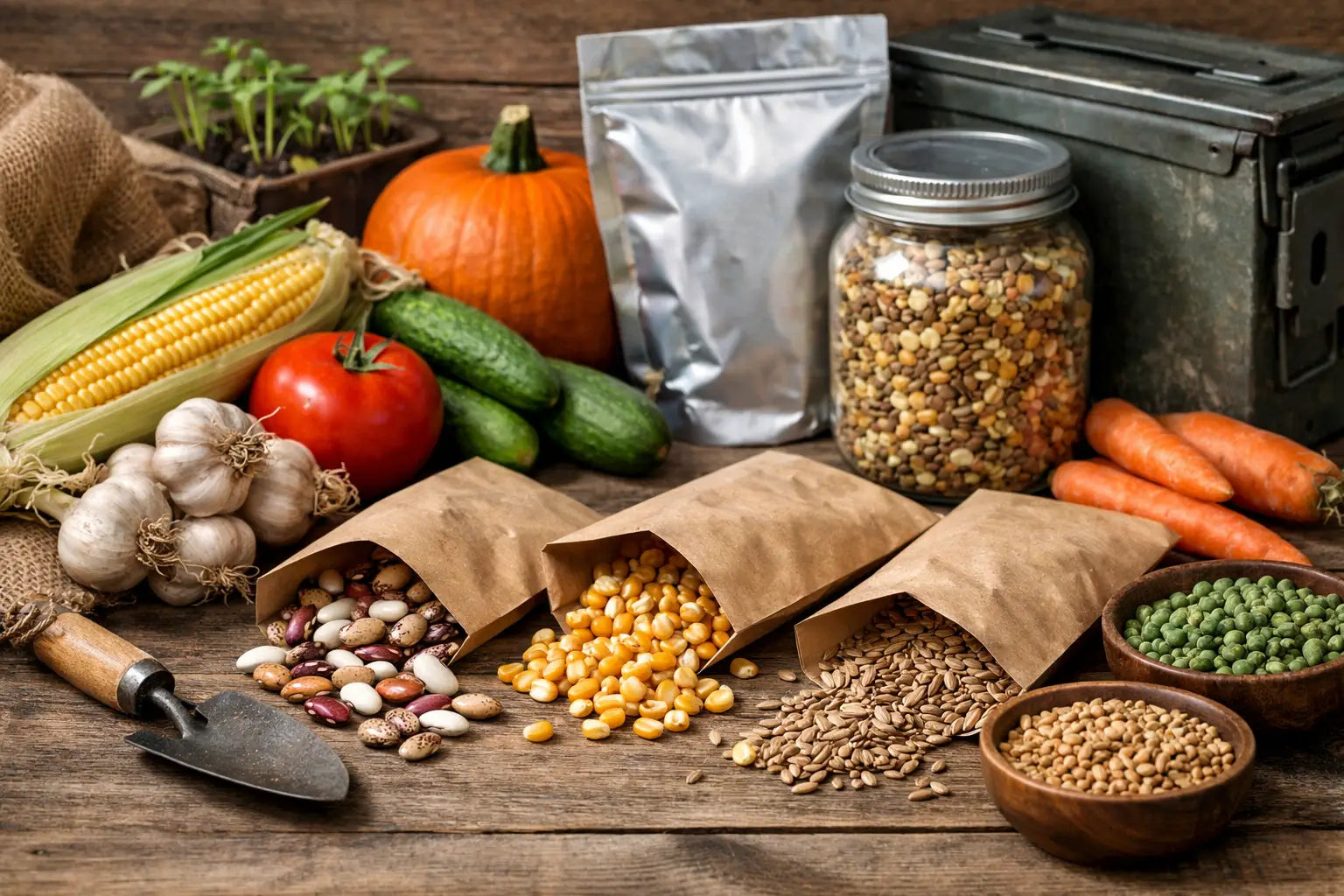
A seed vault sounds smart until you realize half the packets at the garden center are hybrids, some crops are fussy to save, and a lot of “survival seed” marketing skips the part your family actually needs to know. If you are looking for the best survival seeds for long term storage, the real question is not which packet looks most impressive. It is which seeds store well, grow reliably, produce meaningful food, and can be renewed season after season.
That narrows the field fast. For most families, the best seed reserve is not a novelty collection with 50 obscure varieties. It is a compact group of dependable, open-pollinated crops that match your climate, your cooking habits, and your available space. A suburban backyard in North Carolina needs a different plan than a dry rural property in Arizona, but the decision framework is the same.
What makes seeds worth storing long term
Long-term seed storage is about more than shelf life. A seed can remain technically viable for years and still be a poor choice for preparedness. Some crops take a long season, demand careful pest control, or produce very little food for the effort. Others are easy to grow but difficult to save true from year to year.
The strongest choices usually share four traits. They are open-pollinated rather than hybrid, so you can save seed with predictable results. They tolerate a range of conditions. They produce food your household will actually eat. And they offer decent calorie value, nutrition, or repeat harvests without expert-level gardening skills.
Storage conditions matter too. Seeds last longest when they are kept cool, dark, and dry. A sealed container with low humidity in a stable basement will outperform a hot garage every time. Even the best survival seeds for long term storage will lose viability quickly if they spend summers in a shed that feels like an oven.
The best survival seeds for long term storage
If you want a practical family seed bank, start with crops that give you the best return on effort.
Beans
Beans deserve a top spot because they pull double duty. They are useful as a dry food staple and as a seed crop. Bush beans are especially beginner-friendly. They mature fairly quickly, store well as seed when dried properly, and provide protein, fiber, and dependable yields.
Pole beans can also be excellent, especially if space is tight and vertical growing helps. The trade-off is that they need trellising. If you are building a preparedness plan for a normal household, bush beans are usually the easier first choice.
Peas
Peas are productive, nutrient-dense, and easier to manage in cool seasons than many warm-weather crops. They are a smart addition for families in northern states or anyone trying to stretch the growing year in spring and fall. Like beans, many pea varieties are simple to save.
Their main limitation is heat. In hot southern summers, peas are not your backbone crop. They are still worth storing, but they should sit beside heat-loving crops, not replace them.
Corn
Corn is one of the few garden crops that can meaningfully support calorie production at scale. That matters in a long disruption. Dent corn and flour corn are more useful for preparedness than sweet corn because they store, grind, and feed a household better.
There is a catch. Corn needs room, decent soil fertility, and enough plants for pollination. For a small suburban lot, corn may be worth storing as part of a broader plan, but not as your main answer. For larger properties, it becomes much more valuable.
Winter squash
Winter squash is one of the most underrated preparedness crops. It stores well after harvest, offers calories and vitamins, and many varieties are fairly forgiving. Butternut, Hubbard, and other storage squash can sit for months under the right conditions, which reduces pressure on your pantry.
Saving seed is manageable for many gardeners, though cross-pollination can complicate things if multiple varieties are grown close together. That does not make squash a bad choice. It just means a little planning helps.
Tomatoes
Tomatoes are not your calorie crop, but they are one of the most useful kitchen crops a family can grow. They preserve well as sauce, salsa, or dehydrated slices, and many open-pollinated varieties are easy enough to save.
They do come with more disease pressure than beans or squash, and they are not the easiest option in every region. Still, for morale, flavor, and preserving value, tomatoes earn their place in a storage plan.
Lettuce and leafy greens
Leafy greens will not carry your family through a long emergency, but they fill a different need. They grow fast, improve diet quality, and can produce fresh food quickly when supply chains are shaky. Lettuce, kale, chard, and spinach all have a role, especially in cooler seasons.
Think of these as support crops. They are important, but not foundational in the same way beans or corn can be.
Carrots and beets
Root crops bring steady value. Carrots and beets store well after harvest, offer strong nutrition, and can be succession planted. They are especially helpful for families trying to bridge the gap between fresh gardening and food storage.
Seed saving is a little more advanced because these crops are biennial, meaning they usually produce seed in their second year. That makes them slightly less convenient for a beginner seed-saving plan, but still worthwhile in a stored seed reserve.
Seeds that sound good but may not be your best first choice
Preparedness is partly about restraint. You do not need every possible crop in year one.
Hybrid seeds are the biggest issue. They often grow well, but saved seed does not reliably reproduce the parent plant. If your goal is long-term independence, hybrids are weaker choices than open-pollinated heirloom varieties.
Very specialized crops can also be a distraction. Celery, cauliflower, and some brassicas can be rewarding, but they are less forgiving for beginners and often more climate-sensitive. Watermelon is fun, but in a small garden it usually gives less practical return than beans, squash, or potatoes.
And that brings up potatoes. They are excellent for food production, but they are usually grown from seed potatoes rather than true seed packets. They belong in a serious food independence plan, just not in the same category as long-stored dry seed.
How to build a seed reserve that actually helps your family
A good seed reserve should reflect how your family eats. If nobody in your house likes turnips, storing turnip seeds because they are “survival crops” is not wise. Preparedness works better when it fits real life.
Start with ten to fifteen dependable varieties, not fifty. Include a few calorie-supporting staples, a few nutrient-rich vegetables, and a few fast growers for early harvests. If you have children or grandchildren, include crops that encourage participation. Cherry tomatoes, bush beans, and pumpkins do more for long-term resilience than many people realize because they make gardening easier to sustain as a family habit.
Then test what you store. This is the part people skip. Plant from your reserve each season. Learn which varieties handle your local weather, pests, and soil. Replace what performs poorly. A seed packet is not a preparedness asset until you know it works on your property.
Storage tips that matter more than fancy packaging
Packaging helps, but conditions matter more. Keep seeds dry, cool, and protected from light. Moisture is the enemy. Heat is a close second. A vacuum-sealed mylar pack stored in a hot attic is still a bad setup.
For many households, the best approach is simple: airtight containers, labeled clearly, with the year packed and basic planting notes inside. If you want extra protection, add desiccants and keep the containers in a temperature-stable indoor area. Some families refrigerate or freeze seeds for maximum life, but only if they can control moisture and avoid frequent temperature swings. Done carelessly, that can create more problems than it solves.
Rotation matters too. Seeds are not canned goods, but they should still be checked and renewed. Germination rates decline over time. If you plant and replenish regularly, your stored supply stays alive in the most literal sense.
The smartest mindset for long-term food independence
Seeds are not magic. They are a tool. A very good one, but still just one part of a larger family preparedness plan that includes stored food, water, power, cooking, and realistic expectations. In a short-term outage, your pantry does the heavy lifting. In a longer disruption, seeds begin to matter more.
That is why the best survival seeds for long term storage are the ones you can actually use, not the ones with the most dramatic packaging. Choose open-pollinated varieties. Focus on reliable crops. Build skills while life is normal. If you want to go deeper, a well-chosen family seed reserve from a preparedness-focused source such as SHTF Prepper Club can save time, but the real value still comes from planting, learning, and adjusting.
Start smaller than you think. Grow one bed well. Save one kind of seed successfully. Let confidence build the same way a good pantry does - steadily, quietly, and on purpose.