
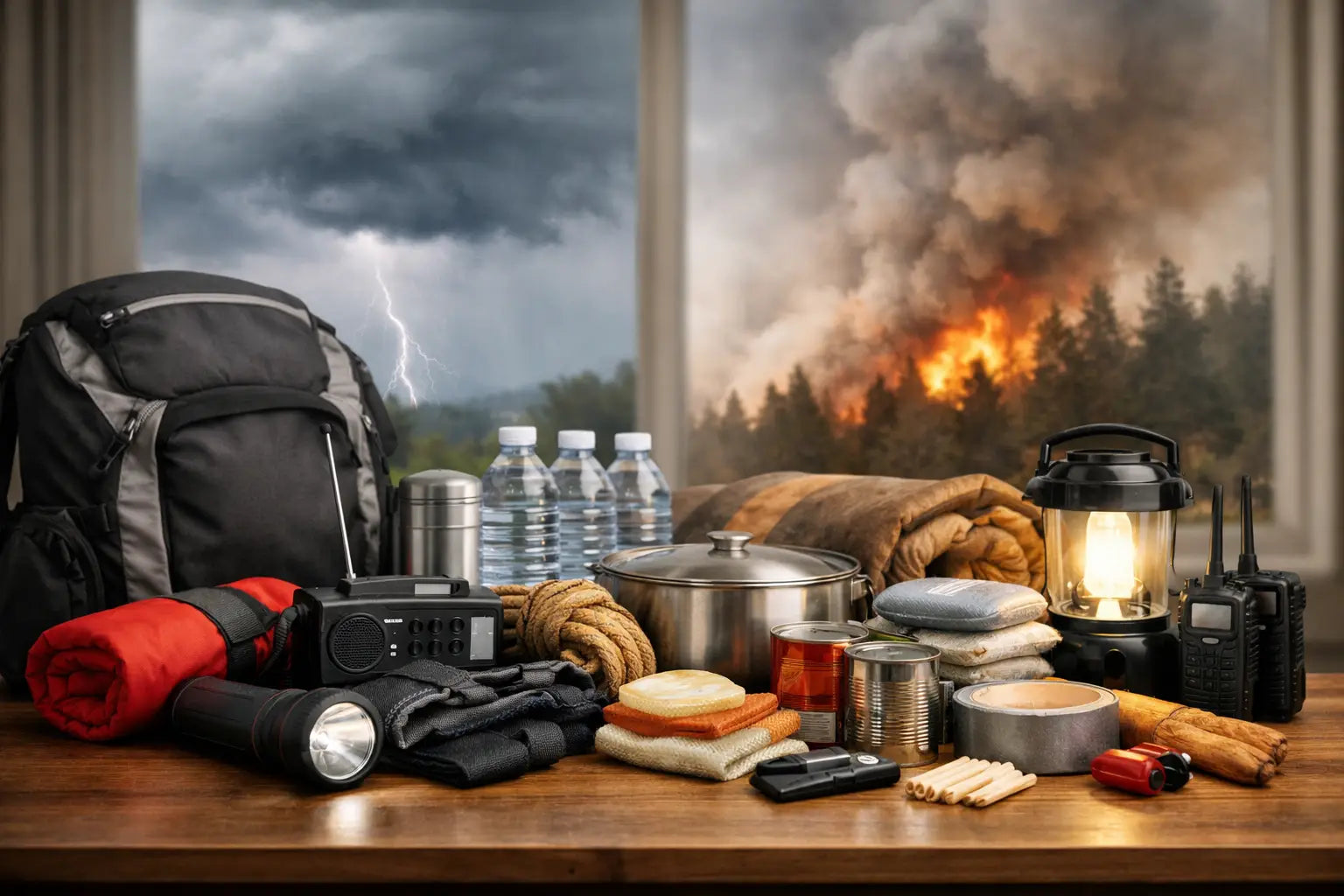
The mistake most families make is waiting for the warning. By the time a storm track shifts, smoke is visible, or the power grid starts failing, your best options are already smaller, more expensive, and harder to find. If you are wondering how to prepare for natural disasters, the goal is not to predict the next emergency. It is to make sure your household can stay safe, comfortable, and functional when normal systems stop working for a few days or longer.
That sounds like a big job, but it gets much easier when you stop thinking in terms of dramatic scenarios and start thinking in terms of practical gaps. Can your family drink, eat, stay warm or cool, charge devices, handle minor injuries, and leave quickly if needed? Those are the real questions. Most preparedness planning is simply filling those gaps one category at a time.
How to prepare for natural disasters without getting overwhelmed
Start with the disruptions most likely to affect your home, not every possible disaster on earth. A family in Florida may prioritize hurricanes, long power outages, and flooding. A household in California may need to think first about earthquakes, wildfire smoke, and evacuation. In the Midwest, tornadoes and winter storms may matter more than anything else.
This matters because the right level of preparedness depends on your risks. A week of stored water makes sense almost everywhere. A generator or large power station may be essential in some areas and less urgent in others. If a wildfire zone could force you to leave with 15 minutes of notice, your planning should look different from someone preparing to shelter at home during an ice storm.
A simple way to begin is to plan for 72 hours first, then extend to two weeks. Three days covers the most common short-term disruptions. Two weeks gives you a much better cushion for utility failures, road closures, supply shortages, or delayed services. That step-by-step approach keeps preparedness affordable and realistic.
Build your plan around the basics
Most disaster readiness comes down to six areas: water, food, power, medical, shelter, and communication. If those six are covered, your family is already in much better shape than most households.
Water comes first
People usually underestimate water because bottled water is easy to grab during normal times. During an emergency, it disappears fast. A good baseline is one gallon per person per day for drinking and basic sanitation, but that is a minimum. Hot climates, children, nursing mothers, and certain medical conditions may require more.
Stored water is your first layer. Water filtration and purification are your second. That combination matters because storage can run out, containers can leak, and local water service can become questionable even when taps still work. For families, a mix often works best: some sealed long-term water for immediate use, larger containers for bulk storage, and a dependable filter or purifier as backup.
Food should be easy, familiar, and low-stress
Emergency food planning does not need to start with a year of freeze-dried meals. Start with food your family will actually eat and can prepare with limited power or water. Shelf-stable pantry meals, ready-to-eat options, and simple long-term storage items all have a place.
Think in layers here too. First, keep a two-week buffer of normal groceries. Second, add foods that store well for longer and require little prep. Third, if you want deeper readiness, build out a long-term food supply that covers calories, protein, and variety. Kids, older adults, and anyone with dietary restrictions need special attention. The best emergency food plan is the one your household can use without stress, not the one that looks impressive on a shelf.
Power is really about staying functional
When families say they want backup power, they often mean several different things. They want phones charged, medications protected, flashlights working, garage doors opening, and maybe a refrigerator running. That is why it helps to think in terms of priority loads instead of just watts.
For many households, a smaller backup setup is enough for lights, charging, radios, and internet. Others need a larger power station or generator for refrigerated medication, CPAP machines, freezers, or well pumps. There is a cost trade-off here. Bigger systems give you more comfort and flexibility, but they also require more investment and planning. Starting with battery lighting, rechargeable power banks, and a safe backup cooking plan is still real progress.
Medical readiness should fit your family
Every home needs a real first aid setup, not a half-used box of bandages under the bathroom sink. A practical medical kit should match your family size, health needs, and level of training. Minor cuts, burns, sprains, stomach illness, and cold symptoms are common during emergencies. Prescription medications, spare glasses, hearing aid batteries, and backup medical supplies are just as important.
If someone in your home has asthma, diabetes, severe allergies, mobility limitations, or other ongoing needs, build your plan around them first. The same goes for infants and grandparents. Disaster planning gets much clearer when you identify the people who would have the hardest time if systems failed.
How to prepare for natural disasters at home
Your home itself needs attention. Preparation is not only what you store. It is also what you prevent.
Walk your property like a storm or fire already hit your area. Look for weak tree limbs, loose outdoor furniture, poor drainage, missing smoke detector batteries, and anything that would become a problem if you lost power for several days. If you live in earthquake country, secure heavy furniture and water heaters. If wildfire is a concern, reduce flammable debris around the house. If flooding is common, know what should be moved first and where sandbags or barriers would actually help.
Inside the house, organize supplies so they can be found in the dark or under stress. Keep flashlights where you need them, not all in one drawer. Store important documents in a protected, portable format. Label bins. If your plan depends on everyone knowing where things are, then everyone should actually know where things are.
Have an evacuation plan before you need one
Some emergencies are shelter-in-place events. Others are not. Families often focus so much on home supplies that they neglect the possibility of leaving quickly.
An evacuation bag for each family member should cover the basics: water, snacks, medications, documents, hygiene items, chargers, cash, seasonal clothing, and comfort items for children. Pets need their own supplies too, including food, leashes, carriers, and records. The bag does not need to be extreme. It just needs to save you from scrambling.
Also decide where you would go. One location might be nearby, such as a relative's house outside a flood zone. Another might be farther away if your whole region is affected. Choose meeting points, print key phone numbers, and talk through what happens if family members are in different places when an emergency starts.
Practice makes the plan real
A written plan is good. A practiced plan is better.
Run simple drills at home. See how long it takes to gather pets, load the car, or switch to backup lighting. Try a no-power evening and notice what you forgot. Check whether your stored food really works with your cooking setup. Test your water plan. Charge your backup batteries on schedule. Preparedness is not a one-time shopping trip. It is a household system that needs occasional maintenance.
This is also where many families discover their weak spots. Maybe you have food but not enough water. Maybe you own backup power but no safe indoor lighting for the kids' rooms. Maybe your evacuation plan looks fine on paper but falls apart when you remember the dog hates the crate. Better to learn that on a calm Saturday than during an actual warning.
Start small, then build depth
If your family is just starting, do not let perfect planning stop you. A basic emergency kit, a water supply, a medical kit, and a short food reserve are a strong start. From there, add backup power, better storage, longer-term food, and more complete evacuation gear as your budget allows.
That steady approach is how most capable households get prepared. Not all at once. Not out of fear. Just one smart decision after another. At SHTF Prepper Club, that is how we encourage families to think about readiness - practical, calm, and built to last.
The best time to prepare is before life gets noisy. Start with what would help your family most this month, then keep going until the next storm warning feels less like panic and more like a checklist.