
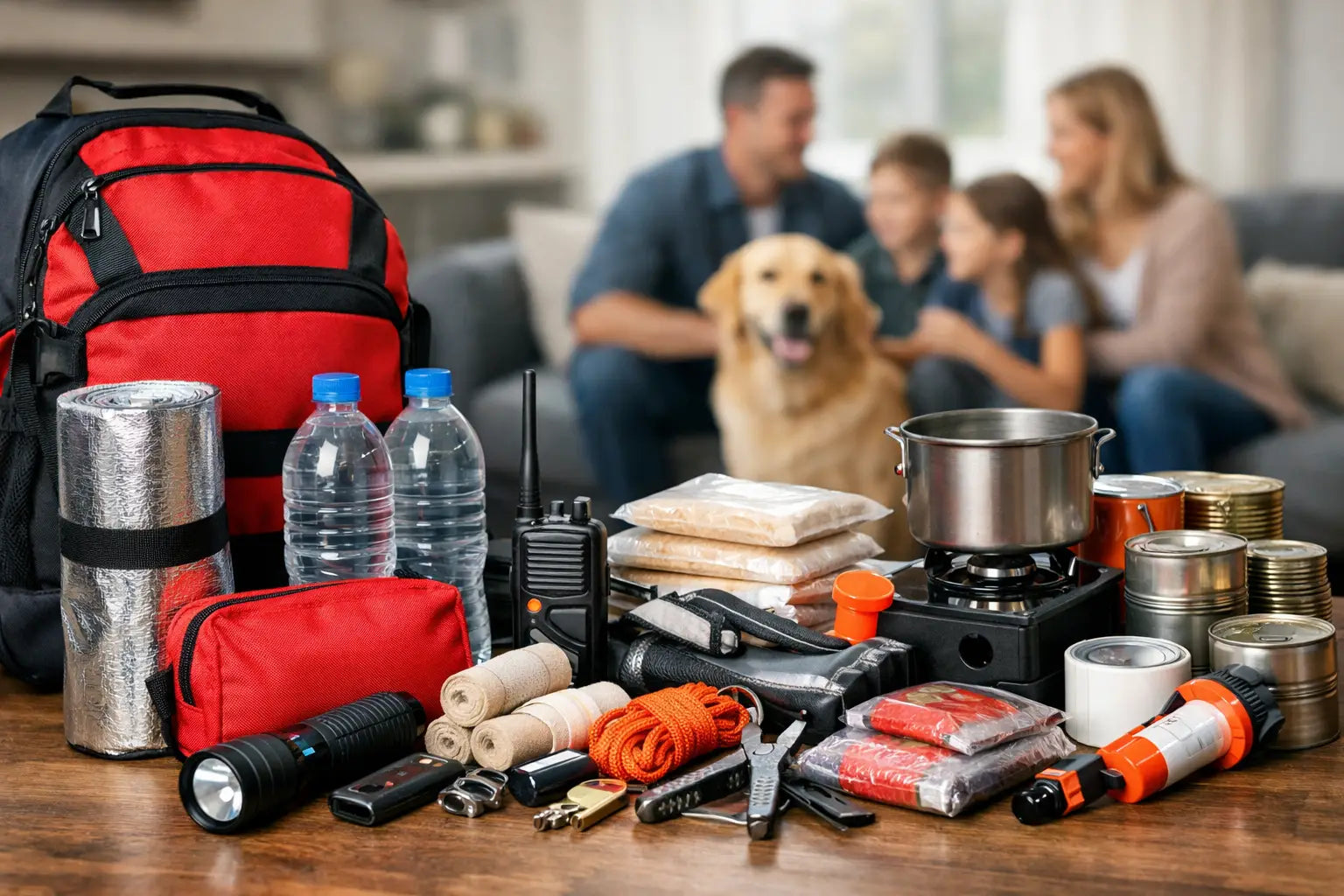
The difference between a hard week and a full-blown household mess often comes down to what you already have at home. When the power stays out longer than expected, the roads close, or the store shelves empty faster than anyone thought they would, an emergency kit for family of 4 stops being a nice idea and starts feeling like the most practical thing in the house.
Most families do not need a bunker. They need a solid, realistic setup that covers 72 hours well and can stretch further if needed. That means water your family will actually drink, food your kids will actually eat, backup light and power, basic first aid, and a few comfort items that keep stress from taking over.
What a family emergency kit really needs to do
A good kit does two jobs. First, it keeps your household safe and functional during a short disruption like a winter storm, hurricane outage, boil-water notice, or wildfire evacuation warning. Second, it buys you time. Time to make better decisions, avoid panic shopping, and care for your family without scrambling for basics.
That is why the best emergency kit is not built around gadgets. It is built around the problems families actually face. Can you drink safely? Stay warm or cool enough? See after dark? Charge a phone? Handle minor injuries? Feed everyone without relying on takeout, refrigeration, or a quick store run? If your kit covers those questions, you are in good shape.
How much water and food for an emergency kit for family of 4
Water is where most families underprepare. A common rule is one gallon per person per day for at least three days. For a family of four, that is 12 gallons minimum. In real life, more is better, especially in hot weather, with pets, during illness, or if you may need water for basic cleanup.
A better starter target is 16 to 20 gallons at home, plus a way to purify more if the outage or disruption lasts longer. Stored water is simple and dependable. Filtration and purification add flexibility. You want both if your budget allows.
Food should be easy, familiar, and low-stress. Think shelf-stable meals, ready-to-eat snacks, canned proteins, nut butter, crackers, oatmeal, soups, fruit cups, and comfort foods your family already knows. If anyone in the house has allergies, digestive issues, or medication that must be taken with food, build around that first. Calories matter, but so does cooperation. In an emergency, the best food is the food your family will actually eat.
For a 72-hour kit, aim for nine meals per person plus snacks. That sounds like a lot until you remember that stress, cold, heat, and cleanup all burn energy. If you want your kit to cover a full week, you can layer in freeze-dried or longer-term storage meals to save space and simplify rotation.
The non-food basics families forget
Families usually remember flashlights. They often forget the items that make daily life manageable.
Start with lighting. Every adult should have a flashlight, and the house should also have area lighting such as lanterns. Headlamps are even better for hands-free tasks like cooking, cleaning up a leak, or checking a breaker panel.
Power comes next. A charged power bank for each adult phone is a strong baseline. If outages are common where you live, a larger portable power station is one of the most useful upgrades you can make. It can keep phones, medical devices, routers, small fans, lights, or other essentials running without the noise and fuel issues of a generator.
Sanitation matters more than people expect. Add toilet paper, wet wipes, trash bags, zip-top bags, feminine hygiene supplies, diapers if needed, and a basic plan for waste if water service is interrupted. Keep a small supply of soap and hand sanitizer too. Clean hands prevent small problems from turning into bigger ones.
Then there is warmth and shelter. Blankets, sleeping bags, emergency bivvies, rain gear, extra socks, and season-appropriate clothing are not just for evacuation. They help when your heat fails, your AC goes down, or a family member has to sleep in a different part of the house for safety or comfort.
Build your medical section like a parent, not a movie character
Your first-aid kit should reflect the way families actually get hurt and sick. That means cuts, burns, headaches, fevers, stomach issues, splinters, sprains, and prescription interruptions are more likely than dramatic trauma.
A strong family medical kit includes bandages, gauze, adhesive tape, antiseptic, burn gel, tweezers, gloves, pain relievers for adults and children, antihistamines, anti-diarrheal medication, thermometer, electrolyte packets, and any backup prescription medicines your doctor will help you maintain. If someone in the family uses an inhaler, EpiPen, glucose supplies, hearing aid batteries, or other medical essentials, those belong in the kit too.
Keep copies of insurance cards, prescription lists, and key medical information in a waterproof pouch. If you need to leave quickly or visit an urgent care during a regional disruption, that paperwork saves time when your brain is already overloaded.
If you may need to leave, your kit changes
A stay-at-home emergency kit and an evacuation setup overlap, but they are not the same thing. Home kits can be heavier and more complete. Evacuation bags need to be portable.
For a family of four, that usually means one household tote or bin for shared supplies and one smaller bag per person for personal items. The shared container can hold food, water treatment, cooking basics, medical supplies, lights, and hygiene items. Individual bags should carry clothing, chargers, medications, comfort items, copies of documents, and age-specific needs.
Children change the equation. A teenager may carry their own bag. A younger child probably cannot. If you have kids, your evacuation plan should assume at least one adult is carrying extra gear.
Pets count too. Food, water, leash, waste bags, medications, and vet records should be packed as part of the family plan, not treated as an afterthought.
Where families overspend - and where they should not
It is easy to spend too much on novelty gear and not enough on core supplies. Expensive multitools, oversized knives, and specialty gadgets often look useful and then sit untouched while the household runs short on water, batteries, or easy meals.
Spend first on water storage and treatment, practical food, medical essentials, dependable lighting, and backup power. Those categories solve the most common problems. After that, improve comfort and resilience with cooking options, larger power capacity, better shelter items, and longer-duration food storage.
There is also a trade-off between buying a prebuilt kit and building your own. Prebuilt kits are fast and helpful for getting started, especially if you are busy and want to avoid decision fatigue. The downside is that some are light on calories, weak on medical supplies, or stocked with items your family would never choose. A custom-built kit takes more time but usually fits your household better. Many families do best with a hybrid approach - start with a quality base kit, then customize it for medications, kids, pets, climate, and local risks.
How to store and maintain an emergency kit for family of 4
A great kit does not help if nobody can find it. Store core supplies in one main location that is cool, dry, and easy to access. A hall closet, mudroom, utility room, or shelf in the garage can work well, depending on your climate. Keep the kit in sturdy bins or clearly labeled containers.
Then make it visible. If your family cannot identify the emergency supplies in ten seconds, the setup needs work. Label bins by category such as water, food, medical, lighting, and sanitation. Keep a simple inventory sheet inside the lid.
Maintenance is less work than people think. Check the kit twice a year. Replace expired medications, rotate food your family already eats, test power banks, swap batteries, and update clothing sizes for growing kids. Tie your check-in to daylight saving time, hurricane season, back-to-school, or another date you will remember.
A simple starter setup that works
If you are building from scratch, do not wait for the perfect plan. Start with enough water for three days, shelf-stable food for four people, a serious first-aid kit, flashlights, batteries, a lantern, phone charging, hygiene supplies, blankets, and copies of important documents. That alone puts your household ahead of most families.
From there, add depth. Increase water storage. Add a portable power station. Improve your cooking options. Expand to seven days, then two weeks. Preparedness works better when it grows in layers.
That is the approach we believe in at SHTF Prepper Club - not panic buying, not fantasy scenarios, just steady, useful readiness for real family life.
You do not need to finish everything this weekend. You just need to make sure the next outage, storm, or evacuation order does not catch your family with empty hands.