
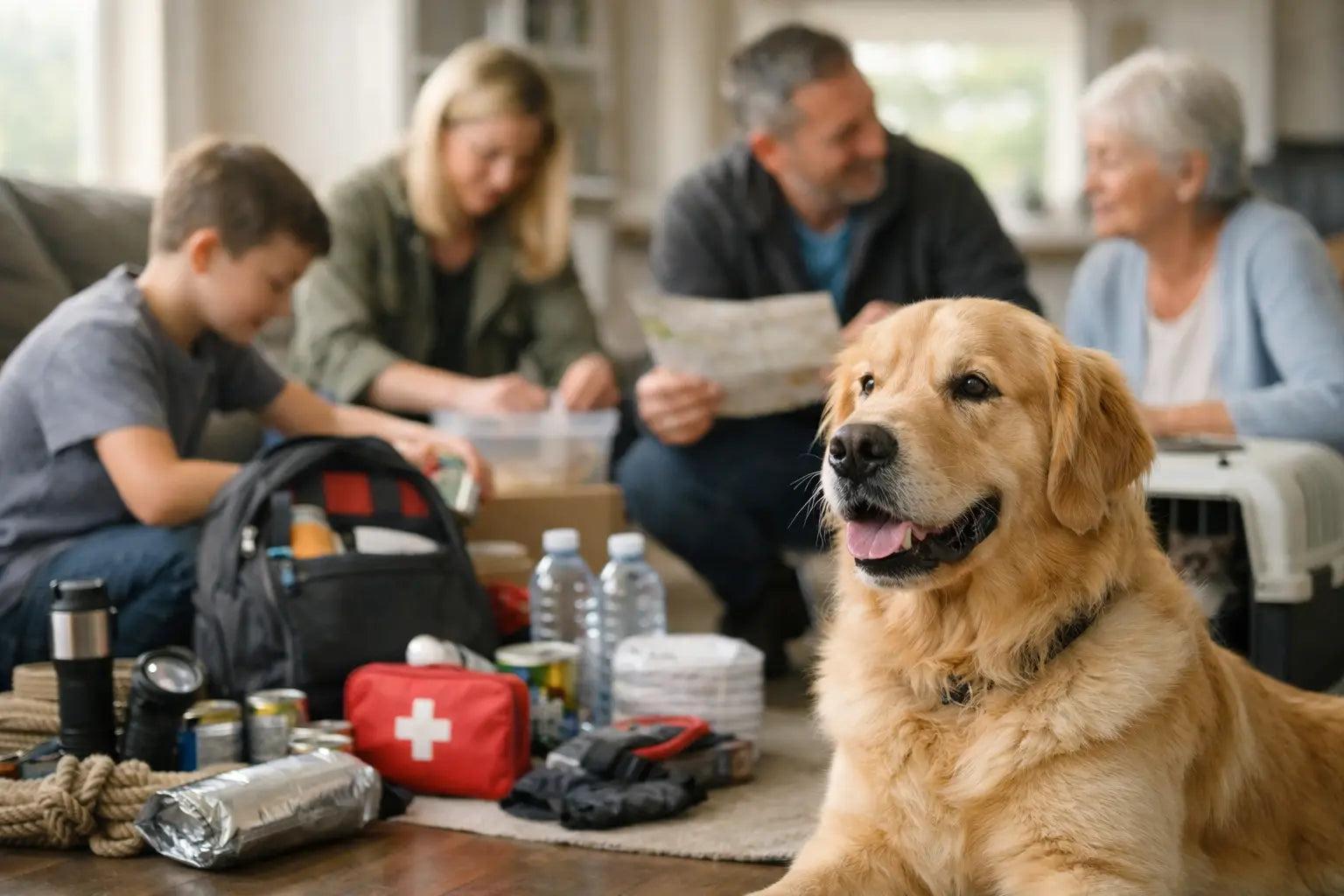
The hard part is not remembering your dog food. It is realizing, in the middle of a fast-moving emergency, that your pet depends on the same things your kids do - safety, routine, water, shelter, and a calm adult with a plan. Emergency preparedness for families with pets works best when you stop treating the animals as an extra detail and start planning for them as part of the household.
That shift matters more than most people think. Families often have a decent plan for flashlights, batteries, and bottled water, but no clear answer for what happens if the cat disappears during a wildfire warning, the dog refuses a crowded shelter, or a power outage spoils refrigerated medication. Those are not edge cases. They are common, stressful problems that get worse when you are tired and under pressure.
Why emergency preparedness for families with pets needs its own plan
Pets change the math. A 72-hour power outage feels different when you have a Labrador that drinks a lot of water, a senior dog on medication, or an indoor cat that panics around strangers. If you need to evacuate, your departure time may be longer. If you need to shelter at home, your supply needs go up. If you have to stay in a hotel or with relatives, your options may shrink.
This is where many good intentions fall apart. Families assume they will figure it out in the moment. Sometimes you can. Sometimes you cannot. A pet-friendly hotel may already be full. A boarding facility may be closed. A pet left behind for what was supposed to be a short outage may become a rescue problem by the next day.
A solid family emergency plan accounts for those trade-offs early. It does not need to be fancy. It just needs to be real.
Start with the two questions that matter most
Before you buy anything, answer these two questions. First, will your pet stay with you in an emergency, or is there a realistic scenario where they may need temporary boarding with family, friends, or a veterinary clinic? Second, can every adult in the home safely transport and manage that pet without help?
Those answers shape almost everything else. A calm 12-pound dog is one kind of planning problem. A nervous 85-pound shepherd with storm anxiety is another. A cat that tolerates a carrier is easier to move than one that bolts when the front door opens. Households with birds, reptiles, rabbits, or multiple animals need more specific planning because temperature, habitat, and transport become harder fast.
If your current setup depends on one person doing all the lifting, driving, and animal handling, your plan is too fragile. Emergencies rarely arrive on schedule.
Build a pet-ready evacuation bag
Every pet should have its own evacuation bag or tote, stored where you can grab it as quickly as your family emergency kit. This is one place where convenience really matters. If supplies are scattered between the pantry, bathroom cabinet, garage, and laundry room, you are not ready yet.
A useful pet bag includes at least three days of food, water, bowls, medications, waste supplies, a leash or harness, a carrier if needed, vaccination records, and a familiar comfort item like a small blanket. For cats, that usually means litter and a small litter pan solution. For dogs, think through weather exposure, paw protection, and backup restraints for the car.
Food is the easy part. Medication is where people get caught short. If your pet takes daily prescriptions, ask your veterinarian how to maintain a safe backup supply. If a medication must stay cold, your power outage plan needs to include a cooling option or a relocation plan. The same goes for pets with special diets. It is much easier to rotate an extra bag of food now than to search for a specialty formula after shelves have been picked over.
Water is usually the hidden problem
Families tend to underestimate pet water needs, especially for larger dogs and during summer outages. If you are already storing water for your household, include your animals in the total. A good baseline is to plan for at least several days, then adjust upward for heat, stress, size, and medical needs.
This is also where storage method matters. Small disposable bottles are fine for short disruptions, but they become inefficient for bigger households with pets. Larger water storage containers are easier to manage over time and easier to calculate against actual daily use. If you rely on filtration, make sure your system can keep up with both people and animals. That sounds obvious until you are rationing filtered water on day two.
Pets can also drink contaminated water if they are stressed, loose, or left in the yard. During floods, wildfires, and storm aftermath, standing water is not safe. Build your plan around controlled access, not hope.
Identification and containment are not optional
A frightened pet does not act like your normal pet. Doors get left open. Fences fail. Loud weather, smoke, strangers, and sirens can push even a well-trained animal into panic behavior.
That means identification needs layers. Tags on the collar help. A microchip with current contact information is better. Recent printed photos matter too, especially if your phone dies or cell service is unreliable. Keep records of breed, age, medications, and any special handling notes in a waterproof sleeve inside the pet bag.
Containment is just as important. Dogs need secure leashes, harnesses, and crates that fit them properly. Cats need carriers, even if you think you will only be gone for a few hours. In real evacuations, loose pets become lost pets.
Shelter in place is often more realistic than evacuation
Most families picture evacuation first, but many emergencies are shelter-at-home events. Ice storms, tornado aftermath, short wildfire smoke periods, civil disruptions, and multi-day outages often mean staying put if the home is structurally safe.
That changes pet planning. You may need indoor potty options, extra odor control, more cleaning supplies, and a way to keep pets calm in close quarters. Cats may need a quieter room away from generators, guests, or repair crews. Dogs may need a secure indoor routine if the yard is unsafe because of debris, broken fencing, or downed lines.
Temperature control matters here too. Brachycephalic dogs, older pets, and very young animals can struggle quickly in heat. Reptiles and birds may have even narrower tolerances. If backup power is part of your family plan, think through which pet needs are truly non-negotiable. A fish tank, heated habitat, or oxygen-related device may move from nice-to-have to essential.
Practice the plan before you need it
Preparedness gets easier once it becomes boring. That is the goal. Run a simple drill. Can you get every pet crated, leashed, loaded, and out the door in ten minutes? Can your spouse do it without you? Can an older child help in a useful way without creating confusion?
This is where weak spots show up. Maybe the carrier is buried in the attic. Maybe the dog hates the harness. Maybe the cat vanishes under the bed every time the smoke alarm chirps. Better to learn that on a Saturday afternoon than during an evacuation order.
Pets benefit from practice too. Let them get used to carriers, car rides, temporary confinement, and eating from travel bowls. Routine reduces panic. Familiarity buys time.
The right supplies depend on your real risks
A family in hurricane country may need stronger transport planning, waterproof records, and a longer evacuation window. A family in wildfire areas may need faster departure readiness and better air quality planning. Winter storm households need warmth, traction, and backup power for heated water or temperature-sensitive animals.
This is why practical preparedness beats generic advice. Buy for the disruptions you are most likely to face first. Then build outward. If your budget is tight, start with transport, food, water, meds, and ID. Those cover the majority of pet-related emergency failures.
If you are building a larger readiness setup, organize pet supplies alongside the same categories you use for the rest of the household - water, food, first aid, shelter, sanitation, and power. That keeps your system easier to maintain over the long term. SHTF Prepper Club serves families best when preparedness stays approachable, and pet planning is a good example of why simple organization beats complicated theory.
The best pet emergency plan is not the most impressive one. It is the one your family can carry out when everyone is tired, worried, and trying to move fast. If your pets are family, put them in the plan now, while the house is quiet.