
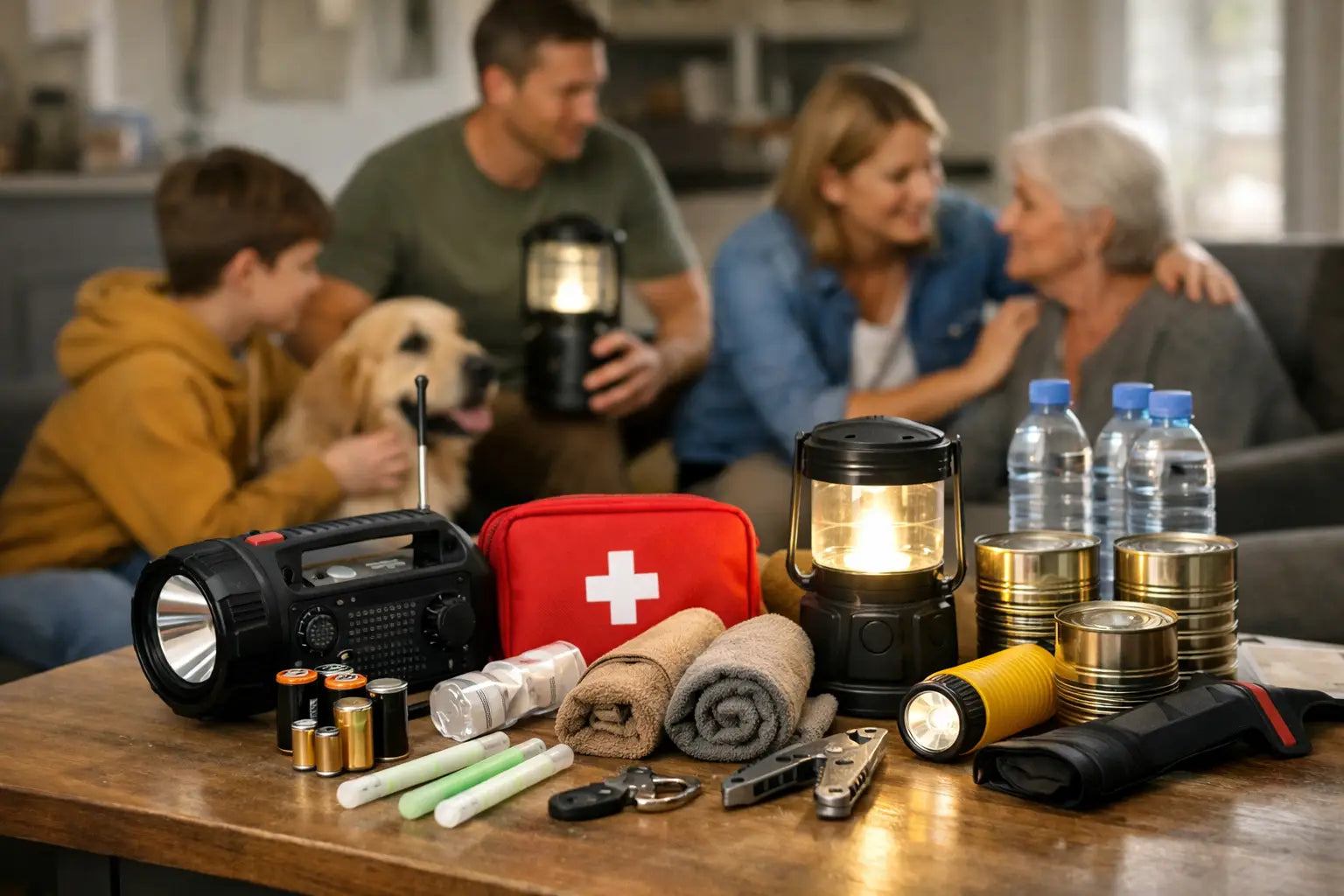
The power usually goes out at the worst possible time. Dinner is half-cooked, phones are at 23%, the garage door is stuck, and someone in the house is already asking how long this will last. A good family blackout preparedness checklist example helps you make decisions before that moment, when everyone is tired and the house starts getting colder or warmer by the hour.
For most families, the goal is not to prepare for every imaginable scenario. It is to cover the realistic ones well. That usually means being ready for 24 hours without power, then stretching to 72 hours, then building toward a full week if your budget and storage space allow. If you think in layers instead of one giant shopping trip, blackout preparedness becomes much more manageable.
What a family blackout preparedness checklist example should actually cover
A useful checklist is not just a gear list. It should help your household function. That means you are thinking about water, food, light, backup power, medications, communication, temperature control, sanitation, and the specific people in your home who may need extra support.
That last part matters more than most people realize. A family with two healthy adults and a gas stove has a very different outage plan than a family with a baby, refrigerated medication, an elderly parent, or a well pump that stops the moment the grid goes down. The best checklist is the one that fits your house, not a generic one copied from a government flyer.
Start with the first 72 hours
The first three days are where most preventable problems show up. Phones die. Flashlights are missing batteries. The fridge gets opened too often. Nobody is sure how much water is actually on hand. If your checklist handles those first 72 hours well, you are already ahead of most households.
Water
Store at least one gallon of water per person per day for drinking and basic hygiene. In hot climates, with kids, nursing mothers, or pets, that amount can be too low. A better planning number for many families is 1.5 to 2 gallons per person per day if you have the room.
If your home relies on a well, remember that a power outage can also mean no running water. That changes everything. In that case, your blackout checklist should include stored water for drinking, handwashing, and toilet flushing, not just a few cases of bottles in the pantry.
Food
Plan around foods your family already eats. Shelf-stable meals, canned proteins, nut butters, crackers, oatmeal, applesauce, ready-to-eat soups, and freeze-dried food all have a place, but the right mix depends on your family. Some homes need quick grab-and-eat calories. Others can support simple cooking with a camp stove, grill, or backup burner.
The trade-off is convenience versus cost. Ready-to-eat foods are easy during a stressful outage, but they take more storage space and often cost more per meal. Longer-term food storage is efficient, but it usually needs water, heat, and a little planning.
Light
Every bedroom should have a dedicated light source that stays in the same place. Headlamps are especially useful because they keep hands free for cooking, carrying, and helping children. Lanterns are better for common areas. Candles work, but they are a distant backup in a house with kids, pets, or anyone likely to fall asleep before blowing them out.
A practical checklist also includes extra batteries, rechargeable options, and a habit of topping devices off before a storm arrives.
Power
This is where many families overspend or underspend. You do not need to power your whole house on day one. But you probably do need a way to recharge phones, keep a few lights running, power medical devices, or support internet access if cell service is spotty.
Portable power stations are a good middle ground for many households because they are quiet and simple to use. A generator can carry more of the load, but it brings fuel storage, placement, noise, and maintenance into the picture. If your budget is limited, start by identifying what truly must stay powered. Often that list is shorter than people expect.
A practical family blackout preparedness checklist example
Here is a simple household framework you can adapt:
For each adult, store three to seven days of water, shelf-stable meals, prescription medications, hygiene basics, weather-appropriate clothing, and a flashlight or headlamp with backup batteries. For each child, add comfort food, activity items, and any age-specific needs such as formula, diapers, wipes, or favorite bedtime items that help maintain routine.
For the home, include a lantern for shared spaces, a way to charge phones, a battery or solar radio, cash in small bills, manual can openers, extra pet food, sanitation supplies, and a written contact list. If you use electric cooking appliances for everything, add a safe backup cooking option. If your heat or cooling system depends entirely on electricity, plan for one heated or cooled room rather than trying to solve the whole house at once.
For refrigerated and frozen food, keep appliance thermometers inside the fridge and freezer so you can make better decisions. A refrigerator generally keeps food cold for about four hours if unopened. A full freezer can hold temperature for around 48 hours, sometimes less if it is half full or frequently opened. You do not need to memorize every rule, but you do need a plan to stop the endless door-opening that wastes cold air.
Don’t forget the people, not just the supplies
A blackout hits different family members in different ways. Younger kids may be scared by darkness and broken routines. Teenagers may be frustrated by dead devices and lost Wi-Fi. Older adults may struggle if stair lifts, refrigerated medication, CPAP machines, or electric recliners are suddenly unavailable.
That is why a good family blackout preparedness checklist example includes roles. One adult checks lighting and power. Another manages food and water. One person tracks device charging. Older children can help inventory supplies or fill wash basins. Clear roles reduce stress because everyone knows what happens next.
Pets need to be in the plan too. Set aside food, water, medications, waste bags, leashes, carriers, and vaccination records. If you may need to leave home, pet readiness becomes even more important, because not every shelter or hotel will take animals.
Build around your house’s weak spots
Every home has a failure point. In one house, it is the sump pump. In another, it is the garage freezer full of expensive food. In another, it is that no one can cook without electricity because the kitchen is fully electric and there is no backup heat source.
Walk through your home and ask a blunt question: what stops working first, and what does that affect? If the answer is your well pump, water storage moves to the top of the list. If the answer is refrigerated medication, backup power becomes urgent. If the answer is extreme indoor temperatures, then shelter, blankets, fans, or a safe room setup matter more than extra gadgets.
This is where family preparedness starts to feel less abstract. You are not buying random gear. You are solving known problems.
Make your checklist usable under stress
The best checklist in the world is worthless if it lives in your phone and your phone is dead. Print it. Keep one copy in the kitchen and another with your emergency supplies. Use plain language and keep it short enough to scan with a flashlight.
A strong checklist answers a few simple questions fast: where are the lights, where is the water, what can we eat first, what should stay closed, what needs charging, who do we call, and under what conditions would we leave the house? If you can answer those clearly, you have done more than most.
Review it twice a year. Replace expired batteries, rotate food, update medications, and check whether your family situation has changed. A checklist for a couple is not the same as one for a family with a newborn, a new puppy, or a grandparent staying for the season.
Start small, then improve the weak areas
Preparedness has a way of looking expensive when you picture the finished version. It feels more reasonable when you break it into stages. Week one might be lights, batteries, and water. Week two might be food and a radio. Month two might be backup power. Later, you can build toward longer food storage, better water solutions, or home power options.
That is a much better approach than panic-buying a pile of gear you have not thought through. Families do best when they start with the basics, use them, and adjust. The right setup is the one your household can actually maintain.
If you want one standard to work from, aim for this: your family should be able to stay safe, fed, hydrated, informed, and reasonably comfortable for 72 hours without leaving home. Once that feels solid, extend it to a week.
A blackout is stressful, but it does not have to become chaos. A written plan, a few smart supplies, and a realistic checklist can turn a long night into a manageable inconvenience - and that is a very good place to start.