
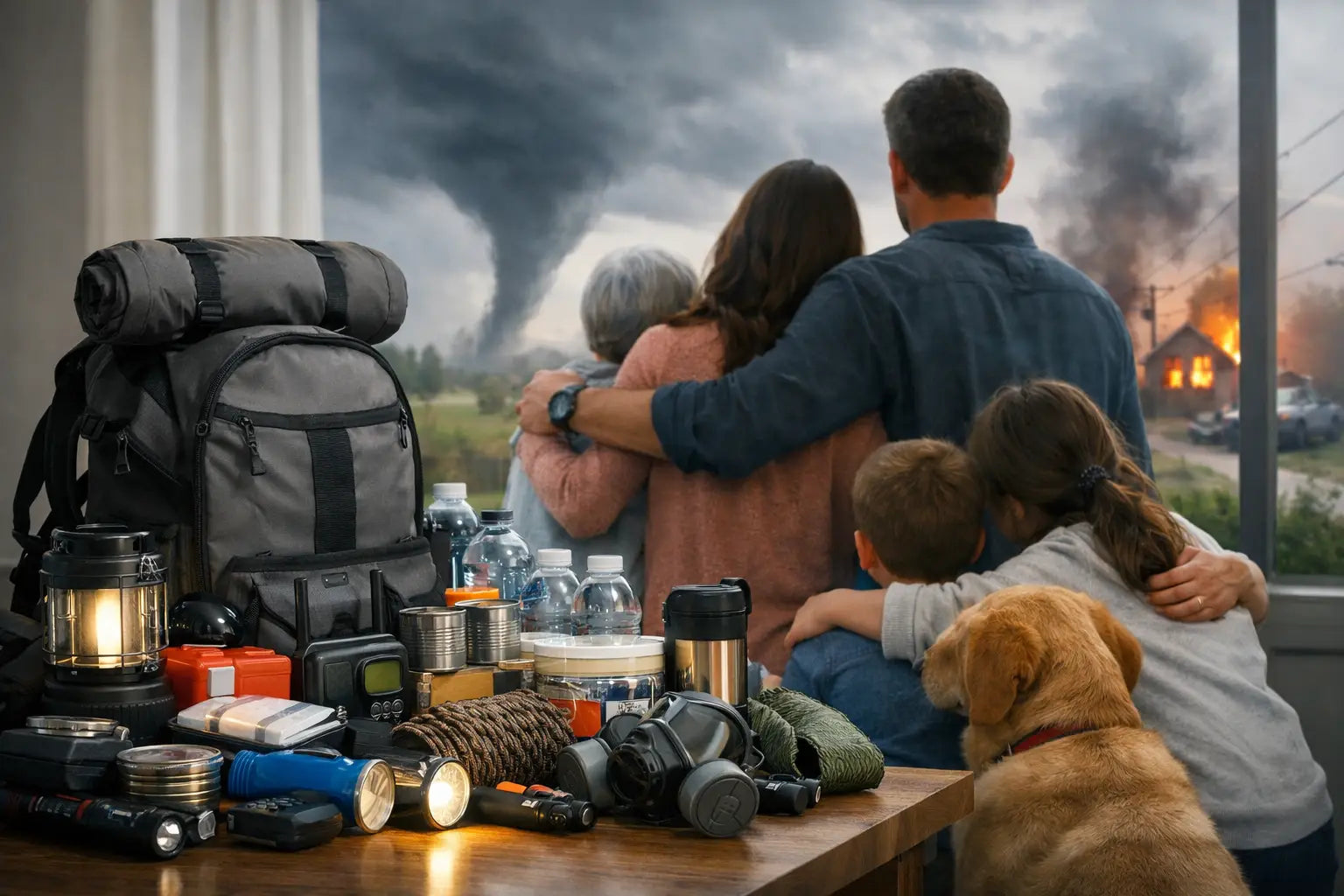
When the power goes out for three days, the question gets very real very fast: what I need if disaster strikes to protect my family is not a philosophical exercise. It is water for the next morning, a way to keep medications cold, enough food that kids still eat, light after sunset, and a plan everyone can follow when cell service is spotty and stress is high.
That is why the smartest approach is not buying random gear. It is building coverage in the order families actually need it. Start with the basics that keep people safe, hydrated, warm, informed, and medically supported. Then add depth based on your region, your house, and the people who depend on you.
What I need if disaster strikes to protect my family first
Most household emergencies look boring before they look dangerous. A storm warning. A boil-water notice. A wildfire shifting direction. A winter outage that lasts longer than promised. The first layer of preparedness should cover the disruptions that happen most often and create the fastest stress.
Water comes first. A family can go surprisingly long on simple meals, but not long without safe drinking water. A practical target is at least one gallon per person per day for drinking and basic sanitation, with a minimum of several days on hand and ideally more if space allows. If you live in a hurricane, wildfire, or earthquake zone, storing extra matters because stores empty early and municipal systems can fail.
Food is next, but it does not need to be fancy. You want calories that are easy to store, easy to prepare, and familiar enough that your family will actually eat them under stress. Shelf-stable staples, ready-to-eat meals, and a small reserve of longer-term emergency food all have a place. The trade-off is simple: grocery-store food is cheaper and familiar, while purpose-built emergency food stores longer and takes less planning.
Then comes light and power. Most families feel the strain of an outage within hours, not days. Phones drop below 20 percent, flashlights disappear, and refrigerated food starts to become a question mark. Battery lanterns, headlamps, backup battery packs, and a power station can turn a chaotic first night into an inconvenience instead of a crisis. If someone in your home uses medical equipment, power moves from convenience to priority.
Build around the people in your house
Preparedness is personal. A good family plan works for the oldest person, the youngest person, and the person who is most likely to panic when the routine breaks.
If you have children, your supplies need to include more than calories and bandages. Think comfort and routine. That means age-appropriate snacks, extra wipes, spare clothing, comfort items, and a simple way to explain what is happening. Kids handle emergencies better when adults sound steady and when familiar needs are already covered.
If you are caring for aging parents or have frequent grandkid visits, medications and mobility matter. Keep a current medication list, extra prescription supplies when possible, spare glasses, hearing aid batteries, and backup plans for refrigeration if needed. If someone uses a walker, wheelchair, or oxygen, the home setup and evacuation plan need to reflect that before an emergency starts.
Pets count too. Families often remember the dog food after they have already built everything else. A better approach is to include pets from day one: food, water, medications, leash or carrier, waste bags, and proof of vaccinations if evacuation becomes necessary.
The six categories that cover most family emergencies
If you are asking what I need if disaster strikes to protect my family, you can simplify the answer into six practical categories. Get these right and you will be better prepared than most households.
Water and sanitation
Store water, but also store a way to make more water safe. That could mean filters, purification drops, or both. Keep simple sanitation supplies too - moist towelettes, trash bags, toilet backup options, soap, and household disinfecting basics. Water problems rarely stay limited to thirst. They quickly become hygiene problems.
Food and cooking
Plan for food that requires little or no refrigeration. Add a simple cooking method that does not depend on your kitchen range working. Depending on your home and climate, that might be a camp stove, a kettle system, or meals that can be eaten without heating. The right setup depends on whether you are sheltering at home, dealing with a short outage, or preparing for a longer disruption.
Power and light
Every household should have layered backup power. Start small with flashlights, lanterns, spare batteries, and phone chargers. Build up to a power station or generator if your budget allows and your needs justify it. The trade-off here is cost versus capability. A battery bank helps with communication. A larger system can help keep food cold, run fans, support medical devices, or keep a freezer closed and useful longer.
First aid and medical
A basic drugstore first aid kit is not enough for most real disruptions. You need a kit built for more than paper cuts, along with the knowledge to use it. Include prescription backups when possible, over-the-counter medications your family already uses, and supplies for common injuries and illness. If someone in your household has asthma, severe allergies, diabetes, or other ongoing conditions, those needs belong at the center of your plan, not at the end.
Shelter and warmth
Not every disaster takes your roof, but many take your heat or air conditioning. Extra blankets, sleeping bags, weather-appropriate clothing, rain protection, and temporary shelter options can make a huge difference. In winter, warmth becomes a safety issue quickly. In hot-weather outages, shade, ventilation, and hydration become the bigger concern.
Communication and evacuation
Families need a plan for where to go, how to leave, and how to reconnect if separated. Keep printed contact information, local maps, copies of key documents, cash in small bills, and a packed evacuation bag for each person. Evacuation is where good intentions often fail because people wait too long and spend the first hour looking for chargers, medications, and pet supplies.
Start with home readiness, then add evacuation readiness
Most people imagine emergencies as dramatic escapes, but many families ride them out at home. That means your house should be ready first. Home readiness includes stored water, shelf-stable food, backup power, medical supplies, sanitation, and ways to stay warm or cool.
After that, build evacuation readiness. Pack what you would need if you had to leave in fifteen minutes and stay elsewhere for a few days. Clothing, toiletries, chargers, medications, copies of documents, snacks, water, and comfort items belong here. Keep the bag realistic. If it is too heavy or stuffed with gear you do not understand, it will not help when you are tired and in a hurry.
Buy in phases so you actually finish
The biggest mistake families make is trying to solve preparedness in one expensive weekend. That usually leads to overspending in one category and neglecting another. A calmer approach works better.
Start with a two-week goal for water, food, light, first aid, and sanitation. Then strengthen the weak spots. Add backup power. Improve your cooking options. Increase water storage. Build better medical coverage. If long-term food independence is part of your goal, that can come later, after your short-term basics are already solid.
This is where a trusted retailer can help by organizing supplies by real use case instead of hype. SHTF Prepper Club does that well for families who want practical categories and straightforward options, whether they are starting with a modest emergency kit or planning a deeper pantry and power setup over time.
A simple standard for knowing you are ready
You do not need to be ready for every possible event by next Friday. You do need to answer a few basic questions with confidence.
Can your family drink safely for at least several days without going to the store? Can you feed everyone without relying on the fridge, freezer, or takeout? Can you see after dark, charge key devices, and receive updates? Can you treat minor injuries and manage ongoing medical needs? Can you stay reasonably warm, cool, clean, and dry? Can you leave quickly if authorities tell you to evacuate?
If the answer is no to any one of those, that is your next category to fix. Not because fear should drive the process, but because clarity should.
Preparedness is not about looking extreme. It is about making sure the people you love are not one outage, one storm track, or one empty store shelf away from a very hard week. Start with the next sensible step, and let that step count.