
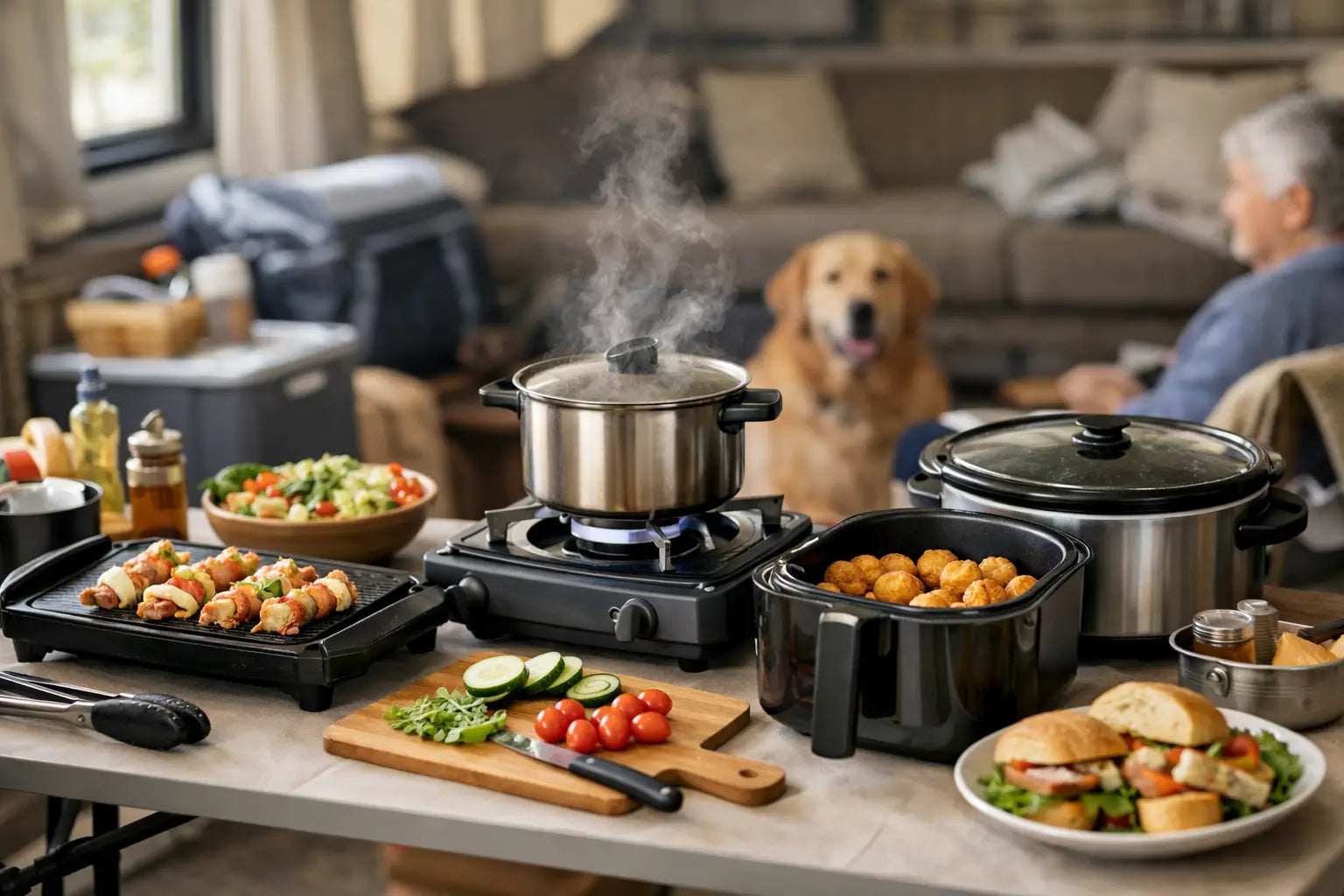
The stove won’t turn on. The microwave is dead. Maybe the water is off too. That’s when cooking without your kitchen stops being a thought exercise and becomes a family problem you need to solve before everyone gets tired, hungry, and frustrated.
Most households picture emergency food as a shelf of cans and a manual opener. That’s part of the plan, but it’s not the whole plan. If your kitchen is unusable because of a power outage, gas shutoff, storm damage, renovation, or evacuation into a garage, backyard, hotel room, or relative’s house, the real question is simpler: how will you make safe, filling meals with the tools you still have?
Cooking without your kitchen starts with heat
Food storage matters, but heat is what turns a pile of ingredients into dinner. When families struggle during an emergency, it’s often because they bought food first and left the cooking plan vague. A case of rice, dry beans, or freeze-dried meals is useful only if you can boil water, simmer, or rehydrate when your regular kitchen is unavailable.
The best backup cooking setup is usually not one tool. It’s layers. A backyard propane grill may handle family meals during a short outage. A camp stove can cover fast boiling and one-pot cooking. A small rocket stove or kettle system can help when fuel efficiency matters. In a long disruption, those layers give you options instead of forcing one device to do everything.
That said, every heat source comes with trade-offs. Propane is familiar and easy, but you need enough fuel stored safely. Charcoal stores well and cooks hot, but it is slower to light and less convenient in bad weather. Butane stoves are simple for quick indoor-style cooking in appropriate ventilated spaces where the product is designed to be used, but fuel canisters may be harder to replace during a regional emergency. Wood-burning options reduce dependence on stored fuel, but they require practice, dry material, and a place to use them safely.
The goal is not to own every stove. It’s to choose one primary option and one backup that fit your home, climate, and household size.
Build a realistic cooking without your kitchen plan
A useful plan starts with your actual family. Two adults can improvise more easily than a household with three kids, a grandparent, and a dog underfoot. If someone in your home needs coffee to function, soft foods, low-sodium meals, or dependable hot water for formula, that changes what “ready” looks like.
Start by thinking through three timeframes. The first is the first 24 hours, when you want low-effort food and minimal cleanup. The second is days two through seven, when morale and routine start to matter. The third is anything longer, when fuel use, food variety, and dishwashing become bigger concerns.
For the first day, lean on foods that are ready to eat or need only warming. Soup, chili, canned chicken, tortillas, peanut butter, fruit cups, shelf-stable milk, and instant oatmeal all work well. By day two or three, people want meals that feel normal. That might mean pasta, rice bowls, pancakes, skillet meals, or freeze-dried entrees. In a longer event, your menu needs to protect your fuel supply. One-pot meals, fast-cooking grains, and foods that can soak before heating become much more practical than anything that requires a long simmer.
This is where many families overcomplicate things. You do not need a wilderness menu. You need seven to ten meals your family already likes and can make with limited power, limited water, and limited patience.
Keep the setup simple and repeatable
A backup cooking station should be boring in the best way. You want a stable surface, a reliable stove, lighter or matches, a pot with a lid, a skillet, a spoon, a spatula, and heat-resistant gloves. Add a wash tub or basin, paper towels, and a way to store clean water nearby. If you’re cooking outdoors, include a lantern or headlamp because dinner often happens after dark during outages.
Families often lose time not because they lack gear, but because the gear is scattered. Fuel is in the shed. The pot is in the kitchen you can’t use. The lighter is missing. The manual opener is somewhere in a junk drawer. Keep your core cooking kit together in one labeled bin. That single step removes a surprising amount of stress.
If you have the space, test your setup twice a year. Cook one full dinner outside or in your designated backup area. You will find the weak points quickly. Maybe your pan is too thin, your fuel runs faster than expected, or you realize your family hates the emergency meal you bought on sale. Better to learn that on a calm Saturday than on day three after a hurricane.
Safety matters more than convenience
This is the part that deserves plain talk. A backup stove is helpful. Carbon monoxide is deadly. Never use charcoal grills, camp stoves, or fuel-burning devices indoors unless the product is specifically designed and rated for that environment and you are following its safety requirements exactly. Garages, enclosed porches, and cracked windows are not a safe workaround.
Food safety also changes when your kitchen is down. If the power is out, open the refrigerator and freezer as little as possible. Cook refrigerated food first. Use shelf-stable food next. Save frozen food only if temperatures are still safe and you can use it quickly. When in doubt, throw it out. That is not wasteful. It is cheaper than food poisoning in the middle of an emergency.
Water deserves equal attention. Cooking often uses more water than families expect, especially once you count handwashing, dishwashing, and cleanup. A meal that looks affordable in stored food may be expensive in stored water. Instant rice may beat dry beans for that reason alone during a short disruption. The best emergency meal is not always the cheapest one on paper. It’s the one your family can safely prepare with the fuel, water, and time you actually have.
What foods work best when the kitchen is offline
The strongest emergency pantry is built around flexibility. Shelf-stable foods that can be eaten cold, warmed quickly, or turned into a one-pot meal give you room to adapt. Think canned meats, soups, pasta, rice, oats, pancake mix, broth, mashed potato flakes, tortillas, and freeze-dried ingredients that rehydrate fast.
Comfort matters too. During a stressful week, a warm breakfast or familiar dinner does more than fill stomachs. It steadies the house. Kids are calmer when meals feel recognizable. Adults make better decisions when they’ve had coffee, protein, and something hot.
That’s one reason complete freeze-dried meals appeal to many families. They trade some flexibility for speed and simplicity. You add water, manage heat, and serve. Bulk staples like rice, wheat, beans, and dehydrated ingredients offer better long-term value, but they ask more from your cookware, your fuel, and your time. It depends on whether you’re planning for a three-day outage, a two-week disruption, or a larger self-sufficiency goal.
At SHTF Prepper Club, this is the conversation worth having before you buy. Not just what food stores well, but what your household can realistically cook when the kitchen is out of commission.
The best backup cooking plan is the one you’ll use
Preparedness has a way of turning into a gear hunt. A better approach is quieter and more effective. Choose one dependable stove. Store enough fuel for a real event, not just a weekend. Build a short meal rotation your family already accepts. Keep the cooking kit together. Practice once or twice a year.
That is how ordinary households become far more capable without making preparedness feel like a second job. Cooking without your kitchen does not require perfection. It requires a plan that works when the lights are out, the weather is bad, and everyone is looking at you asking what’s for dinner.
Start there. A hot meal in a hard moment does more than feed your family. It tells them you thought ahead, and that matters.