
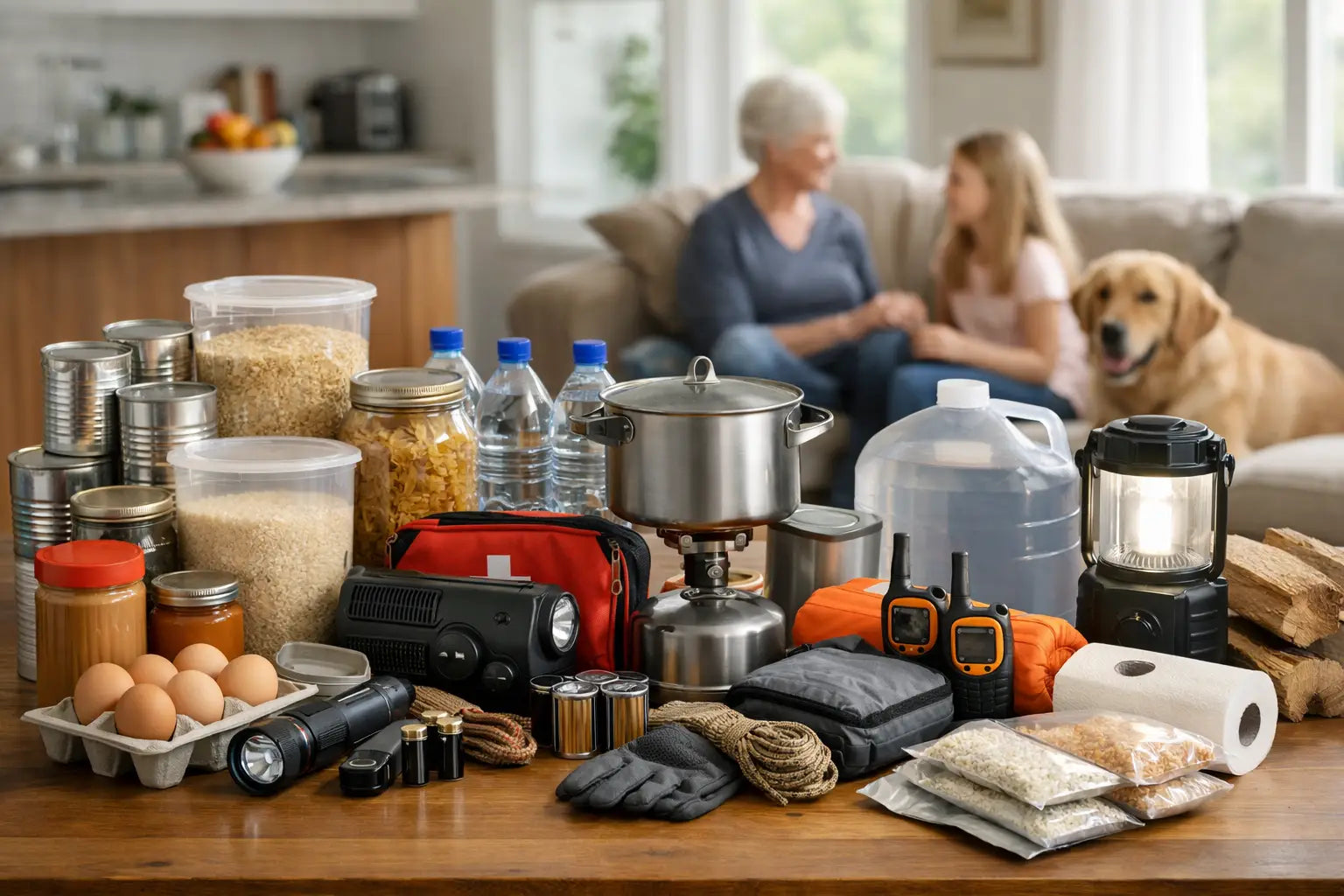
You usually do not notice a supply chain problem when a container ship is late or a factory slows down. You notice it when cough medicine is missing from the shelf, the pet food you always buy is backordered, or a simple home repair turns into a three-week wait. That is why supply chain disruption preparedness matters for families. It is less about predicting global events and more about protecting your household from the very ordinary ways those events show up at home.
For most families, the goal is not to stockpile for years. It is to create enough margin that a shortage, storm, strike, or transportation delay does not immediately become a crisis. A prepared home can handle a week or two of disruption without panic buying, rushed errands, or expensive last-minute decisions. That kind of stability is what most people are really after.
What supply chain disruption preparedness really means
A lot of people hear the phrase and picture empty shelves everywhere. Sometimes that happens, but more often disruptions are uneven. One town loses bottled water after a hurricane warning. Another cannot find infant formula, antibiotics, generator fuel cans, or basic pantry staples. The problem is rarely that everything disappears at once. The problem is that the one thing your family actually needs becomes hard to replace.
Supply chain disruption preparedness is the practice of reducing your dependence on just-in-time shopping. If your household buys essentials only when you are almost out, you are vulnerable to delays you cannot control. If you keep a sensible cushion of the items your family uses regularly, you gain time, options, and calm.
That cushion looks different for every household. A family with toddlers, pets, and prescription medications has different needs than empty nesters in a condo. A home in hurricane country will think differently than a family dealing with winter storms or wildfire shutoffs. The principle is the same, though. Store what you use. Plan for interruptions. Rotate what you keep.
Start with the items that break family routines fastest
When people first think about preparedness, they often jump to dramatic scenarios. In real life, disruption usually starts with inconvenience and then compounds. School is still open, work still expects you online, and the house still needs dinner, clean water, light, and basic medical supplies. So start where routine breaks down first.
Food is a clear example. You do not need a bunker menu. You need meals your family will actually eat if stores are low or delivery is delayed. That may mean shelf-stable proteins, pantry staples, freeze-dried meal backups, comfort foods for kids, and a way to cook if the power is out. The right mix depends on budget, storage space, and dietary needs. Some families do well with a two-week pantry buffer. Others want a deeper reserve because they live in storm zones or prefer fewer shopping trips.
Water deserves the same practical thinking. Municipal systems are reliable until they are not, and bottled water disappears quickly during regional emergencies. A family plan should include stored water and a backup way to filter or purify more. If you have ever stood in a crowded store the night before a storm, you already know why this matters.
Power is another weak point. A disruption does not have to be dramatic to affect your home. A long outage can spoil refrigerated food, interrupt medical devices, stop remote work, and make heating or cooling much harder. Even a modest backup power setup for lights, phones, radios, and a few essentials can lower stress fast.
Then there are the quiet essentials that people forget until they are gone. Paper goods. Trash bags. Pet food. Baby wipes. Hygiene items. Over-the-counter medicine. Laundry detergent. These are not exciting purchases, but they are often what make a house feel functional during a rough week.
Build your supply chain disruption preparedness around replacement time
One of the simplest ways to prepare is to think in terms of replacement time instead of quantity alone. Ask yourself how long it would take to replace a critical item if local stores were low and shipping slowed down. If the answer is seven to ten days, keep more than a weekend's worth in the house.
This changes how you shop. Instead of buying one when you need one, you buy one to use and one to hold. Over time, that creates depth without a painful upfront bill. It also prevents waste because you are still cycling through products your family already uses.
This approach works especially well for medicine, pantry food, water treatment supplies, batteries, diapers, and pet supplies. It also helps with seasonal items. If winter weather is coming, buy cold-weather fuel, shelf-stable food, and backup lighting before the first storm watch. If hurricane season is approaching, refill the gaps before everyone else does.
There is a trade-off here. Buying ahead ties up money and storage space. That is why families should focus on high-use, high-impact items first. You do not need six months of everything. You need enough of the right things to absorb normal disruption without chaos.
How to organize for supply chain disruption preparedness without overdoing it
Preparedness fails when it becomes too complicated to maintain. The best systems are boring on purpose. Keep categories simple and visible. Group food with food, water with water, medical with medical, and power gear with power gear. Label shelves or bins. Put expiration dates where you can see them. Store backup items near the place they are used when possible.
A pantry reserve should not feel like a second job. If your family eats pasta, rice, canned soup, oats, peanut butter, and boxed milk, that is where you start. If anyone in the house has allergies, special dietary needs, or texture issues, plan around that now, not during a shortage. Preparedness that ignores your real household is not preparedness.
Medical supplies deserve more attention than they usually get. Families often store bandages and pain relievers, but shortages can hit fever reducers, cold medicine, electrolyte support, prescription refills, and basic wound care fast. If a child gets sick during a bad week for local inventory, your shelf at home matters more than your intentions.
The same goes for pets. If your dog eats one specific food and switching causes problems, keep extra on hand. If your cat needs medication or special litter, build that into your reserve. Pets are part of the family plan or the plan is incomplete.
The biggest mistakes families make
The first mistake is buying random gear before covering basics. A household with no water storage and no pantry buffer does not need fancy equipment first. It needs practical depth in food, water, light, and health supplies.
The second mistake is preparing for a fantasy scenario instead of a realistic disruption. Most homes are not facing total collapse. They are facing delays, shortages, price spikes, and service interruptions. Prepare for what actually happens in your region and your life.
The third mistake is forgetting maintenance. Stored food expires. Batteries leak. Water containers need rotation. Backup power needs testing. A simple check every few months is better than a perfect system you never revisit.
The fourth mistake is leaving one person to manage everything. A household plan works better when everyone knows the basics. Your spouse should know where supplies are. Older kids should know what to use during an outage. Grandparents who visit often should know where backup lighting, medication basics, and water are kept.
A calm, practical way to start this week
If your house is not where you want it to be yet, that is fine. Start with one gap. Add two weeks of the foods your family already eats. Set aside extra hygiene and cleaning basics. Store water. Get a dependable light source in the main rooms. Build a simple medical shelf. Then keep going.
For many families, the smartest path is category by category: food first, then water, then power, then medical, then cooking and shelter needs. That keeps spending focused and prevents the common mistake of owning a lot of gear but not enough essentials. It is also how SHTF Prepper Club encourages people to build readiness - start small, stay practical, and expand with purpose.
Supply problems rarely announce themselves early enough to give you a comfortable shopping window. The families who handle them best are usually not the ones with the biggest storage rooms. They are the ones who planned just enough ahead to keep daily life steady when the system around them got shaky.
That is a good goal for any home: less scrambling, more breathing room, and the confidence that your family can handle a disrupted week without it turning into a bad month.