
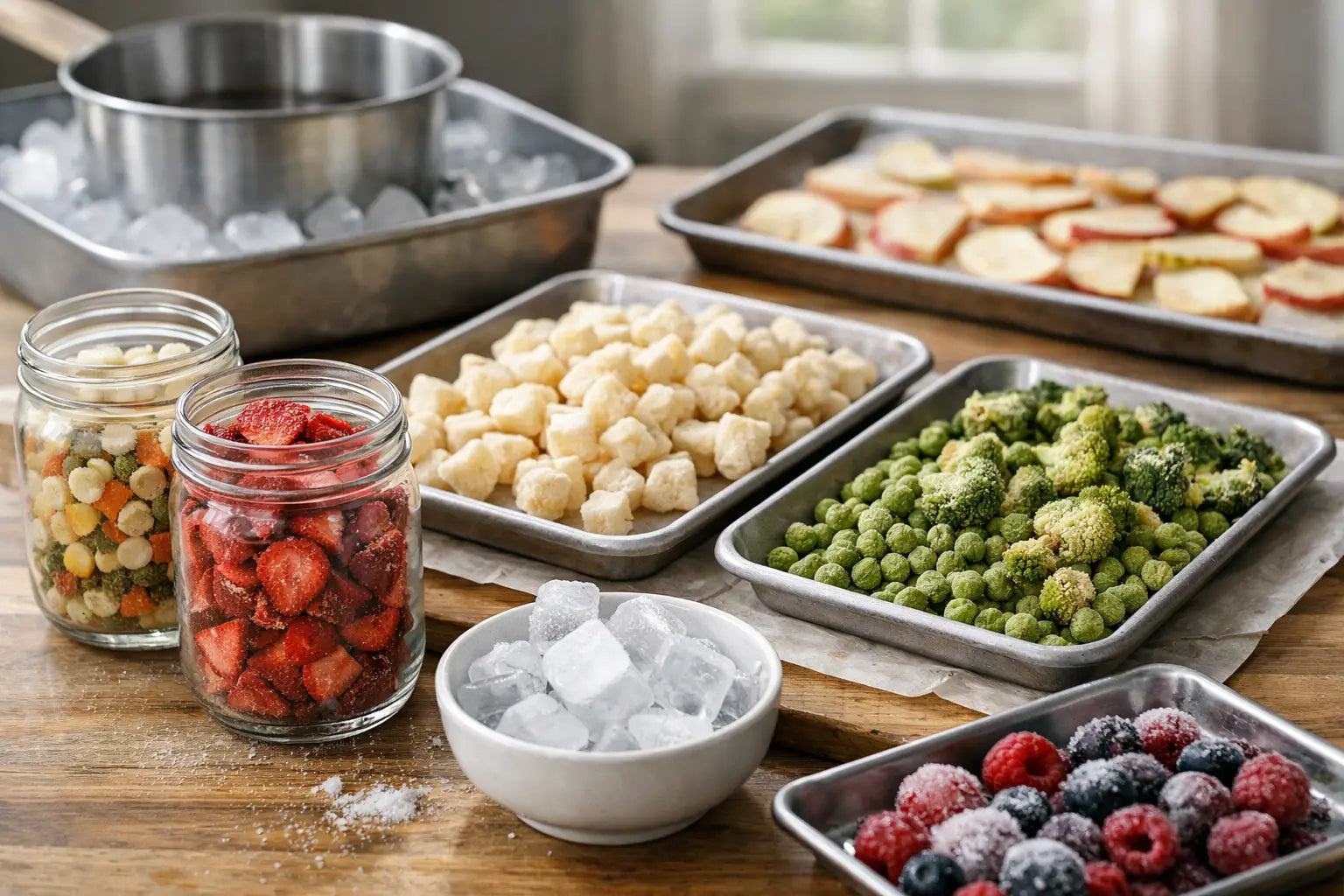
If you're trying to figure out how to freeze dry without freeze dryer equipment, here's the straight answer - you cannot truly freeze-dry food at home with a freezer, fan, or a social media hack. You can get food very cold. You can dehydrate it. You can even preserve it well enough for short-term use. But true freeze-drying is a specific process, and when you're building food security for your family, details matter.
That matters even more in a real emergency. If you're storing food for a storm season, a job loss, a grid failure, or the kind of supply chain mess that empties shelves fast, you need preservation methods that do what they claim. Wishful thinking is not a food storage plan.
How to freeze dry without freeze dryer - what freeze-drying really is
Freeze-drying removes moisture from frozen food through sublimation. That means the ice inside the food turns directly into vapor under very low pressure, instead of melting into liquid water first. To do that correctly, you need three things working together - deep freezing, a strong vacuum, and controlled heat over time.
A household freezer only handles the first part. It freezes food, but it does not create the vacuum needed for sublimation at the level required for real freeze-drying. That is why food left in the freezer for a long time gets freezer burn instead of becoming properly freeze-dried. Moisture slowly migrates out, texture degrades, and quality drops.
This is where a lot of bad advice starts. People see dry-looking frozen food and assume they made a shelf-stable product. They didn't. In preparedness, that kind of mistake can cost you food, money, and confidence when you can least afford it.
Can you freeze dry food without a machine?
Not in the true sense, no. You may find claims that dry ice, a deep freezer, or a vacuum chamber can let you freeze-dry food without a dedicated machine. Some of those setups can remove a meaningful amount of moisture under limited conditions. But for most households, they are inconsistent, hard to verify, and not reliable enough for long-term storage.
The real issue is not whether you can get some water out of food. The issue is whether you can get enough water out, evenly and safely, to create a stable product that stores for months or years. Without that certainty, you're gambling with your pantry.
There is also a safety problem. Low-moisture foods resist spoilage better, but partially dried foods can still grow mold or support bacterial issues if packaged badly or stored warm. Food that looks preserved is not always food that is preserved.
What people mean when they ask how to freeze dry without freeze dryer
Most people asking this question want one of three things. They want lighter food for storage, longer shelf life, or a way to save harvests and leftovers without waste. Those are smart goals. The mistake is tying all three to a method that requires specialized equipment.
If your real goal is resilience, the better question is this: what preservation method fits the food, the budget, and the storage timeline?
For some families, that means dehydration. For others, it means pressure canning, water-bath canning for high-acid foods, or simply building a layered pantry with commercially freeze-dried staples. The right answer depends on whether you are preserving strawberries, cooked beef, garden herbs, or full meals.
The closest alternatives to freeze-drying at home
Dehydrating is the closest practical substitute for most households. It removes moisture with low heat and moving air, not a vacuum. The result is not the same as freeze-dried food. Texture is denser, flavor can change more, and some foods do much better than others. But dehydration is proven, accessible, and far more honest than pretending a chest freezer can replace a freeze dryer.
Fruits like apples, bananas, and berries can dehydrate well. Vegetables such as peppers, onions, carrots, and celery also store well when dried thoroughly. Herbs are even easier. Meats require more care. If you're drying meat for storage, you need to handle temperature, fat content, and storage conditions correctly.
Canning is another strong option, especially for complete meals, broths, sauces, meats, and produce from a garden. It keeps food ready to eat and does not require electricity for long-term storage after sealing. The trade-off is weight, space, and shorter shelf life compared with properly freeze-dried foods.
Freezing itself is useful too, but only if you have dependable power or a solid backup plan. A freezer full of food is an asset until the grid goes down for days.
What about dry ice methods?
Dry ice is often mentioned as a workaround, and it can help freeze food fast or create a very cold environment. But cold alone is not the full process. Without controlled vacuum conditions and careful moisture removal, you are not getting the same result as machine freeze-drying.
Some hobbyists experiment with dry ice and sealed containers, but this is not a dependable family preparedness method. Results vary by food thickness, humidity, temperature control, and packaging. Even if a batch seems dry, most households have no reliable way to confirm final moisture content well enough for long-term storage.
That makes dry ice more of an experiment than a system. Preparedness should be built on systems.
If you need long-term food storage, reliability beats hacks
This is the heart of it. If you are storing food for real emergencies, the preservation method has to be repeatable. You need to know what you did, why it works, and how long the food can reasonably last.
That is why serious preppers usually take one of two paths. They either use established home preservation methods for medium-term storage, or they invest in actual long-term storage solutions, whether that means a freeze dryer or professionally packed foods. Both paths are smarter than relying on internet tricks that cannot be tested easily in a crisis.
There is nothing wrong with starting smaller. A dependable dehydrator, proper jars, oxygen absorbers, Mylar bags, and a clear rotation plan can dramatically improve your food resilience. You do not need to do everything at once. But each method should be chosen for what it actually does, not what you hope it does.
Best uses for each preservation option
If you want lightweight snacks, trail food, dried produce, and simple pantry ingredients, dehydration is a strong workhorse. If you want shelf-stable soups, meats, stews, and high-volume harvest preservation, canning earns its place. If you want maximum shelf life, better texture on rehydration, and serious control over long-term food storage, true freeze-drying is in a different class.
That does not mean every household needs a freeze dryer today. It means you should match the tool to the mission. A family building a 30-day emergency pantry has different needs than a homesteader preserving bulk harvests or a household preparing for extended disruptions.
How to make a smart decision now
Start by looking at your actual risk. Are you preparing for short outages and storms, or for months of disruption? Are you preserving garden surplus, stocking ready-to-eat meals, or trying to build deep food reserves? Those answers shape the method.
Then look at failure points. If your plan depends on constant electricity, what is your backup? If your plan depends on perfect drying, how will you verify it? If your plan depends on rotating food quickly, will your family actually eat it?
The strongest preparedness plans are not built around one miracle device or one trendy trick. They are layered. Some foods are canned. Some are dehydrated. Some are frozen. Some are bought already packaged for the long haul. That layered approach gives your household options when conditions change.
At SHTF Prepper Club, that is the mindset that matters most - not chasing hacks, but building systems that protect your family when stores are empty, power is unstable, and resupply is not guaranteed.
If you're still asking how to freeze dry without freeze dryer equipment, the honest answer is that you should stop trying to force the wrong method and choose the right preservation tool for the job. Your pantry does not need myths. It needs food that will still be there when your family needs it most.