
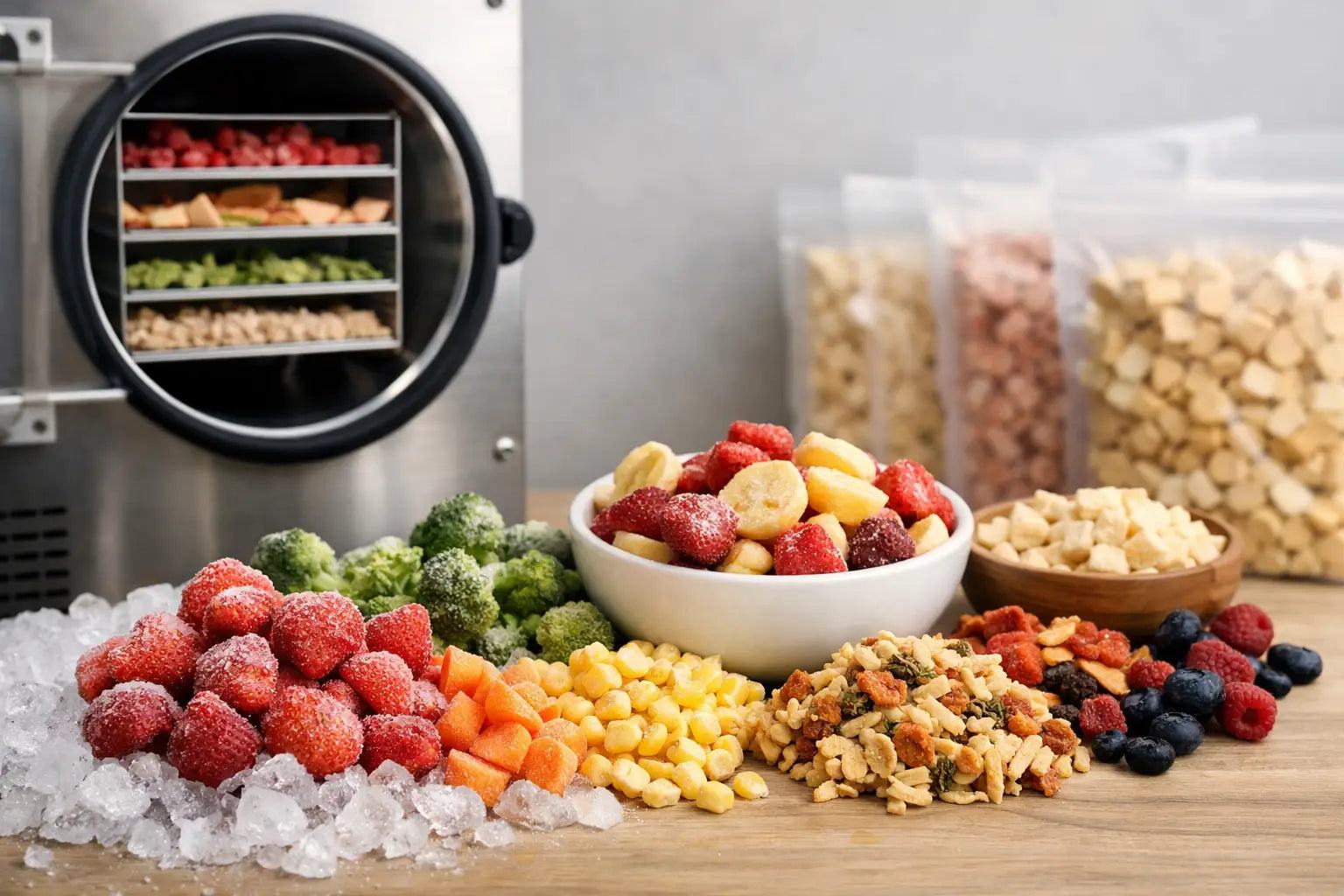
A pantry full of canned soup looks reassuring until you start doing the math on shelf life, weight, and how fast a family can burn through it during a real disruption. That is where the freeze drying food preservation method starts making sense. For households building serious food resilience, it offers something most storage methods cannot match at the same time - long shelf life, strong nutrient retention, and food that stays light enough to store, move, and use.
This is not magic, and it is not automatically the right answer for every food or every budget. But if your goal is to build a food reserve that can carry your family through supply chain problems, grid failures, bad weather, or a longer emergency, freeze drying deserves a hard look.
What the freeze drying food preservation method actually does
Freeze drying removes moisture from food after the food has been frozen. Instead of using heat to evaporate water like traditional dehydration, the process pulls ice out through sublimation, which means the frozen water turns into vapor without first becoming liquid. That matters because less heat generally means less damage to the food's original structure, flavor, and nutrition.
The result is food that keeps much of its original shape and can often return close to normal when rehydrated. Meat, fruits, vegetables, full meals, and even dairy can all be freeze dried with varying degrees of success. Compared with dehydrated food, freeze-dried food is usually lighter, crisper, and faster to rehydrate.
For preparedness-minded families, the big advantage is simple. Water is the enemy of long-term food storage. Remove enough of it, package the food properly, and you dramatically slow the spoilage process.
Why families lean on freeze drying for preparedness
In a short emergency, almost any extra food is better than no food. In a long emergency, quality starts to matter. Appetite fatigue is real. Kids get picky. Adults under stress need calories, protein, and meals they will actually eat.
That is where freeze drying stands apart. It lets families store more than just survival staples. You can preserve leftovers, garden harvests, meats, fruits, eggs, and complete meals. That gives you flexibility that bulk rice and beans alone cannot provide.
It also reduces waste. If your garden overproduces, if you find a strong sale on meat, or if you cook in bulk, freeze drying can turn that excess into shelf-stable reserves instead of letting it spoil in the fridge or freezer. For families trying to control food costs while also building emergency stores, that matters.
There is another advantage that often gets overlooked. Freeze-dried food is efficient to store and transport. In an evacuation scenario or if you need to shift supplies between home, cabin, or retreat property, weight becomes a real issue fast. A bucket of freeze-dried meals and ingredients gives you a lot more usable food per pound than water-heavy alternatives.
Freeze drying vs. dehydrating vs. canning
If you are building a serious food storage plan, the better question is not which method is best in every case. The better question is what each method does best.
Freeze drying is strongest when you want maximum shelf life, low weight, and better retention of taste and texture. It is especially useful for ingredients and meals you may want to rehydrate later with decent results.
Dehydrating is usually more affordable and simpler, but it leaves more residual moisture and often changes texture more aggressively. It works well for jerky, fruit leather, herbs, and certain fruits and vegetables. It is a useful tool, but it does not replace freeze drying for long-haul storage.
Canning is excellent for ready-to-eat foods and high-volume preservation, especially for soups, sauces, jams, and pressure-canned meats. But canned food is heavy, takes more storage space, and usually has a shorter shelf life than properly packaged freeze-dried food. It also depends on jar integrity over time.
Prepared families rarely rely on just one method. A smart pantry often uses all three. Canned foods cover short- and medium-term rotation. Dehydrated foods fill specialty roles. Freeze-dried foods anchor long-term resilience.
The biggest benefits of freeze-dried food
The headline benefit is shelf life. When freeze-dried food is packaged in the right conditions, often with oxygen absorbers and moisture-resistant storage, it can last for decades. That makes it one of the few food strategies that genuinely supports long-range planning instead of constant turnover.
Nutrient retention is another major strength. No preservation method keeps food identical to fresh, but freeze drying generally does a better job than many alternatives because it uses low temperatures. For families storing food for uncertain events, that can help preserve more than just calories.
Taste and texture are also better than many people expect. Some foods come back extremely well after rehydration. Others are good enough, but not perfect. Strawberries, peas, cooked meats, and many prepared meals do well. Foods high in fat can be more complicated, and some items never fully return to fresh texture.
Then there is convenience. Freeze-dried food can be eaten dry in some cases, rehydrated quickly, or used as an ingredient in soups, skillets, casseroles, and emergency meals. During a stressful event, simple food prep matters.
The trade-offs most people should know up front
The freeze drying food preservation method has clear strengths, but it comes with real costs.
First is equipment price. Home freeze dryers are a serious investment, especially compared with a dehydrator or basic canning setup. For some households, buying finished freeze-dried foods makes more sense than processing at home. For others, especially gardeners, homesteaders, hunters, or large families, owning a machine can pay off over time.
Second is the process itself. Freeze drying is not instant. Cycles can be long, and successful results depend on food prep, loading, maintenance, and packaging. It is practical, but it is not effortless.
Third is power dependence. Running a freeze dryer requires electricity. If your preparedness plan includes making your own long-term food stores, think beyond the machine itself. Consider backup power, surge protection, and where the unit will operate. If the grid goes down for extended periods, production stops unless you have another power solution.
Finally, not every food is ideal. High-fat foods tend to have shorter shelf life because fat can go rancid even when moisture is removed. Butter, peanut butter, and very oily foods require more careful expectations. Freeze drying is powerful, but it does not break the laws of food chemistry.
Building a freeze-drying system instead of buying random food
The most prepared households do not treat food storage like a pile of disconnected products. They build a system.
Start with what your family already eats. If no one in your house likes powdered eggs, do not build your plan around them. If your kids will eat freeze-dried fruit without complaint, that is a better place to begin. Familiar food reduces stress and waste.
Then think in layers. Ingredients matter just as much as complete meals. Freeze-dried chicken, ground beef, berries, vegetables, and dairy ingredients can stretch your options far beyond a bucket labeled emergency food. During a long disruption, flexibility is survival.
Packaging is not the glamorous part, but it is the part that protects your investment. Even perfectly freeze-dried food can fail if it is stored poorly. Oxygen, moisture, heat, and light all work against shelf life. Cool, dark, dry storage is still the rule.
This is also where a retailer focused on preparedness systems, not just individual items, becomes useful. Families looking at long-term food often also need water filtration, off-grid cooking, backup power, and storage organization. Food is not separate from the rest of your plan.
Who should consider home freeze drying
If you garden heavily, raise livestock, hunt, buy food in bulk, or want tighter control over ingredients, a home unit can make a lot of sense. It gives you the ability to preserve your own food supply, not just purchase someone else's packaged meals.
It is also a strong fit for families with dietary restrictions. Store-bought emergency food can be convenient, but it may not match your needs for allergens, sodium, or ingredient quality. Home freeze drying lets you preserve foods you already trust.
If you are new to preparedness or working with a limited budget, there is no shame in starting smaller. A few cases of quality freeze-dried staples and meals may be smarter than jumping straight into equipment ownership. Readiness is built in steps, not ego purchases.
A realistic way to think about this method
Freeze drying is one of the strongest tools available for long-term food storage, but it works best when it serves a clear plan. It is not a replacement for pantry rotation, water storage, cooking fuel, or common sense. It is one part of a family resilience strategy that should hold up when stores are empty, roads are closed, or the power stays off longer than anyone promised.
If you are responsible for feeding the people under your roof, look at freeze drying through that lens. Not as a trend, not as a hobby first, but as a way to preserve security, reduce waste, and put real meals between your family and uncertainty. The right food on hand buys time, and time is one of the most valuable resources you can store.