
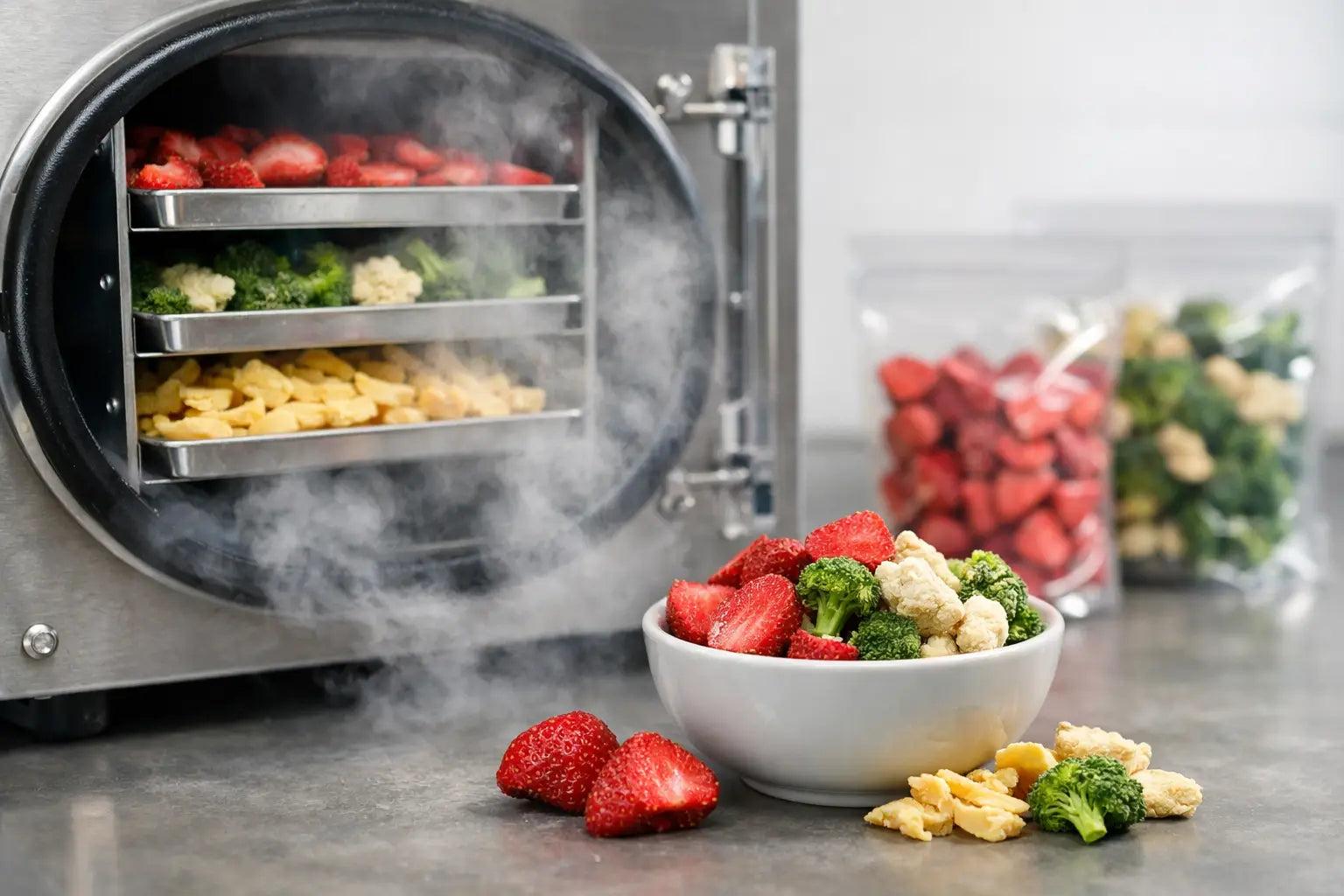
If you have ever watched a freezer full of meat, produce, or leftovers turn into a liability during a power outage, you already understand why people ask, what is freeze drying food preservation? For families building real food security, freeze drying is not a trend. It is a serious way to protect nutrition, stretch harvests, reduce waste, and store meals that can sit ready for years when stores are empty or the grid is down.
What Is Freeze Drying Food Preservation?
Freeze drying food preservation is a process that removes moisture from food after it has been frozen. Instead of using heat to evaporate water like dehydration or canning, freeze drying uses a vacuum so the ice inside the food turns directly into vapor. That step is called sublimation.
What matters for preparedness is the result. You get food that keeps much of its original shape, flavor, and nutrition while becoming extremely light and shelf-stable. Once sealed properly, freeze-dried food can last far longer than most pantry food and can be rehydrated when you need it.
That is why freeze drying has become a major tool for homesteaders, hunters, gardeners, and families serious about emergency food storage. It lets you preserve full meals, meats, fruits, vegetables, dairy, and even leftovers in a form that stores efficiently and travels well.
How Freeze Drying Actually Works
The process sounds technical, but the basic idea is simple. Food is frozen first. Then the pressure around it is lowered inside a vacuum chamber. With the right temperature and pressure, the frozen water in the food does not melt into liquid first. It moves from ice to vapor and gets pulled away.
That matters because liquid water is one of the main reasons food spoils. Mold, bacteria, and enzymes need moisture to do damage. Remove most of that moisture, and you slow spoilage dramatically.
Freeze drying is different from simply putting food in your home freezer. Frozen food still contains water, and once power is lost or storage time runs long, quality drops fast. Freeze-dried food has most of that moisture removed, so it can be stored at room temperature if packaged the right way.
Why Preppers Pay Attention to It
A family emergency food plan is not just about calories. It is about shelf life, portability, nutrition, and the ability to serve food people will actually eat under stress. Freeze drying checks a lot of those boxes.
First, it gives you long-term storage potential. Properly packaged freeze-dried food can last for decades, depending on the food type and storage conditions. That makes it useful for deep pantry planning and long-duration disruptions.
Second, it helps preserve variety. Rice and beans have their place, but most families do better when they can rotate fruits, vegetables, meats, eggs, and complete meals into their reserve. Freeze drying makes that more realistic.
Third, it cuts waste. If your garden produces too much zucchini, your chickens are laying hard, or you found a good sale on meat, freeze drying lets you lock in that value instead of watching it spoil.
What Foods Freeze Dry Well
Many foods freeze dry extremely well, but not all foods behave the same. Fruits are popular because they rehydrate well and often taste great even dry. Strawberries, apples, bananas, blueberries, and peaches are common choices. Vegetables like corn, peas, green beans, potatoes, and peppers also store well.
Cooked meats, shredded chicken, ground beef, sausage, and diced turkey can all be freeze-dried for later use. Complete meals such as soups, stews, casseroles, pasta dishes, and scrambled eggs are also common. That is one of the biggest advantages over simpler storage methods. You are not limited to ingredients. You can preserve actual ready-to-eat meals.
High-fat foods are the main exception. Butter, peanut butter, syrup, chocolate-heavy items, and very oily meats do not freeze dry as well because fat does not contain water to remove, and it can still go rancid over time. Freeze drying is powerful, but it is not magic. The food itself still matters.
Freeze Drying vs. Dehydrating
People often confuse freeze drying with dehydrating because both remove moisture. The difference is how they do it and what kind of result you get.
Dehydrating uses low heat and airflow to dry food. It is cheaper, simpler, and works well for a lot of foods. But the heat can shrink texture more aggressively, reduce some nutritional value, and leave more residual moisture behind. That usually means a shorter shelf life than properly freeze-dried food.
Freeze-dried food tends to keep its structure better, rehydrate faster, and last longer in storage. It also weighs less. Those are big advantages for emergency planning, bug-out supplies, and long-term reserves.
The trade-off is cost. Freeze dryers are more expensive than dehydrators, and the process takes more time and energy. If your goal is short- to mid-term pantry storage, dehydration may be enough. If your goal is long-haul family food security, freeze drying starts making more sense.
What Is Freeze Drying Food Preservation Good For in Real Life?
For a preparedness-minded household, freeze drying is not just about stocking a bunker shelf. It is useful in everyday life.
It can help a family build a serious food reserve without relying only on prepackaged buckets. It can preserve leftovers from tonight's dinner into future convenience meals. It can protect garden harvests and bulk purchases when grocery prices spike. And it can support off-grid or rural households that want more control over their own supply chain.
This is where the method shines. It bridges daily life and emergency readiness. You are not storing strange food you never touch. You can preserve food your family already eats.
Packaging Matters More Than Most People Think
Freeze drying is only half the job. Bad packaging can ruin good food.
Once food is dried, it needs protection from moisture, oxygen, light, and heat. Mylar bags with oxygen absorbers are common for long-term storage. Vacuum-sealed jars or other airtight containers can work for shorter-term pantry use. If the food picks up moisture from the air, shelf life drops and texture suffers fast.
Storage conditions matter too. Cool, dark, and dry beats a hot garage every time. Even the best-preserved food will not perform as well if it lives through repeated temperature swings.
That is a key point for families planning around emergencies. Buying or making good food storage is not enough. The system around it matters just as much.
The Main Trade-Offs
Freeze drying has real strengths, but it also has costs and limits that should be understood upfront.
The biggest hurdle is equipment price. Home freeze dryers are a serious investment. For some households, buying quality prepackaged freeze-dried meals is the better move at first. For others, especially large families, gardeners, hunters, or people preserving a lot of food each year, owning the equipment can pay off over time.
There is also a learning curve. Batch size, food thickness, pre-freezing, moisture testing, and packaging all affect results. You do not need to be an engineer, but you do need to pay attention.
Then there is texture. Some foods come back nearly perfect after rehydration. Others are still good, but not identical to fresh. Freeze-dried strawberries can be excellent. A creamy casserole may need more realistic expectations. For most preparedness families, that is an acceptable trade if the food is safe, stable, and available when it counts.
Is Freeze-Dried Food Healthy?
Generally, yes. Freeze drying can retain a large portion of the food's original nutrients because it avoids the high heat used in other preservation methods. But healthy still depends on what you start with.
Freeze-dried candy exists. So do freeze-dried vegetables, lean proteins, and balanced meals. The machine does not decide quality. You do. If you preserve whole ingredients and solid meals, you can build a reserve that supports energy, morale, and nutrition during a hard stretch.
For families, that matters. Emergency food should not just fill stomachs. It should help people function.
When Freeze Drying Makes the Most Sense
Freeze drying makes the most sense when you want long shelf life, flexible meal storage, low weight, and the ability to preserve foods you already use. It is especially valuable if you are storing food for power outages, supply chain problems, job loss, storms, or longer disruptions where grocery access is not guaranteed.
It may be less urgent if you are only trying to save a few snacks or build a pantry for a couple of weeks. In that case, canned goods, dehydrated staples, and rotated dry storage may cover the job at a lower cost.
Preparedness is always about matching the tool to the mission. Freeze drying is one of the strongest food preservation tools available, but it works best as part of a larger system that includes water, cooking, storage space, and a plan your household can actually use.
The smartest food reserve is not the one with the fanciest label. It is the one your family understands, stores correctly, and can count on when normal supply chains stop acting normal.