
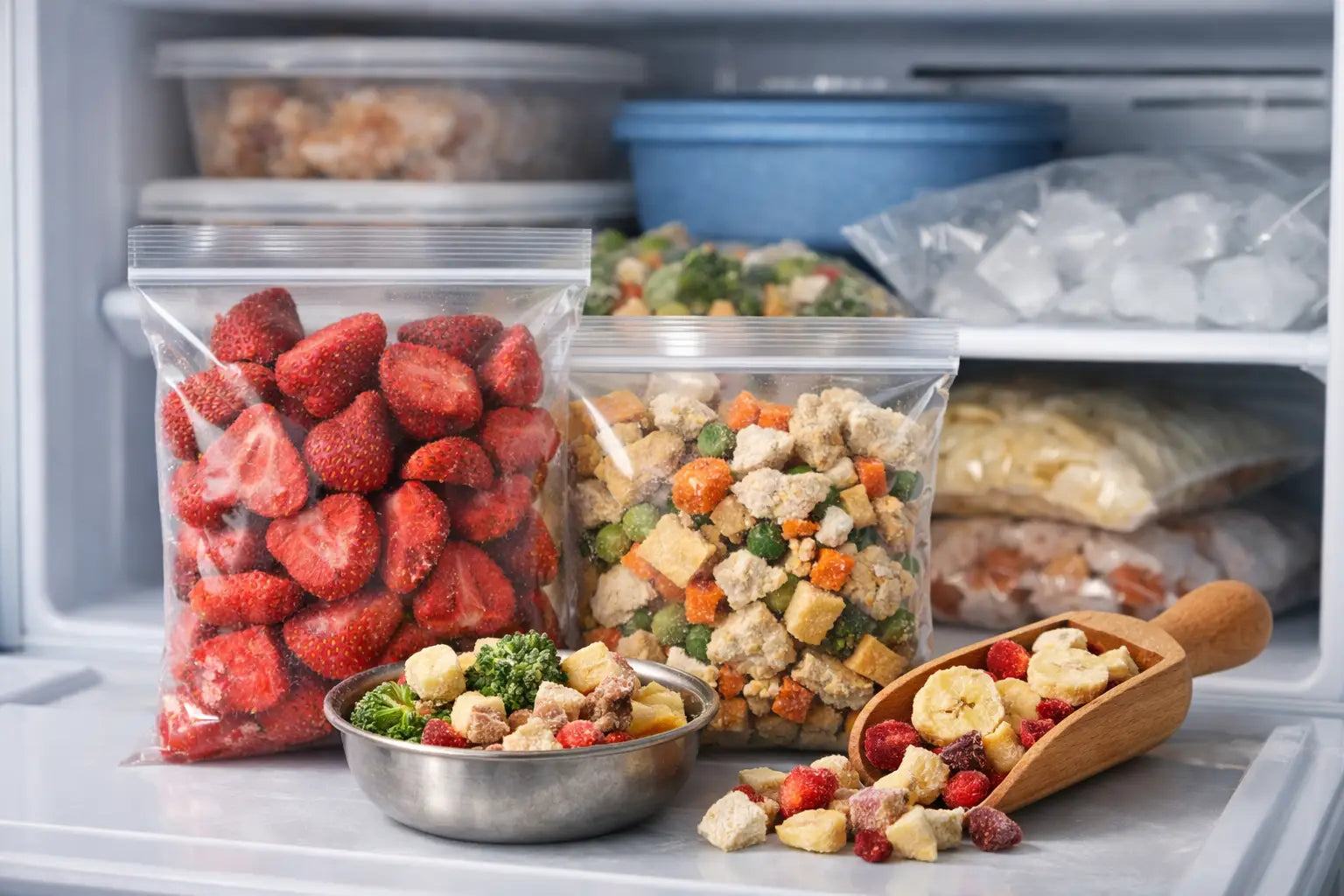
A lot of families build a food reserve assuming colder always means better. That sounds logical, but when people ask, can you store freeze dried food in a freezer, the real answer is more nuanced than yes or no.
Freeze-dried food is already preserved by removing moisture. Its long shelf life comes from being kept dry, protected from oxygen, shielded from light, and stored at a stable temperature. A freezer can work, but in most cases it is not the best storage solution, and sometimes it creates new problems that did not need to exist.
Can you store freeze dried food in a freezer safely?
Yes, you can store freeze-dried food in a freezer if the food is in a truly airtight, moisture-proof container and stays that way. Freezing will not usually damage properly packaged freeze-dried food. The problem is not the cold itself. The problem is moisture and temperature change.
Freeze-dried food acts like a sponge. If any humidity gets to it, it starts pulling that moisture back in fast. A freezer is full of moisture in the form of frost, condensation, and humid air from repeated door openings. If your packaging is less than perfect, the freezer can shorten quality instead of protecting it.
That is why commercial long-term food storage is usually packed in Mylar pouches, #10 cans, or other oxygen- and moisture-resistant containers, then stored in a cool, dry place - not necessarily a frozen one. Stable conditions matter more than extreme cold.
Why a freezer usually is not the best place
Preparedness is about reliable systems, not extra steps that add risk. For most households, a chest freezer or kitchen freezer is not the ideal place for freeze-dried food because it introduces variables you do not want.
First, freezers get opened. Every time that door opens, warmer air and humidity enter. That matters less for frozen meat sealed in plastic and more for dry food that must stay bone dry. Second, freezers lose power. If the grid goes down, a freezer warms up, cools down, and may cycle through condensation events that are hard on packaging. Third, freezer space is valuable. In a real-world emergency plan, that space is often better used for foods that truly need freezing.
There is also the issue of convenience. Long-term food storage works best when it is organized, visible, and accessible. If your reserve is buried behind frozen roasts and ice packs, rotation and inspection tend to slip.
When freezing freeze-dried food might make sense
There are a few cases where freezing is reasonable.
If you live in a hot, humid climate and do not have a cool indoor storage space, a freezer may provide a more stable environment than a garage that swings from 60 to 100 degrees. That said, the packaging still has to be excellent, and you still need to guard against condensation when removing items.
Another case is short-term protection from pests or heat while you solve a storage problem. If you are waiting to move supplies into proper bins, buckets, or climate-controlled storage, freezing can be a temporary holding step.
Some people also freeze individual ingredients they packed themselves in vacuum-sealed, moisture-resistant bags with oxygen absorbers. That can work, especially for DIY freeze-dried foods from a home freeze dryer. But it only works if the seal is solid and the product is not handled carelessly when coming back to room temperature.
So yes, it can make sense. It just is not the default best practice.
The real risk: condensation
If there is one thing to remember, it is this: cold freeze-dried food pulled into warm room air can collect condensation on the outside of the package. If that package is opened before it fully warms, moisture can get inside and ruin texture, flavor, and shelf life.
That is where people get into trouble. They assume the food is safe because it was frozen, then open the bag too soon. Once humidity reaches freeze-dried food, crisp fruits turn leathery, powders clump, and meals lose the quality you paid for.
If you do keep freeze-dried food in a freezer, remove only what you need and let the unopened container come fully to room temperature before opening it. That simple habit prevents a lot of waste.
Best storage conditions for freeze-dried food
For most family preparedness plans, the better answer is boring and dependable: store freeze-dried food in a cool, dry, dark place with stable temperatures.
That usually means an indoor pantry, basement, closet, under-bed storage area, or a dedicated food storage room. Aim for consistent temperatures, low humidity, and strong packaging. Commercially packed freeze-dried foods are designed for this exact setup.
A climate-controlled room inside the home usually beats a shed, attic, garage, or outdoor building. Heat shortens shelf life over time. Moisture destroys it fast. Light also degrades quality, especially in clear containers.
If you are building a serious reserve, think in layers. Keep everyday pantry food where it is easy to rotate. Keep medium-term backups organized in sealed bins or buckets. Keep long-term freeze-dried food protected in manufacturer packaging inside the coolest dry area you control.
Can you store freeze dried food in a freezer after opening?
You can, but this is where the answer shifts from long-term storage to damage control.
Once opened, freeze-dried food is much more vulnerable. If you have a partially used pouch and you reseal it with as little air as possible, freezing may help slow quality loss for some items. But again, the pouch has to be airtight, and you must avoid opening it while still cold.
For opened products, many families are better off using oxygen absorbers where appropriate, vacuum sealing smaller portions, or repackaging into mason jars with tight lids and then storing those jars in a cool, dry cabinet. Freezing an already opened bag often sounds smart but becomes a hassle if that food gets accessed repeatedly.
If it is something you use often, like freeze-dried fruit, vegetables, or meat for cooking, portion it out first. Repeated thawing, opening, and resealing is not a strong storage strategy.
Packaging matters more than location
This is the part many people miss. The package is doing most of the work.
A factory-sealed #10 can or high-quality Mylar pouch with an oxygen absorber is built for shelf stability. A thin zip-top bag is not. A vacuum sealer helps, but not all vacuum bags are equal barriers against oxygen and moisture over long periods. Plastic containers can be useful for organization but should not be confused with true long-term preservation.
If you are using a home freeze dryer, packaging discipline is non-negotiable. The drying process is only half the job. If the food is not packed correctly afterward, freezer storage will not save it.
For preparedness-minded households, this matters because long shelf life is not magic. It is packaging plus storage conditions plus disciplined handling.
The practical rule for family preparedness
If your freeze-dried food came professionally packaged for long-term storage, keep it in a cool, dry indoor location and leave the freezer for foods that actually require freezing. That is the cleanest, lowest-risk setup.
If you packed the food yourself and your home runs hot or humid, freezer storage can be a backup option - but only with strong moisture-proof packaging and careful handling. Think of it as a workaround, not the gold standard.
The goal is not just making food last on paper. The goal is making sure it is still dry, safe, and usable when your family needs it during a storm, a supply chain disruption, or a long power problem. Fancy storage ideas do not beat simple reliability.
A smart reserve is one you can trust without second-guessing. Keep freeze-dried food dry, stable, and protected, and it will do what it was bought to do - stand ready when the shelves are empty.