
The first night of a power outage tells you what matters. Not in theory - in real life. You find out fast whether you need to keep a CPAP running, charge phones, protect refrigerated medicine, power a sump pump, or just get a few lamps on so your kids can settle down.
That is where the portable power station versus generator question stops being a gadget debate and becomes a family readiness decision. Both can earn a place in a smart emergency plan. The right choice depends on what you need to power, how long you need it, where you live, and how much noise, maintenance, and fuel handling you are willing to deal with.
Portable power station versus generator: the real difference
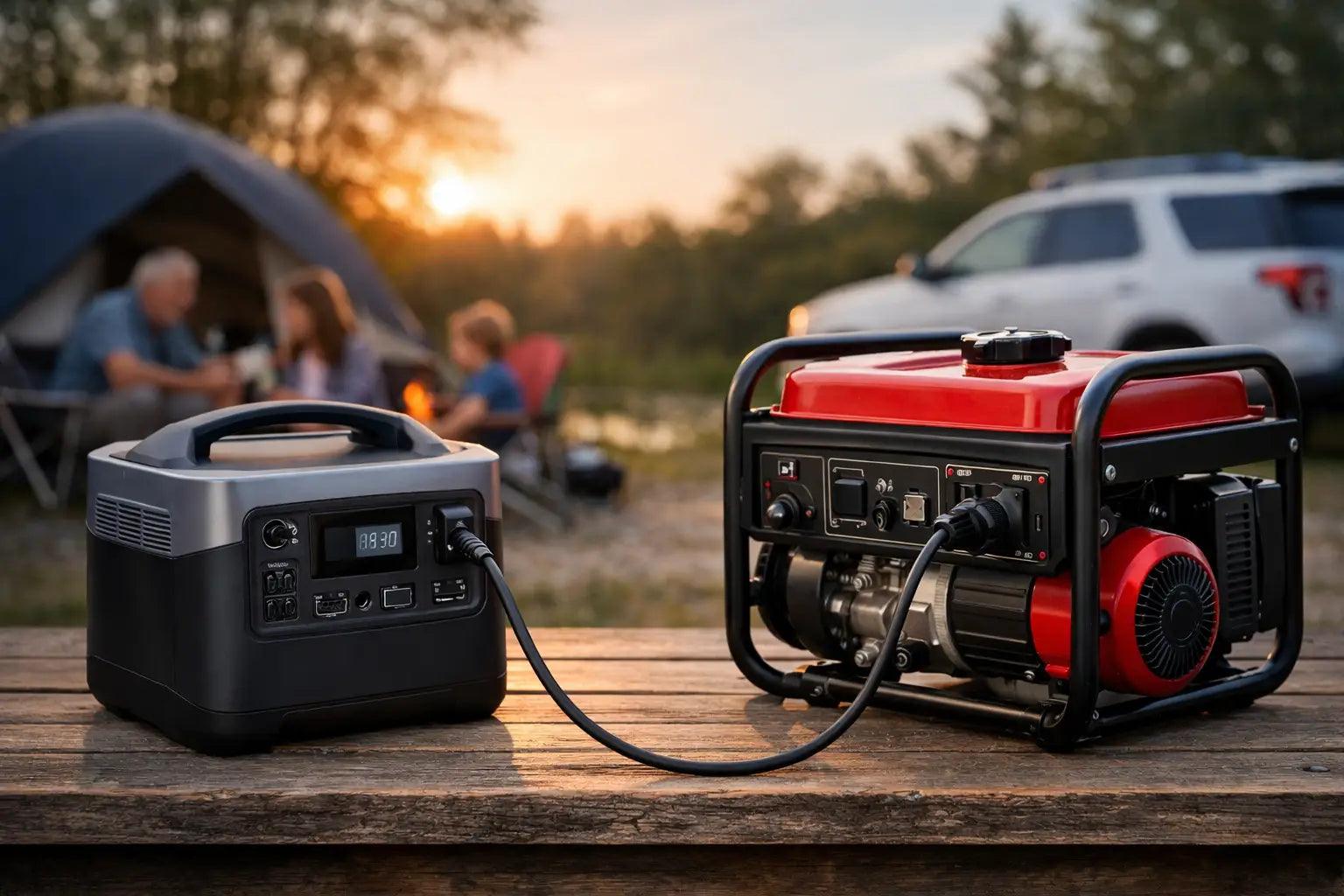
A portable power station is a large rechargeable battery with outlets, USB ports, and often solar charging capability. It stores electricity and delivers it quietly. A generator makes electricity on demand, usually by burning gasoline, propane, diesel, or natural gas.
That difference shapes everything else. Power stations are simple, clean, and easy to use indoors. Generators are stronger for heavy loads and long outages, but they are louder, require fuel, and must be used safely outdoors.
For many families, the decision comes down to this: do you need convenience and indoor-safe backup for small-to-medium essentials, or do you need enough muscle to run major appliances and ride out a longer grid failure?
When a portable power station makes more sense
Portable power stations are often the better fit for households that want backup power without adding another engine to maintain. If your main goal is to keep communication, lighting, basic medical gear, and a few comfort items going, a quality power station can cover a surprising amount.
They are especially useful in apartments, suburban neighborhoods with close neighbors, and homes where noise matters. During a storm outage, being able to place a unit in the kitchen or bedroom and power devices without fumes or engine noise is a real advantage. For parents with sleeping children, elderly family members, or pets that get anxious, that quieter experience matters more than people expect.
A portable power station is also easier for less technical users. There is no pull cord, no gasoline can, no oil changes, and no guessing whether old fuel will gum up the machine when you finally need it. You keep it charged, test it on schedule, and use it when the lights go out.
That said, batteries have limits. A power station can handle phones, laptops, routers, fans, lights, CPAP machines, and many small kitchen devices. But once you move into high-draw appliances like central air, electric dryers, large space heaters, or some well pumps, battery capacity disappears quickly. Even if the inverter can handle the surge, runtime may be short.
When a generator is the better tool
Generators still win when the outage is likely to last days and your power needs are large. If you want to keep a refrigerator and freezer cold, run a sump pump, cycle a microwave, support power tools, or handle multiple appliances through a transfer switch, a generator gives you more staying power.
This matters for hurricane zones, ice storm regions, and rural properties where restoration can take longer. It also matters for households with well water. If your home depends on an electric well pump, backup power is not just about comfort. It affects drinking water, toilet flushing, cooking, and basic sanitation.
A generator also gives you flexibility on refueling. With enough stored fuel, or with a propane or natural gas setup, you can extend power far beyond the runtime of a battery. That is a major reason many experienced homeowners still choose a generator as their core outage tool.
But generators ask more of you. They are louder. They need routine maintenance. Fuel storage takes planning. Cold weather can affect startup. And the safety rules are non-negotiable. Improper use can cause carbon monoxide poisoning, fire, and backfeed dangers.
Noise, safety, and ease of use
This is where many families change their minds.
Portable power stations are about as close to plug-and-play as backup power gets. They work indoors, they do not produce exhaust, and they are quiet enough for overnight bedroom use. If your outage plan includes children, older adults, or anyone who would struggle with engine equipment in bad weather, that simplicity has real value.
Generators are more demanding. You need a safe outdoor location well away from doors, windows, and vents. You need weather protection without trapping exhaust. You need extension cords rated for the load, or a properly installed transfer switch. You need to know how to store and rotate fuel. None of that is impossible, but it does require a little discipline.
For some households, that is fine. For others, a backup tool only helps if every adult in the home can use it confidently.
Cost is not as simple as the sticker price
A lot of comparisons stop at purchase price, but that misses the bigger picture.
Portable power stations can look expensive for the watt-hours you get, especially when you compare them to a gas generator with higher output. But the total cost is more predictable. There is no fuel to buy during every outage, no spark plug changes, no oil, and less chance the unit sits neglected until it fails at the worst time.
Generators often offer more power per dollar upfront. If you need to run large loads, they can be the more economical answer. Still, fuel, storage cans, stabilizer, maintenance, and transfer equipment all add up over time. During regional emergencies, fuel may also be hard to find.
If your budget is limited, it helps to work backward from your critical loads instead of buying by hype. A family that only needs lights, communication, medical devices, and a cooler strategy may be overspending on a generator. A family trying to keep a full-size fridge, chest freezer, and well pump alive may waste money on a battery system that is too small.
What each option can realistically power
A portable power station is best thought of as a way to protect essentials and reduce stress. It shines with phones, radios, rechargeable lanterns, internet equipment, baby monitors, small fans, laptops, CPAP machines, and in some cases a refrigerator for a limited period if capacity is large enough.
A generator is better for heavier, more demanding household loads. Refrigerators and freezers are common generator use cases because they cycle on and off and can be managed efficiently. Sump pumps, many microwaves, garage door openers, power tools, window AC units, and some well pumps are also often generator territory.
The key is surge wattage. Many appliances need extra power at startup. A backup system that looks adequate on paper can still fail if you ignore startup demand.
The best answer for many homes is both
This is the part people often miss. Portable power station versus generator does not always need a single winner.
A layered plan is often the most realistic one. Use a portable power station for indoor essentials, overnight use, quiet charging, and quick grab-and-go reliability. Pair it with a generator for heavy loads, refrigeration, water access, and multi-day resilience.
That combination gives your family options. If the outage is short, the battery may be all you need. If it stretches into day two or three, the generator handles the bigger jobs while the power station keeps your sensitive electronics and nighttime needs covered. It is a calmer setup, and calm matters in an emergency.
For families building readiness over time, this can also be the smartest path financially. Start with the battery system if you need something simple and immediately useful. Add a generator later if your home, climate, or medical needs call for more capacity.
How to choose for your family
Start with your non-negotiables. If someone in the house relies on a CPAP, refrigerated medication, or powered medical equipment, list those first. Then add food protection, water access, communication, and heating or cooling needs based on your region.
Next, think in hours and days, not just watts. A short outage after a thunderstorm is different from a four-day winter storm or a hurricane aftermath where gas stations may be closed. Runtime changes the math.
Then be honest about your household. Will someone maintain a generator, rotate fuel, and run monthly tests? Or would your family be better served by a lower-maintenance battery solution that gets used regularly for camping, road trips, or backyard projects and is always familiar?
If you are not sure, choose the option you are most likely to use correctly under stress. Preparedness is not about buying the most impressive system. It is about having a system that actually works for your home.
At SHTF Prepper Club, we see this with families all the time. The strongest plan is usually not the flashiest one. It is the one sized to your real risks, your real budget, and the people you are responsible for.
Backup power should make your home feel steadier when everything outside is uncertain. If a portable power station helps your family stay connected and sleep better, that is a strong choice. If a generator protects water, food, and core household function during a long outage, that is a strong choice too. The helpful step is not waiting for the perfect answer - it is choosing your next layer of readiness and getting it in place before the next storm shows up.