
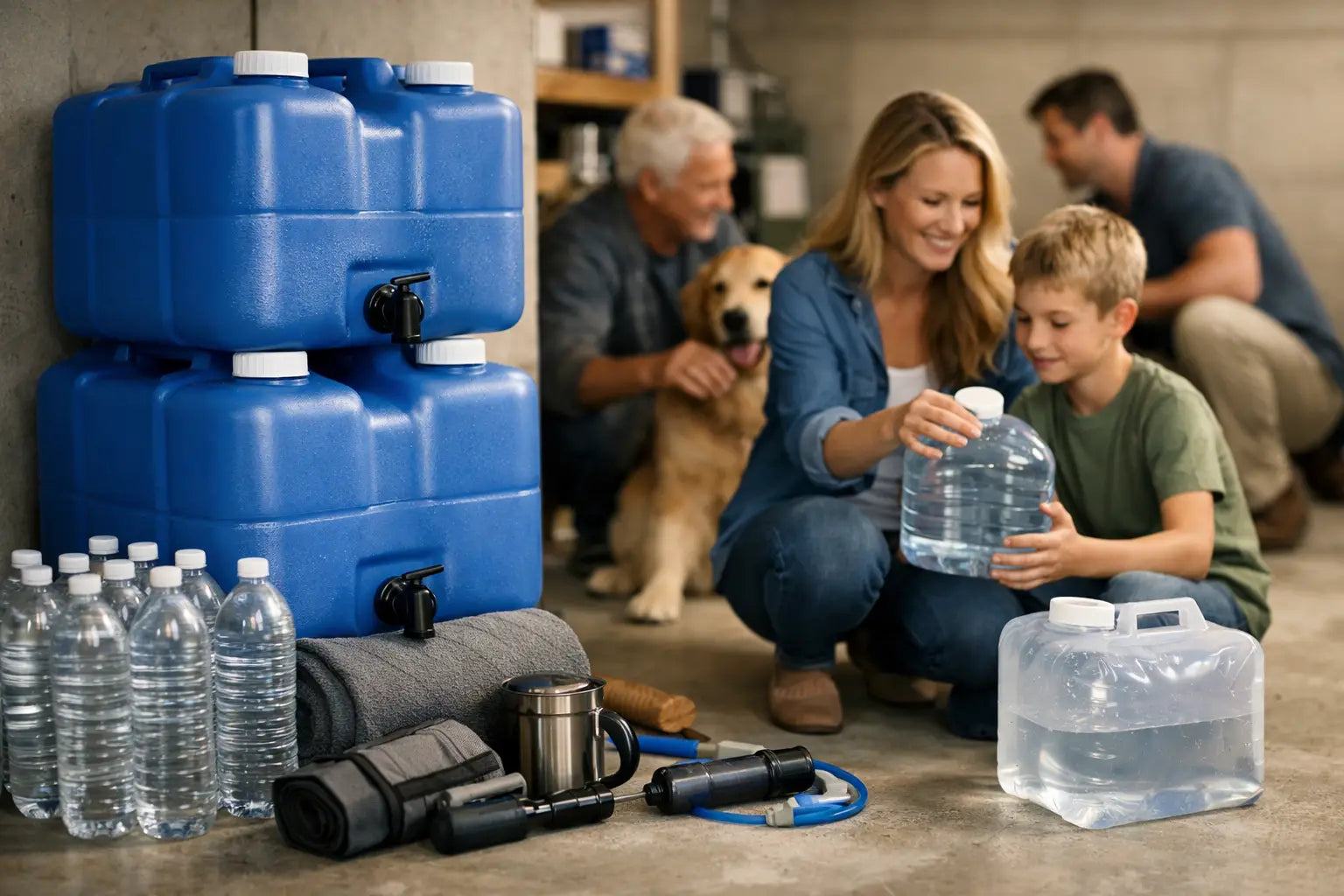
When the tap stops working, the problem gets personal fast. You are not just thinking about drinking water. You are thinking about bottles for medications, quick meals, brushing teeth, washing hands, pets, and whether your kids will stay calm if normal routines disappear. That is why emergency water storage for families deserves more thought than tossing a case of bottled water in the garage.
Most households underestimate two things at the same time: how much water they actually use, and how annoying it is to manage water storage badly. The goal is not to create a bunker. It is to build a system your family can afford, store, rotate, and actually use when a hurricane, winter storm, wildfire outage, boil-water notice, or supply interruption hits.
How much emergency water storage for families is enough?
The standard advice is one gallon per person per day. That is a good floor, not a comfortable plan. For a family, that number disappears quickly.
A household of four needs at least 28 gallons for one week, and that assumes careful use. Add a dog, a cat, hot weather, illness, powdered drink mixes, or basic cleaning, and your margin gets thin fast. If you live in a hurricane zone, wildfire country, or a place where infrastructure can stay down for days, two weeks is a much more realistic target.
For many families, the best first milestone is 14 days of drinking and basic hygiene water. If that feels like a lot, start with seven days and expand. Readiness that exists beats a perfect plan that never gets built.
There is also a difference between stored water and backup water options. Stored water is what you can use immediately. Backup options include filters, purification tablets, or a way to fill containers from another source. Families usually need both.
The best water storage setup is layered
One giant tank sounds efficient until you need to carry water upstairs, fit it into a closet, or move it during an evacuation. On the other hand, tiny individual bottles are convenient but expensive, wasteful, and hard to scale for a full household.
A layered setup works better. Think in terms of short-term grab-and-go water, medium-size containers for daily emergency use, and larger reserves for staying home.
Small factory-sealed bottles or pouches help during the first 24 hours, especially if your family may need to leave quickly. Mid-size containers in the 3- to 7-gallon range are manageable for most adults and fit well in garages, utility rooms, or under sturdy shelving. Larger barrels or tanks make sense if you have the space and a stay-at-home plan, but they should support your system, not become the whole system.
This is where families often make smarter choices than hobbyist preppers. You are not storing water for a thought experiment. You are storing it for school closures, storm cleanup, a broken main, or a power outage that drags on longer than promised.
Choosing containers that make sense in real life
Water is heavy. That simple fact should drive most of your storage decisions.
A full gallon weighs a little over eight pounds. A 5-gallon container weighs more than 40 pounds before you factor in awkward handles or stairs. A 55-gallon barrel weighs hundreds of pounds and is not something you casually reposition later. So the right container is not just about volume. It is about who in your household can lift it, pour it, and access it without frustration.
Food-grade plastic containers made for water storage are usually the practical sweet spot for families. They are durable, designed for potable water, and available in sizes that balance capacity with usability. Avoid random used containers unless you are completely sure what was in them before. Saving a little money is not worth contaminating your water supply.
Store containers off bare concrete when possible, out of direct sunlight, and away from gasoline, paint, pesticides, or anything with strong fumes. Water containers can absorb odors over time, and heat speeds up problems. A cool interior closet, basement shelf, or organized garage space is usually better than a backyard corner that bakes all summer.
Tap water, bottled water, or filled storage containers?
All three can play a role.
Factory-sealed bottled water is simple and familiar. It is good for fast starts, temporary disruptions, and evacuation bags. The downside is cost per gallon, packaging waste, and the tendency to let a few cases sit around instead of building a real plan.
Filled storage containers give you more water for less space and usually lower long-term cost. If you are using municipal tap water, it is often already treated and suitable for storage in clean, food-grade containers. Some families use water preservatives for longer storage cycles. Others rotate on a set schedule and keep the system simple.
Larger barrels and tanks make the most sense when your household is committed to longer-term water planning. They can be excellent for sheltering in place, especially in storm-prone areas, but they do require planning for filling, dispensing, and cleaning. Bigger is not automatically better if nobody wants to maintain it.
Rotation matters, but not every system needs constant fussing
One reason people avoid water storage is that it sounds like another household chore they will forget. That is fair. The answer is to build a rotation plan that matches the kind of storage you chose.
Factory-sealed water can usually sit longer, though you should still check condition, expiration guidance, and heat exposure. Home-filled containers should be labeled with the fill date and checked on a schedule your family will actually remember. Every six to twelve months is common, depending on container type, storage conditions, and whether you use treatment products.
Tie rotation to something you already do. Daylight saving time, back-to-school season, the start of hurricane season, or a New Year home reset all work. If you need a complicated spreadsheet to manage your water, the system is probably too complicated.
Don’t forget the water you need beyond drinking
Families rarely think only in terms of thirst once an emergency starts. You need water to swallow medications, mix infant formula, rinse cuts, brush teeth, wash hands, and clean basic dishes. If someone in your home has a medical condition, that number can climb quickly.
Babies, older adults, and people with chronic health needs deserve extra margin. So do pets. A large dog can go through meaningful amounts of water in hot weather or stressful conditions. If your family includes animals, include them in your storage math from day one.
It also helps to separate your water mentally into categories. Drinking and cooking water should stay protected and easy to access. Utility water for flushing toilets or basic cleanup can come from other sources if needed. That distinction can stretch your emergency supply without forcing unsafe shortcuts.
Water storage is stronger when paired with filtration and treatment
Stored water is your first line of defense. Filtration and purification are what keep your plan from ending the moment the stored supply runs low.
A practical family setup usually includes both. A filter can help if you need to use water from a questionable source. Purification tablets or drops add another layer and are easy to keep on hand. The exact tools depend on where you live. A suburban family with frequent boil-water notices may plan differently than a rural household with well water or rain catchment.
This is one of those areas where cheap gear can be false economy. If your household is counting on water treatment during an emergency, reliability matters. SHTF Prepper Club focuses on family-ready options for exactly this reason - water is too central to improvise badly.
Where to start if you feel behind
Start with the next useful level, not the final version. For many homes, that means one week of water for everyone in the house, stored in manageable containers, plus a basic filtration or purification backup. Once that is in place, extend to two weeks.
If space is tight, prioritize drinking and cooking water first. If budget is tight, build gradually. A few solid containers bought over time is still progress. If your region faces predictable seasonal threats, have your target amount in place before the season starts, not after the weather alerts begin.
The best water plan is boring in the best possible way. It is organized. It is labeled. It fits your house. It accounts for your kids, your pets, your space, and your likely risks. And when something goes wrong, it lets your family stay calmer because one of the biggest problems has already been handled.
That peace of mind is not extreme. It is what responsible households do when they decide their family deserves better than hoping the water keeps running.