
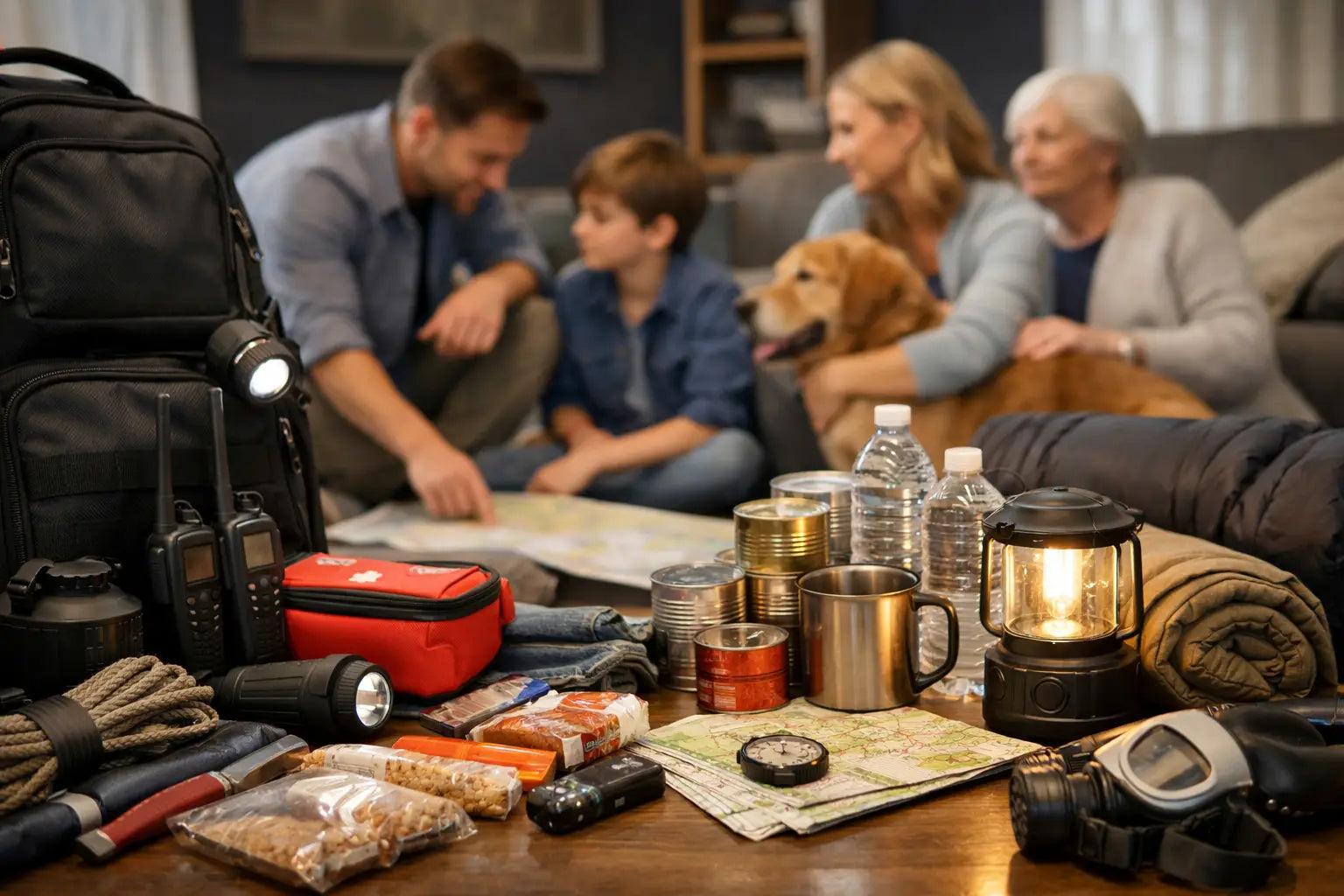
The question usually shows up after a bad week. The power was out for two days. Store shelves looked thin. A storm track shifted toward your neighborhood. You find yourself thinking, how do I protect my family from this happening again - or at least from being caught flat-footed next time?
That is the right question. Not because you need to prepare for every imaginable disaster, but because ordinary families do better when they prepare for the disruptions they are most likely to face. A smart plan is not built on fear. It is built on the simple idea that your household should be able to stay safe, fed, warm, informed, and flexible when daily life stops working the way it usually does.
What most families are really trying to protect against
When people say they want to protect my family from emergencies, they are usually not talking about one dramatic event. They are talking about a cluster of realistic problems that tend to pile up together.
A hurricane can mean a power outage, no gas, road closures, and spoiled food. A winter storm can mean dangerous cold, frozen pipes, missed medications, and no easy way to cook. A wildfire can mean smoke, evacuation, and communication problems. Even a shorter disruption can create stress fast if you have kids, pets, an elderly parent, or anyone in the house who relies on medical devices or daily prescriptions.
That is why the best preparedness plans are category-based. Think in terms of water, food, power, medical needs, shelter and warmth, communication, sanitation, and transportation. If those bases are covered, your family will be in much better shape for a wide range of emergencies.
Start with the risks that fit your life
Preparedness gets easier when it becomes specific. A family in Florida should think differently than a family in Oregon. A suburban household with two teenagers, a dog, and a chest freezer has different priorities than a retired couple in a condo.
Start with the emergencies you have already experienced or nearly experienced. That often gives you your clearest roadmap. If your area has repeated outages, backup power and shelf-stable food matter. If wildfire smoke is a seasonal reality, indoor air quality and evacuation planning matter. If supply shortages hit your household hard in 2020 or during a major storm, extra food, water, and household basics deserve a permanent place in your plan.
This is also where trade-offs come in. You may not be able to buy everything at once. That is fine. The goal is not perfection. The goal is to reduce the most likely pain points first.
Protect my family from the first 72 hours
The first three days of an emergency are where most households feel the gap between what they assumed they had and what they actually had.
Water is the first place to get serious. A few bottles in the pantry are not a plan. A better baseline is enough drinking and basic hygiene water for every person and pet in the home for at least three days, with a path to extend that if services are disrupted longer. Stored water is part of the answer. Filtration and purification matter too, especially if you may need to use questionable water sources.
Food comes next, but it should be practical food. Buy what your family will actually eat under stress and what you can prepare if the power is out. That may mean ready-to-eat meals, pantry staples, canned proteins, dry goods, and longer-term food storage for backup. Families often overestimate how useful their normal kitchen is during an outage. If your stove is electric, think through how you would heat food safely.
Light, power, and communication also deserve immediate attention. Every household should have dependable lighting in more than one room, charged battery banks, and a way to get information if cell service is spotty or the grid is down. If someone in your home depends on refrigerated medication, a CPAP, or another powered device, backup power moves from helpful to essential.
Build around the people, not just the event
This is where many emergency plans quietly fail. They account for the storm, but not for the actual family.
Children need familiar foods, comfort items, and routines as much as they need calories. Grandparents may need mobility support, hearing aid batteries, or extra medications. Pets need food, water, crates, leashes, and records. If someone in the household has anxiety, autism, diabetes, severe allergies, or another condition that changes how emergencies feel and function, your supplies and plans should reflect that reality.
In practical terms, that means packing and storing with names and roles in mind. Your evacuation bag should not be generic if one child needs a specific medicine and another sleeps better with headphones and a blanket. Your first aid setup should go beyond adhesive bandages if someone is likely to deal with cuts during storm cleanup or if a family member has known medical needs.
Preparedness feels less overwhelming when it gets personal. Instead of asking what a generic household needs, ask what your household needs to make it through three days, seven days, and two weeks with less stress and fewer bad decisions.
Home readiness matters more than gear collecting
A lot of people start by buying a few items and calling it done. A flashlight here, a case of water there. That is better than nothing, but it is not the same as a home readiness system.
A stronger approach is to organize your supplies by function and by speed of access. What do you need in the first five minutes of an outage? What do you need if you must leave in fifteen minutes? What do you need if roads are blocked and you are home for a week?
This is where kits become useful, especially for busy families who do not want to assemble every piece from scratch. But kits work best when they are a starting point, not the whole plan. Most need to be tailored for family size, climate, dietary needs, pets, and local risks.
Storage matters too. If your emergency food is buried in the garage under holiday decorations, it will not help much when the weather turns or the lights go out. Keep your daily-use outage supplies easy to reach. Keep backup water, longer-term food, and seasonal gear organized where you can rotate and inspect it.
The most overlooked part of protecting your family from emergencies
It is not gear. It is decision-making.
Families handle emergencies better when they have already settled a few key questions. Where will you go if you need to evacuate? Who picks up the kids if school closes early? How will you contact each other if phone networks are overloaded? What will you do if one person is home and the other is commuting?
These conversations are not dramatic. They are calming. They remove uncertainty before uncertainty shows up.
Write down the basics. Keep hard copies of key phone numbers, insurance information, medication lists, and local meeting points. Make sure older kids understand the plan in age-appropriate language. If you have adult children or elderly parents nearby, include them in the conversation. A family plan works better when everyone knows where they fit.
Protect my family from panic buying and last-minute mistakes
One of the biggest advantages of preparedness is that it lets you avoid bad timing. You are not fighting crowds for batteries the night before a storm. You are not paying inflated prices for a generator after the outage has already started. You are not trying to remember which medications are running low when the pharmacy is closed.
That is why steady, boring progress wins. Start with a realistic budget. Build in layers. Cover water, food, light, first aid, sanitation, warmth, and communication. Then expand into backup power, deeper food storage, better cooking options, and longer-term self-sufficiency if that fits your goals.
At SHTF Prepper Club, that step-by-step mindset is the part many families find most helpful. You do not need to go from zero to fully built out in one weekend. You need a plan that keeps getting better.
A household with a three-day supply, a tested lantern, stored water, and an evacuation bag is already in a better position than one with good intentions and no system. A household with two weeks of food, backup power, filtration, and a practiced plan is stronger still. Both are worth celebrating.
Preparedness is not about proving something. It is about making sure the people you love are less exposed when life gets rough. Start where your family is. Fix the next obvious gap. Then keep going while things are calm.