
Table of Contents
- Essential Categories of Best Emergency Supplies for Home
- Budget-Tier vs. Pro-Tier Emergency Supply Comparison
- How Long Should Emergency Supplies Last for Your Household
- Emergency Preparedness Checklist for Home Safety
- Emergency Food Storage Ideas and Best Practices
- Emergency Kit Maintenance Tips and Shelf-Life Management
- Psychological Preparedness: The Overlooked Supply
- Assembling Your Best Emergency Supplies for Home Kit
Last Updated: July 14, 2026
When disaster strikes, having the best emergency supplies for home on hand can mean the difference between panic and preparedness. According to research from the Department of Homeland Security, households with stocked emergency supplies recover faster from disruptions and experience significantly less stress during crises. Below, we'll show you exactly how to assemble comprehensive emergency supplies for your household, whether you're preparing for severe weather, power outages, or longer-term scenarios.
Essential Categories of Best Emergency Supplies for Home
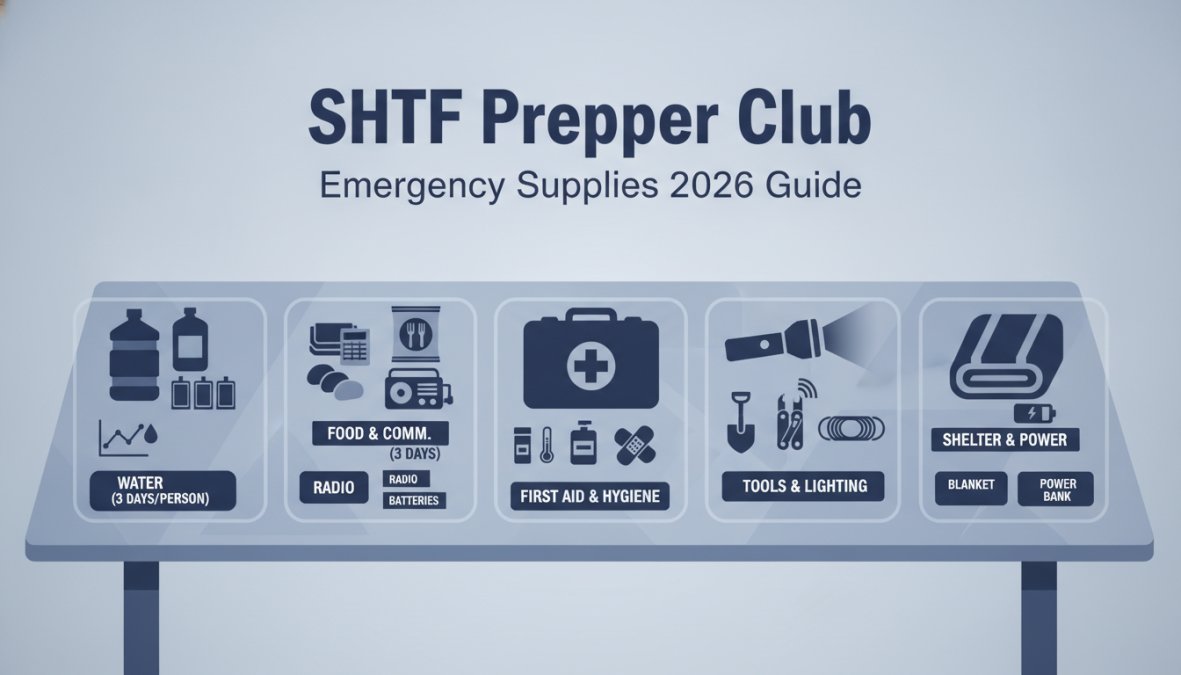
The foundation of any emergency preparedness plan rests on understanding what categories matter most. Water, food, medical supplies, shelter, and communication tools form the backbone of household readiness. What separates adequate kits from exceptional ones is strategic selection based on your family's specific needs.
Your best emergency supplies for home should address these core categories: water storage and filtration, long-term food rations, fire-starting capability, thermal protection, medical response, and communication tools. Each category serves a specific survival function, and together they create redundancy so that if one system fails, others compensate.
Water Filtration and Storage
A person requires one gallon per day for drinking and basic hygiene. For a family of four, a two-week supply means 56 gallons, a number that clarifies why proper storage matters.
The Reliance Aqua-Tainer 7-Gallon Water Container solves the storage problem with a stackable, durable design and integrated spigot for controlled dispensing. Food-grade plastic prevents contamination, and the rectangular shape maximizes storage efficiency in tight spaces.
Storage alone isn't enough. The Sawyer Squeeze Water Filtration System addresses contamination vulnerabilities with a portable solution that filters to 0.1 microns, removing bacteria and protozoa. It weighs almost nothing and works with standard water bottles or pouches.
Emergency Food Rations and Long-Term Storage
Food storage creates psychological comfort that extends beyond calories. Knowing your family can eat normally for weeks reduces panic and allows clearer thinking during crises.
Mountain House Adventure Meals offer freeze-dried options that taste like actual food with a 30-year shelf life. Preparation is simple: add boiling water and wait five minutes. At roughly $10-15 per pouch, they cost more than bulk canned goods, but the taste advantage and preparation simplicity make them worth the investment.
For budget-conscious storage, Augason Farms 30-Day Emergency Food Supply offers comprehensive coverage at lower cost. A single pail contains breakfast, lunch, and dinner options for one person for 30 days with a 20-25 year shelf life. The trade-off: preparation requires water and cooking capability.
| Food Type | Shelf Life | Preparation | Best For |
|---|---|---|---|
| Freeze-dried meals | 25-30 years | Add hot water, 5 min | Taste priority, variety |
| Bulk food pails | 20-25 years | Requires cooking | Budget, volume, long-term |
| Canned goods | 3-5 years | Heat or eat cold | Rotation, familiar foods |
| Energy bars | 2-3 years | Ready to eat | Quick calories, portability |
Fire Starting Tools and Lighting
Fire serves multiple functions: warmth, water purification, food preparation, and morale. Yet most people rely on a single lighter or matches, both vulnerable to moisture or damage. Redundancy in fire-starting tools prevents the catastrophic scenario of being unable to start a fire when needed most.
UCO Stormproof Matches light even after submersion in water, with an extended burn time that handles windy conditions. The windproof design and waterproof case make them reliable in harsh weather. Store multiple containers since each holds a limited number.
For lighting, a quality headlamp transforms navigating without power by keeping hands free while maintaining visibility.
Shelter, Bedding, and Thermal Protection
Hypothermia kills faster than hunger or thirst, yet thermal protection remains overlooked in many emergency kits. Emergency Mylar Thermal Blankets reflect up to 90% of body heat in an impossibly compact package. A set of four blankets takes up less space than a paperback book. Store multiple sets, the cost per blanket is negligible.
First Aid and Medical Supplies
Most household first aid kits contain bandages and antibiotic cream, useful for minor cuts but inadequate for genuine emergencies. The Surviveware Small First Aid Kit addresses this gap with organized trauma supplies, labeled compartments for quick identification, and water-resistant construction.
Organization matters more than you'd expect. During an emergency, searching through a disorganized kit wastes precious time and increases stress. Clear labeling and compartmentalization let anyone in the household find what they need immediately.
Navigation, Signaling, and Communication
During widespread emergencies, normal communication infrastructure fails. A hand-crank radio provides critical access to emergency broadcasts and weather updates without battery dependency. The Midland WR120EZ NOAA Weather Radio uses S.A.M.E. technology to alert you to county-specific hazards, and battery backup ensures operation during power loss.
A signaling mirror, compass, and whistle occupy minimal space but serve crucial functions if evacuation becomes necessary.
Budget-Tier vs. Pro-Tier Emergency Supply Comparison
Emergency preparedness doesn't require unlimited spending. A functional household kit for four people costs between $400-600 at budget tier and $1,200-2,000 at pro tier. The difference isn't dramatic because fundamentals, water, food, first aid, remain the same.
Budget-tier supplies prioritize essentials: basic water storage, bulk food rations, standard first aid, and simple fire-starting tools. These address core survival needs without excessive investment and work perfectly well for short-term disruptions lasting days to weeks.
Pro-tier supplies add redundancy, higher-quality components, and specialized tools. Multiple filtration methods, premium freeze-dried meals, advanced medical supplies, and backup power systems increase resilience during extended scenarios. The practical answer: start with budget-tier supplies covering fundamentals, then upgrade specific categories based on your family's priorities and local risks.
How Long Should Emergency Supplies Last for Your Household
The standard recommendation of two weeks represents a minimum, not an optimal target. Two weeks covers most common disruptions: severe weather, temporary power outages, localized infrastructure failures. However, realistic preparedness depends on several factors.
Consider your local risks. Communities prone to hurricanes or winter storms should maintain 30-day supplies. Families with young children, elderly members, or medical conditions benefit from extended supplies because these populations are more vulnerable to disruption stress.
Practical math: multiply your household size by one gallon of water per person per day, then multiply by your target duration. A family of four preparing for 30 days needs 120 gallons of water, roughly 18 five-gallon containers.
Emergency Preparedness Checklist for Home Safety
A comprehensive checklist prevents overlooking critical items while building your kit. Work through each category systematically.
Water and Filtration:
- One gallon per person per day for your target duration
- Water storage containers (food-grade, sealed)
- Portable water filter (Sawyer Squeeze or equivalent)
- Water purification tablets as backup
Food:
- Freeze-dried meals for variety and morale
- Bulk food rations for volume
- Energy bars or calorie-dense snacks
- Salt, sugar, and basic seasonings
Fire and Light:
- Waterproof matches or lighters (multiple methods)
- Flashlight with extra batteries
- Headlamp with batteries
- Candles and matches as backup
Shelter and Warmth:
- Emergency thermal blankets (multiple)
- Sleeping bag or heavy blanket
- Tarps or emergency shelter material
Medical:
- Comprehensive first aid kit
- Prescription medications (30-day supply minimum)
- Pain relievers, antihistamines, antacids
- Trauma supplies (tourniquets, gauze)
Communication and Navigation:
- NOAA weather radio
- Compass
- Signaling mirror
- Whistle
Tools and Miscellaneous:
- Multi-tool or knife
- Duct tape
- Paracord
- Hand-crank can opener
Emergency Food Storage Ideas and Best Practices
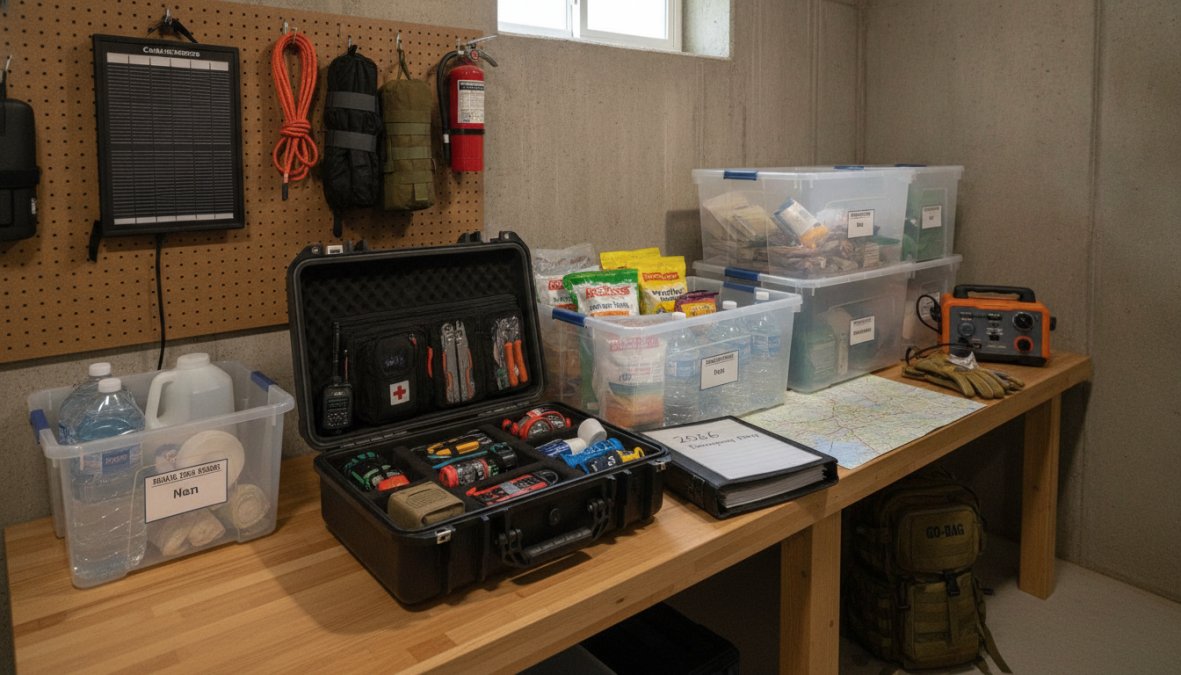
Storage location matters as much as what you store. Cool, dark, dry spaces preserve food longest. Temperature fluctuations accelerate degradation, so avoid attics in hot climates or basements in damp conditions. A temperature-stable closet or pantry works better than a garage.
Organization prevents waste. Clearly label everything with purchase or storage dates. Rotate stock regularly, using older supplies in normal cooking and replacing them. This practice keeps your emergency supplies fresh while ensuring your family is comfortable eating them before actual emergencies occur.
Stack containers vertically to maximize space efficiency. Clearly visible storage reminds you to maintain and rotate supplies. Consider your family's actual eating preferences, storing food your family dislikes guarantees it will go uneaten during stress.
Emergency Kit Maintenance Tips and Shelf-Life Management
Emergency supplies aren't a one-time purchase. Maintenance determines whether your kit functions when needed.
Establish an annual maintenance routine. Check water containers for leaks or contamination. Inspect food for damage or signs of spoilage. Test batteries in flashlights and headlamps. Verify that medications haven't expired.
Rotate perishable items systematically. Use stored canned goods in regular cooking and replace them. Eat freeze-dried meals occasionally to ensure your family is comfortable with them. Document your kit's contents and locations with a simple inventory list so family members know what exists and where to find it.
Replace items after use. If you use supplies for camping or minor emergencies, restock them immediately. A depleted kit provides false security.
Psychological Preparedness: The Overlooked Supply
Physical supplies address only half of emergency preparedness. Psychological readiness, understanding how your family will respond to disruption, managing stress, and maintaining clear thinking, determines whether you use supplies effectively or panic.
Discuss emergency scenarios with your family before they occur. What will you do if power fails for a week? How will you stay in contact if phones don't work? These conversations create mental frameworks that prevent panic.
Practice using your supplies occasionally. Cook a freeze-dried meal as a camping dinner. Use your headlamp for an evening. Filter water for drinking. This familiarity removes uncertainty and builds confidence.
Knowing your household has supplies and a plan reduces anxiety about potential disruptions. That psychological benefit extends beyond crisis response, it improves daily life by replacing vague worry with concrete preparedness.
Assembling Your Best Emergency Supplies for Home Kit
Begin with water and food, the non-negotiable foundation of any emergency kit. Add filtration capability to ensure access to safe water beyond stored supplies. Include first aid supplies appropriate to your family's medical needs. Layer in fire-starting tools, thermal protection, and communication devices. Each addition builds redundancy and resilience.
The actual assembly takes a weekend. Gathering supplies, organizing them into accessible containers, and labeling everything prevents the scattered approach that leaves gaps. Document what you've assembled by photographing your kit and creating an inventory. Share locations and contents with family members so everyone knows what exists and where to find it during stress.
Review and adjust annually. Your family's needs change. Medical conditions evolve. New risks emerge. Each annual review provides opportunity to improve your kit based on actual experience and changing circumstances.
Frequently Asked Questions
What are the most important items in a basic emergency supplies kit for home?
A solid foundation includes water (1 gallon per person per day), non-perishable food with 30+ year shelf life, a comprehensive first aid kit, fire-starting tools, a hand-crank radio, emergency blankets, a multi-tool, and a headlamp. Water filtration systems like the Sawyer Squeeze and signaling mirrors extend your preparedness. Prioritize items that address your family's specific needs, medications, infant formula, or pet supplies, before expanding into advanced gear.
How long should emergency supplies last in a home preparedness plan?
At minimum, maintain a 72-hour supply (3 days) for immediate emergencies. A 30-day supply provides security during extended outages or localized disasters. For true long-term self-reliance, many households stock 6-12 months of shelf-stable food and water. The duration depends on your risk profile, family size, and storage capacity. Start with 72 hours, then expand incrementally. Rotate items regularly to maintain freshness and effectiveness.
What's the difference between emergency food storage and regular pantry items?
Emergency food storage emphasizes shelf life, minimal preparation, and caloric density. Freeze-dried meals offer 20-30 year shelf lives and require only boiling water. Bulk supplies like Augason Farms pails provide variety and cost efficiency. Regular pantry items typically last months, not decades. Emergency rations are engineered for nutrition without refrigeration or complex cooking. Rotate commercial emergency food every 5-10 years; check expiration dates on canned goods annually.
How often should you check and maintain your emergency kit supplies?
Review your emergency kit twice yearly, spring and fall work well. Check expiration dates on food, water, medications, and batteries. Test fire-starting tools, flashlights, and radios. Rotate water every 6 months if stored in clear containers. Replace any depleted first aid items. Update your preparedness plan if family size, health conditions, or address changes. Document what you have and where it's stored. This maintenance habit ensures your supplies remain field-tested and reliable when needed.
Emergency preparedness transforms from overwhelming complexity to manageable reality when you approach it systematically. SHTF Prepper Club simplifies this process through expert-vetted supplies, comprehensive guidance, and long-term food storage solutions designed for families, not just survivalists. Start building your best emergency supplies for home today, your future self will appreciate the peace of mind that comes from knowing your household is genuinely prepared.
This article was written using GrandRanker