
Table of Contents
- Understanding Survival Tools for Home Defense
- Non-Lethal Home Defense Weapons and Options
- DIY Home Security and Perimeter Alarms
- Self-Defense Tools Legal Requirements and Compliance
- Home Defense Training and Drills for Readiness
- Essential Gear: Tactical Equipment and Emergency Preparedness
- Integrating Survival Tools for Home Defense Into Your Strategy
- Conclusion
Last Updated: July 16, 2026
Understanding Survival Tools for Home Defense
Survival tools for home defense require a thoughtful combination of non-lethal options, smart security systems, training, and emergency preparedness gear working together as an integrated strategy. According to National Crime Victimization Survey data, households with visible security measures experience significantly fewer break-in attempts. What separates an effective home defense plan from a reactive one is preparation, the tools you choose, combined with training and situational awareness, create layers of protection that deter threats before they escalate.
Non-Lethal Home Defense Weapons and Options
Non-lethal self-defense tools form the foundation of accessible home protection, allowing you to respond to threats without introducing lethal force and its legal complexity.
Pepper Spray and Gel Formulas
Pepper spray remains one of the most effective non-lethal deterrents available. The SABRE Home Defense Spray with gel formula offers a significant advantage over traditional liquid pepper spray: reduced blowback. The gel sticks to an attacker's face rather than dispersing into the air, preventing self-contamination in confined spaces like hallways or bedrooms. The gel formula reaches up to 25 feet, includes UV marking dye for suspect identification, and operates one-handed so you can move toward safety simultaneously.
Key advantages include minimal cross-contamination in enclosed spaces, extended range, wall-mounted accessibility, and UV dye for identification. The primary limitation is accuracy, you must achieve a direct hit to the face for maximum effectiveness.
Stun Guns and Tasers
Stun guns deliver an electrical shock that temporarily disrupts muscle function, giving you time to escape or call for help. They require close contact, typically within arm's reach. Tasers represent an evolution, firing barbed probes that reach 15-30 feet depending on the model, allowing you to maintain distance while incapacitating a threat. However, Tasers are significantly more expensive and require regular training for effective use.
Impact Tools and Batons
Impact tools, flashlights, batons, and tactical pens, serve dual purposes: they're legal in most jurisdictions and useful for everyday carry. The NFG Tactical Flashlight with over 1,000 lumens output can disorient intruders while allowing you to strike if necessary. Its aircraft-aluminum body is durable enough to use as an impact tool. Expandable batons offer controlled striking capability without legal gray areas, though training is essential.
| Tool Type | Range | Legal Status | Training Required |
|---|---|---|---|
| Pepper Spray | 25 feet | Legal in most states | Minimal |
| Stun Gun | Contact | Varies by state | Low |
| Taser | 15-30 feet | Restricted in many areas | Moderate |
| Tactical Flashlight | Illumination + contact | Legal everywhere | Minimal |
| Expandable Baton | Contact | Legal in most states | High |
DIY Home Security and Perimeter Alarms
Smart home security systems detect threats before they reach your front door through door and window sensors, motion detectors, and a central hub that alerts you to breaches.
Smart Alarm Systems and Monitoring
The Abode Smart Security Kit provides real-time push notifications without mandatory monthly monitoring fees. This flexibility allows you to self-monitor, subscribe to professional monitoring, or switch between options as needs change. Full integration with Apple HomeKit, Alexa, and Google Home means your security system works with devices you already own. Z-Wave and Zigbee compatibility allows expansion beyond basic door sensors to smart locks, motion detectors, and environmental sensors.
Tactical Flashlights for Target Identification
Darkness is an attacker's advantage. A tactical flashlight mounted near your bed or in your hand gives you the ability to identify threats before engaging. The NFG Tactical Flashlight's hybrid beam profile delivers both flood lighting for nearby threats and throw for distant identification. USB rechargeable models ensure you can maintain backup lights through regular charging routines.
Self-Defense Tools Legal Requirements and Compliance
A tool that's perfect for your situation becomes useless, or worse, creates legal liability, if it's illegal in your jurisdiction. Pepper spray legality varies significantly, some states allow any concentration while others cap it at 2% OC. California prohibits certain delivery methods. New York requires permits. Tasers face even stricter regulation, with several states prohibiting civilian ownership entirely and others requiring permits or restricting them by age group.
Lethal force tools like firearms come with the highest legal burden, requiring compliance with federal law, state licensing, local ordinances, permits, background checks, and often safety training or waiting periods.
Home Defense Training and Drills for Readiness
Tools alone don't protect you. Training transforms tools into effective responses.
Situational Awareness and De-Escalation
Most threats can be avoided entirely through situational awareness, noticing your surroundings, identifying potential dangers before they escalate, and taking action to remove yourself from risk. Know your exits, identify sight lines from windows, understand your neighborhood's patterns, and notice which areas feel safe at different times. De-escalation, using calm communication to reduce tension, prevents many confrontations from becoming physical.
Family Emergency Response Plans
A home defense plan only works if your family understands it. Create a written plan covering where to go if an intruder enters, how to contact emergency services, code words indicating danger, and who is responsible for what. Practice drills at least quarterly so responses become automatic during actual emergencies. Adults should practice drawing and deploying self-defense tools regularly to build muscle memory.
Essential Gear: Tactical Equipment and Emergency Preparedness
Survival tools for home defense include equipment for medical response, power continuity, and water access, addressing the reality that emergencies often involve cascading failures.
Trauma First Aid and Bleeding Control Kits
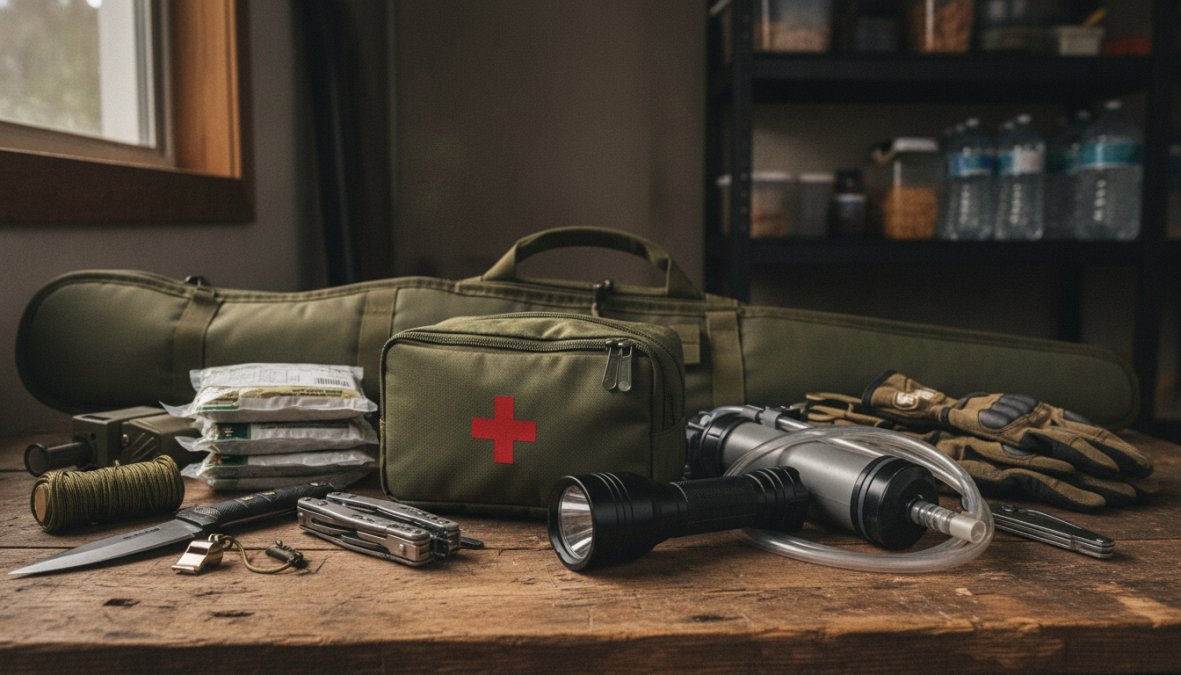
The Rescue Essentials Home Defense Trauma Kit addresses injuries that standard first aid kits cannot handle, including tourniquets, wound packing gauze, chest seals for penetrating wounds, and respiration aids. Store your trauma kit in a bright, clearly labeled container in multiple locations, bedroom, kitchen, and vehicle, ensuring quick access. Training matters enormously; many communities offer first aid and trauma response courses through the Red Cross, wilderness medicine organizations, and tactical medicine instructors.
(/blogs/news/emergency-preparedness-elderly-relatives-guide)]Backup Power and Water Purification Systems
Power outages often accompany emergencies. The Goal Zero Yeti Portable Power Station provides silent, emission-free electricity through multiple charging outlets. Smaller models handle phone charging and emergency lighting; larger models power essential appliances for extended periods. Water purification becomes critical if municipal systems fail. The LifeStraw Emergency Water Filters remove bacteria, parasites, and microplastics from questionable water sources. Combining backup power with water purification creates redundancy for basic survival needs.
Integrating Survival Tools for Home Defense Into Your Strategy
Effective home defense creates layers of protection addressing different threat scenarios:
- Deterrence (visible security measures that discourage attacks)
- Detection (alarms and monitoring that alert you to threats)
- Response (tools and training that let you act decisively)
- Recovery (medical supplies and support systems for aftermath)
Start with deterrence through visible security cameras, alarm system signs, and good lighting. Add detection through smart alarms and monitoring, early warning gives you time to respond. Prepare for response with appropriate tools and training. Finally, prepare for recovery with medical supplies, backup power, and water purification.
At SHTF Prepper Club, we've helped thousands of families move beyond fear-based thinking to practical preparedness. Our expert-vetted selection of survival tools for home defense covers non-lethal weapons, smart security systems, trauma kits, and backup power solutions. Start with our core kits and guidance, then expand your preparedness as your knowledge and comfort level grow. Your family's safety is worth the investment.
Frequently Asked Questions
What are the most effective non-lethal home defense tools?
Effective non-lethal options include pepper gel spray (offering up to 25-foot range with reduced blowback), stun guns, tactical flashlights with 1,000+ lumen output to disorient intruders, and impact tools like batons. Pepper gel is particularly popular because it minimizes cross-contamination and includes UV marking dye for assailant identification. The best choice depends on your comfort level, physical capability, and state-specific legal restrictions on each tool type.
Are self-defense tools legal, and what restrictions apply?
Self-defense tools legal status varies significantly by state and locality. Pepper spray, stun guns, brass knuckles, and batons face different restrictions, some states prohibit certain items entirely or require permits. Before purchasing any self-defense tool, verify your state and local laws. Many jurisdictions restrict concealed carry of weapons or limit the potency of pepper spray formulations. Consulting local law enforcement or a legal professional ensures your chosen tools comply with regulations.
What survival tools for home defense should I prioritize for a complete setup?
A comprehensive home defense strategy combines multiple layers: perimeter security (smart alarms, door/window sensors), non-lethal weapons (pepper spray, tactical flashlight), communication tools (satellite messengers for outage scenarios), trauma first aid kits for medical emergencies, and backup power systems. Start with threat detection via alarms and cameras, add accessible non-lethal options, then supplement with emergency supplies like water filters, power stations, and first aid equipment for complete preparedness.
Do I need training to use home defense tools effectively?
Yes, training significantly improves effectiveness and safety. Pepper spray requires understanding wind direction and spray patterns; stun guns need knowledge of proper contact points; firearms demand extensive safety and proficiency training. Beyond weapon training, situational awareness and de-escalation techniques prevent incidents before they escalate. Many communities offer home defense courses covering both tactical skills and psychological preparation. Regular drills with family members ensure everyone understands emergency response procedures.
This article was written using GrandRanker