

Table of Contents
- How to Prepare for Power Outages: A Practical Framework
- Build Your Emergency Preparedness Kit
- What to Do During a Power Outage: Immediate Actions
- Backup Power Solutions for Home Protection
- Food Safety During Power Outage: Temperature and Storage
- Medical Devices, Medications, and Health Preparedness
- Digital Preparedness and Cybersecurity During Outages
- Psychological Preparedness and Family Communication
How to Prepare for Power Outages: Complete 2026 Guide
Last Updated: July 16, 2026
Power outages happen without warning. Whether caused by severe weather, aging infrastructure, or grid failures, preparation transforms panic into competence. This guide covers eight key areas: emergency supplies, immediate safety actions, backup power, food preservation, medical security, digital resilience, psychological readiness, and family communication.
Why Power Outage Preparedness Matters for Your Household
Aging electrical grids, increased severe weather, and growing demand make outages more frequent and longer-lasting. When electricity stops, refrigeration, heating, water pumps, medical equipment, communication, and lighting all fail simultaneously.
The first hour after an outage is critical. Families with a plan know exactly what to do and where supplies are. That difference saves food, medication, and peace of mind. Preparedness also protects your finances, spoiled food, damaged appliances, and medical emergencies cost far more than modest emergency supplies. Knowing you're prepared reduces anxiety and helps you make better decisions when they matter most.
Build Your Emergency Preparedness Kit
An emergency supply kit sits ready in your home, organized for quick access, containing everything you need to survive the first 72 hours without power.
Essential Items Every Household Needs
Start with lighting. Buy multiple flashlights (at least three for a household of four) with fresh batteries stored in known locations. A battery-powered radio lets you access emergency broadcasts and utility company information when your phone battery dies.
Water is non-negotiable: one gallon per person per day for drinking and sanitation. For a family of four, that's 12 gallons for a three-day outage. Store it in food-grade containers, rotate every six months, and keep it in a cool, dark place. Include water purification tablets or a portable filter as backup.
Non-perishable food should require no cooking and no refrigeration: canned goods, dried fruit, nuts, protein bars, peanut butter, and crackers. Include a manual can opener. Pack foods your family actually eats.
First aid supplies address minor injuries: bandages, antibiotic ointment, pain relievers, antacids, anti-diarrheal medication, antihistamines, and any prescription medications. Add a thermometer to monitor fevers.
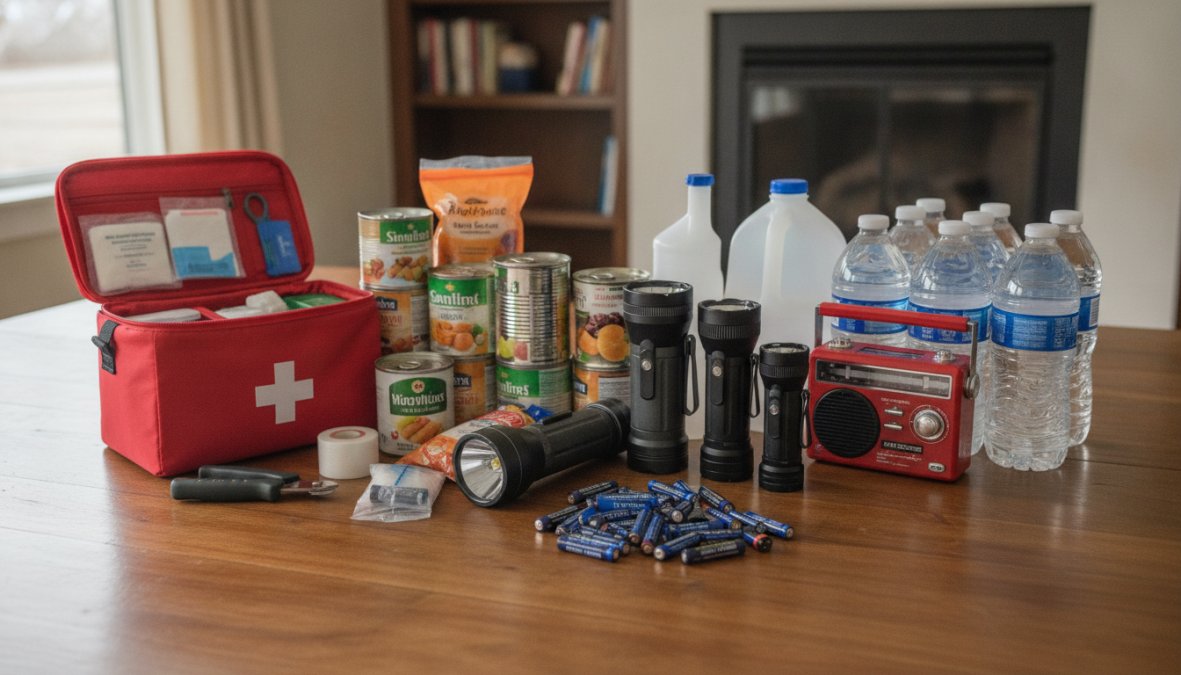
Organizing and Storing Your Kit for Quick Access
Create a central emergency kit in an accessible location, a hall closet, basement shelf, or garage corner that everyone knows about. Use clear plastic bins or a dedicated cabinet and label everything. Group items by function: one container for lighting, one for first aid, one for water and food.
Keep a printed inventory. Check your kit twice yearly (spring and fall), rotating expired medications and replacing dried-out batteries. Store away from direct sunlight and extreme temperatures. Avoid garages where temperature swings degrade batteries and medications.
For medications and medical devices, maintain a separate, smaller emergency kit in an easily accessible location with a list of medications, dosages, allergies, and contact information for your pharmacist and doctor.
What to Do During a Power Outage: Immediate Actions
The first hour determines how well you manage the entire outage.
First Hour Priorities and Safety Checks
The moment you realize the power is out, check that no one is in immediate danger. Call 911 if someone needs emergency assistance. Locate your flashlights and turn them on, never rely on candles. Do not open your refrigerator or freezer. A closed refrigerator keeps food safe for four hours; a closed freezer for 48 hours.
Locate your battery-powered radio and listen for official updates from your utility company or local emergency management. Check on neighbors, especially elderly people and those with medical equipment.
Protecting Your Home from Electrical Hazards
When power returns, it often returns suddenly with surges that damage appliances. Unplug major appliances before the outage ends: refrigerator, water heater, furnace, and sensitive electronics. Wait 30 minutes after power is restored before plugging them back in.
Never use a generator indoors. Generators produce carbon monoxide, a colorless, odorless gas that kills quickly. Place generators outside, at least 20 feet from windows, doors, and vents. If you smell gas during an outage, leave your home immediately and call your gas company.
Avoid opening your home to unknown people claiming to be utility workers. Real utility workers carry identification.
Backup Power Solutions for Home Protection
Backup power keeps critical systems running when the grid fails.
Generator Safety and Proper Operation
A 5,000-watt generator can power your refrigerator, freezer, furnace, and basic lighting. The most critical rule: never run a generator indoors. Place it outside, at least 20 feet from windows, doors, and air vents, with exhaust directed downwind.
Use heavy-duty extension cords rated for outdoor use. Connect only essential appliances: refrigerator, freezer, furnace, water pump, and a few lights. Store fuel in approved containers away from your home. Gasoline degrades over time; use fuel stabilizer if storing longer than 30 days. Never refuel a running generator.
Portable Power Banks and Battery-Powered Alternatives
A 20,000 mAh power bank charges a phone 4-5 times. A 50,000 mAh bank charges 10+ times. For households with medical devices, larger capacity banks are worth the investment. Solar chargers provide indefinite charging if outages extend beyond a few days.
Battery-powered fans ($20-30) run 6-8 hours on four AA batteries and prevent heat-related illness during summer outages. For households with critical medical equipment, discuss backup power systems with your doctor or medical equipment supplier.
Food Safety During Power Outage: Temperature and Storage
A closed refrigerator keeps food safe for four hours without power. A closed freezer keeps food safe for 48 hours (or 24 hours if half-full). Every opening reduces the window by 30-60 minutes.
Keeping Refrigerated Food Safe Without Power
The moment power fails, stop using your refrigerator. Place a "Do Not Open" sign on the door. If the outage lasts longer than four hours, transfer refrigerated items to coolers packed with ice.
Never taste food to determine if it's safe. When in doubt, throw it out. Once power is restored, check if thawed food still contains ice crystals or feels cold. If it's thawed completely and has been above 40°F for more than two hours, discard it.
Non-Perishable Food Storage and Water Supplies
Stock foods your household actually eats: canned fruits, vegetables, soups, beans, meats, dried pasta, rice, oats, crackers, peanut butter, nuts, dried fruit, and protein bars. Include a manual can opener.
Rotate your non-perishable stock using "first in, first out." Check expiration dates twice yearly. Store one gallon of water per person per day in food-grade containers, avoiding direct sunlight. Rotate every six months.
If stored water runs out, boiling makes tap water safe. Bring water to a rolling boil for one minute (three minutes at high elevation). Water purification tablets or portable filters provide alternatives.
Medical Devices, Medications, and Health Preparedness
Power outages threaten people who depend on electricity for survival.
Protecting Insulin, Medications, and Medical Equipment
Insulin requires refrigeration. If your outage lasts less than four hours, keep insulin in the closed refrigerator. For longer outages, transfer to a cooler with ice packs. Insulin pens and vials can survive room temperature for 28 days but work best when refrigerated. Discuss backup plans with your doctor before an outage.
CPAP machines, oxygen concentrators, and other powered medical devices require battery backup. Talk to your doctor or equipment supplier about options. For people on dialysis, discuss outage protocols with your dialysis center before an emergency.
Create a medication list including drug names, dosages, frequencies, and allergies. Store in your emergency kit and keep a copy with you at all times.
First Aid Supplies and Backup Medication Storage
A well-stocked first aid kit includes bandages (multiple sizes), antibiotic ointment, pain relievers, antacids, anti-diarrheal medication, antihistamines, hydrocortisone cream, and prescription medications. Add a thermometer, tweezers, scissors, and a CPR face shield if trained.
Store medications in a cool, dark place, a bedroom closet or kitchen cabinet away from the stove, not a bathroom medicine cabinet. Maintain a 30-day supply of essential medications. Discuss this with your pharmacist and doctor.
Digital Preparedness and Cybersecurity During Outages
Power outages create cybersecurity risks. Sudden power loss damages data and creates vulnerabilities when systems restart.
Protecting Data and Devices During Power Surges
When power returns, it often returns with surges that damage electronics. Install surge protectors on all important circuits: computer, router, modem, television. Uninterruptible power supplies (UPS) provide battery backup that keeps your computer running long enough to save files and shut down properly.
Unplug sensitive electronics before the outage ends. Back up important files to cloud services (Google Drive, Dropbox, iCloud) or external hard drives stored away from your computer. Change your passwords after an extended outage.
Communication Tools and Information Access Without Power
A hand-crank or battery-powered radio keeps you informed without relying on electricity or internet. Know which local stations provide emergency information.
Keep your mobile phone charged. A portable power bank ensures your phone stays charged through a multi-day outage. A solar charger provides indefinite charging. Create an emergency contact list written on paper with family members, neighbors, emergency services, your utility company, and your doctor. Keep copies in your emergency kit and give them to family members.
Psychological Preparedness and Family Communication
Power outages create stress and anxiety, especially for children. Psychological preparedness makes outages manageable instead of traumatic.
Creating an Emergency Contact List and Communication Plan
Identify an out-of-area contact person, a relative or friend outside your immediate area. If local phone lines are overwhelmed, out-of-area calls sometimes go through.
Create a written emergency contact list with names, phone numbers, and addresses. Keep physical copies in your emergency kit, wallet, and car. Establish a meeting point if your family is separated during an outage. Practice your communication plan before an outage occurs.
Mental Resilience and Managing Outage Stress
Before an outage, discuss with your family what to expect. Explain that outages are temporary and that you have a plan. Children who understand what's happening experience less anxiety.
During an outage, maintain routine as much as possible. Eat meals at normal times, keep children on a sleep schedule, and engage in activities that don't require electricity. Acknowledge emotions without judgment, it's normal to feel frustrated, anxious, or bored.
For people with medical conditions triggered by stress, discuss with your doctor how to manage your condition during an outage. Identify calming techniques that work for you: breathing exercises, meditation, or physical activity.
Prepare for power outages before they happen. Build your emergency kit, test your backup power systems, review your communication plan, and discuss outages with your family. This preparation transforms a crisis into an inconvenience. SHTF Prepper Club offers comprehensive emergency kits with all essential supplies, water, non-perishable food, first aid supplies, flashlights, batteries, and battery-powered radios, organized for quick access and designed based on real outage scenarios.
Frequently Asked Questions
What should I have ready for a power outage?
Build an emergency preparedness kit containing flashlights, extra batteries, a battery-powered radio, manual can opener, first aid supplies, non-perishable food, drinking water (1 gallon per person per day), medications, a thermometer, and a surge protector. Include an emergency contact list, portable charger, and a weather radio. Store these items in an easily accessible location and rotate supplies annually to maintain freshness.
How long can a refrigerator stay cold during a power outage?
A closed refrigerator can maintain safe food temperatures for approximately 4 hours without power. A full freezer can hold safe temperatures for 48 hours if unopened. Keep the refrigerator and freezer doors closed to preserve cold air. Use a thermometer to monitor internal temperature, food safety depends on maintaining 40°F or below. Discard perishable items if the temperature rises above this threshold for more than 2 hours.
What backup power solutions work best for home protection?
Generators provide reliable backup power but require proper safety precautions, always operate them outdoors to prevent carbon monoxide buildup. Portable power banks charge essential devices like phones and medical equipment. Battery-powered systems and uninterruptible power supplies (UPS) protect against power surges. For long-term preparedness, consider multiple solutions: a generator for heavy loads, surge protectors for appliances, and portable chargers for communication devices. Never run generators indoors or in garages.
How do I protect my home during a power outage?
Unplug sensitive appliances and electronics to prevent power surge damage when electricity returns. Use surge protectors for devices you need to keep connected. Close refrigerator and freezer doors to maintain food safety. Turn off major appliances like water heaters and air conditioning to prevent power overload when service restores. Install carbon monoxide detectors and test them regularly. Keep a fire extinguisher accessible and know your evacuation plan. Contact your utility company to report the outage and receive outage alerts for future events.
Power outages are inevitable. Your household doesn't have to be vulnerable. Build your emergency kit, test your backup power, organize your medications, and communicate your plan to your family. When the power fails, you'll be ready. Get started with SHTF Prepper Club and ensure your household is prepared for any outage scenario.
This article was written using GrandRanker