
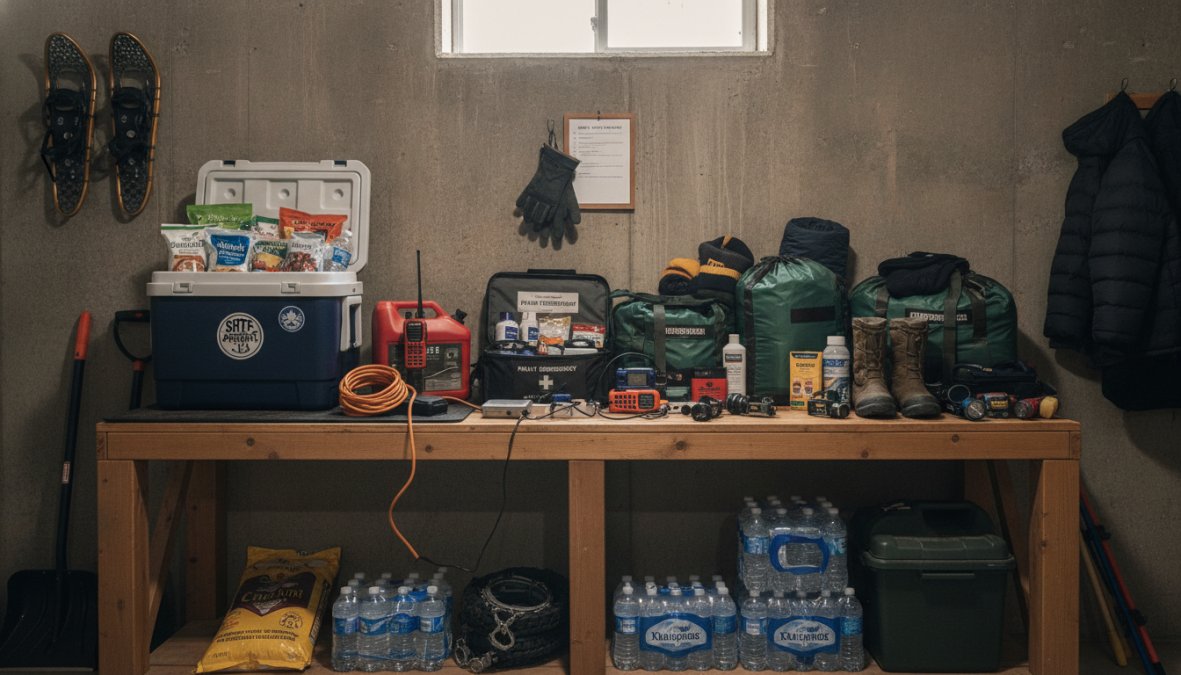
Table of Contents
- Why Emergency Gear for Winter Storms Matters for Your Family
- Essential Emergency Kit Checklist for Winter Weather
- Food, Water, and Power: The 72-Hour Supply Foundation
- Winter Storm Safety: Staying Warm and Protected Without Power
- Communication, First Aid, and Emergency Contacts
- Snow Removal and Road Safety Tools
- Budget-Friendly DIY Kits vs. Pre-Built Solutions for Families
- Scaling Emergency Gear for Your Living Situation: Apartment, Suburban, or Rural
Emergency Gear for Winter Storms: Family Preparedness Guide
Last Updated: July 17, 2026
When winter weather strikes, the difference between safety and crisis comes down to preparation. Emergency gear for winter storms is essential protection when roads freeze, power fails, and temperatures plummet. At SHTF Prepper Club, we've helped thousands of families build kits that work for real households in real situations.
The challenge most families face isn't knowing what to buy, but understanding why each item matters and how to scale preparedness to their living situation.
Why Emergency Gear for Winter Storms Matters for Your Family
Winter emergencies don't announce themselves. A single ice storm can knock out power for days or trap vehicles on roads. For most winter scenarios, the critical gap between a normal day and when help arrives is 72 hours. Having supplies staged and accessible during those critical days determines whether your family stays safe, warm, and calm.
The real difference comes down to making decisions before the crisis, not during it. When the power goes out at midnight and temperatures are dropping, you'll grab what's ready.
Essential Emergency Kit Checklist for Winter Weather
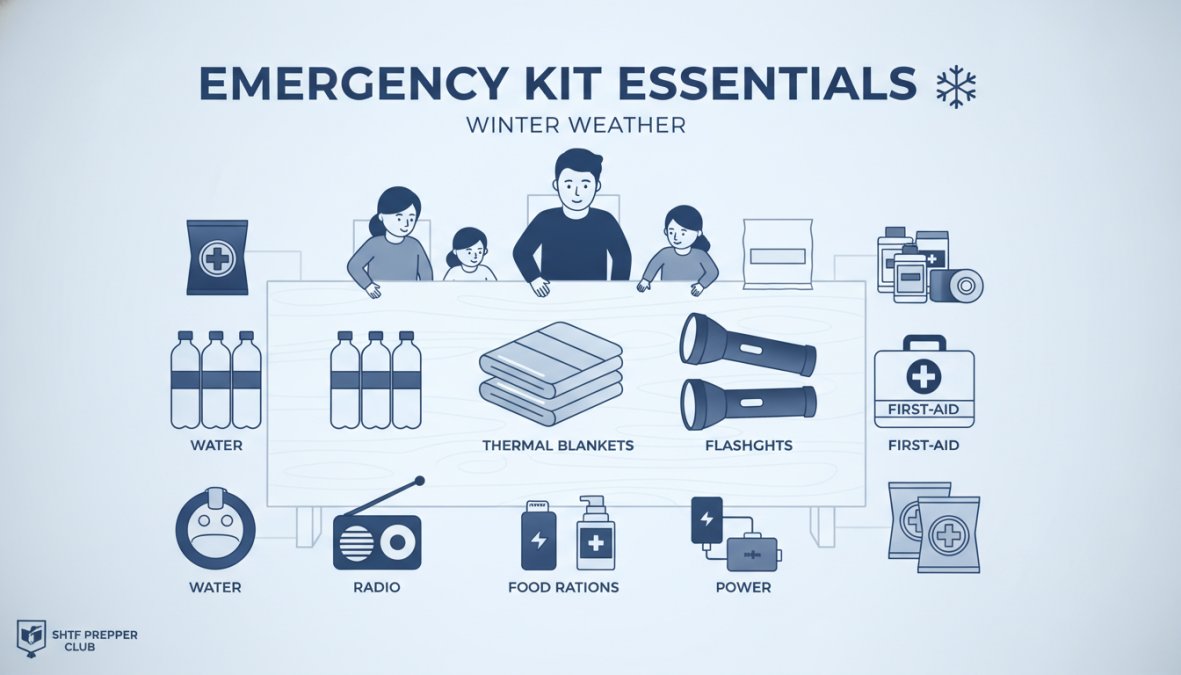
A functional emergency kit for winter storms starts with light, heat, communication, first aid, and the ability to stay hydrated.
Core Items Every Family Needs
-
Battery-powered flashlight and extra batteries, At least two reliable flashlights per person. Hand-crank flashlights eliminate battery dependency.
-
First-aid kit with winter-specific additions, Standard supplies plus items for frostbite, hypothermia, and cold-weather injuries. Include a 30-day backup supply of any prescription medications.
-
Thermal blankets and sleeping bags, One thermal blanket per person minimum. These lightweight, reflective blankets trap body heat efficiently. Sleeping bags rated for temperatures 20 degrees colder than your worst-case scenario provide insurance.
-
Bottled water and water purification supplies, One gallon per person per day for drinking and sanitation. Include water purification tablets or a portable filter as backup.
-
Non-perishable food and high-calorie snacks, Focus on foods requiring no preparation: energy bars, nuts, dried fruit, peanut butter, crackers. Include items your family actually eats.
-
Hand-crank radio with weather alerts, Receive emergency broadcasts and weather updates without depending on batteries or power.
-
Phone chargers (battery and car-powered), Keep at least one portable battery bank fully charged with cables for every device your family uses.
-
Warm clothing layers, Hat, gloves, heavy socks, and insulated jacket per person. Store these in your kit, not just in daily closets.
-
Emergency contact list (written, not digital), Store phone numbers for family members, neighbors, local emergency services, and utility companies. When cell networks are overloaded, this paper list becomes essential.
-
Medications and medical supplies, Include prescription medications with 30-day supply, medical devices (EpiPens, inhalers), and specialized supplies your family needs.
Vehicle Winter Emergency Supplies
Your car becomes a shelter if stranded on a frozen road. Vehicle supplies differ from home kits because space is limited and conditions are harsher.
-
Ice scraper and snow shovel, Keep both in your vehicle year-round. Small folding shovels take minimal space.
-
Jumper cables or portable jump starter, Cold drains battery power faster. A portable jump starter requires no second vehicle.
-
Sand, kitty litter, or road salt, Provides traction when stuck.
-
Extra blankets and sleeping bag, Store in a waterproof bag.
-
Bottled water and non-perishable snacks, Assume 24 hours of stranded time.
-
Phone charger (car-powered), A dead phone during breakdown is dangerous.
-
Flashlight with extra batteries, Essential for roadside repairs or signaling for help.
-
First-aid kit, Smaller than home kit, focused on cold-weather injuries.
-
Tire chains or emergency traction devices, Practice installation before winter.
-
Flares or reflective triangles, Make your vehicle visible to approaching traffic.
Store vehicle supplies in a compact bin under a seat or in the trunk. Check supplies annually.
Food, Water, and Power: The 72-Hour Supply Foundation
Most utility companies restore service within three days. Having supplies to bridge that gap means your family doesn't panic or make dangerous decisions like running a generator indoors.
Non-Perishable Food and High-Calorie Snacks
Winter emergencies burn calories faster than normal days. Your body works constantly to maintain core temperature, so high-calorie foods matter more.
Stock foods requiring no cooking, refrigeration, or water preparation: energy bars, nuts and nut butters, dried fruit, crackers, canned soups and stews, chocolate, and powdered milk.
Include foods your family enjoys eating. During crisis, familiar comfort foods reduce stress.
Rotate stock every six months. Use older supplies in normal meals and replace with fresh stock.
Bottled Water and Backup Power Sources
One gallon per person per day assumes drinking, cooking, and basic hygiene. In winter, frozen pipes often contaminate municipal water supplies, making stored water your only safe option.
Store water in food-grade containers in a cool location. Basements work better than heated spaces. Rotate stock annually.
Backup power sources depend on your situation. Portable generators provide reliable power but require fuel storage and must run outdoors. Battery-powered systems are quieter and safer but provide less power. Hand-crank chargers require physical effort but provide reliable charging without fuel or batteries.
For most families, a combination approach works best: one backup power source for essential items plus hand-crank options for redundancy.
Winter Storm Safety: Staying Warm and Protected Without Power
When heating systems fail, staying warm becomes your primary survival challenge. Hypothermia develops faster than most people realize.
Thermal Blankets, Sleeping Bags, and Warm Clothing
Thermal blankets are the most underrated winter emergency item. These lightweight, reflective blankets trap body heat efficiently by reflecting radiant heat back to the body.
Every family member needs at least one thermal blanket. Store them accessibly.
Sleeping bags rated for cold temperatures provide better insulation than blankets if you have storage space. A sleeping bag rated for 0°F provides safety margin.
Multiple thin layers trap air better than one thick coat. Store emergency clothing separately from daily wardrobes: wool socks (insulates when damp), hat and gloves, long underwear, and insulated jacket.
Portable Heaters and Carbon Monoxide Safety
Portable heaters provide supplemental warmth but carry serious risks. Never run a generator, charcoal grill, or gas stove indoors, they produce carbon monoxide, an odorless gas that causes death in minutes.
Safe portable heating options include propane heaters with automatic shutoff designed for indoor use, ceramic heaters, and oil-filled radiators. If you use any heating source indoors, open a window slightly for air circulation and install battery-powered carbon monoxide detectors.
The safest approach: layer clothing, use thermal blankets, and seal off one small room to heat efficiently.
Communication, First Aid, and Emergency Contacts
When normal communication systems fail, backup options prevent isolation and panic.
Hand-Crank Radio, Phone Chargers, and Flashlights
A hand-crank radio provides weather updates, emergency broadcasts, and psychological comfort. Knowing what's happening reduces fear and helps you make better decisions.
Choose a radio with AM/FM bands, weather alert capability, built-in flashlight, USB charging port, and hand-crank plus battery backup.
Phone chargers matter because cell service often works when power doesn't. A charged phone lets you contact family and emergency services. Flashlights should be reliable, redundant (multiple units in different locations), and have both battery and hand-crank options.
First-Aid Kit and Medical Essentials
A winter-specific first-aid kit addresses cold-weather injuries: frostbite treatment supplies (sterile gauze, antibiotic ointment, pain relievers), hypothermia supplies (thermal blankets, dry clothing, warm beverages), standard first-aid items (bandages, antiseptic, pain relievers, antihistamines), prescription medications (30-day supply stored separately), medical devices (EpiPens, inhalers, glucose monitors), and wound closure supplies (butterfly bandages, medical tape, sterile gauze).
Store first-aid supplies in a waterproof container with clear labels. Rotate medications annually.
Snow Removal and Road Safety Tools
Winter storms dump snow and ice that trap vehicles and block access. A basic snow removal kit includes a snow shovel, ice scraper, sand or kitty litter for traction, road salt or ice melt, and tire chains. Store these tools accessibly.
| Tool | Primary Use | Storage Location | Maintenance |
|---|---|---|---|
| Snow shovel | Clearing snow from driveway/walkway | Garage or shed | Check for cracks annually |
| Ice scraper | Clearing windshield and windows | Vehicle and home | Replace blade if worn |
| Sand/kitty litter | Traction for stuck vehicles | Garage or vehicle | Keep bags sealed and dry |
| Tire chains | Traction on icy roads | Vehicle trunk | Inspect for broken links |
| Road salt | De-icing walkways and driveways | Garage storage | Keep sealed and dry |
Budget-Friendly DIY Kits vs. Pre-Built Solutions for Families
Building emergency gear doesn't require expensive pre-packaged kits. DIY kits offer lower cost and customization but require time investment. Pre-built kits offer convenience and completeness but cost more.
For most families, a hybrid approach works best: purchase a pre-built kit as foundation, then customize by adding family-specific items.
Scaling Emergency Gear for Your Living Situation: Apartment, Suburban, or Rural
Emergency preparedness looks different depending on where you live.
Apartment and Urban Considerations
Apartment dwellers face space constraints and limited control over building systems. Emergency gear must be compact and focused on personal/family needs. Store supplies in two locations: a main kit in a closet or cabinet, and a portable backup bag for quick evacuation.
Suburban Home Approach
Suburban homes offer moderate space and some property control but often depend on municipal utilities. A suburban kit includes vehicle supplies, home emergency supplies, and basic snow removal tools stored in a garage or basement.
Rural Property Approach
Rural residents often face longer response times and less reliable utility restoration. Emergency gear becomes more comprehensive, with extended supply duration (7-14 days), backup power systems, comprehensive snow removal equipment, and water supply and purification. A maintenance schedule matters more in rural settings. Test backup power systems monthly, rotate food supplies quarterly, and inspect tools before winter.
Winter emergencies test families in ways normal life never does. The difference between weathering the storm and facing crisis comes down to decisions made in advance. Emergency gear for winter storms isn't about paranoia, it's about recognizing that winter is predictable and preparing accordingly.
SHTF Prepper Club has helped thousands of families move from anxiety about winter emergencies to confidence in their preparedness. Whether you're building a DIY kit or purchasing pre-assembled supplies, the goal is the same: ensure your family stays safe, warm, and calm when winter turns dangerous.
External Sources & References
According to the CDC's Extreme Cold Guide, hypothermia can develop in as little as 15 minutes of exposure to extreme cold, making preparedness essential for winter survival.
Research from FEMA's Emergency Preparedness Resources emphasizes that 72-hour supply strategies work for most utility disruptions, as most power restoration occurs within three days of major weather events.
The National Weather Service Winter Storm Safety Information provides detailed guidance on recognizing frostbite and hypothermia symptoms, which helps families respond quickly to cold-weather emergencies.
Frequently Asked Questions
What should be included in a basic emergency gear kit for winter storms?
A basic kit includes non-perishable food, bottled water, a first-aid kit, thermal blankets, a battery-powered flashlight with extra batteries, a hand-crank radio, jumper cables, an ice scraper, a snow shovel, warm clothing, and an emergency contact list. For vehicles, add sand or road salt for traction, a cellular phone charger, and a sleeping bag. Tailor items based on your family's size, location, and specific needs.
How much food and water should a family store for winter storm preparedness?
Aim for a 72-hour supply of bottled water (one gallon per person per day) and non-perishable, high-calorie snacks that don't require cooking. Include items your family will actually eat, canned goods, energy bars, nuts, dried fruit, and peanut butter. Store items in a cool, dry place and rotate stock annually. Check expiration dates before winter weather season.
Can I maintain a smaller emergency gear kit if I live in an apartment?
Yes. Apartment dwellers can scale down by focusing on portable, space-efficient items: a compact emergency kit, bottled water, non-perishable snacks, a hand-crank radio, a battery-powered flashlight, thermal blankets, and warm clothing. Skip large items like snow blowers or sand. Store your kit in a closet or under a bed. Coordinate with building management about backup power and heating plans during outages.
How do I know if my winter emergency gear is still reliable when I need it?
Test and maintain gear annually before winter arrives. Check flashlight batteries and replace if dim, test hand-crank radios, inspect thermal blankets for tears, verify food and water expiration dates, and confirm first-aid kit supplies are intact. Replace dead batteries, expired medications, and damaged items. Keep a maintenance log and refresh your 72-hour supply every 6-12 months to ensure family readiness.
This article was written using GrandRanker