
Table of Contents
- Why Emergency Preparedness for Elderly Relatives Matters
- Building an Emergency Kit Checklist for Seniors
- Creating an Evacuation Plan for Elderly with Mobility Issues
- Organizing a Caregiver Emergency Contact List Template
- Emergency Preparedness for Seniors Living Alone
- Psychological First Aid and Emotional Preparedness
- Coordinating with Schools, Daycares, and Care Facilities
- Budget-Friendly Preparedness Strategies for Elderly Care
Last Updated: June 27, 2026
Why Emergency Preparedness for Elderly Relatives Matters
When disaster strikes, elderly family members face unique vulnerabilities that generic preparedness guides overlook. According to CDC guidance on disaster preparedness, older adults experience higher rates of injury and death during emergencies, particularly when pre-existing health conditions complicate evacuation or shelter-in-place scenarios.
A senior with mobility issues cannot simply grab a go-bag and evacuate. Someone on daily medications faces a genuine crisis if supply chains break down for even a few days. The difference between a household that survives a crisis intact and one that fragments under stress often comes down to specific, actionable planning tailored to your elderly relative's actual needs.
Building an Emergency Kit Checklist for Seniors
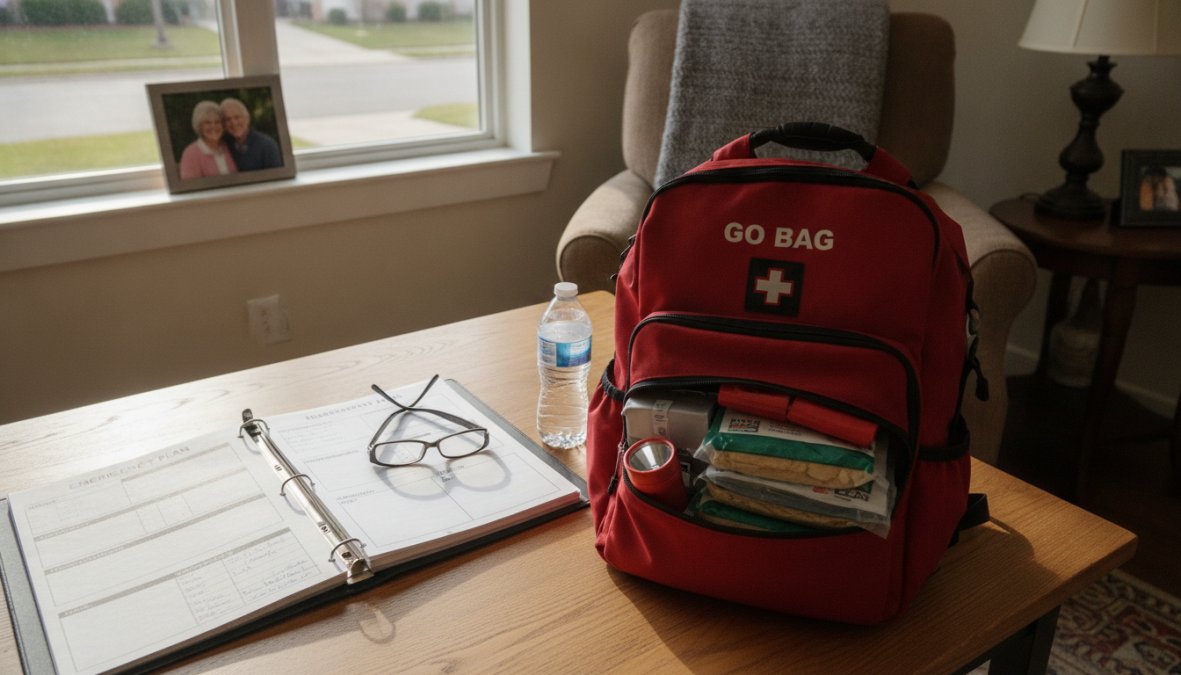
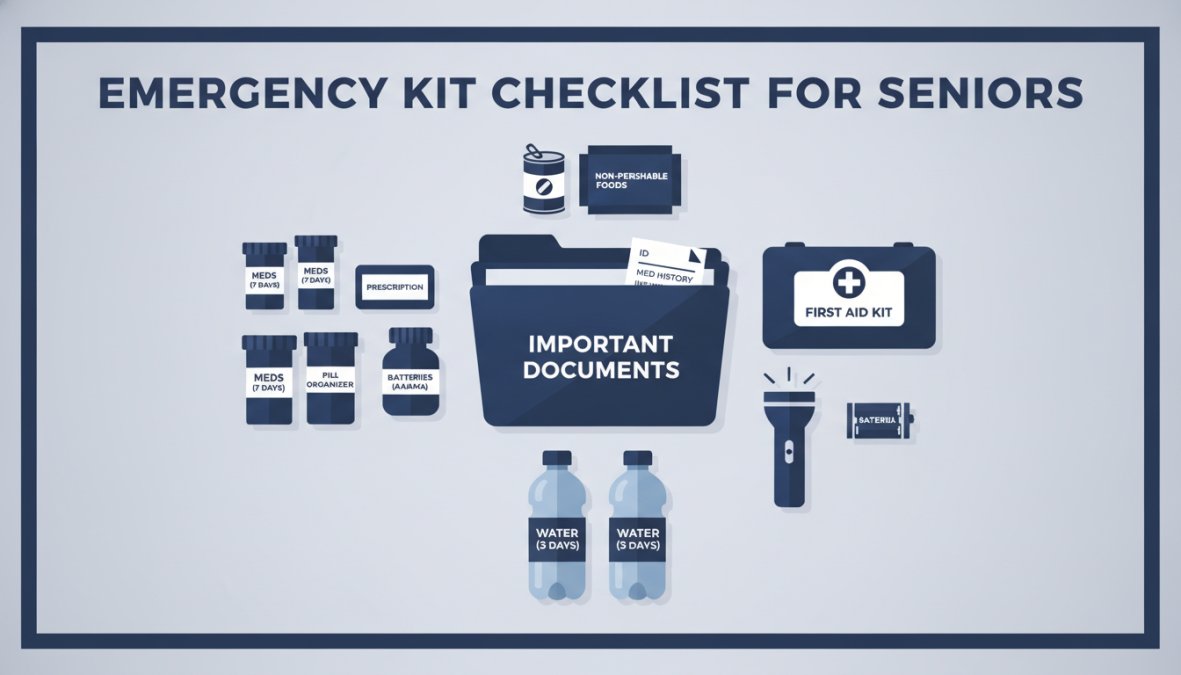
An emergency kit for seniors looks fundamentally different from a standard go-bag. The focus shifts from mobility and self-sufficiency to medical continuity and comfort during displacement. Start with a sturdy, waterproof container that's lightweight enough for your relative to handle or that you can transport easily. Include a printed copy of all medications with dosages, prescriptions, and pharmacy contact information, this single document can prevent dangerous drug interactions if your relative ends up in an unfamiliar hospital.
Essential Medical Supplies and Medications
Medical supplies form the backbone of any senior emergency kit:
- A 30-day supply of all prescription medications in original labeled bottles (rotate stock every 6 months)
- Blood pressure monitor and any other monitoring devices your relative uses regularly
- Glucose monitor and testing strips if diabetic
- Inhaler or other respiratory medications with extras
- Pain relief medications and regularly used over-the-counter drugs
- Copies of medical records, allergies, and current prescriptions
- Insurance cards and Medicare/Medicaid information laminated in waterproof sleeves
- Medical alert identification bracelet or necklace with emergency contacts
The medication supply deserves special attention. A 30-day supply stored in a cool, dry place ensures continuity even if pharmacies close or supply chains are disrupted.
Mobility and Accessibility Items
Mobility challenges compound during emergencies. A senior who uses a cane, walker, or wheelchair needs these items accessible and functional:
- Extra batteries for motorized mobility aids (twice what you think you'll need)
- Backup manual crutches or cane if your relative relies on electronic mobility
- Comfortable, broken-in walking shoes with good support
- Incontinence supplies (often overlooked but critical for dignity and health)
- Hearing aid batteries and backup hearing aids if available
- Glasses or contact lenses with spare pairs and prescriptions
- A lightweight folding wheelchair or transport chair if mobility is severely limited
Creating an Evacuation Plan for Elderly with Mobility Issues
An evacuation plan for elderly with mobility issues must address the hard truth: your relative may not be able to self-evacuate. This requires pre-planning that identifies who will assist, what transportation is available, and how you'll handle medical equipment during the process.
Map your home's exits and identify which ones your relative can actually use. A senior in a wheelchair cannot navigate stairs. Your evacuation plan must account for these realities and identify alternative routes or assistance methods.
Identifying Safe Routes and Transportation
Walk through your home with your elderly relative and identify the fastest, safest exit routes. Mark these clearly. If your relative uses a wheelchair, ensure at least one exit is wheelchair-accessible. Test the route in person, what looks accessible on paper may have obstacles you didn't anticipate.
Identify multiple transportation options in advance. Arrange backup transportation with neighbors, other family members, or local services. Contact your local emergency management office to learn what specialized evacuation assistance is available for seniors and people with disabilities.
Practicing Drills and Building Muscle Memory
Run at least two full evacuation drills per year, ideally in different seasons. During a drill, actually move your elderly relative through the evacuation route. Time it. Identify bottlenecks. Adjust the plan based on what you learn. After each drill, discuss what worked and what didn't, then update your plan and share the revised version with everyone involved.
Organizing a Caregiver Emergency Contact List Template
A caregiver emergency contact list template serves as the central document that coordinates response when disaster strikes. Keep copies in multiple locations: one in your elderly relative's wallet, one posted on the refrigerator, one with each designated caregiver, and one in your vehicle.
Start with basic identification: your relative's full name, date of birth, and identifying medical information (blood type, major allergies, chronic conditions). Add a current photo so emergency responders can identify your relative faster.
List all medications with current dosages and pharmacy information. Include the name and contact information for your relative's primary care physician and any specialists. Add insurance information: Medicare number, supplemental insurance, prescription coverage.
Then list emergency contacts in order of availability: primary contact first (usually the main caregiver), then secondary and tertiary contacts. Include cell phone, home phone, and work phone for each person. Add special instructions: "Uses wheelchair, cannot navigate stairs," "Diabetic, needs access to glucose monitoring supplies," "Hard of hearing, speak clearly and face directly."
| Element | Details | Update Frequency |
|---|---|---|
| Medications & dosages | All prescriptions with pharmacy info | Monthly |
| Medical contacts | Primary care, specialists, insurance | Quarterly |
| Emergency contacts | Caregivers, neighbors, family | Quarterly |
| Special instructions | Mobility, sensory, cognitive needs | As conditions change |
| Digital backup location | Cloud storage, password manager | Quarterly |
Print the contact list on cardstock and laminate it if possible. Distribute copies to all designated caregivers, your elderly relative's doctor's office, and your local fire department if they offer a registry for vulnerable residents. Create a digital backup stored in a secure cloud location accessible to authorized family members.
Emergency Preparedness for Seniors Living Alone
A senior living alone faces a fundamentally different emergency scenario than one with family nearby. The first hours after a disaster are the most critical, and a senior living alone has no one to assess their condition or alert emergency services if they're injured or trapped.
Establishing Check-In Systems
Create a daily check-in routine that your elderly relative initiates, not one where you initiate contact. A senior who calls you every morning at 8 AM creates a pattern that responders can verify. If that call doesn't come, someone knows something is wrong.
The check-in can be as simple as a phone call, text message, or email. The key is consistency and a clear protocol: if the check-in doesn't happen by a certain time, a designated person calls to verify safety. If that person can't reach the senior, the next person in the chain tries. If no one can establish contact within a reasonable timeframe, emergency services are called for a welfare check.
Neighbors are often the most effective part of this system. A neighbor who sees your elderly relative regularly notices immediately if something's wrong.
Medical Alert Devices and Emergency Communication
Medical alert devices provide a backup system when a senior falls, has a medical emergency, or is trapped. Modern devices include fall detection, GPS tracking, medication reminders, and two-way voice communication with monitoring centers.
A quality medical alert device should be worn consistently and have a long battery life (at least 24-48 hours between charges). Establish backup communication methods for scenarios where normal infrastructure fails: a battery-powered radio for emergency broadcasts, a whistle or air horn to signal for help if trapped, and a written list of emergency information.
Psychological First Aid and Emotional Preparedness
Physical preparedness matters. Emotional preparedness matters more.
A disaster creates psychological stress that compounds physical challenges. An elderly person separated from familiar surroundings, unable to reach family, or displaced to an unfamiliar shelter experiences trauma that can trigger physical health crises. Concrete planning reduces anxiety more effectively than reassurance alone.
During and after a disaster, maintain routine as much as possible. Regular meal times, sleep schedules, and familiar activities provide psychological anchoring. Watch for signs of distress: withdrawal, confusion, loss of appetite, sleep disruption. Elderly people sometimes hide emotional distress because they don't want to be a burden.
Coordinating with Schools, Daycares, and Care Facilities
If your elderly relative receives care at a facility or adult day center, those facilities must be part of your emergency preparedness plan. Contact the facility and request their emergency plan. Ask specific questions: How do they handle evacuation? Where do residents go if the facility is damaged? How will they reunite residents with family?
Ensure the facility has current emergency contact information for your relative. Provide a copy of your relative's emergency contact list template and medication information. If your elderly relative lives in assisted living or memory care, ask whether the facility has a disaster plan that accounts for residents with cognitive decline.
Budget-Friendly Preparedness Strategies for Elderly Care
Emergency preparedness doesn't require spending thousands of dollars on specialized gear. Strategic spending on essentials, combined with organization and planning, creates effective preparedness on a modest budget.
Start by inventorying what your elderly relative already has. Consolidate basic first aid supplies, flashlights, and batteries scattered throughout their home into a single emergency kit. Purchase medications and medical supplies gradually rather than all at once. Request 90-day supplies instead of 30-day supplies if insurance allows.
Focus spending on items that serve dual purposes. A battery-powered radio provides emergency alerts and entertainment. A manual can opener works for both emergency food and everyday cooking. A rechargeable flashlight serves emergency and everyday needs.
Build your emergency supplies gradually. Buy a few items each month when you do regular shopping. Over six months, you've built substantial supplies without financial strain. SHTF Prepper Club offers comprehensive emergency kits and supplies specifically designed for seniors, with options at various price points and long-term food storage solutions ideal for elderly relatives with limited mobility.
Emergency preparedness for elderly relatives isn't about creating perfect plans, it's about creating realistic plans that account for actual limitations and then testing those plans until they work reliably. The families that weather disasters successfully aren't the ones with the fanciest gear. They're the ones who planned specifically for their elderly relative's needs, communicated clearly about roles and procedures, and practiced until everyone knew what to do.
Start with your elderly relative's most critical need: medication continuity, mobility support, or communication during isolation. Address that first. Build outward from there. Within a few months of consistent effort, you'll have created a preparedness system that genuinely protects your elderly relative.
Frequently Asked Questions
What are the most important items in an emergency kit checklist for seniors?
Prioritize medications and medical equipment (at least a 30-day supply), prescription glasses or hearing aid batteries, first aid supplies, non-perishable food, bottled water (1 gallon per person per day), flashlights, batteries, and copies of important documents. Include items addressing mobility needs like canes, walkers, or cushions. Label everything clearly and keep the kit in an easily accessible location your elderly relative knows about.
How do I create an evacuation plan for elderly relatives with mobility issues?
Identify primary and secondary evacuation routes from their home, noting doors and stairs. Arrange transportation in advance, designate a trusted family member or neighbor with an accessible vehicle. Practice the route together quarterly. Ensure they wear comfortable shoes during drills. Create a written plan with large, easy-to-read text posted in multiple rooms. Include meeting points if separated and contact numbers. Consider mobility aids and ensure evacuation routes accommodate wheelchairs or walkers.
What should a caregiver emergency contact list template include?
Include the elderly relative's full name, date of birth, and primary care physician contact. List all caregivers' names, phone numbers, and email addresses. Add secondary emergency contacts, nearby family members, and friends. Include insurance information, pharmacy details, and hospital preferences. Note any allergies, medications, and special health care needs. Keep digital and printed copies, store one at home, one with the elderly relative, and one with primary caregivers. Update quarterly.
How can I help seniors living alone prepare for emergencies?
Establish daily or weekly check-in calls or texts. Consider medical alert devices with emergency contact features. Ensure they have a spare key with a trusted neighbor. Stock emergency supplies including medications, food, water, and first aid items. Create a written emergency plan and post it visibly. Set up automatic bill payments and ensure important documents are accessible. Register them with local emergency management for special needs assistance. Install grab bars and adequate lighting to prevent falls during disasters.
This article was written using GrandRanker