
Table of Contents
- Why Emergency Preparedness Matters for Homeowners
- How to Create a Family Emergency Plan
- Building Your 72 Hour Emergency Kit Checklist
- Organizing Essential Documents for Emergency Binder
- Child-Specific Preparedness and Psychological First Aid
- School and Daycare Coordination for Emergency Readiness
- Practicing Household Drills and Emergency Exercises
- Budget-Friendly Emergency Preparedness Strategies
- Digital Preparedness and Emergency Alerts
- Your Complete Emergency Preparedness Checklist for Homeowners
Emergency Preparedness Checklist for Homeowners: 2026 Guide
Last Updated: June 27, 2026
Nearly 60% of households lack a basic emergency plan, leaving families unprepared when disaster strikes. This guide breaks down everything you need to create an effective emergency preparedness checklist for homeowners: a family communication plan, a 72-hour emergency kit, vital documents, and child preparation. We'll show you how to move from unprepared to genuinely ready.
Why Emergency Preparedness Matters for Homeowners
Real preparedness means your family can shelter in place safely, communicate during a crisis, and access what they need without panic. According to FEMA's disaster preparedness guidelines, households with an emergency plan and supplies recover significantly faster from disasters.
Disasters don't announce themselves. Hurricanes, earthquakes, severe weather, and power outages happen without warning. Your emergency preparedness checklist isn't about predicting what will happen, it's about being ready for anything. The families that handle emergencies best aren't those with the most supplies; they're the ones who've thought through scenarios and practiced their plans.
How to Create a Family Emergency Plan
A family emergency plan is the foundation of household disaster readiness. Sit down with everyone in your household, including children age 5 and up. The goal is for every family member to know what's expected during an emergency. Your plan should answer three core questions: How will we communicate? Where will we go? What do we do first?
Write your plan down and post it somewhere visible, a refrigerator or emergency binder. Treat it like a fire escape plan: simple, visual, and rehearsed regularly.
Establish Communication Protocols
When disasters strike, phone lines often fail and cell networks become overloaded. Your communication plan must work when normal channels don't.
Designate an out-of-area contact person, someone far enough away to be unaffected by the same disaster. This person becomes your family's relay point. If you can't reach each other directly, everyone tries to reach this contact instead. Write down their name, phone number, and email. Give every family member a copy to carry.
Establish text-based communication as your primary method. Text messages often get through when voice calls don't because they require less bandwidth. Agree that everyone will text your out-of-area contact saying "We're safe" or "Need help at [location]."
For households with multiple work locations or schools, establish a specific meeting protocol. If an emergency happens during the day when family members are separated, do you go to school to pick up children? Do you go home? Write this down explicitly.
Designate Meeting Locations and Evacuation Routes
Identify two meeting locations: one within your neighborhood (a park or community center) and one outside your immediate area (a relative's house or hotel). Map at least two evacuation routes from your home. Don't rely on your usual route, if roads are blocked or flooded, you need alternatives. Walk or drive these routes with your family and point out landmarks.
Practice evacuation drills at least twice a year. Time yourselves and identify bottlenecks. Adjust your plan based on what you learn.
| Element | What to Include | Why It Matters |
|---|---|---|
| Out-of-area contact | Name, phone, email | Phone lines often fail; text may work |
| Meeting locations | Neighborhood + out-of-area | Ensures family can reunite if separated |
| Evacuation routes | At least 2 different paths | Primary routes may be blocked |
| Communication protocol | Text-based primary method | Texts use less bandwidth than calls |
| Children's drills | Practice 2x per year | Muscle memory reduces panic |
Building Your 72 Hour Emergency Kit Checklist
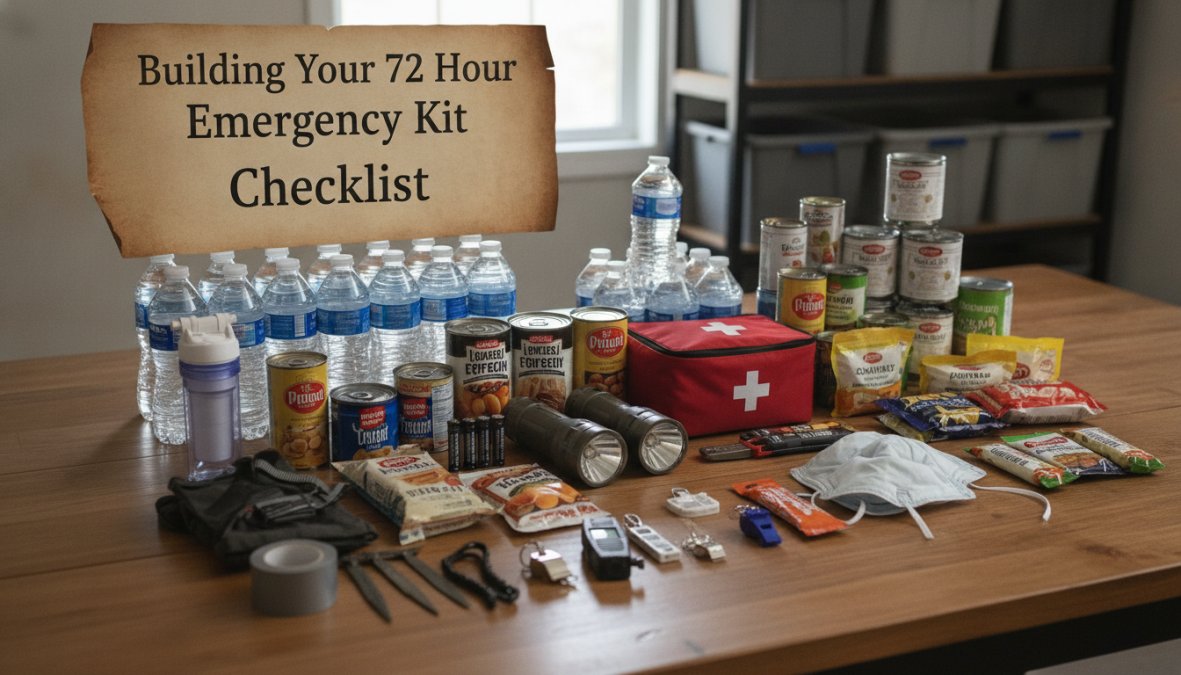
A 72-hour emergency kit sustains your family for three days without access to stores, utilities, or outside help. Store it in an accessible location, a closet, garage, or under-bed storage, and label it clearly.
Water and Food Essentials
Store one gallon of water per person per day. For a family of four, that's 12 gallons for three days. Include bottled water (shelf-stable for years) and store tap water in food-grade containers if you have space. Rotate water annually.
For food, choose non-perishable items requiring no cooking or minimal cooking:
- Canned goods (vegetables, fruits, beans, protein)
- Granola and energy bars
- Peanut butter and crackers
- Dried fruit and nuts
- Instant oatmeal
- Canned soup and stew
- Powdered milk
Include a manual can opener, utensils, napkins, and wet wipes for cleanup.
First Aid and Medical Supplies
Include a well-stocked first aid kit with:
- Pain relievers (acetaminophen, ibuprofen)
- Antihistamines
- Anti-diarrhea medication
- Antacids
- Hydrocortisone cream
- Antibiotic ointment
- Elastic bandages
- Tweezers
- Thermometer
- Prescription medications (keep a 30-day supply rotated regularly)
- Medical equipment specific to your family (inhalers, EpiPens, glucose monitors)
Check expiration dates every six months and replace expired items.
Tools, Light, and Power
Include a multi-tool or Swiss Army knife and basic tools (hammer, screwdrivers, pliers).
For lighting:
- Flashlights (at least two)
- Extra batteries (multiple sizes)
- Glow sticks or LED light sticks
- Candles and waterproof matches
Include a battery-powered or hand-crank radio to stay informed about emergency broadcasts. A portable phone charger (solar or battery-powered) keeps communication devices alive. Add a whistle for signaling help.
Organizing Essential Documents for Emergency Binder
An emergency binder keeps vital records organized and portable. If you need to evacuate, you grab it and go.
Include:
- Copies of insurance policies (home, auto, health, life)
- Deed or lease agreement
- Birth and marriage certificates
- Social Security card copies
- Passport information
- Bank and credit card account numbers
- Medication lists and dosages
- Immunization and medical records
- Medical provider contact information
- Veterinary records for pets
- Photos of your home and possessions (for insurance claims)
- Utility account numbers
- Emergency contact information
Store the binder in a waterproof, fireproof container in an accessible location. Create digital copies in cloud storage (Google Drive, Dropbox) encrypted if possible. Update your binder annually when you renew insurance policies.
:::pro-tip Set a calendar reminder for January 1st to review and update your binder. This takes 30 minutes and prevents scrambling for information when you actually need it. :::
Child-Specific Preparedness and Psychological First Aid
Children experience emergencies differently than adults. Effective preparedness includes preparing them psychologically, not just physically.
Teaching Children About Disasters
Use age-appropriate language. For young children (ages 4-7): "Sometimes storms are very strong and the power goes out. We have flashlights and food, so we'll be okay. We'll stay together."
For older children (ages 8-12), provide more detail about how emergencies happen and what your family will do. For teenagers, discuss specific regional disasters and how emergency services work.
Include children in planning. Let them help assemble the emergency kit and walk them through evacuation routes. Ask what worries them about emergencies and address those concerns.
Infant and Toddler Specific Needs
Include in your emergency kit:
- Formula and bottled water (if formula-fed)
- Diapers and wipes
- Child-specific medications
- Comfort items (favorite toy, blanket)
- Extra clothing in multiple sizes
- Sunscreen and insect repellent
- Plastic bags for soiled diapers
Include a recent photo of your child for identification if separated.
School and Daycare Coordination for Emergency Readiness
Contact your children's school and ask for a copy of their emergency procedures. Understand where children shelter, how parents are notified, and when you can pick them up.
Provide the school with emergency contact information, including your out-of-area contact person. Establish a code word with your children. If someone arrives claiming to be sent by you, the school should verify the code word.
Practice the pickup plan. Know how long it takes to reach the school from your work and identify alternative routes. For multiple children at different schools, map out a consolidated pickup plan.
Practicing Household Drills and Emergency Exercises
Conduct fire drills quarterly. Practice evacuating from different rooms and meeting at your designated outdoor location.
Conduct earthquake drills (drop, cover, hold on) at least twice yearly. Practice tornado drills if you live in tornado country. Conduct a "shelter in place" drill annually to test your supplies and identify gaps.
After each drill, discuss what went well and what was difficult. Adjust your plan based on what you learn.
Budget-Friendly Emergency Preparedness Strategies
Emergency preparedness doesn't require thousands of dollars. Start by using what you already have. Canned goods in your pantry can be part of your emergency kit. A flashlight from your junk drawer works.
Buy supplies gradually, add a few items to your grocery cart each week. Use generic and store brands. Check expiration dates on items you already own; canned goods last much longer than printed dates suggest.
Ask family members to contribute. Make DIY solutions: fill clean two-liter bottles with tap water for storage.
Digital Preparedness and Emergency Alerts
Sign up for emergency alerts from your local government. Most communities offer SMS alerts for severe weather and evacuations. Download weather and emergency alert apps like Weather.gov or the Red Cross Emergency App.
Establish a system for sharing information with family members using group text or messaging apps. Back up important digital files in cloud storage. Create a digital emergency contact list stored in your phone and emailed to yourself.
Ensure your phone is charged and carry a portable charger.
| Strategy | Time Required | Cost | Impact |
|---|---|---|---|
| Sign up for emergency alerts | 10 minutes | Free | Instant notification of threats |
| Download emergency apps | 5 minutes | Free | Access to real-time information |
| Back up digital files | 30 minutes | Free | Protection of critical records |
| Create digital contact list | 15 minutes | Free | Quick access to help during crisis |
| Establish family communication protocol | 20 minutes | Free | Coordinated response during separation |
Your Complete Emergency Preparedness Checklist for Homeowners
Family Planning:
- Identify out-of-area contact person and share information with family
- Create written family communication plan
- Establish in-neighborhood and out-of-area meeting locations
- Map at least two evacuation routes from your home
- Practice evacuation drills twice yearly
- Review and update plan annually
72-Hour Emergency Kit:
- Store one gallon of water per person per day (3-day supply minimum)
- Include non-perishable food for three days
- Include manual can opener and utensils
- Stock first aid supplies and medications
- Include flashlights, batteries, and alternative lighting
- Include multi-tool, basic tools, and safety equipment
- Add comfort items and entertainment for children
- Store in accessible, clearly labeled location
Essential Documents:
- Create emergency binder with insurance policies, IDs, medical records
- Include bank account and credit card information
- Store copies of property deeds and lease agreements
- Include photos of home and possessions for insurance claims
- Create digital backup in cloud storage
- Update binder annually
Child Preparedness:
- Teach age-appropriate disaster information to children
- Practice drills with children regularly
- Include child-specific supplies in emergency kit
- Coordinate with schools on emergency procedures
- Establish code word for authorized pickup
- Include comfort items for children in kit
Digital Preparedness:
- Sign up for local emergency alerts
- Download emergency alert apps
- Create and test family communication system
- Back up important digital files
- Create digital emergency contact list
- Ensure phone charging capability
Maintenance:
- Check emergency kit supplies every six months
- Replace expired medications and food
- Update emergency binder annually
- Practice drills at least twice yearly
- Review and update family plan as circumstances change
The difference between a family that weathers an emergency and one that's overwhelmed comes down to preparation. An emergency preparedness checklist for homeowners isn't about predicting disaster, it's about removing uncertainty so your family can focus on staying safe when it matters most. Start with one element, whether assembling your 72-hour kit or creating your family communication plan, and build from there. Each step removes one layer of uncertainty and transforms your household from unprepared to genuinely resilient.
Frequently Asked Questions
What should be in a homeowner's emergency preparedness checklist?
A comprehensive emergency preparedness checklist includes water (1 gallon per person per day for 3 days), non-perishable food, first aid supplies, flashlights, batteries, a battery-powered radio, medications, important documents, and cash. Add infant care items, pet supplies, and special medical equipment based on your household's unique needs. The checklist should also cover communication plans, evacuation routes, and shelter-in-place supplies for your specific region's disaster risks.
How do I create a family emergency plan that works?
Start by identifying potential disasters in your area and discussing them with your family. Establish a family communication plan with out-of-state contacts, designate meeting locations both near home and outside your neighborhood, and assign responsibilities. Document evacuation routes from your home and workplace. Practice your plan quarterly through household disaster drills. Include special considerations for children, elderly family members, and pets. Keep copies of your plan accessible to all family members and update it annually.
What essential documents should I include in an emergency binder?
Your emergency binder should contain copies of insurance policies (home, auto, health), property deeds, mortgage documents, medical records, medication lists, and vaccination records. Include identification documents, banking information, account numbers, and contact information for doctors and emergency services. Add photos of your home's interior and exterior for insurance claims, utility shut-off instructions, and a list of vital records locations. Store originals in a safe deposit box and keep the binder in a waterproof, portable container accessible during evacuation.
How often should I practice my family's emergency preparedness plan?
Conduct household disaster drills at least twice per year, ideally during spring and fall. Practice different scenarios relevant to your area (earthquakes, hurricanes, tornadoes, etc.) and vary your drills to keep them realistic. Include all family members and test your communication plan by having everyone practice contacting your designated out-of-state contact. After each drill, review what worked and what needs improvement. Update your emergency preparedness checklist and family emergency plan based on lessons learned, and refresh supplies annually to ensure food and water remain current.
This article was written using GrandRanker