
Table of Contents
- Understanding Long Term Food Storage Shelf Life
- Food Storage Shelf Life Chart and Timeline
- Proper Storage Conditions for Dry Goods
- Long Term Food Storage Containers for Families
- Emergency Food Supply List for Families
- Extending Long Term Food Storage Shelf Life
- DIY vs. Commercial Kits: What Works for Your Family
- Conclusion
Long Term Food Storage Shelf Life: A Family Guide
Last Updated: July 4, 2026
Understanding how to evaluate long term food storage shelf life is one of the most practical skills a family can develop for emergency preparedness. Knowing what you're storing and how long it remains safe directly determines whether your emergency plan works when you need it most.
The difference between food that lasts five years and food that lasts twenty-five years often comes down to a few critical factors: packaging, environment, and the type of food itself.
Understanding Long Term Food Storage Shelf Life
Shelf life in emergency food comes down to four core factors: moisture, oxygen, light, and temperature. Remove or minimize these elements, and your food remains stable for decades.
Moisture causes mold and bacterial growth. Oxygen accelerates rancidity, particularly in foods with fat content. Light degrades vitamins and triggers unwanted chemical reactions. Temperature fluctuations speed up every degradation process, for every 10-degree Fahrenheit increase, shelf life is cut roughly in half.
The USDA's guidelines on food storage safety confirm that properly packaged foods stored in cool, dark, dry conditions remain safe far longer than most households assume. A can on a pantry shelf exposed to kitchen heat and humidity is not the same as the same can sealed in a food-grade bucket with oxygen absorbers in a basement.
Freeze-Dried vs. Dehydrated: Shelf Life Differences
Freeze-dried foods typically last longer than dehydrated foods because the freeze-drying process removes more moisture, often 98% versus 80-90% for dehydration.
A freeze-dried strawberry stored in a Mylar bag with oxygen absorbers can last 25+ years. The same strawberry dehydrated might last 10-15 years under identical storage conditions. Freeze-drying uses extreme cold and vacuum pressure to extract moisture without heat, preserving cell structure and nutrition. Dehydration uses heat, which is faster and cheaper but leaves more residual moisture.
For families building long term food storage shelf life supplies, freeze-dried emergency meals cost more per serving but deliver longer shelf life and better nutrition retention. Dehydrated options offer better value and still provide excellent shelf life when stored correctly.
Food Storage Shelf Life Chart and Timeline
Different foods have dramatically different shelf lives, even when stored identically.
| Food Category | Shelf Life | Storage Notes |
|---|---|---|
| Freeze-dried fruits & vegetables | 20-25 years | Requires oxygen absorbers and Mylar bags |
| Dehydrated vegetables | 10-15 years | Monitor for moisture; reseal if opened |
| Canned vegetables | 3-5 years | Acidic vegetables last longer than low-acid |
| Canned meats | 5-10 years | Rotate regularly; inspect for rust |
| Pasta & grains | 8-10 years | Use food-grade buckets with oxygen absorbers |
| Powdered milk | 10-25 years | Freeze-dried lasts longer than spray-dried |
| Honey | Indefinite | Never spoils; may crystallize but remains edible |
| Peanut butter | 6-9 months (opened); 2-3 years (sealed) | Oil separation is normal; stir before use |
| Cooking oils | 2-3 years | Heat and light accelerate rancidity |
| Salt & sugar | Indefinite | Store in food-grade containers away from moisture |
White rice, dried beans, and wheat berries can last 20-30 years when stored in food-grade buckets with oxygen absorbers. Brown rice and whole grains have shorter shelf lives, typically 6-8 years, because their higher oil content makes them prone to rancidity.
Commercially prepared emergency food kits vary widely. Budget kits might guarantee 5-7 years; premium freeze-dried meal kits claim 25-year shelf life. Check whether kits use Mylar bags with oxygen absorbers or standard cardboard boxes, the packaging determines realistic shelf life.
Proper Storage Conditions for Dry Goods
Ideal storage temperature is 50-70°F. Every 10-degree increase above 70°F cuts shelf life roughly in half. Basements, root cellars, and interior closets typically maintain more stable temperatures than garages, attics, or sheds.
Humidity should stay below 15% for optimal preservation. Above 60% humidity, you risk mold growth and moisture reactivation. Invest in a simple hygrometer to monitor your storage space. If humidity creeps above 50%, add desiccants, silica gel packets or food-grade drying agents, to your containers.
Light degrades vitamins and can trigger photosynthesis in seeds. Store food in opaque, food-grade containers or in dark locations. Never store emergency food near windows.
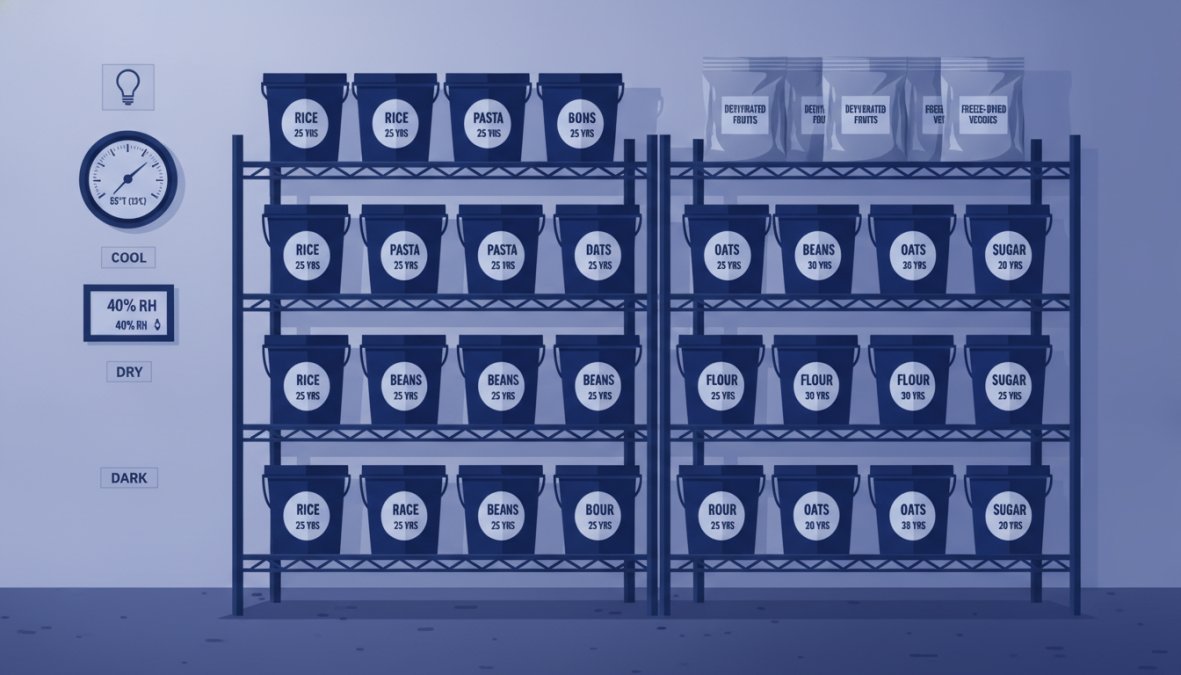
Store food off the floor on shelving. Inspect containers regularly for signs of insects. Food-grade buckets with tight-fitting lids prevent pest access far better than open shelving or cardboard boxes.
Long Term Food Storage Containers for Families
Three options dominate family emergency preparedness: Mylar bags, 5-gallon buckets, and PETE bottles.
Mylar bags are metallized plastic that blocks light and oxygen. Pair them with oxygen absorbers, small packets that chemically remove oxygen from sealed bags. A 1-gallon Mylar bag with oxygen absorbers keeps white rice fresh for 20+ years. They're affordable, stackable, and perfect for rotation. The downside: they're single-use.
5-gallon food-grade buckets with gamma-sealed lids are the workhorse of long term food storage shelf life. They're durable, reusable, stackable, and protect contents from light, pests, and temperature fluctuations. A 5-gallon bucket holds roughly 35 pounds of grain or 25 pounds of flour. Food-grade buckets cost more than regular buckets, but the difference is critical, non-food-grade plastics can leach chemicals into stored food.
PETE bottles (plastic code #1) work for storing liquids like cooking oil and some dry goods. They're lightweight and inexpensive but less protective than Mylar bags or buckets.
For balanced long term food storage shelf life supplies, use Mylar bags with oxygen absorbers for bulk grains and staples, 5-gallon buckets for items you'll access occasionally, and PETE bottles for oils and liquids.
Emergency Food Supply List for Families
Building a balanced survival food strategy means combining shelf-stable basics with foods your family will actually eat.
Start with calorie-dense staples: white rice, pasta, oats, beans, and flour. A family of four needs roughly 8,000-12,000 calories per day depending on activity level. Most emergency guides recommend storing at least a two-week supply, ideally three months or longer.
Add proteins: canned meats, powdered eggs, peanut butter, and dried beans. Canned fish, chicken, and beef provide complete proteins and last 5-10 years.
Include vegetables and fruits: freeze-dried options are superior for long term food storage shelf life because they retain nutrition and rehydrate quickly. Canned vegetables are cheaper but take up more space.
Don't forget fats and oils: cooking oil, coconut oil, and butter powder provide concentrated calories and improve taste. Coconut oil lasts longer than vegetable oil due to its saturated fat content.
Add comfort foods and supplements: salt, sugar, honey, spices, multivitamins, and baking supplies. These items cost little but dramatically improve morale during an actual emergency.
Balance calorie-dense staples with nutrient-dense vegetables and proteins. An emergency diet of only high-calorie foods leads to malnutrition despite adequate calories.
For a family of four with a three-month supply:
- 100 pounds of white rice
- 50 pounds of pasta
- 25 pounds of oats
- 20 pounds of beans (variety)
- 50 cans of vegetables
- 30 cans of meats
- 5 pounds of powdered milk
- 2 gallons of cooking oil
- Multivitamins, salt, sugar, spices
This combination provides roughly 2,500 calories per person per day and ensures nutritional balance.
Extending Long Term Food Storage Shelf Life
Your storage plan only works if you actually rotate and monitor your supplies. Implement the "FIFO" system: First In, First Out. When you add new supplies, move older items to the front. When you cook, use items from the front first.
Monitor your stored food quarterly. Open buckets and Mylar bags occasionally to check for off-odors, discoloration, moisture, or pest activity. These signs usually indicate environmental problems, humidity too high, temperature fluctuating, or light exposure, rather than the food itself.
Document your inventory with a simple spreadsheet listing what you have, when it was stored, and its expected shelf life. Rotate through your stored food in normal cooking to ensure your family is comfortable with it and to naturally refresh supplies.
Discard food showing musty odors, visible mold, moisture inside containers, insect activity, or unusual texture changes. If you see mold in dry goods, discard the entire container.
DIY vs. Commercial Kits: What Works for Your Family
DIY storage using bulk grains, canned goods, and Mylar bags costs roughly 40-60% less per calorie than commercial emergency kits. You control exactly what you store and can rotate supplies naturally through regular cooking.
The downside: DIY requires time to source, package, and organize supplies. You need to learn proper packaging techniques and manage inventory.
Commercial emergency food kits range from basic bucket meals to premium freeze-dried options. Basic kits provide adequate calories but often taste bland. Premium kits offer better flavor and nutrition but cost significantly more per serving.
When evaluating commercial kits, check the ingredient list and avoid kits heavy in sodium or sugar. Look for variety in meals, vegetables, and proteins. Verify packaging: Mylar bags with oxygen absorbers indicate genuine long term food storage shelf life claims.
A hybrid approach works best for most families: store bulk staples using DIY methods for cost-effectiveness and customization, and add 1-2 commercial emergency meal kits for convenience and backup.
Building a family emergency food supply that lasts requires understanding what determines long term food storage shelf life and maintaining proper storage conditions. Start with your storage environment, invest in proper containers and oxygen absorbers, and build your supply gradually through both DIY bulk staples and strategic commercial kits. Your family's preparedness depends on consistent, informed action.
Frequently Asked Questions
What foods have the longest shelf life for long term food storage?
Freeze-dried vegetables, grains, beans, pasta, and powdered milk typically last 20-30 years when stored properly. Sugar, salt, honey, and cooking oils also maintain quality for decades. Canned goods, when kept in cool conditions, can remain safe for 3-5 years or longer, though quality may decline. Commercially prepared emergency food kits with freeze-dried ingredients often provide 25+ year shelf lives. For families, bulk staples like wheat berries and white rice offer excellent longevity at lower cost than pre-made kits.
How do temperature and humidity affect long term food storage shelf life?
Temperature and humidity are critical factors in long term food storage shelf life. Ideal storage conditions are 50-70°F with relative humidity below 15%. For every 10°F increase in temperature, shelf life can be cut in half. High humidity accelerates mold growth and chemical breakdown. Basements, cool closets, and climate-controlled areas work best. Avoid garages, attics, and areas near heat sources. Moisture control using oxygen absorbers and food-grade containers prevents oxidation and extends shelf life significantly.
What are the best containers for long term food storage containers?
Food-grade 5-gallon buckets with gamma-sealed lids offer durability and protection from pests. Mylar bags with oxygen absorbers provide an airtight seal and are ideal for grains and bulk ingredients. PETE plastic bottles work for dry goods but offer less protection than Mylar. For families building an emergency supply, combining buckets for bulk staples and Mylar bags for smaller portions offers flexibility. Always use food-grade containers, non-food-grade plastics can leach chemicals. Airtight sealing is essential to prevent moisture and pest infiltration.
How can families build an emergency food supply list that balances nutrition and shelf life?
Start with bulk staples: rice, pasta, beans, and oats for caloric density. Add freeze-dried vegetables and fruits for nutritional density and variety. Include powdered milk, canned proteins, and cooking oils for balanced nutrition. For families, consider caloric requirements: roughly 2,000 calories per person daily for survival. Mix commercial emergency food kits with DIY bulk storage to reduce overall cost while ensuring nutritional balance. Rotate stock regularly using older items in everyday cooking. Include comfort foods to maintain morale during emergencies.
What are signs that long term stored food has gone bad?
Inspect stored food regularly for visible mold, discoloration, or off odors. Swelling buckets or Mylar bags indicate gas buildup from spoilage. Moisture inside containers signals seal failure. Rancid smells in oils or fats mean oxidation has occurred. Insects or pest damage are obvious signs of compromised storage. Taste-test small amounts cautiously, bitter or sour flavors indicate degradation. For canned goods, check for rust, dents, or leaks. Proper storage conditions minimize these issues, but regular monitoring ensures your family's emergency food supply remains safe.
How does food rotation help maintain long term food storage shelf life?
Food rotation using the FIFO method (First In, First Out) ensures older items are consumed before newer stock. This practice prevents waste and identifies degraded items early. Incorporate stored foods into everyday cooking to cycle inventory naturally while building familiarity with emergency meals. Track purchase dates on all containers and Mylar bags. For families, rotating stock quarterly allows you to monitor storage conditions and replace expired items. Regular rotation also helps you identify which foods your family prefers, improving preparedness for actual emergencies.
This article was written using GrandRanker